
The Ge'ez Script: Origins, Development, and its Role in Aksumite Christian Literature

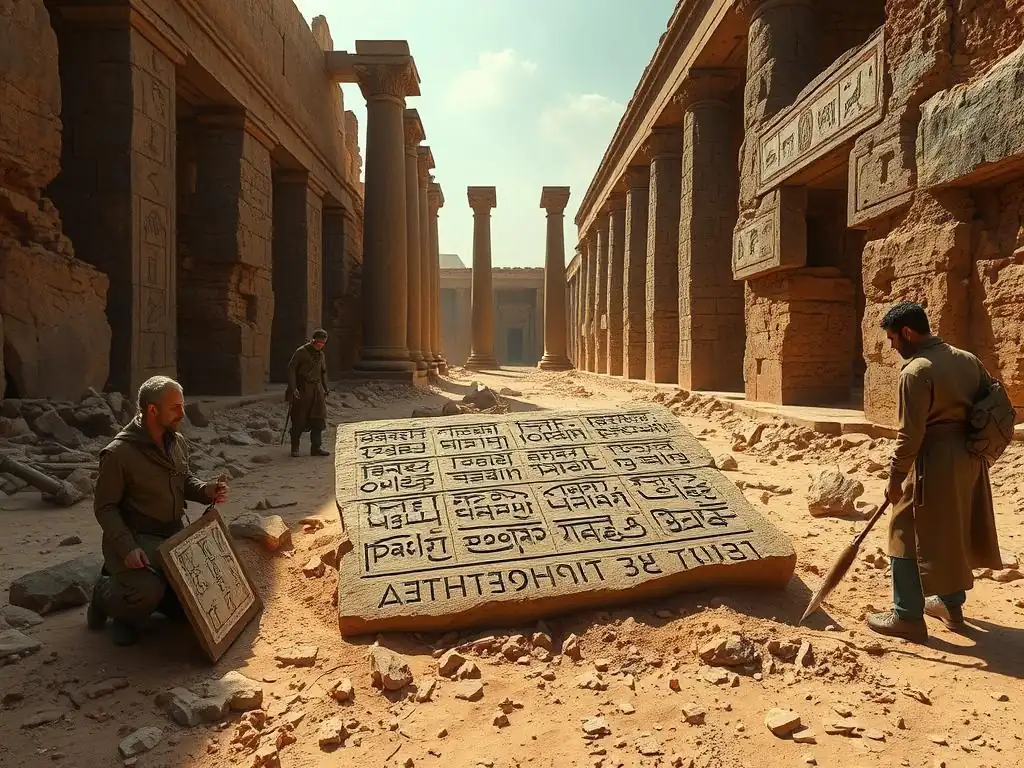
Welcome to ArchaeologyHub.org, your gateway to unraveling the mysteries of the past. Ever wondered how a script could shape an empire and preserve a culture? Dive into our latest exploration of the Ge'ez script and its profound influence on Aksumite Christian literature. Discover the origins, development, and enduring legacy of this ancient writing system, and how it illuminated a civilization. Intrigued? Journey with us as we delve deeper into this fascinating world...
- Introduction to the Ge'ez Script and Aksumite Civilization
- Origins of the Ge'ez Script: Tracing its Ancestry
- Development and Standardization of the Ge'ez Script
- Ge'ez Script and the Rise of Aksumite Christian Literature
- The Ge'ez Script Beyond Aksum: Legacy and Influence
- The Ge'ez Script in Archaeological Context: Discoveries and Insights
- Analyzing Aksumite Literature: A Window into the Past through the Ge'ez Script
- Conclusion: The Enduring Legacy of the Ge'ez Script
-
Frequently Asked Questions
- What are the origins of the Ge'ez script?
- How did the Ge'ez script contribute to Aksumite literature?
- What role did Christianity play in the development of Ge'ez literature?
- Can you describe some examples of Aksumite literature written in Ge'ez?
- What is the significance of studying Ge'ez script and Aksumite literature today?
- Final Reflection: The Enduring Legacy of Ge'ez
- Unearth Ancient Wisdom: Embrace Ge'ez Script Today!
Introduction to the Ge'ez Script and Aksumite Civilization
The Significance of Ge'ez in Understanding Aksumite History
The Ge'ez script stands as an indispensable key to unlocking the mysteries of the ancient Aksumite civilization. It is not merely a writing system but the very medium through which the Aksumite Kingdom recorded its history, administered its vast territories, and, crucially, developed its profound religious traditions. Without the extensive corpus of Ge'ez script Aksumite literature, our understanding of this powerful African empire, which flourished from approximately the 1st to the 7th century CE, would be severely limited, relying mostly on external accounts.
This ancient Ethiopic script preserved vital information on royal decrees, trade agreements, and daily life, but its most enduring legacy lies in its role as the vehicle for Aksumite Christian literature. This body of work, ranging from biblical translations to hagiographies and theological treatises, provides unparalleled insights into the spiritual, social, and political landscape of Aksum, offering a unique window into one of the earliest Christian states in the world.
Aksum: A Center of Trade, Power, and Early Christianity
The Kingdom of Aksum, strategically located in what is now northern Ethiopia and Eritrea, emerged as a dominant power in Northeast Africa and the Arabian Peninsula. Its coastal city of Adulis served as a crucial port on the Red Sea, connecting the Roman Empire, India, and beyond, facilitating a vibrant trade network that included gold, ivory, spices, and frankincense. This economic prosperity fueled Aksum's political and military might, allowing it to control significant territories and influence regional dynamics for centuries.
A pivotal moment in Aksumite history, and for the Ge'ez script, was the conversion to Christianity in the mid-4th century CE under King Ezana. Aksum became one of the first states globally to officially adopt Christianity, pre-dating many European nations. This religious transformation spurred an urgent need for sacred texts, propelling the Ge'ez script into a new era of literary production, laying the groundwork for the rich tradition of Aksumite Christian literature that followed.
Origins of the Ge'ez Script: Tracing its Ancestry
Theories on the Proto-Ge'ez Script and its Connection to South Arabian Scripts
The origins of the Ge'ez script are widely traced to the ancient South Arabian scripts, particularly Sabaean, used in what is now Yemen. Archaeological and epigraphic evidence suggests that early forms of writing in the Horn of Africa, sometimes referred to as Proto-Ge'ez or Old Ethiopic, began appearing around the 5th century BCE. These early inscriptions, found in regions like Eritrea and northern Ethiopia, bear a strong resemblance to the consonantal abjad structure of South Arabian scripts, typically written from right to left.
Scholars debate the exact nature of this connection, with theories ranging from direct adoption and adaptation by South Arabian settlers in the Horn of Africa to indigenous development influenced by cross-cultural contact. Regardless, the shared foundational elements, such as similar letterforms for certain consonants, clearly indicate a close linguistic and scriptural relationship between the early Ethiopic writing and its South Arabian counterparts, marking the initial phase of the Ge'ez script's evolution.
Epigraphic Evidence: Early Inscriptions and the Evolution of Letterforms
Early epigraphic evidence provides crucial insights into the formative stages of the Ge'ez script. Inscriptions from sites such as Yeha in northern Ethiopia, dating to the 5th to 4th centuries BCE, exhibit a purely consonantal script, mirroring the abjad system of Old South Arabian. These early stone carvings show a gradual evolution in letterforms, becoming more distinctly Ethiopic over time, moving away from the more angular South Arabian characters.
By the early Aksumite period (1st-3rd centuries CE), inscriptions on stelae, coins, and other artifacts reveal a further standardization of the script. Notably, the direction of writing began to shift from right-to-left to left-to-right, a significant divergence from its Semitic ancestors. These archaeological findings, such as the numerous dedicatory and commemorative inscriptions unearthed in Aksum and its environs, provide a tangible timeline for observing the morphological development of the Ge'ez script.
From Abjad to Alphabet: The Innovation of Vowel Notation in Ge'ez
The most profound innovation in the development of the Ge'ez script was its transformation from a consonantal abjad to a syllabic alphabet, or abugida. This pivotal change, which occurred roughly between the late 4th and early 5th centuries CE, involved the systematic addition of diacritical marks or slight modifications to the basic consonant shapes to denote the seven different vowel sounds in Ge'ez. This made it unique among Semitic scripts, which typically only represent consonants, leaving vowels to be inferred by the reader.
This revolutionary adaptation made the Ge'ez script far more precise and less ambiguous, immensely facilitating the recording of complex linguistic nuances and, critically, the accurate translation and transcription of religious texts. The adoption of this vocalized system coincided directly with the widespread propagation of Christianity in Aksum, making the newly evolved Ge'ez script an ideal tool for the burgeoning Aksumite Christian literature and the dissemination of the Gospel message.
Development and Standardization of the Ge'ez Script
The Aksumite Period: Ge'ez as the Official Script of the Kingdom
During the zenith of the Aksumite Kingdom, from approximately the 1st to the 7th century CE, the Ge'ez script solidified its position as the official writing system. It was employed across all facets of imperial administration, from royal decrees and legal documents to trade records and diplomatic correspondence. This widespread governmental adoption underscored the script's importance in maintaining the cohesion and operational efficiency of a sprawling empire that stretched across significant parts of Northeast Africa and the Arabian Peninsula.
The standardization of the Ge'ez script during this era was crucial for enabling effective communication and record-keeping throughout the kingdom. This formalization, alongside the shift to a vocalized system, made the Ge'ez script a powerful instrument for cultural and political unity, facilitating the integration of diverse linguistic groups under the Aksumite rule and paving the way for a rich tradition of Aksumite Christian literature.
Royal Inscriptions and the Spread of Ge'ez Literacy
Royal inscriptions played a paramount role in the spread and prominence of Ge'ez literacy during the Aksumite period. Prominent examples include the monumental stelae of King Ezana (c. 325-360 CE) found in Aksum, which often feature trilingual texts in Ge'ez, Greek, and Sabaean. These inscriptions, detailing military victories, public works, and the king's conversion to Christianity, served as powerful statements of imperial authority and religious conviction. Their public display disseminated the Ge'ez script to a broader audience, even if full literacy was primarily confined to the elite and the clergy.
Furthermore, Aksumite coins, starting from the reign of Endubis (c. 270-300 CE), prominently featured Ge'ez script alongside Greek, marking a significant step in the assertion of a distinct Aksumite identity. The consistent use of Ge'ez on coinage and public monuments reinforced its status as the kingdom's official and prestigious script, contributing significantly to its entrenchment and the eventual flourishing of Aksumite Christian literature.
The Transition from Epigraphic Ge'ez to Manuscript Ge'ez
The evolution of the Ge'ez script was not limited to its forms but also extended to its medium. Initially, Ge'ez was primarily an epigraphic script, carved into stone, metal, and pottery. However, with the widespread adoption of Christianity, there was an increasing demand for extensive religious texts, which necessitated a shift towards more portable and voluminous writing materials. This led to the transition from monumental epigraphic Ge'ez to manuscript Ge'ez, typically written on parchment or vellum.
This transition, largely occurring from the 5th century CE onwards, facilitated the creation of complex and lengthy works, including the translation of the entire Bible and numerous other religious treatises that form the core of Aksumite Christian literature. The fluid nature of writing with pen and ink on animal skin also influenced the script's aesthetics, leading to the development of smoother, more rounded letterforms distinct from their rigid, carved predecessors, thus adapting the Ge'ez script for its new literary purpose.
Ge'ez Script and the Rise of Aksumite Christian Literature
The Conversion of Aksum to Christianity and its Impact on Literature
The official conversion of the Aksumite Kingdom to Christianity in the mid-4th century CE under King Ezana marked a watershed moment for the Ge'ez script and the subsequent explosion of Aksumite Christian literature. Prior to this, written Ge'ez served primarily administrative and commemorative functions. With the adoption of a new state religion, there arose an immediate and pressing need for sacred texts—biblical scriptures, liturgical works, theological commentaries, and hagiographies—to be translated and disseminated.
This demand transformed the Ge'ez script into a vibrant vehicle for religious expression and scholarship. The intellectual and spiritual energy unleashed by the conversion spurred a massive translation movement, primarily from Greek and Syriac sources, laying the foundation for a unique and extensive body of religious writings. This period is often considered the golden age of early Ge'ez literary production, profoundly shaping the cultural and religious identity of Ethiopia for centuries to come.
The Role of Ge'ez in Translating the Bible and Other Religious Texts
The most monumental undertaking in the early history of Aksumite Christian literature was the translation of the entire Bible into Ge'ez. This colossal task, traditionally attributed to the "Nine Saints"—missionaries who arrived in Aksum from Syria in the late 5th or early 6th century CE—involved not just linguistic transfer but also cultural adaptation. The Ge'ez Bible, often referred to as the Ethiopic Bible, became one of the earliest and most complete Christian Bibles, predating many European vernacular translations by centuries.
Beyond the Bible, numerous other religious texts were translated into Ge'ez, forming the bedrock of Aksumite Christian literature. These included patristic writings (works by early Church Fathers), apocryphal books, monastic rules, and various liturgical texts necessary for the burgeoning Aksumite Church. The Ge'ez script thus became the sacred language, enabling the local clergy and literate elite to engage directly with Christian doctrine and spiritual traditions, fostering a deep intellectual tradition.
Key Aksumite Christian Texts Written in Ge'ez: The Ethiopian Bible, Physiologus, and the Book of Enoch
The corpus of Aksumite Christian literature preserved in Ge'ez is remarkably rich and diverse. The Ethiopian Bible stands out, not only for its antiquity but also for its unique canon, which includes books considered apocryphal or pseudepigraphical in other Christian traditions, such as the Book of Enoch and the Book of Jubilees. The Ge'ez version of Enoch is particularly significant as it is the only complete textual witness to this ancient Jewish apocalyptic work.
Another important text is the Physiologus, an early Christian allegorical bestiary. Translated into Ge'ez from Greek, this work interprets the natural world through Christian symbolism, providing moral and theological lessons. Its popularity in Aksum demonstrates the intellectual and spiritual engagement of the period with broader Hellenistic Christian thought. These texts, among many others, highlight the Ge'ez script's pivotal role in shaping and preserving a distinctive Aksumite Christian intellectual heritage that profoundly influenced subsequent Ethiopian civilization.
The Ge'ez Script Beyond Aksum: Legacy and Influence
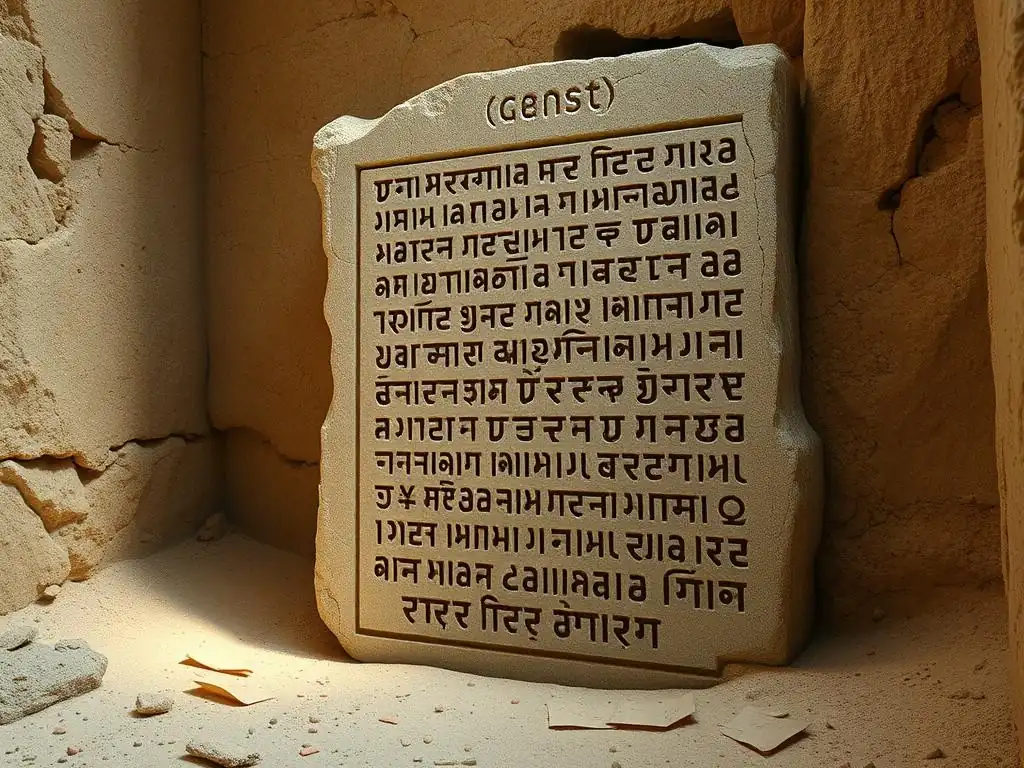
Ge'ez as the Liturgical Language of the Ethiopian Orthodox Tewahedo Church
Even after the decline of the Aksumite Kingdom around the 7th century CE, the Ge'ez script and language did not fade into obscurity. Instead, Ge'ez transitioned into its enduring role as the sacred and liturgical language of the Ethiopian Orthodox Tewahedo Church. Similar to the continued use of Latin in the Roman Catholic Church or Classical Arabic in Islam, Ge'ez serves as the primary language for divine liturgy, hymns, prayers, and religious instruction for millions of adherents worldwide.
This continuous liturgical use has ensured the remarkable preservation of the Ge'ez language and its extensive body of Aksumite Christian literature over more than a millennium. Monasteries and churches across Ethiopia continue to be custodians of thousands of ancient Ge'ez manuscripts, meticulously copied and preserved by generations of scribes. This living tradition underscores the profound spiritual and cultural significance of the Ge'ez script, maintaining a direct link to its Aksumite origins.
The Use of Ge'ez in Medieval Ethiopian Literature and Scholarship
The medieval period in Ethiopia, particularly with the rise of the Solomonic Dynasty from the 13th century onwards, witnessed a remarkable renaissance of Ge'ez literature and scholarship. While Amharic began to emerge as a spoken lingua franca, Ge'ez remained the language of high culture, religious discourse, and historical record-keeping. This era saw the proliferation of new literary genres, significantly expanding the corpus of Ge'ez script Aksumite literature and later Ethiopian writings.
Notable works from this period include extensive hagiographies (the Gadla or "Acts" of saints), royal chronicles detailing the reigns of emperors, legal codes like the Fetha Nagast (Law of the Kings), theological treatises, and philosophical texts. Monastic scriptoria flourished, producing thousands of intricately illuminated manuscripts, many of which are still extant. This continued scholarly and literary output in Ge'ez cemented its status as the bedrock of Ethiopian intellectual and religious identity, building directly upon its Aksumite foundations.
Modern Usage and Preservation Efforts of the Ge'ez Language and Script
In contemporary Ethiopia, while Amharic is the official national language and other regional languages are widely spoken, Ge'ez continues to hold a revered place. It remains the liturgical language of the Ethiopian Orthodox Tewahedo Church, ensuring its daily use in religious services and education within ecclesiastical institutions. Scholars worldwide also continue to study Ge'ez as a classical Semitic language, vital for understanding ancient Ethiopian history, linguistics, and religious studies.
Significant efforts are underway to preserve the vast heritage of Ge'ez script manuscripts. Institutions such as the Hill Museum & Manuscript Library (HMML) in collaboration with Ethiopian partners, are actively engaged in digitizing and cataloging hundreds of thousands of ancient Ge'ez manuscripts from monasteries and churches across Ethiopia. These initiatives are crucial for safeguarding this invaluable cultural patrimony, including the extensive Aksumite Christian literature, making it accessible for future generations of scholars and the global public.
The Ge'ez Script in Archaeological Context: Discoveries and Insights
Archaeological Findings: Ge'ez Inscriptions on Stelae, Coins, and Artifacts
Archaeological excavations in Aksum and surrounding regions have yielded a wealth of Ge'ez inscriptions, providing tangible evidence of the script's widespread use and evolution. The most iconic examples are the massive Aksumite stelae, or obelisks, often bearing inscriptions that commemorate royal achievements and religious dedications. For instance, King Ezana's famous trilingual inscription in Aksum, featuring Ge'ez, Greek, and Sabaean, offers crucial insights into the kingdom's conversion to Christianity and its pre-Christian beliefs.
Furthermore, Aksumite coins, minted from the late 3rd century CE, prominently display Ge'ez script, alongside Greek, indicating a growing emphasis on a distinct Aksumite identity. These numismatic findings provide valuable chronological markers for the development of the Ge'ez script's letterforms. Inscriptions on pottery shards, metalwork, and rock art discovered at sites like Matara and Adulis also feature early Ge'ez, offering glimpses into daily life, trade practices, and local religious expressions, enriching our understanding beyond the formal royal records.
Dating Ge'ez Inscriptions: Methods and Challenges
Dating Ge'ez inscriptions involves a combination of archaeological and epigraphic methods. Archaeological stratification is key: if an inscription is found in a datable layer, its age can be inferred. However, many inscriptions, particularly those on stone, are often found out of their original context, making precise dating challenging. Paleography, the study of ancient writing systems, is crucial; changes in letterforms, writing direction, and the shift from an abjad to an abugida system provide a relative chronology for the Ge'ez script's evolution.
For manuscripts, radiocarbon dating of the parchment or vellum can provide absolute dates, though this is destructive. Comparative analysis with securely dated texts, such as royal inscriptions or coins with known regnal periods, helps to establish a chronological framework for undated Ge'ez script Aksumite literature and other texts. Despite these methods, the precise dating of many early Ge'ez inscriptions remains a subject of ongoing scholarly debate due to limited contextual evidence and the longevity of certain scribal traditions.
What Ge'ez Inscriptions Tell Us About Aksumite Society, Religion, and Governance
Ge'ez inscriptions are invaluable primary sources for reconstructing Aksumite society, religion, and governance. From a societal perspective, royal inscriptions often list the king's lineage and titles, providing insights into social hierarchies and succession. Dedicatory inscriptions on artifacts can reveal names of individuals, professions, and sometimes even glimpses into daily life or funerary practices.
Religiously, the evolution of inscriptions clearly documents the shift from pre-Christian polytheistic beliefs, referencing deities like Astar and Beher, to the profound impact of Christianity under King Ezana. Later inscriptions often detail the construction of churches, the establishment of monasteries, and the veneration of saints, reflecting the deep integration of Christian faith into Aksumite life and its influence on Aksumite Christian literature.
In terms of governance, inscriptions narrate military campaigns, administrative structures, taxation, and trade routes, such as those that describe Aksumite control over Red Sea trade and territorial expansion. The Monumentum Adulitanum, though known from later copies, also details Aksum's imperial reach and economic might, all recorded through the powerful medium of the Ge'ez script.
Analyzing Aksumite Literature: A Window into the Past through the Ge'ez Script
Themes and Motifs in Aksumite Christian Literature
The vast body of Aksumite Christian literature, preserved in the Ge'ez script, explores a rich tapestry of themes and motifs that reflect the religious, social, and political landscape of the era. Prominent themes include the concept of salvation, the virtues of asceticism and monastic life, the glorification of martyrs, and the divine nature of kingship, particularly after the conversion to Christianity. Many texts emphasize the triumph of Christianity over paganism and the establishment of a new, sacred order.
Common motifs found throughout this literature include miraculous interventions, divine prophecies, and the spiritual struggles of saints and hermits. The narratives often draw heavily from biblical stories, reinterpreting them within an Aksumite context. This literary tradition served not only as a means of religious instruction and moral guidance but also as a powerful tool for shaping Aksumite identity, reinforcing the kingdom's unique position as a bastion of early Christianity in Africa.
The Importance of Ge'ez Manuscripts for Reconstructing Aksumite History
Ge'ez manuscripts are paramount for reconstructing the history of Aksum, as many historical events and figures are known primarily through these internal sources. While often infused with hagiographical or propagandistic elements, chronicles, king lists, and hagiographies contain invaluable historical kernels that complement archaeological findings. For instance, the Kebra Nagast (Glory of Kings), though compiled later in the 13th century, incorporates earlier Aksumite traditions that shed light on the kingdom's self-perception, its claim of Solomonic descent, and its unique relationship with ancient Israel.
Without these extensive Ge'ez script documents, much of Aksum's narrative, including details about its rulers, military campaigns, and religious developments, would remain unknown or heavily reliant on external, often biased, accounts. The meticulous study and critical analysis of this Aksumite Christian literature allow scholars to piece together a more comprehensive and nuanced understanding of this pivotal African civilization.
Analyzing the Gadla 'Acts' of Saints: A Case Study
The Gadla literature, meaning "Acts" or "Struggles" in Ge'ez, represents a significant genre within Aksumite Christian literature. These hagiographies recount the lives, miracles, and martyrdoms of Ethiopian saints, particularly the "Nine Saints" who were instrumental in the evangelization of Aksum. Analyzing these texts, despite their often legendary elements, provides profound insights into various aspects of Aksumite society and religion.
For example, the Gadla Abba Pantelewon describes the ascetic life and missionary work of one of the Nine Saints in Aksum, offering a glimpse into early monastic practices and the challenges of spreading Christianity. These narratives illuminate the theological debates prevalent in the Aksumite Church, the establishment of influential monasteries (such as Debre Damo), and the social customs and beliefs of the period. The Gadla texts, written in the Ge'ez script, are not merely religious biographies but crucial primary sources that reflect the spiritual fervor and cultural landscape of the Aksumite era.
Conclusion: The Enduring Legacy of the Ge'ez Script
The Importance of Preserving and Studying Ge'ez for Understanding Aksum and Ethiopia
The Ge'ez script is far more than an ancient writing system; it is a living testament to the intellectual and spiritual achievements of the Aksumite Kingdom and the bedrock of Ethiopian civilization. Its preservation and continued study are critical for a comprehensive understanding of Aksum's rich history, its unique position as an early Christian state, and the development of one of Africa's most enduring literary traditions. The vast corpus of Ge'ez script Aksumite literature provides unparalleled insights into the political, social, and religious life of this influential empire.
Without dedicated efforts to conserve the thousands of extant Ge'ez manuscripts and to promote the study of the language, a crucial part of global human heritage would be at risk of being lost. These texts offer not only historical facts but also profound cultural, theological, and linguistic information, making the Ge'ez script an indispensable tool for future generations of scholars seeking to unravel the complexities of ancient Ethiopia and its enduring legacy.
Future Research Directions in Ge'ez Studies and Aksumite Archaeology
Future research in Ge'ez studies and Aksumite archaeology promises to yield even deeper insights into this fascinating period. One key direction involves more systematic and extensive archaeological excavations focused on identifying new Ge'ez inscriptions in their original contexts, which can provide more precise dating and contextual information for the script's evolution. The application of advanced imaging techniques to decipher faded or damaged inscriptions could also unlock previously inaccessible data.
Furthermore, digital humanities projects are poised to revolutionize Ge'ez studies. Comprehensive digitization, cataloging, and online accessibility of the immense Ge'ez manuscript corpus will open new avenues for comparative linguistic studies, textual criticism, and interdisciplinary research. Combining archaeological findings with philological analysis of Aksumite Christian literature will continue to offer a more holistic understanding of Aksumite society, its interactions, and its profound cultural contributions.
Ge'ez Script and Aksumite Literature: A Critical Analysis
In critical analysis, the Ge'ez script stands as the foundational pillar upon which Aksumite civilization's written record and religious expression were built. Its evolution from a consonantal abjad to a vocalized syllabary was a linguistic innovation that directly facilitated the complex undertaking of translating the Bible and other sacred texts, giving rise to a distinctive body of Aksumite Christian literature. This literature, in turn, served not only as a spiritual guide but also as a historical chronicle, preserving the memory of kings, saints, and societal structures.
The synergy between the Ge'ez script and Aksumite literature is a profound testament to Aksum's intellectual and spiritual achievements. It allowed for the administration of a powerful empire, the flourishing of a unique Christian tradition, and the shaping of an identity that has resonated through Ethiopian history for millennia. The enduring legacy of the Ge'ez script is thus inextricably linked to the rich textual heritage it preserved, offering an unparalleled window into an ancient African civilization.
Frequently Asked Questions
What are the origins of the Ge'ez script?
The Ge'ez script is believed to have evolved from an epigraphic South Arabian script, likely during the pre-Aksumite period. Its earliest forms appear to be consonantal, with vowels later being incorporated, potentially influenced by Greek alphabets.
How did the Ge'ez script contribute to Aksumite literature?
The Ge'ez script became the primary writing system for Aksumite civilization, enabling the creation and preservation of religious texts, royal inscriptions, and other important documents. These texts provide invaluable insights into Aksumite culture, religion, and history.
What role did Christianity play in the development of Ge'ez literature?
The adoption of Christianity as the state religion in Aksum greatly influenced Ge'ez literature. Much of the surviving Aksumite literature consists of translations of biblical texts and theological works, contributing significantly to the development of a unique Aksumite Christian identity.
Can you describe some examples of Aksumite literature written in Ge'ez?
Examples include the Aksumite inscriptions found on stelae and coins, which provide historical accounts of Aksumite rulers and their achievements. Additionally, early translations of the Bible, such as the Ge'ez version of the Old and New Testaments, are crucial literary works.
What is the significance of studying Ge'ez script and Aksumite literature today?
Studying Ge'ez script and Aksumite literature provides critical insights into the history and culture of the Aksumite kingdom, a significant civilization in ancient Africa. It also helps us understand the spread of Christianity in Africa and the development of Ethiopian Orthodox Christianity.
Final Reflection: The Enduring Legacy of Ge'ez
The journey through the origins and development of the Ge'ez script, culminating in its pivotal role in Aksumite Christian literature, reveals a profound truth: language is not merely a tool for communication, but a vessel for culture, faith, and identity. The enduring presence of Ge'ez, even in a modified form, speaks volumes about its resilience and the deep-seated connection it fosters between past and present.
The impact of Ge'ez extends far beyond the ancient kingdom of Aksum. Its influence on Ethiopian and Eritrean culture is undeniable, shaping religious practices, artistic expression, and national identity. The preservation of ancient texts in Ge'ez offers invaluable insights into the early development of Christianity in Africa, a testament to the script's enduring power. Language is the road map of a culture. It tells you where its people come from and where they are going.
- Rita Mae Brown. This quote perfectly encapsulates the significance of Ge'ez, a roadmap guiding us through the rich tapestry of Aksumite civilization and its lasting impact.
As we conclude this exploration of the Ge'ez script and its contributions to Aksumite literature, let us consider its broader implications. How can we, in our own lives, appreciate and preserve the linguistic and cultural heritage that shapes our identities? Let us strive to understand the power of language to connect us to the past, inform the present, and inspire the future, ensuring that the stories encoded within ancient scripts like Ge'ez continue to resonate for generations to come.
Unearth Ancient Wisdom: Embrace Ge'ez Script Today!
Thank you for exploring the fascinating world of the Ge'ez script and its profound impact on Aksumite literature! Now, it's time to take your newfound knowledge further.
Here are a few ways to engage with this ancient language and its historical context:
- Dive Deeper: Start learning the basics of the Ge'ez alphabet! Even understanding a few characters will enrich your understanding of ancient Ethiopian texts.
- Explore digitized manuscripts: Visit online archives of Aksumite texts to see the Ge'ez script in its original context.
- Share your insights: Discuss the significance of Ge'ez with fellow archaeology enthusiasts on social media using #Ge'ezScript.
Ready to decipher the secrets held within the Ge'ez script?