
Griffins, Sphinxes, and Composite Creatures: Mythological Beings in Scythian Artistic Traditions

Welcome to ArchaeologyHub.org, your gateway to unlocking the secrets of the past. Delve into the fascinating world of ancient civilizations and groundbreaking discoveries! Ever wondered about the symbolic power of mythological creatures in ancient cultures? Our detailed exploration of Scythian art mythological creatures reveals a captivating tapestry of griffins, sphinxes, and other composite beings, offering profound insights into their beliefs and artistic traditions. Prepare to embark on a journey through time and uncover the hidden meanings behind these extraordinary artistic expressions. Read on to discover more!
- Introduction: Unveiling the Mythical World of Scythian Art
- Scythian Art and Its Defining Characteristics
- Prominent Mythological Creatures in Scythian Art
- The Role of Mythological Creatures in Scythian Society
- Scythian Art and its Legacy
- Conclusion: The Enduring Allure of Scythian Mythological Art
-
Frequently Asked Questions
- How prominent were mythological creatures in Scythian art?
- What types of mythological creatures are most frequently depicted in Scythian artifacts?
- Did the depiction of mythological creatures in Scythian art influence or reflect other cultures?
- What materials were typically used to create Scythian art featuring mythological creatures?
- What do scholars believe is the significance or meaning behind the Scythian use of mythological creatures in their art?
- Final Reflection: Echoes of Imagination in Scythian Art
- Unearth Your Inner Mythographer!
Introduction: Unveiling the Mythical World of Scythian Art
The Significance of Composite Creatures in Scythian Culture
Composite creatures, such as the formidable griffins and enigmatic sphinxes, held profound significance within Scythian culture, serving as far more than mere decorative motifs. These hybrid beings were central to the Scythian worldview, embodying powerful concepts related to protection, divine authority, and the mastery over both terrestrial and celestial realms. Their pervasive presence on a vast array of artifacts—from elaborate gold plaques adorning clothing and weaponry to intricate horse trappings and ceremonial vessels—underscores their deep integration into daily life, spiritual beliefs, and social hierarchy.
For a nomadic people like the Scythians, whose existence was intimately tied to the vast steppes and the animals inhabiting them, these creatures often represented a synthesis of the most powerful and revered animals, such as the lion, eagle, and stag. They symbolized the untamed forces of nature, the liminal spaces between the human and animal worlds, and perhaps even the shamanistic ability to transcend ordinary reality. This artistic tradition, rich with Scythian art mythological creatures, offers invaluable insights into their complex cosmology and the values they held dear.
ArchaeologyHub.org: Exploring Scythian Art Within the Wider Archaeological Context
ArchaeologyHub.org is dedicated to providing a comprehensive resource for understanding ancient civilizations through their material culture, and the study of Scythian art mythological creatures fits seamlessly into this mission. By examining these unique artistic expressions, we gain a deeper appreciation for the Scythians' ingenuity, their sophisticated metallurgy, and their profound engagement with the supernatural. This exploration not only illuminates the Scythian civilization itself but also connects it to broader archaeological narratives of cultural exchange and artistic evolution across Eurasia.
Through detailed analyses of artifact profiles and interpretive frameworks, ArchaeologyHub.org aims to showcase how the distinctive "Animal Style" of Scythian art, heavily featuring these composite beings, serves as a crucial lens for understanding nomadic life and belief systems. It allows us to trace artistic influences, identify indigenous innovations, and place Scythian artistic traditions within the wider tapestry of ancient artistic expressions, from the Near East to the Mediterranean.
Scythian Art and Its Defining Characteristics
Animal Style Art: The Foundation of Scythian Artistic Expression
The defining characteristic of Scythian artistic expression is undoubtedly its "Animal Style," a vibrant and dynamic tradition that permeated nearly every aspect of their material culture. This style is characterized by its emphasis on stylized animal forms, often depicted in contorted or highly kinetic poses, suggesting movement, power, and often conflict. Common motifs include stags with exaggerated antlers, predatory felines like panthers and lions, and powerful birds of prey, all rendered with a remarkable sense of muscular tension and vitality.
This artistic approach often involved a distinctive method of rendering animal anatomy, where individual body parts might be abstracted or emphasized to convey a sense of strength or speed. For instance, the musculature of a deer's leg might be highly defined, or the curve of a bird's beak exaggerated. This focus on zoomorphic forms laid the groundwork for the creation of Scythian art mythological creatures, as indigenous animals were frequently combined to form hybrid beings that encapsulated even greater symbolic power.
Influences on Scythian Art: Greek, Persian, and Central Asian Interactions
Scythian art, while possessing a distinct indigenous character, was also a remarkable synthesis of various external influences, reflecting the Scythians' extensive trade networks and interactions across the vast Eurasian steppe. Greek influence is particularly evident in the Black Sea region, where Scythian elites had direct contact with Greek colonies.
This led to the adoption of certain forms and mythological figures, such as the sphinx, which were then reinterpreted through the lens of Scythian Animal Style. A prime example is the exquisite gold comb from the Solokha kurgan (circa 4th century BCE), which depicts a battle scene with clear Greek stylistic elements integrated with Scythian dynamism.
Similarly, Achaemenid Persian art, with its emphasis on royal power and complex animal motifs, also left its mark on Scythian artistic traditions. Motifs like the "master of animals" or specific animal combat scenes found in Persian art were sometimes adapted by Scythian artisans. Furthermore, continuous interaction with other Central Asian and Steppe cultures ensured a mutual exchange of artistic ideas and motifs, contributing to a broader "steppe art" continuum. The Scythians, however, were masters of adaptation, never simply copying but always transforming these external influences into something uniquely their own, resulting in their distinctive Scythian art mythological creatures.
Prominent Mythological Creatures in Scythian Art
The Griffin: A Symbol of Power and Protection in Scythian Culture
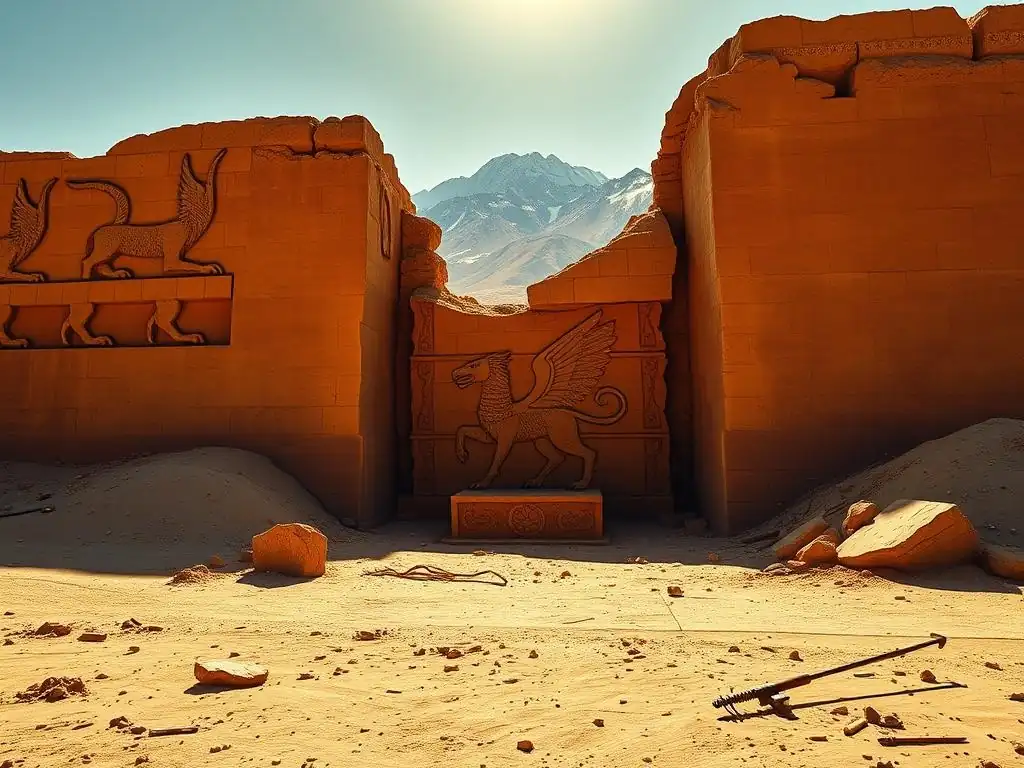
The griffin stands out as one of the most frequently depicted and symbolically potent Scythian art mythological creatures. Typically rendered with the body of a lion and the head and wings of an eagle, this formidable hybrid embodied a unique combination of terrestrial strength and aerial dominance. Across Scythian territories, the griffin was widely understood as a guardian of treasures, a formidable protector, and a symbol of swift, overwhelming power. Its prevalence on weaponry, horse trappings, and ceremonial objects suggests its deep integration into the Scythian belief system regarding warfare, wealth, and the afterlife.
The griffin’s dual nature, combining the king of beasts with the king of birds, made it an ideal emblem for a nomadic warrior society that revered both the strength of land animals and the freedom of winged creatures. It often appears in dynamic poses, either attacking or in watchful repose, further emphasizing its role as a potent force. The consistent presence of this creature across various Scythian sites underscores its universal significance within their culture.
Griffin Depictions: Examining Variations in Scythian Artistic Representations
Griffin depictions in Scythian art exhibit remarkable variations, reflecting regional styles, chronological shifts, and the specific materials used. In the Pontic Steppe, particularly in richly furnished kurgans like Kul-Oba, griffins often appear on intricate gold plaques and vessels, sometimes with highly refined details and a more naturalistic approach, possibly influenced by Greek craftsmanship. For example, the gold plaques from the Kul-Oba kurgan (4th century BCE) feature griffins with distinct facial features and powerful, defined musculature.
Further east, in the Siberian Scythian and Pazyryk cultures, griffins, while still recognizable, tend to be more stylized and abstract. The felt hangings and horse masks from the Pazyryk burials (5th-3rd century BCE) showcase griffins with exaggerated beaks, prominent crests, and simplified body forms, often integrated into complex, swirling compositions characteristic of the more eastern Animal Style. These variations highlight the diverse interpretations and artistic adaptations of this iconic Scythian art mythological creature across the vast Scythian domain.
The Griffin's Role in Scythian Mythology and Beliefs
The griffin’s pervasive presence in Scythian art is inextricably linked to their mythology and spiritual beliefs, particularly its association with gold and guardianship. Ancient Greek accounts, such as those by Herodotus, describe griffins as guardians of gold in the northern lands, a narrative that aligns remarkably with the Scythians' own extensive gold artifacts and rich burial practices. It is plausible that the Scythians adopted or shared this belief, viewing the griffin as a protector of their immense wealth, both material and spiritual.
Beyond its role as a treasure guardian, the griffin likely held deeper cosmological significance. It may have been seen as a psychopomp, guiding souls in the afterlife, or as a manifestation of divine power that could be harnessed by shamans or warrior-chiefs. Its depiction alongside other powerful animals or in scenes of combat suggests its role in maintaining cosmic order or representing the struggle between opposing forces, making it a multifaceted symbol within the Scythian spiritual landscape.
The Sphinx: Wisdom and Guardianship in Scythian Imagery
The sphinx, another prominent Scythian art mythological creature, typically features a human head (often female) on the body of a lion. While its origins lie in ancient Egypt and the Near East, later adopted and reinterpreted by the Greeks, the Scythians integrated this powerful figure into their own artistic repertoire, imbuing it with unique characteristics and symbolism. Its presence suggests a fascination with foreign motifs and a capacity for cultural appropriation and transformation.
In Scythian art, the sphinx often appears in a more stylized and dynamic form than its classical counterparts, reflecting the prevailing Animal Style. Its role likely extended beyond mere exotic decoration, embodying concepts of wisdom, guardianship, and perhaps even a connection to the divine feminine or ancestral spirits. Its appearance on personal ornaments and ceremonial items underscores its importance as a protective emblem.
Scythian Sphinxes: Analyzing Unique Characteristics and Interpretations
Scythian sphinxes, while clearly derived from foreign prototypes, developed unique characteristics that distinguished them within the broader Scythian Animal Style. Unlike the often static and monumental Egyptian sphinxes or the more serene Greek versions, Scythian sphinxes frequently exhibit a more active, almost predatory stance, aligning with the dynamism of other Scythian animal depictions. Their facial features can sometimes be more stylized, with exaggerated eyes or mouths, and they are often incorporated into complex compositions alongside other animals.
Examples include gold plaques found in various Black Sea region kurgans, where sphinxes might be depicted in profile, sometimes with elaborate hairstyles or headgear. Their presence in burial contexts suggests a role as guardians of the deceased or as symbols facilitating the journey to the afterlife. The adaptation of the sphinx motif demonstrates the Scythians' ability to absorb foreign iconography and reinterpret it to fit their own aesthetic and symbolic frameworks, making it a distinct Scythian art mythological creature.
The Sphinx as a Cultural Borrowing and Adaptation
The sphinx serves as a prime example of cultural borrowing and adaptation within Scythian art. The Scythians, through their extensive contacts with neighboring civilizations, particularly the Greeks in the Pontic Steppe, encountered and adopted this powerful mythological figure. However, rather than simply replicating foreign designs, Scythian artisans actively reinterpreted the sphinx, integrating it seamlessly into their indigenous Animal Style. This process involved stylizing its form, adapting its proportions, and sometimes combining it with elements unique to Scythian iconography.
This adaptation speaks volumes about the Scythians' cultural dynamism and their ability to synthesize diverse artistic traditions into a coherent and distinct aesthetic. The transformed sphinx became a new Scythian art mythological creature, reflecting not only external influences but also the unique artistic vision and symbolic needs of the Scythian people, demonstrating their openness to new ideas while maintaining a strong cultural identity.
Other Composite Creatures: Exploring Diverse Mythological Hybrids
While griffins and sphinxes are the most recognizable Scythian art mythological creatures, the Scythian artistic tradition boasts a rich array of other, less common, yet equally fascinating mythological hybrids. These diverse composite beings further illustrate the Scythians' imaginative capacity and their complex understanding of the natural and supernatural worlds. Their appearance on various artifacts suggests a nuanced symbolic language that extended beyond the most prominent figures.
These additional hybrids often represent a creative fusion of different animal characteristics, sometimes blending predator and prey, or combining terrestrial creatures with avian features. Their existence points to a sophisticated mythological framework where the boundaries between species were fluid, and where the most powerful attributes of various animals could be combined to create entities of extraordinary symbolic potency.
Winged Horses and Antlered Felines: Examples of Less Common Composite Creatures in Scythian Art
Among the fascinating, though less ubiquitous, Scythian art mythological creatures are winged horses and antlered felines. Winged horses, reminiscent of the Greek Pegasus but often rendered in the distinctive Scythian Animal Style, appear on some horse trappings and decorative plaques. These creatures likely symbolized speed, transcendence, and a connection to the heavens, fitting for a nomadic people who relied heavily on horses for their mobility and warfare. Their presence on horse gear might have been intended to imbue the actual horses with supernatural swiftness or protection.
Even more uniquely Scythian are the antlered felines, such as panthers or lions adorned with the antlers of a stag or deer. This striking combination of predator and prey is particularly intriguing. Examples can be found on gold plaques and carved wooden artifacts from Siberian kurgans, such as the famous stag with bird-headed antlers from the Pazyryk burials. This hybrid may symbolize the cyclical nature of life and death, the integration of opposing forces, or perhaps the shamanistic ability to bridge different realms of existence, making it a profound Scythian art mythological creature.
Symbolism and Meanings Behind Other Scythian Hybrid Figures
The symbolism behind these diverse Scythian hybrid figures often revolves around concepts of transformation, power over nature, and guardianship of the spiritual realm. The blending of animal attributes suggests a worldview where physical forms were mutable and where the essence of different creatures could be combined to create entities possessing combined strengths. For instance, the antlered feline might represent a harmonious balance between the ferocity of a predator and the regenerative power associated with deer antlers.
Many of these Scythian art mythological creatures likely served as protective amulets or symbols of high status, reflecting the wearer's connection to powerful spirits or their ability to navigate the complex spiritual landscape. They also reinforce the deep connection between Scythian society and the natural world, where animals were not just resources but also potent symbols and manifestations of divine or supernatural forces.
The Role of Mythological Creatures in Scythian Society
Religious and Ritualistic Significance of Mythological Art
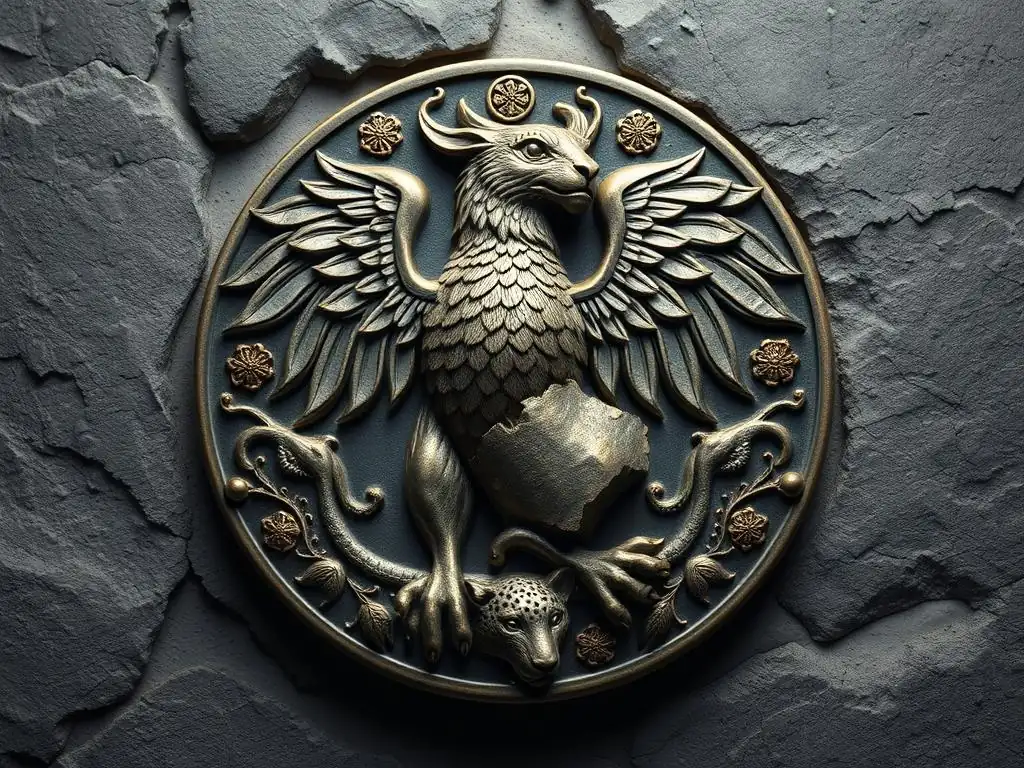
The ubiquitous presence of Scythian art mythological creatures on artifacts suggests their profound religious and ritualistic significance within Scythian society. These figures were not merely aesthetic embellishments but integral components of their spiritual practices and worldview. Their depiction on burial goods, such as the elaborate felt hangings and wooden carvings from the Pazyryk kurgans, strongly indicates a role in funerary rituals and beliefs about the afterlife. They may have been seen as guides or protectors for the deceased on their journey to the spirit world.
Furthermore, the recurrence of these creatures on shamanistic paraphernalia, such as drum handles or ritual headwear, points to their use in ceremonies aimed at communicating with the supernatural. Shamans, who often mediated between the human and spirit realms, might have used the imagery of powerful composite beings to embody their own transformative abilities or to invoke the power of animal spirits. This deep integration into ritual life underscores that Scythian art mythological creatures were active participants in their religious landscape.
Beyond their religious implications, Scythian art mythological creatures served as potent symbols of status and authority within the highly stratified Scythian society. The most elaborate and finely crafted objects adorned with these composite beings were typically found in the burials of elites, including warrior-chiefs and powerful women. For instance, the gold plaques and weaponry from the Royal Scythian kurgans of the Black Sea region, such as the famous Melitopol kurgan, are replete with griffins, panthers, and other zoomorphic motifs.
Possession of such art not only demonstrated immense wealth, due to the precious materials like gold and silver used, but also signified the owner's connection to supernatural power and protection. A chieftain adorned with a golden griffin plaque on his shield or helmet would project an image of formidable strength and divine favor, reinforcing his leadership. Thus, Scythian art mythological creatures were fundamental to the visual language of power, legitimizing the elite and distinguishing them from common members of society.
Scythian Art, Mythological Creatures, and Narrative Storytelling
While the Scythians left no written records, their rich artistic tradition, particularly the consistent depiction of Scythian art mythological creatures, strongly suggests a vibrant tradition of oral narrative storytelling. These creatures likely populated a complex mythology, acting as protagonists, antagonists, or symbolic representations within their epic tales and legends. The dynamic poses and interactions often depicted in their "Animal Style" art, such as combat scenes between animals or composite beings, might be visual fragments of these unrecorded narratives.
For example, a gold plaque showing a griffin attacking a stag could represent a specific myth about cosmic balance, the triumph of order over chaos, or a heroic feat. Although the precise stories are lost to us, the pervasive and consistent iconography indicates a shared understanding of these figures' roles in their worldview. These mythological creatures served as powerful visual cues, evoking stories and beliefs that were central to Scythian identity and collective memory.
Scythian Art and its Legacy
The Endurance of Scythian Artistic Traditions: Influence on Sarmatian and Hunnic Cultures
The artistic traditions of the Scythians, particularly their distinctive Animal Style and the prominence of Scythian art mythological creatures, did not vanish with their decline but endured and profoundly influenced subsequent nomadic cultures across Eurasia. The Sarmatians, who emerged as a dominant force in the steppes after the Scythians, adopted and evolved the Animal Style. Sarmatian art often features an even greater emphasis on polychromy, intricate patterns, and a continuation of zoomorphic and composite creature motifs, albeit with their own stylistic innovations. Examples include elaborate Sarmatian gold plaques featuring a more curvilinear and abstract rendering of animals.
Further to the east, and later impacting Europe, the Hunnic cultures also carried forward elements of this nomadic artistic heritage. As the Huns migrated westward, they disseminated variations of the Animal Style, influencing later Germanic and Slavic art forms. The widespread adoption and transformation of these motifs, including composite creatures, demonstrate the enduring power and adaptability of Scythian artistic innovations, leaving a lasting imprint on the art of the steppe and beyond.
Preserving Scythian Art: Archaeological Discoveries and Ongoing Research
The preservation and understanding of Scythian art, including its rich array of Scythian art mythological creatures, owe a tremendous debt to dedicated archaeological discoveries and ongoing research. The remarkably well-preserved artifacts from the frozen kurgans of Siberia, such as those at Pazyryk in the Altai Mountains, have provided unparalleled insights into Scythian material culture, including intricate felt hangings, wooden carvings, and leather objects adorned with composite creatures. These discoveries, often yielding organic materials rarely preserved elsewhere, have revolutionized our understanding of Scythian craftsmanship and artistry.
Beyond these sensational finds, countless other kurgans across the vast Eurasian steppe continue to be excavated, revealing new examples of Scythian art and expanding our knowledge of regional variations and chronological developments. Contemporary research employs advanced scientific techniques, such as radiocarbon dating, DNA analysis of human and animal remains, and material analysis of metals and pigments, to gain deeper insights into provenience, manufacturing techniques, and cultural interactions. This ongoing work is crucial for both preserving these invaluable cultural heritage items and for continually refining our understanding of Scythian art mythological creatures and their significance.
Conclusion: The Enduring Allure of Scythian Mythological Art
Summarizing the Importance of Mythological Creatures in Understanding Scythian Culture
The study of griffins, sphinxes, and other composite creatures in Scythian art is far more than an exercise in art history; it is a crucial gateway to understanding the very essence of Scythian culture. These Scythian art mythological creatures were not mere decorative elements but powerful symbols deeply embedded in their religious beliefs, social hierarchy, and narrative traditions. They represent the Scythians' complex worldview, their reverence for animals, and their unique ability to synthesize foreign influences with indigenous artistic expressions to create a distinct and compelling visual language.
From their role as protectors and guardians to their significance as emblems of status and authority, these hybrid beings illuminate the Scythians' spiritual landscape, their nomadic lifestyle, and their interactions with the natural and supernatural worlds. Their consistent presence across diverse artifacts underscores their central importance in shaping Scythian identity and providing a profound insight into a civilization that left no written records.
Further Research and Exploration of Scythian Art and Mythology
Despite significant archaeological discoveries, the world of Scythian art and mythology remains a fertile ground for further research and exploration. Continued archaeological investigations, particularly in less-explored regions of the steppe, promise to uncover new artifacts and provide additional contexts for understanding Scythian art mythological creatures. Advances in analytical techniques will allow for even more precise dating, material characterization, and insights into artistic production.
Future research could also delve deeper into comparative mythology, examining how Scythian mythological creatures relate to similar figures in neighboring cultures and how these shared motifs evolved across Eurasia. The ongoing digital documentation and analysis of existing collections will also make Scythian art more accessible to a global audience, fostering a deeper appreciation for this remarkable ancient civilization and its enduring artistic legacy.
Frequently Asked Questions
How prominent were mythological creatures in Scythian art?
Mythological creatures were extremely prominent in Scythian art. They served as powerful symbols representing beliefs, status, and connections to the spiritual realm.
What types of mythological creatures are most frequently depicted in Scythian artifacts?
Griffins and sphinxes are among the most frequently depicted mythological creatures. Other composite creatures, often blending features of various animals, are also common, demonstrating complex symbolism.
Did the depiction of mythological creatures in Scythian art influence or reflect other cultures?
Yes, there's evidence of influence from other cultures, particularly those of ancient Greece and Persia. However, the Scythians adapted these figures to their own unique artistic style and belief system.
What materials were typically used to create Scythian art featuring mythological creatures?
Scythian art featuring these creatures was often crafted from gold, bronze, and iron. These materials were used to create jewelry, weaponry, and decorative elements for clothing and horse harnesses, highlighting social status.
What do scholars believe is the significance or meaning behind the Scythian use of mythological creatures in their art?
Scholars interpret these creatures as representing power, protection, and connections to the divine. They also likely played a role in narrative storytelling and reinforcing Scythian identity.
Final Reflection: Echoes of Imagination in Scythian Art
The intricate tapestry of Scythian art, woven with threads of griffins, sphinxes, and other composite creatures, speaks volumes about a culture deeply connected to its mythology. These fantastical beings, far from being mere decorations, served as potent symbols of power, protection, and the Scythian worldview. Their enduring presence in artifacts unearthed centuries later underscores the timeless appeal of these narratives and their continued relevance in understanding ancient cultures.
The enduring influence of these mythological creatures extends beyond the archaeological record. They remind us of the human capacity for imagination and the power of art to transcend time and cultural boundaries. The Scythians, through their art, gifted us a glimpse into their spiritual beliefs and their relationship with the natural world. Myth is the secret opening through which the inexhaustible energies of the cosmos pour into human cultural manifestation.
- Joseph Campbell. This quote perfectly encapsulates the profound impact of these mythical creatures on Scythian society and their lasting legacy on our understanding of their world.
As we reflect on the legacy of Scythian art and its captivating mythological creatures, let us consider the power of storytelling and symbolism in our own lives. What narratives do we create, and what symbols do we embrace to define our own worldviews? Embrace the spirit of the Scythians: let your imagination soar, and let your creations reflect the depth and richness of your own inner landscape.
Unearth Your Inner Mythographer!
Thank you for delving into the captivating world of Scythian art and their mythological creatures. We hope you enjoyed exploring the rich symbolism and artistic traditions. Ready to take your fascination further?
Here's how you can continue your journey:
- Research a specific griffin or sphinx motif found in Scythian art and share your findings with a local art history group.
- Explore the representation of composite creatures in other ancient cultures (e.g., Egypt, Greece) and compare them to Scythian examples.
- Create your own composite creature inspired by Scythian art and share its backstory on social media with #ArchaeologyHubMyth.
Which Scythian-inspired creature will you bring to life first?