
Lydian Coinage: Archaeological Evidence for the Invention and Spread of Minted Money from Sardis


Welcome to ArchaeologyHub.org, your gateway to the fascinating world of the past!
Ever wonder how money as we know it truly began? Delve into the groundbreaking archaeological evidence surrounding the invention and spread of minted money, focusing on the pivotal role of Lydian coins and the iconic Sardis minting process. Explore this regional overview and discover the secrets these ancient artifacts reveal about the rise of economies and civilizations. Intrigued? Keep reading to unlock the full story!
- Introduction to Lydian Coinage and the Sardis Mint
- The Archaeological Context of Early Lydian Coins at Sardis
- The Invention of Minting: A Lydian Innovation
- Iconography and Symbolism on Lydian Coins
- The Spread of Lydian Coinage and its Impact
- Lydian Coinage as a Tool for Economic and Political Power
- The Legacy of Lydian Minting: Its Influence on Subsequent Coinage Systems
- Conclusion: Lydian Coins, Sardis, and the Dawn of Monetary History
- References and Further Reading
-
Frequently Asked Questions
- What archaeological evidence supports the claim that Lydian coins were invented in Sardis?
- How did Lydian coins contribute to the development of trade and commerce in the ancient world?
- What materials were typically used in the minting of Lydian coins, and how can these materials help determine their age?
- How has ArchaeologyHub.org contributed to our understanding of Lydian coinage and the Sardis mint?
- What were the typical designs or symbols found on Lydian coins, and what might these symbols represent?
- Final Reflection: The Enduring Legacy of Sardis' First Coins
- Unearth Your Inner Explorer: Connect with Ancient Worlds!
Introduction to Lydian Coinage and the Sardis Mint
The Significance of Lydian Coins in Archaeological Studies
Lydian coinage represents a pivotal innovation in human history, marking the transition from commodity-based exchange to a standardized, universally accepted form of money. Archaeological studies of these early Lydian coins provide invaluable insights into the economic, political, and social structures of the ancient Near East, particularly the Kingdom of Lydia. The consistent discovery of these artifacts in specific stratigraphic contexts allows researchers to trace the emergence of monetary systems, understand early trade networks, and reconstruct the economic policies of powerful Lydian rulers like Alyattes and Croesus.
The unique composition of early Lydian coins, primarily electrum, offers a tangible link to the geological resources of the region and the technological capabilities of the Lydian civilization. Furthermore, the iconography imprinted on these pieces acts as a historical ledger, reflecting royal power, religious beliefs, and cultural identity. Studying the distribution patterns of Lydian coins Sardis minting reveals the extent of Lydian influence and their role in facilitating inter-regional commerce, making them indispensable artifacts for understanding the origins of global finance.
Sardis: Unearthing the Cradle of Coinage
Sardis, the ancient capital of Lydia, stands as a monumental archaeological site, uniquely positioned at the confluence of trade routes and natural resources, notably the gold-bearing Pactolus River. Extensive archaeological excavations at Sardis have provided compelling evidence that this city was indeed the birthplace of minted coinage, a revolutionary concept that fundamentally reshaped economic transactions. The systematic unearthing of workshops, furnaces, and coin hoards within the city's ancient layers paints a vivid picture of the early minting operations.
The sustained archaeological efforts by institutions like Harvard and Cornell Universities have brought to light a wealth of material culture from Sardis, including the earliest known examples of Lydian coins. These findings, often discovered in well-defined stratigraphic contexts, corroborate historical accounts and provide tangible proof of the Lydian innovation. The preservation of the ancient city's infrastructure, from its defensive walls to its industrial zones, allows archaeologists to reconstruct the environment in which the world's first standardized currency was conceived and produced, solidifying Sardis's reputation as the epicenter of early monetary history.
The Archaeological Context of Early Lydian Coins at Sardis
Excavation Sites and Stratigraphic Layers Yielding Lydian Coin Finds
The most significant archaeological discoveries of early Lydian coins have concentrated within the ancient city of Sardis, particularly in areas associated with its industrial and religious centers. Key excavation sites include the Artemision (Temple of Artemis) precinct and the Pactolus North area, which lies close to the gold-bearing Pactolus River. At the Artemision, a crucial find was the "Artemision Deposit," a cache of electrum coins and other artifacts found beneath the foundations of the later temple. This deposit, sealed by the temple's construction, provided a remarkably secure chronological anchor for some of the earliest Lydian coins.
Further discoveries have been made in the Lydian levels of the Pactolus North sector, revealing evidence of metalworking activities, including crucible fragments and touchstones, in close proximity to coin finds. The stratigraphic layers yielding these early Lydian coins are typically identified as belonging to the late 7th and early 6th centuries BCE.
These layers often show clear distinctions from underlying Phrygian-era deposits and overlying Persian-era structures, allowing archaeologists to precisely date the introduction and initial spread of Sardis minting. The meticulous recording of these contexts, including associated pottery and architectural phases, is crucial for establishing the chronology of the world's first standardized currency.
Dating the Earliest Lydian Coins: Challenges and Methods
Dating the earliest Lydian coins presents inherent challenges due to the lack of contemporary written records explicitly detailing their initial minting. Archaeologists primarily rely on stratigraphic analysis, numismatic typology, and associated finds for chronological placement. The "Artemision Deposit" at Sardis, for instance, contained a mix of electrum coins, lumps of electrum, and small gold objects, all sealed within a foundation deposit that predates the construction of the later Ionic temple. Based on the architectural style and associated pottery, this deposit is securely dated to around 600 BCE, providing a terminus ante quem for the coins within it.
Beyond sealed deposits, the relative dating of Lydian coins often involves examining their wear patterns, die links, and stylistic evolution. Early electrum coins, with their simple designs, are distinguished from later, more refined issues. Scientific methods, such as neutron activation analysis (NAA) or X-ray fluorescence (XRF), are employed to determine the precise composition of the electrum, which varies depending on the source of the gold and silver. While not direct dating methods, these analyses can help group coins from specific periods or sources, contributing to a more robust chronological framework for Lydian coins from the Sardis minting operations.
The Invention of Minting: A Lydian Innovation
Examining the Technology of Early Coin Production in Sardis
The invention of minted coinage in Lydia, specifically at Sardis, was a technological leap rooted in advanced metallurgical knowledge. Early Lydian coin production involved a relatively simple yet effective process: a small globule of electrum, often weighing between 0.15 and 17 grams, was placed on an engraved die (the anvil die). A second, smaller punch die, also engraved, was then placed on top of the globule, and struck with a hammer.
This forceful impact simultaneously flattened the metal and imprinted designs on both sides. The earliest Lydian coins often bore a single design, typically the forepart of a lion, on one side, with a simple incuse punch mark on the reverse.
Archaeological excavations at Sardis have uncovered various tools and remnants associated with this early minting technology. Finds include stone touchstones used to test the purity of electrum, small furnaces for melting and casting metal, and numerous coin blanks (planchets) in various stages of preparation.
While specific dies themselves are rare finds due to their value and reusability, the distinctive incuse marks on the reverse of early Lydian coins often show variations from different punch dies, providing indirect evidence of the tools used in the Sardis minting process. This localized, controlled production was key to ensuring the standardization and credibility of the new currency.
Electrum Coinage: The Composition and Characteristics of Early Lydian Coins
The earliest Lydian coins were made from electrum, a naturally occurring alloy of gold and silver found in the Pactolus River. The natural composition of electrum from the Sardis region typically contains approximately 70-80% gold and 20-30% silver, along with trace amounts of copper and other elements. This variability in natural electrum meant that the intrinsic value of early Lydian coins could fluctuate slightly, a challenge that later led to the development of bimetallic coinage (pure gold and pure silver) under King Croesus.
Characteristics of these early electrum Lydian coins include their often irregular shapes, a result of the hammering process, and a somewhat crude artistic execution compared to later Greek coinage. They were produced in a wide range of denominations, from tiny fractions (hemitetartemoria, weighing less than 0.2 grams) to large staters (weighing around 14-17 grams), reflecting a sophisticated understanding of fractional currency for various transaction sizes. The most iconic early design featured the head of a lion, symbolizing royal power, a motif that would persist and evolve on later Lydian coins, firmly linking them to their Sardis minting origin.
Pre-Coinage Systems: Bullion, Hacksilber, and Early Forms of Exchange
Before the advent of Lydian coinage, various forms of exchange prevailed throughout the ancient Near East, relying primarily on commodity money and weighed precious metals. Bullion, in the form of unworked gold and silver ingots, rings, or spirals, served as a primary medium for large-scale transactions. The value of these metals was determined by their weight and purity, often requiring scales and touchstones for each transaction, a time-consuming and somewhat cumbersome process.
Another common pre-coinage system was the use of hacksilber, or cut silver. This involved chopping up silver objects, such as jewelry or vessels, into smaller, measurable fragments. Archaeological hoards from sites across the Near East, including those predating Lydian influence, frequently contain such fragments, alongside scales and weights. These systems, while functional, lacked the standardization and governmental guarantee of value that minted Lydian coins provided. The Lydian innovation thus addressed the inefficiencies of these earlier methods, streamlining trade and fostering economic growth by introducing a reliable, verifiable unit of exchange from the Sardis mint.
Iconography and Symbolism on Lydian Coins
Royal Lion Motifs and Their Significance
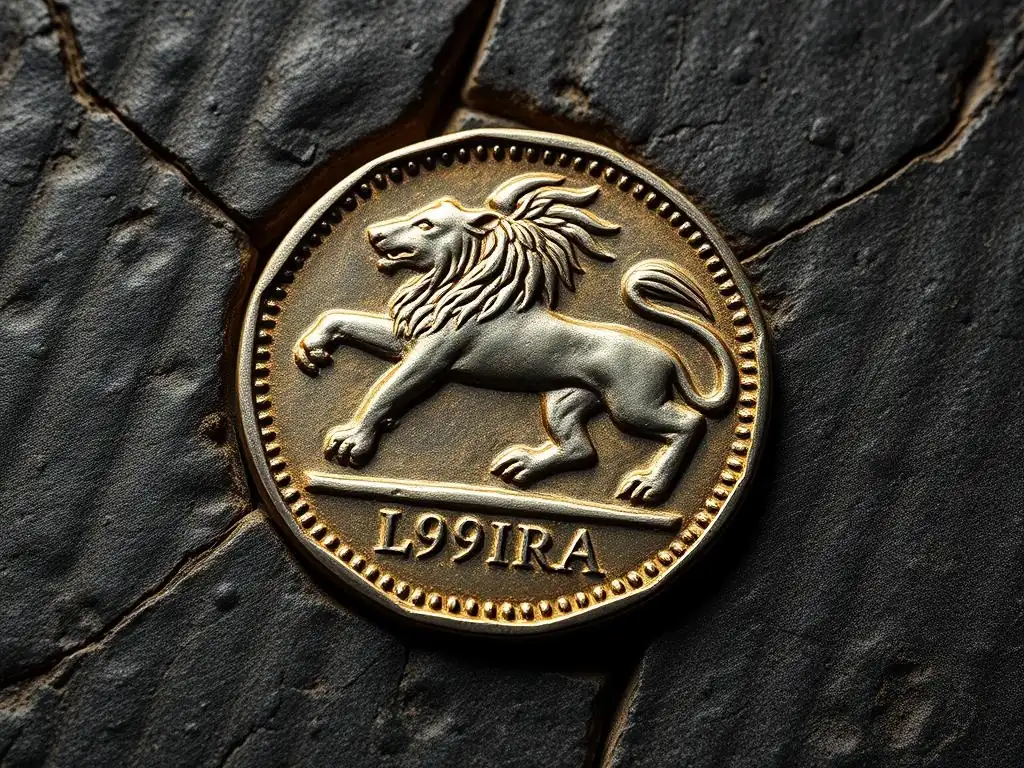
The most prominent and enduring motif on early Lydian coins is the forepart of a lion, often depicted roaring or with a powerful, muscular appearance. This iconography is widely interpreted as a direct symbol of Lydian royal power and authority.
The lion was a traditional emblem of strength, ferocity, and kingship in the ancient Near East, and its prominent placement on the newly invented currency served to legitimize the state's role in guaranteeing the coin's value. The consistent use of this motif across various denominations of Lydian coins from the Sardis mint underscores the centralized control over their production and issuance.
As Lydian coinage evolved, particularly under King Croesus, the lion motif was often paired with a bull. This "lion and bull" design, typically with the lion facing right and the bull left, is thought to represent the opposing forces of strength and fertility, or perhaps a symbolic union of two powerful deities or aspects of the Lydian kingdom.
The pairing may also allude to the Lydian conquest of regions associated with bull symbolism. The deliberate choice of such powerful animals on these early Lydian coins reinforced the message of a strong, prosperous kingdom whose currency was backed by its formidable rulers.
Other Symbolic Representations on Lydian Coins
While the lion and the lion-and-bull motifs dominate Lydian coinage, particularly the electrum and early gold/silver issues, some variations and less common symbols also appear. These include images of fantastic beasts, such as griffins or winged creatures, which might reflect mythological beliefs or specific regional associations within the Lydian realm. The diversity, though limited compared to later Greek coinage, provides glimpses into the broader symbolic landscape of ancient Lydia.
Additionally, the reverse of early Lydian coins often features simple incuse punches, which gradually evolved from irregular marks to more structured, geometric shapes, such as squares or rectangles, sometimes with internal patterns. While not explicitly symbolic in the same way as the obverse imagery, these incuse marks are crucial for numismatic study, as their variations can help identify specific minting periods or even individual die cutters. The evolution of these reverse marks on Lydian coins from Sardis demonstrates a gradual refinement of the minting process and an increasing focus on standardization.
Evolution of Coin Iconography: Reflecting Political and Economic Changes
The iconography on Lydian coins underwent a significant transformation, reflecting key political and economic shifts within the kingdom. The transition from electrum coinage, with its variable intrinsic value, to the bimetallic system of pure gold and silver coinage under King Croesus (circa 560-546 BCE) was accompanied by a standardization of the "lion and bull" motif. These "Croeseids," as they are known, are renowned for their consistent design and purity, symbolizing Croesus's immense wealth and his desire to establish a stable, reliable international currency.
The uniformity of the Croeseid design, coupled with their wide circulation, suggests a deliberate policy to project Lydian economic dominance and political stability across the Mediterranean. The purity of the gold and silver, guaranteed by the royal authority, made these Lydian coins highly trusted in trade.
After the Persian conquest of Lydia in 546 BCE, the Achaemenid Empire adopted the Lydian innovation, minting their own gold darics and silver sigloi, often retaining elements of the Lydian "lion and bull" or incorporating new royal Persian motifs. This evolution underscores how the initial iconography from the Sardis mint set a precedent for state-backed currency, even influencing the imagery of subsequent empires.
The Spread of Lydian Coinage and its Impact
Lydian Coinage Beyond Sardis: Trade and Influence
The innovative Lydian coins quickly spread beyond the borders of Lydia, primarily through active trade networks that connected the Lydian capital of Sardis with major commercial centers throughout the Aegean and the Near East. Archaeological finds of Lydian electrum and later Croeseid coins at sites such as Ephesus, Miletus, and Samos in Ionia, as well as more distant locations like Delphi and Olympia in mainland Greece, provide tangible evidence of their widespread circulation. These discoveries indicate that Lydian coinage was not merely a local phenomenon but rapidly became a recognized and accepted medium of exchange for inter-regional commerce.
The presence of Lydian coins in hoards and archaeological deposits far from the Sardis mint suggests that they facilitated transactions involving a diverse array of goods, from agricultural products and textiles to luxury items and raw materials like timber and metals. The standardization offered by these early Lydian coins reduced the complexities and risks associated with bullion exchange, fostering greater confidence in trade dealings. This expansion of Lydian currency highlights Lydia's significant economic power and its role as a key player in the ancient Mediterranean economy.
The Adoption of Coinage by Neighboring Civilizations
The success and utility of Lydian coinage inspired neighboring civilizations, particularly the Greek city-states of Ionia, to adopt and adapt the concept of minted money. Within a few decades of the initial Lydian innovation, cities like Ephesus, Phocaea, and Miletus began minting their own electrum coins, often featuring their unique civic emblems. These early Greek issues, while distinct in their iconography, clearly demonstrate the influence of the Lydian model in terms of material (electrum), weight standards (often based on the Lydian stater), and the basic minting technology.
The rapid adoption of coinage by these Greek cities underscores the practical benefits it offered for local and regional economies, including facilitating taxation, paying mercenaries, and stimulating market transactions. The spread of minting technology from Sardis to these Greek centers marked a crucial step in the diffusion of monetary systems across the ancient world. This process laid the groundwork for the diverse and sophisticated coinage systems that would characterize the Classical Greek period, all stemming from the foundational innovation of Lydian coins.
Lydian Coinage and the Development of International Trade Networks
Lydian coinage played a transformative role in the development and expansion of international trade networks across the ancient Mediterranean. By providing a standardized, portable, and verifiable unit of value, Lydian coins significantly reduced the transactional friction inherent in earlier barter or bullion-based systems. Merchants no longer needed to carry cumbersome scales or constantly assess the purity of metal, streamlining cross-cultural commerce. This simplification allowed for more efficient and larger-scale trade operations.
The introduction of the bimetallic Croeseid system, with its pure gold and silver denominations, further cemented the Lydian currency's status as an international medium of exchange. The reliability of these Lydian coins, guaranteed by the powerful Lydian state and produced through advanced Sardis minting processes, made them highly sought after.
Their widespread acceptance facilitated the flow of goods, ideas, and even people across vast distances, contributing to the economic integration of the Aegean, Near Eastern, and eventually, the wider Mediterranean world. The legacy of these early Lydian coins is thus intrinsically linked to the emergence of a truly international economic system.
Lydian Coinage as a Tool for Economic and Political Power
Royal Control and Standardization of Lydian Coins
The invention of Lydian coinage was not merely an economic convenience; it was a powerful instrument of state control and royal authority. By monopolizing the production of minted money, the Lydian kings, particularly Alyattes and Croesus, asserted unprecedented control over the kingdom's economy. The royal seal, initially represented by the lion motif on the earliest electrum issues and later by the iconic lion-and-bull on the Croeseids, guaranteed the coin's weight and purity, thereby instilling public trust and confidence in the currency. This centralized control over the Sardis minting process was essential for establishing a uniform monetary system.
The standardization of Lydian coins, particularly under Croesus, was a deliberate policy to create a reliable medium for taxation, state expenditures, and foreign trade. The consistent weight standards (e.g., the Lydian stater of approximately 10.7 grams for gold, and later the silver stater of around 11 grams) and the guaranteed purity of the metals meant that the intrinsic value of each coin was assured. This royal backing reduced counterfeiting and fraud, making Lydian coins a stable and desirable currency throughout the ancient world, reinforcing the king's economic and political dominance.
Coinage as a Reflection of Lydian Wealth and Influence
The very existence and widespread circulation of Lydian coinage served as a potent symbol of Lydia's immense wealth and its burgeoning influence in the ancient world. The rich gold deposits of the Pactolus River, flowing directly through Sardis, provided the raw material for this revolutionary currency. The ability of the Lydian kings to mint such vast quantities of valuable electrum, and subsequently pure gold and silver, reflected their unparalleled access to precious metals and their sophisticated metallurgical capabilities.
The "Croeseids," named after the proverbially rich King Croesus, epitomize this connection between coinage and national prosperity. These bimetallic coins, minted in pure gold and silver, were among the most valuable and widely accepted currencies of their time. Their presence in hoards found across the Mediterranean, from Egypt to mainland Greece, testifies to Lydia's economic reach and its significant role in international trade. The Lydian coins thus functioned not only as a medium of exchange but also as a powerful propaganda tool, broadcasting the kingdom's affluence and power to its neighbors and trading partners.
Coinage and State Finances: Military Campaigns and Public Works
The introduction of Lydian coinage fundamentally transformed state finances, enabling the Lydian kings to manage their treasury, fund ambitious projects, and maintain powerful military forces with unprecedented efficiency. Before coinage, large-scale payments for soldiers, public servants, or infrastructure projects would have involved cumbersome exchanges of bullion or commodities. With standardized Lydian coins, the state could collect taxes, pay its army, and finance public works with greater ease and precision.
Historical accounts, though sometimes legendary, often portray Lydian kings, particularly Croesus, as having vast treasuries. This wealth, largely monetized through the Sardis minting operations, allowed them to engage in extensive military campaigns, such as those against the Greek cities of Ionia, and to undertake monumental construction projects, including the expansion of the Temple of Artemis at Ephesus. The ability to quickly mobilize and distribute wealth through coinage provided the Lydian state with a significant logistical advantage, bolstering its administrative capacity and enabling the projection of its power both domestically and abroad.
The Legacy of Lydian Minting: Its Influence on Subsequent Coinage Systems
The Influence of Lydian Coinage on Greek Coinage
The pioneering efforts of the Lydians in minting the world's first standardized coins had a profound and lasting influence on the development of Greek coinage. The earliest Greek electrum issues, appearing shortly after the Lydian innovation, clearly adopted the Lydian concept of a guaranteed, state-backed piece of metal. While Greek cities quickly developed their own diverse iconographies, reflecting local deities, symbols, or civic pride, the fundamental principles of weight standards, fractional denominations, and the use of dies for mass production were directly inherited from the Lydian model.
The Lydian bimetallic system, particularly the pure gold and silver Croeseids, also set a crucial precedent for later Greek monetary policy. Many Greek city-states, recognizing the advantages of pure metal coinage, eventually transitioned from electrum to their own silver and gold issues. The well-known Athenian "owl" tetradrachms, for instance, became a dominant international currency, but their very existence as standardized, state-guaranteed coins owed a significant debt to the Lydian innovation. The influence of Lydian coins from the Sardis minting process is thus foundational to the rich and varied history of ancient Greek numismatics.
The Spread of Minting Technology Across the Mediterranean
The invention of coinage by the Lydians at Sardis initiated a ripple effect, leading to the gradual spread of minting technology across the Mediterranean world. As Lydian coins circulated through trade, other states and empires recognized the immense benefits of a standardized currency. The Persian Achaemenid Empire, after conquering Lydia in 546 BCE, quickly adopted the Lydian innovation, establishing their own mints to produce gold darics and silver sigloi. These Persian coins, often bearing images of the Great King, became the dominant currency throughout their vast empire for centuries, directly inheriting the Lydian concept of royal-backed coinage.
From the Aegean, the technology spread westward, reaching Magna Graecia (Southern Italy and Sicily) and eventually Rome. While each culture adapted the technology to its own needs, developing unique weight standards and iconographies, the core principles of using dies, striking metal blanks, and ensuring state-backed value remained consistent. The Lydian innovation was not just about a new form of money, but about a new way of organizing economic life that was adopted and refined by countless subsequent civilizations, all tracing their monetary lineage back to the early Sardis minting operations.
Lydian Coinage: A Foundation for Modern Monetary Systems
The legacy of Lydian coinage extends far beyond the ancient world, laying fundamental groundwork for modern monetary systems. The concept of a standardized, government-guaranteed currency, with its value underpinned by a central authority, directly originates from the Lydian innovation. Before Lydian coins, money was primarily commodity-based, requiring constant verification of weight and purity. The Lydians introduced the idea that a piece of metal, by virtue of its official stamp, could represent a fixed value without needing re-weighing for every transaction.
Key principles established by the Lydians, such as the use of distinct denominations, the control of purity and weight by a central authority (the state), and the function of coinage as a medium of exchange, a unit of account, and a store of value, are all cornerstones of contemporary finance. From the earliest electrum pieces to the refined Croeseids, Lydian coins demonstrated the power of a universally accepted currency to facilitate trade, fund state endeavors, and foster economic growth.
The processes and principles refined by the Sardis minting operations centuries ago continue to resonate in the design and function of currencies worldwide today.
Conclusion: Lydian Coins, Sardis, and the Dawn of Monetary History
Summarizing the Archaeological Evidence for Lydian Coinage
Archaeological excavations at Sardis have definitively established the Kingdom of Lydia as the birthplace of minted coinage, a revolutionary economic innovation dating to the late 7th century BCE. Evidence from key sites like the Artemision and Pactolus North has yielded early Lydian coins, primarily made of electrum, often found in secure stratigraphic contexts.
These finds, alongside associated metalworking tools and the consistent iconography of the royal lion and later the lion-and-bull, provide irrefutable proof of sophisticated Sardis minting operations. The transition to pure gold and silver Croeseids under King Croesus further illustrates the Lydian mastery of metallurgy and their commitment to creating a stable, internationally recognized currency.
The widespread distribution of Lydian coins beyond Sardis, found in hoards and deposits across the Aegean and Near East, underscores their rapid adoption as a medium of exchange in ancient trade networks. This archaeological record not only confirms historical accounts of Lydian wealth but also meticulously documents the evolution of the world's first standardized money, showcasing the technological prowess and economic ambition of this ancient Anatolian kingdom. The material evidence firmly places Lydian coinage at the very dawn of monetary history.
The Importance of Sardis as a Key Site for Understanding Monetary History
Sardis holds an unparalleled position as a key archaeological site for understanding the origins and early development of monetary history. Its unique geological resources, particularly the gold-bearing Pactolus River, provided the raw material for the first coins. More importantly, the extensive and ongoing excavations at Sardis have uncovered the physical evidence of the minting process itself, from workshops and furnaces to coin blanks and the earliest known Lydian coins. These findings allow scholars to reconstruct the technological, economic, and political environment that fostered this groundbreaking innovation.
The stratified layers of Sardis offer a chronological sequence that precisely dates the emergence of coinage, providing a foundational benchmark for numismatic studies worldwide. The city served as the administrative and economic hub where royal authority first guaranteed the value of a standardized piece of metal, transforming commerce and statecraft. Without the rich archaeological record unearthed at Sardis, our understanding of the invention of money and its profound impact on human civilization would be significantly less complete, solidifying its status as the cradle of coinage.
Future Research: Unresolved Questions in Lydian Numismatics
Despite the significant archaeological advancements in understanding Lydian coinage, several unresolved questions continue to drive future research in Lydian numismatics. One key area involves further refining the precise chronology of the earliest electrum issues. While the Artemision Deposit provides a terminus ante quem, pinpointing the exact start date and the earliest types of Lydian coins remains a subject of ongoing debate, requiring more secure stratigraphic finds from undisturbed contexts.
Another avenue for research involves the broader economic impact of the transition from electrum to pure gold and silver Croeseids. Scholars seek to understand the specific mechanisms of this monetary reform and its influence on both domestic Lydian economy and international trade, potentially through more detailed analyses of coin hoards and their distribution.
Furthermore, advanced scientific analysis of the metal composition of Lydian coins, particularly trace elements, could help identify specific gold sources and refine our understanding of Lydian trade networks and resource management. Continued investigation into these aspects of Lydian coins and Sardis minting promises to further illuminate this pivotal period in economic history.
References and Further Reading
Key Publications on Lydian Coinage and Archaeology of Sardis
- Hanfmann, G. M. A. Sardis from Prehistoric to Roman Times: Results of the Archaeological Exploration of Sardis, 1958-1975. Harvard University Press, 1983. (A foundational work covering the general archaeology of Sardis, including early monetary finds).
- Greenewalt, C. H., Jr., and Kroll, J. H. "Lydian Gold and the Invention of Coinage." In The Oxford Handbook of Ancient Anatolia (10,000-323 BCE), edited by S. Steadman and G. McMahon, pp. 696-710. Oxford University Press, 2011. (Provides a concise overview of the Lydian contribution to coinage).
- Kroll, J. H. The Persian, Satrapal and Related Coinages of the Fourth Century B.C. from Sardis. Archaeological Exploration of Sardis Monograph 9. Harvard University Press, 2008. (While focusing on later coinage, it builds upon the context of earlier Lydian issues).
- Wallace, R. W. An Archaeology of Lydian Sardis. Harvard University Press, 2019. (A more recent synthesis of archaeological findings at Sardis, including new perspectives on the early monetary economy).
- Carradice, I., and Price, M. Coinage in the Greek World. Seaby, 1988. (Offers a broader context for Lydian coinage within the development of ancient Greek numismatics).
Online Resources and Databases for Numismatic Research
- Archaeological Exploration of Sardis (Harvard Art Museums): The official website for the Sardis excavation project provides detailed reports, images, and scholarly articles related to the archaeological finds, including Lydian coins.
- American Numismatic Society (ANS) Database: The ANS maintains extensive online databases and resources for ancient coinage, including records and images of Lydian coins, offering valuable comparative material for researchers.
- Portable Antiquities Scheme (PAS) - Early Coinage Records: While primarily focused on British finds, the PAS database sometimes includes comparative information or discussions on early coinage types that can be relevant to broader numismatic studies.
- Coinage of the Roman Republic Online (CRRO) and Coinage of the Roman Empire Online (CREO): Although focused on Roman coinage, these databases provide excellent examples of how numismatic data is cataloged and analyzed, offering methodological insights applicable to Lydian coin research.
- Academia.edu and ResearchGate: Platforms where scholars often share pre-prints and published articles on Lydian numismatics and the archaeology of Sardis, providing access to the latest research.
Frequently Asked Questions
What archaeological evidence supports the claim that Lydian coins were invented in Sardis?
Archaeological excavations at Sardis, the Lydian capital, have unearthed early coin dies, coin hoards, and workshop remains directly linked to the first standardized coinage.
How did Lydian coins contribute to the development of trade and commerce in the ancient world?
Lydian coins provided a standardized medium of exchange, facilitating trade beyond barter systems and leading to economic expansion across the Aegean region and beyond.
What materials were typically used in the minting of Lydian coins, and how can these materials help determine their age?
Early Lydian coins were often made from electrum, a natural alloy of gold and silver. The composition of the electrum and the coins' design are key factors in dating the artifacts.
How has ArchaeologyHub.org contributed to our understanding of Lydian coinage and the Sardis mint?
ArchaeologyHub.org provides detailed artifact profiles, historical timelines, and interpretive analyses of the Sardis mint and the impact of Lydian coinage on ancient civilizations.
What were the typical designs or symbols found on Lydian coins, and what might these symbols represent?
Common designs included a lion's head and a bull's head, symbolizing Lydian royalty and power. These images might also represent local deities or important resources of the region.
Final Reflection: The Enduring Legacy of Sardis' First Coins
The exploration of Lydian coinage, particularly the archaeological evidence unearthed at Sardis, reveals more than just the origins of minted money; it highlights a pivotal moment in human history that continues to shape our economic systems today. The standardization and widespread adoption of coins, born from the Lydian innovation, laid the groundwork for global trade and financial structures that we often take for granted. Understanding this genesis allows us to appreciate the profound impact of seemingly simple inventions on the trajectory of civilization.
This journey into the past underscores the remarkable power of innovation to transcend time and geography. The echoes of the Lydian marketplace still resonate in the digital transactions of today, a testament to the enduring influence of their pioneering spirit. As Herodotus, often considered the father of history, noted, So far as we know, the Lydians were the first to strike gold and silver coins.
This simple act, documented through archaeological finds, forever altered the course of commerce and societal organization.
Now, consider the implications of this legacy in your own life. How does the understanding of the Lydian innovation, the birth of coinage at Sardis, inform your perspective on the value of money and the systems that govern its flow? Let us all strive to appreciate the historical roots of our present-day realities and, inspired by the Lydians' ingenuity, contribute to a future where innovation continues to drive progress and prosperity for all.
Unearth Your Inner Explorer: Connect with Ancient Worlds!
Thanks for delving into the fascinating history of Lydian coinage! We hope you've enjoyed discovering the origins of minted money and its impact on the ancient world. Ready to take your exploration further?
Here are a few ways to continue your journey:
- Become an ArchaeologyHub Patron: Support our mission to bring accessible archaeology to everyone and unlock exclusive content!
- Delve deeper:Research how Lydian coinage influenced later monetary systems in different cultures.
- Share this article with a friend and spark a conversation about the lasting impact of Lydian ingenuity.
What other ancient innovations do you think deserve more recognition?