
The Chaco Phenomenon: Understanding the Regional System of Great Houses and Roads

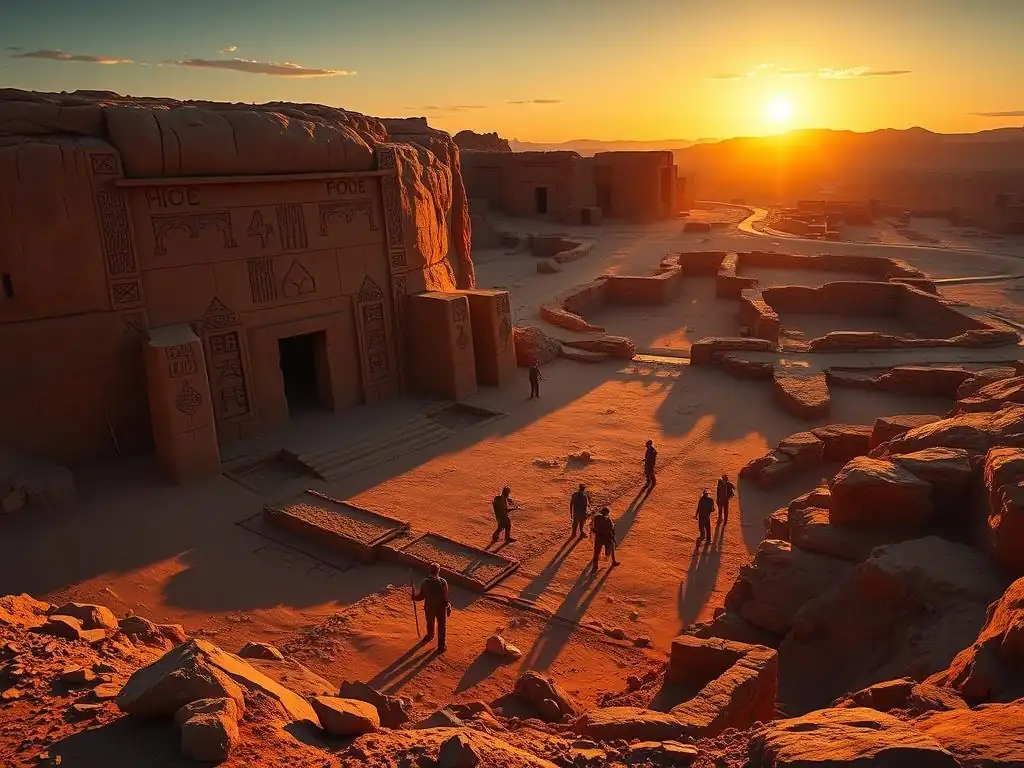
Welcome to ArchaeologyHub.org, your portal to uncovering the past. Delve into the mysteries of ancient civilizations and explore the intricate tapestry of human history. Curious about the sophisticated network of ancient societies? Begin your journey now with our in-depth exploration of the Chaco Canyon archaeological system, a remarkable example of prehistoric engineering and social complexity. What secrets lie hidden within its Great Houses and roads? Read on to discover more.
- Introduction to the Chaco Canyon Archaeological System
-
Frequently Asked Questions
- ### What is the "Chaco Phenomenon" according to ArchaeologyHub.org?
- ### Where is Chaco Canyon located, and why is its archaeological system important?
- ### What are "Great Houses" in the context of the Chaco Canyon archaeological system?
- ### What role did roads play in the Chaco Canyon archaeological system?
- ### What kind of information can I find about the Chaco Canyon archaeological system on ArchaeologyHub.org?
- Final Reflection: Echoes of a Distant Past
- Ignite Your Inner Explorer: Embark on a Chacoan Journey!
Introduction to the Chaco Canyon Archaeological System

Unveiling the Mysteries of Chaco Canyon
Nestled in a remote, high-desert canyon in northwestern New Mexico, Chaco Canyon stands as one of the most significant archaeological sites in North America, a testament to the sophisticated engineering and societal organization of the Ancestral Puebloan people. For approximately 300 years, from 850 to 1150 CE, this arid landscape flourished as a major center of culture, economy, and ceremony for a vast regional network.
The sheer scale and complexity of the monumental "great houses" — multi-story masonry structures like Pueblo Bonito and Chetro Ketl — alongside an elaborate network of ancient roads, suggest a level of social integration and planning unparalleled in the ancient Southwest. The very existence of such a complex Chaco Canyon archaeological system in a challenging environment continues to fascinate researchers and visitors alike.
The mysteries surrounding Chaco Canyon extend beyond its impressive architecture. Archaeologists grapple with questions about its population size, its precise role in the broader Ancestral Puebloan world, and the mechanisms that sustained such a large-scale, organized society for centuries.
Evidence suggests that Chaco Canyon was not merely a residential hub but perhaps a ceremonial or administrative center, drawing people and resources from hundreds of miles away. The sudden emergence and eventual decline of this highly integrated Chaco Canyon archaeological system around 1150 CE, often linked to environmental shifts such as prolonged droughts, adds another layer of intrigue to its story, prompting ongoing research into resilience and adaptation in ancient societies.
The Significance of Chaco Canyon's Archaeological Landscape
The archaeological landscape of Chaco Canyon is globally recognized for its outstanding universal value, earning it a UNESCO World Heritage Site designation in 1987. Its significance lies not only in the monumental architecture found within the canyon itself but also in the extensive regional network it influenced, known as the Chaco Canyon archaeological system.
This system encompasses over 150 "outlier" great houses scattered across a 60,000 square mile area of the Colorado Plateau, all connected by an intricate web of engineered roads spanning hundreds of miles, some remarkably straight and up to 30 feet wide. This interconnectedness points to a sophisticated level of social, economic, and ceremonial integration previously underestimated for pre-Columbian North America.
The enduring significance of Chaco Canyon also stems from its capacity to reveal insights into ancient indigenous knowledge, particularly in astronomy and engineering. Many of the great houses are precisely aligned with solar and lunar cycles, demonstrating a profound understanding of celestial movements. For instance, the Sun Dagger petroglyph on Fajada Butte famously marked the solstices and equinoxes with shafts of light.
The meticulous construction of the great houses, some requiring hundreds of thousands of shaped sandstone blocks and an estimated 200,000 timber beams transported from distant mountain ranges up to 70 miles away, underscores the immense labor organization and logistical prowess inherent in the Chaco Canyon archaeological system. Studying this landscape offers invaluable perspectives on the complex dynamics of power, ritual, and resource management in ancient societies.
Frequently Asked Questions
### What is the "Chaco Phenomenon" according to ArchaeologyHub.org?
The "Chaco Phenomenon" refers to the emergence of a complex regional system centered around Chaco Canyon, characterized by the construction of Great Houses and an extensive road network. It represents a significant period of cultural and architectural development in the American Southwest.
### Where is Chaco Canyon located, and why is its archaeological system important?
Chaco Canyon is located in present-day northwestern New Mexico. Its archaeological system is important because it reveals a highly organized society with sophisticated engineering, astronomical knowledge, and a complex system of resource distribution.
### What are "Great Houses" in the context of the Chaco Canyon archaeological system?
"Great Houses" are massive, multi-storied structures built within Chaco Canyon and its surrounding areas. They are characterized by their planned design, precise masonry, and evidence of ceremonial and administrative functions, indicating a centralized power structure.
### What role did roads play in the Chaco Canyon archaeological system?
The roads of Chaco Canyon were not merely transportation routes; they were likely important for ceremonial processions, the movement of goods, and maintaining social and political connections between Chaco Canyon and outlying communities.
### What kind of information can I find about the Chaco Canyon archaeological system on ArchaeologyHub.org?
ArchaeologyHub.org offers detailed timelines, artifact profiles, and interpretive analyses related to Chaco Canyon. You can find information organized by geographic region and time period, allowing for a vast taxonomy of in-depth historical content about this fascinating site.
Final Reflection: Echoes of a Distant Past
The intricate network of Great Houses and roads that defined the Chaco Canyon archaeological system speaks volumes even today, reminding us of the remarkable ingenuity and organizational capacity of a society that thrived centuries ago. Understanding this complex system is not merely an exercise in historical reconstruction; it's a vital lesson in how communities can build lasting legacies through collaboration, innovation, and a deep connection to their environment. The echoes of Chaco resonate, prompting us to consider the foundations upon which our own societies are built.
The Chaco Phenomenon, with its astronomical alignments and sophisticated engineering, continues to captivate and inspire. Its enduring influence lies not just in the physical remnants, but in the questions it raises about human potential and the rise and fall of civilizations. We are part of something larger than ourselves, and the Chacoans understood that. They built their world in harmony with the cosmos, and that's a lesson we can all learn from.
This connection to something greater, to the cycles of nature and the movements of the stars, is a powerful reminder of our place in the grand scheme of things.
As we contemplate the Chaco Canyon archaeological system, let us not only marvel at the achievements of the past, but also consider the future we are building. What kind of legacy will we leave behind? What structures, both physical and societal, will endure to tell our story? Embrace the spirit of innovation and collaboration that defined the Chacoans, and strive to create a world worthy of admiration and remembrance. Let the echoes of Chaco inspire you to build a future that resonates with purpose, sustainability, and a profound respect for the interconnectedness of all things.
Ignite Your Inner Explorer: Embark on a Chacoan Journey!
Thank you for delving into the fascinating world of the Chaco Phenomenon! We hope this glimpse into the intricate network of Great Houses and roads has sparked your curiosity. Now, it's time to translate that knowledge into action and connect with this incredible history on a deeper level.
Here are a few ways you can continue your Chacoan adventure:
- Plan a visit to Chaco Culture National Historical Park and experience the grandeur of these ancient structures firsthand. Walk the paths, feel the energy, and imagine the lives of those who once called this place home.
- Explore interactive maps and 3D models of Chacoan sites online to virtually reconstruct the landscape and gain a new perspective on their interconnectedness.
- Share this article with friends, family, or fellow archaeology enthusiasts to spread awareness about the Chaco Phenomenon and its significance.
What aspect of the Chaco Phenomenon are you most eager to explore further?