
The Romanization of Gaul under Caesar: Infrastructure, Urbanization, and Cultural Change

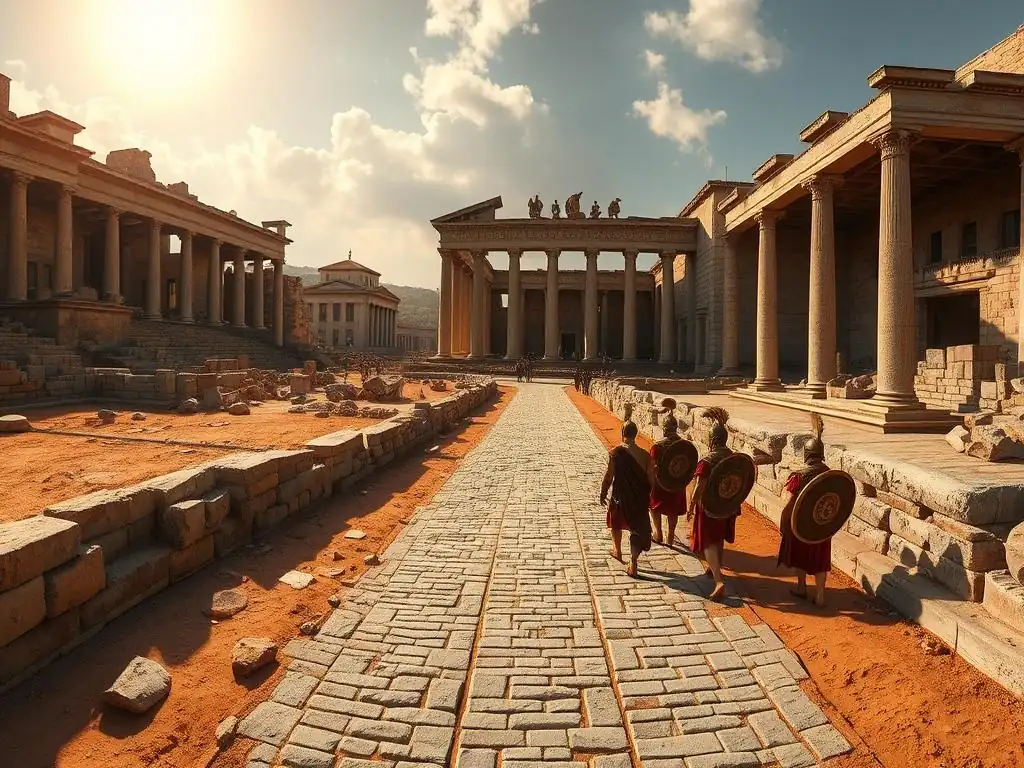
Welcome to ArchaeologyHub.org, your gateway to unraveling the mysteries of the past. Ever wondered how a vast and diverse region like Gaul transformed under Roman rule? This comprehensive exploration dives deep into the Roman Gaul infrastructure development, revealing the remarkable feats of engineering and societal shifts that reshaped the landscape. Prepare to discover how roads, aqueducts, and urban centers became powerful tools of Romanization, and how their impact still resonates today. Intrigued? Delve deeper into the story below and uncover the secrets of this pivotal era!
- Introduction: Caesar's Conquest and the Dawn of Roman Gaul
- Roman Gaul Infrastructure Development: A Foundation for Control and Commerce
- Urbanization in Roman Gaul: From Gallic Settlements to Roman Cities
- Cultural Change and Romanization: Assimilation and Resistance in Gaul
- The Long-Term Impact of Romanization on Gaul
-
Frequently Asked Questions
- What were the primary infrastructure projects undertaken by the Romans in Gaul during Caesar's time?
- How did Roman infrastructure development contribute to the urbanization of Gaul?
- In what ways did Roman infrastructure impact the local Gallic population?
- Can you provide examples of specific Roman infrastructure projects in Gaul and their lasting impact?
- How did the development of Roman infrastructure in Gaul influence cultural change and the "Romanization" process?
- Final Reflection: Echoes of Roman Engineering
- Unearth Your Inner Explorer: Journey Deeper into Gaul's Past!
Introduction: Caesar's Conquest and the Dawn of Roman Gaul
Gaul Before Caesar: A Landscape of Tribes and Territories
Before Julius Caesar's campaigns, Gaul was a diverse and complex region, largely inhabited by various Celtic tribes. These tribes, such as the Aedui, Arverni, Helvetii, and Remi, were often independent, forming fluid alliances and engaging in internecine conflicts. While they shared common cultural and linguistic roots, there was no unified Gallic state.
Their settlements ranged from fortified hillforts (oppida) like Bibracte, which could house tens of thousands, to smaller agricultural villages. These communities possessed their own sophisticated, albeit localized, systems of governance, trade, and even rudimentary infrastructure, primarily consisting of unpaved tracks and riverine transport, but lacking the systematic organization that Rome would later impose.
The Gallic economy was predominantly agrarian, supplemented by skilled craftsmanship in metalwork (iron, bronze, gold), pottery, and textiles. Trade routes, often following rivers like the Rhône, Loire, and Seine, connected different tribal territories and even extended to the Mediterranean world. However, the absence of a centralized authority and a standardized system of roads or currency limited large-scale, efficient economic integration across the vast region. This fragmented political and economic landscape made Gaul ripe for conquest by an external, unified power.
Caesar's Ambitions and the Gallic Wars: Setting the Stage for Romanization
Julius Caesar's ambition, coupled with Rome's strategic interests, initiated the Gallic Wars (58-50 BCE), fundamentally altering the course of Gallic history. Caesar's motivations were multifaceted: securing military glory to advance his political career in Rome, gaining access to Gaul's rich resources and manpower, and eliminating a perceived threat from migrating tribes like the Helvetii. The campaigns were brutal and extensive, culminating in the decisive Battle of Alesia in 52 BCE, where Vercingetorix, the unified Gallic leader, was defeated.
The conquest was not merely a military occupation; it was the precursor to a profound process of Romanization. Caesar immediately began to establish Roman administrative structures, levy taxes, and impose a Roman legal framework, even before formal provincial organization. He strategically cultivated alliances with certain Gallic elites, offering them Roman citizenship or privileges, thereby creating a pro-Roman faction within Gallic society. This initial imposition of Roman authority, backed by a strong military presence, laid the crucial groundwork for the subsequent development of Roman Gaul's infrastructure, urbanization, and deep cultural transformation.
Roman Gaul Infrastructure Development: A Foundation for Control and Commerce
Military Infrastructure: Roman Roads and Fortifications in Gaul
The Strategic Importance of Roman Roads in Gaul
The construction of an extensive network of Roman roads was arguably the most significant aspect of Roman Gaul infrastructure development. These roads were not merely pathways; they were engineered marvels designed for military efficiency, administrative control, and economic integration. Following the conquest, Roman legions, particularly under Marcus Vipsanius Agrippa, began systematically building paved roads (viae) across the newly acquired territories.
One prime example is the Via Agrippa, a major artery that connected Lugdunum (modern Lyon) to various parts of Gaul, including the Rhine frontier, the Atlantic coast, and the Mediterranean. It is estimated that by the 2nd century CE, the total length of Roman roads in Gaul could have exceeded 20,000 kilometers, linking major urban centers, military outposts, and resource-rich areas.
These roads, built with multiple layers of gravel, sand, and large stones, often topped with a paved surface, ensured rapid movement of troops, supplies, and imperial messengers via the cursus publicus (the imperial postal service). This strategic Roman Gaul infrastructure development allowed Rome to quickly suppress any potential rebellions and maintain a firm grip on the vast territory.
Beyond their military utility, these roads also facilitated the collection of taxes, the dissemination of Roman law, and the smooth flow of goods, effectively binding Gaul into the Roman economic sphere and transforming its fragmented tribal lands into a cohesive Roman province.
Roman Forts and Military Camps: Securing the Newly Conquered Territory
Alongside the road network, the establishment of Roman forts and military camps was crucial for securing the newly conquered territory and maintaining order in Roman Gaul. Initially, these camps were temporary structures erected during campaigns, but many evolved into permanent fortifications or even the nuclei of future Roman cities.
Strategic locations, often at river crossings, natural harbors, or along the new road network, were chosen for their defensive advantages and their ability to control key trade routes or resource areas. For instance, sites like Argentoratum (Strasbourg) and Mogontiacum (Mainz) on the Rhine frontier began as legionary fortresses, becoming vital bastions against Germanic incursions.
These forts housed thousands of Roman soldiers, providing a constant presence and a deterrent against local uprisings. They served as administrative centers, supply depots, and points of contact between Roman authority and the local Gallic population. The presence of these military installations stimulated local economies, as Gallic civilians often settled around them to provide goods and services to the soldiers, leading to the organic growth of canabae (civilian settlements) that frequently predated formal Roman urban planning. This military infrastructure was foundational to the stability and long-term Romanization of Gaul, providing the security necessary for further economic and urban development.
Economic Infrastructure: Supporting Growth and Trade in Roman Gaul
Aqueducts, Bridges, and Harbors: Engineering Marvels in Gaul
The expansion of Roman Gaul infrastructure development extended far beyond military necessities to support a burgeoning economy and urban life. Roman engineers brought their unparalleled expertise to construct aqueducts, bridges, and harbors, transforming the logistical capabilities of the region. Aqueducts, such as the magnificent Pont du Gard, which supplied Nemausus (Nîmes) with water over a distance of approximately 50 kilometers, provided clean, abundant water to growing urban centers, facilitating public baths, fountains, and private residences. These structures were testaments to Roman engineering prowess, using gravity-fed systems to transport millions of liters of water daily.
Similarly, robust stone bridges spanned Gaul's major rivers, including the Rhône and the Loire, replacing simpler Gallic wooden structures. These bridges were critical for ensuring uninterrupted movement of goods and people, even during seasonal floods, further enhancing the efficiency of the Roman road network.
Harbors, particularly along the Mediterranean coast at places like Narbo Martius (Narbonne) and Forum Iulii (Fréjus), were expanded and improved, equipped with docks, warehouses, and lighthouses. These maritime infrastructures facilitated trade with other Roman provinces, including Hispania, Italia, and North Africa, allowing Gaul to export its agricultural products, wine, and manufactured goods in exchange for Roman luxury items and essential supplies, thus profoundly integrating Gaul into the vast Roman economic system.
Mining and Resource Extraction: Fueling Roman Expansion
The Roman exploitation of Gaul's natural resources was a significant driver of Roman Gaul infrastructure development and economic growth. Gaul was rich in various minerals, including iron, lead, copper, and even some gold deposits, particularly in Aquitaine. The Romans rapidly expanded existing Gallic mining operations and introduced more advanced techniques to maximize extraction. For instance, extensive iron mines in central Gaul became crucial for supplying the Roman military and civilian industries with raw materials for tools, weapons, and construction. Large-scale lead mining in regions like the Cévennes provided essential materials for pipes, weights, and coinage.
To support these mining operations, specific infrastructure was developed. This included new roads leading directly to mining sites, water channels for ore washing, and smelting facilities. The extracted resources were then transported via the Roman road and river networks to manufacturing centers or directly to Italy.
This systematic and large-scale resource extraction not only enriched Rome but also created new industries and employment opportunities within Gaul, albeit often under harsh conditions for the local population. The integration of Gaul's resources into the Roman imperial economy underscored the comprehensive nature of Roman Gaul infrastructure development, designed to serve both the strategic and economic interests of the empire.
Urbanization in Roman Gaul: From Gallic Settlements to Roman Cities
The Growth of Roman Cities in Gaul: A New Urban Landscape
Lugdunum (Lyon): A Prime Example of Roman Urban Planning in Gaul
The process of urbanization was a cornerstone of Romanization in Gaul, transforming the landscape from scattered oppida to a network of meticulously planned Roman cities. Lugdunum (modern Lyon) stands as a quintessential example of this transformation. Founded in 43 BCE by Lucius Munatius Plancus as a Roman colony, its strategic location at the confluence of the Rhône and Saône rivers quickly propelled it to prominence. It became the capital of Gallia Lugdunensis, one of the three new imperial provinces of Gaul, and served as the administrative, economic, and religious hub for a vast region.
Lugdunum exemplified Roman urban planning with its grid layout, public buildings, and sophisticated infrastructure. By the 2nd century CE, its population likely ranged from 50,000 to 100,000, making it one of the largest cities in the Roman West outside Italy.
It boasted an imperial mint, a vast amphitheater (the Amphitheatre of the Three Gauls), a large theater, public baths, and an extensive network of streets and aqueducts. The city also served as the primary nexus for the Roman road network in Gaul, solidifying its role as the nerve center for Roman control and commerce, demonstrating how Roman Gaul infrastructure development directly supported urban growth.
The Role of Roman Colonies in the Urban Development of Gaul
Roman colonies played a pivotal role in the urban development and Romanization of Gaul. These settlements, often founded on strategic sites or former Gallic oppida, were established for various purposes: as homes for retired Roman legionaries, as centers for Roman administration, or as outposts to secure newly conquered territories.
Examples include Narbo Martius (Narbonne), founded in 118 BCE, which became the capital of Gallia Narbonensis and a vital port, and Forum Iulii (Fréjus), founded by Caesar himself. These colonies were essentially miniature Romes, meticulously planned with a regular street grid (cardo and decumanus), a central forum, temples, basilicas, and other public buildings.
The establishment of colonies served as a powerful tool for cultural assimilation. Roman settlers brought with them their language (Latin), laws, customs, and architectural styles, which were then disseminated to the surrounding Gallic population. Local elites were often encouraged to adopt Roman ways, build villas in the Roman style, and participate in civic life, thereby integrating them into the Roman system. These urban centers, supported by sophisticated Roman Gaul infrastructure development, became magnets for trade and administration, fostering economic growth and facilitating the spread of Roman culture throughout the region.
Roman Urban Amenities: Temples, Theaters, and Public Baths in Gaul
The Significance of Roman Public Architecture in Shaping Gallic Society
The construction of monumental public architecture was a crucial element of Romanization, serving not only practical functions but also as powerful symbols of Roman power, culture, and civilization in Gaul. Temples, dedicated to the Roman pantheon and the imperial cult, were erected in prominent locations within cities, such as the Temple of Augustus and Livia in Vienne. These structures introduced Roman religious practices and provided a focal point for public life and imperial loyalty.
Theaters, like the impressive Theater of Orange, which could seat up to 10,000 spectators, and amphitheatres, such as those in Nîmes and Arles, capable of holding 20,000-25,000 people, hosted Roman plays, gladiatorial contests, and public spectacles. These events served to entertain, but also to reinforce Roman values, norms, and the imperial narrative, exposing the Gallic population to Roman cultural expressions on a grand scale.
Public baths were another essential feature of Roman urban life, found in almost every major city in Gaul. These complexes, like those discovered in Glanum or Lutetia (Paris), were not just places for hygiene but also served as social centers, combining bathing with exercise, business, and leisure.
Their widespread presence, facilitated by Roman Gaul infrastructure development in the form of aqueducts, underscored the Roman commitment to public health and provided a common space where Romans and Gauls could interact and assimilate. These magnificent structures, often adorned with elaborate mosaics and sculptures, showcased Roman engineering and artistry, profoundly influencing Gallic aesthetic tastes and daily routines, gradually reshaping their society into a more Romanized form.
Cultural Change and Romanization: Assimilation and Resistance in Gaul
The Adoption of Roman Language, Law, and Administration in Gaul
The Spread of Latin and Roman Legal Systems
One of the most profound aspects of Romanization in Gaul was the widespread adoption of Latin and the imposition of Roman legal systems. While Celtic languages continued to be spoken, particularly in rural areas, Latin became the language of administration, commerce, and education in urban centers and among the Gallic elite. Inscriptions found on public monuments, tombstones, and everyday artifacts across Roman Gaul attest to the increasing prevalence of Latin. Schools were established, teaching Roman rhetoric and literature, further cementing Latin's dominance. This linguistic shift facilitated communication across the vast empire and provided a common cultural foundation.
Parallel to the linguistic transformation, Roman law gradually supplanted traditional Gallic customary laws. Roman legal principles, emphasizing property rights, contracts, and a more formalized justice system, were introduced through imperial edicts and the presence of Roman magistrates. Citizens, whether Roman or those granted Latin rights, were subject to Roman civil law, while provincial law applied to others. This systematic application of Roman legal frameworks brought a new level of order and uniformity to Gaul, replacing the fragmented tribal legal systems and integrating the region more deeply into the Roman imperial structure.
Roman Provincial Administration: A New Order in Gaul
After the initial conquest, Augustus reorganized Gaul into four main provinces: Gallia Narbonensis (the oldest Roman province, senatorial), and the three imperial provinces of Aquitania, Lugdunensis, and Belgica. Each province was governed by a Roman official (a legatus Augusti pro praetore for imperial provinces, or a proconsul for Narbonensis), supported by a comprehensive administrative apparatus. This new order replaced the decentralized tribal structure with a hierarchical, centralized system. Roman administrators were responsible for maintaining peace, collecting taxes (such as the tributum soli and tributum capitis), and administering justice.
The Roman administration also introduced a census system, allowing for a more efficient collection of taxes and conscription, and providing detailed demographic and economic data. Local Gallic leaders were often integrated into this system, serving as magistrates in their communities or participating in the provincial councils (concilia Galliarum), such as the one established at Lugdunum.
This integration, while seemingly empowering, also served to co-opt the Gallic elite, binding their loyalty to Rome and making them agents of Romanization within their own communities. This sophisticated administrative framework, built upon the foundation of Roman Gaul infrastructure development, was key to Rome's enduring control over the region.
Religious Syncretism: Roman Gods and Gallic Deities
The Influence of Roman Religion on Gallic Beliefs
The Roman conquest brought with it the Roman pantheon and imperial cult, leading to a fascinating process of religious syncretism in Gaul. Rather than completely eradicating indigenous beliefs, the Romans often encouraged the identification of Gallic deities with their Roman counterparts. For example, the Gallic god Lugus, associated with crafts and oaths, was often equated with Mercury, the Roman god of commerce and travelers. Sirona, a Celtic goddess of healing, was frequently worshipped alongside Apollo. This interpretatio Romana allowed for a blending of traditions, making Roman religion more palatable to the Gauls while subtly asserting Roman cultural dominance.
The imperial cult, the worship of the emperor as a divine figure, was actively promoted, particularly in urban centers. Temples dedicated to the imperial cult, such as the famous Altar of the Three Gauls in Lugdunum, served as focal points for provincial loyalty and a unifying force.
While some Gallic religious practices, particularly those involving human sacrifice, were suppressed, many local cults continued to thrive, often incorporating Roman architectural styles and artistic representations. This religious fusion demonstrates the adaptive nature of Romanization, allowing for a degree of cultural continuity while integrating the conquered population into the broader Roman religious framework.
Evidence of Religious Practices: Temples and Shrines
Archaeological evidence provides rich insights into the religious practices of Roman Gaul, showcasing the blend of Roman and Gallic traditions. Numerous temples and shrines have been unearthed across the region, reflecting both Roman architectural styles and distinct Gallo-Roman forms. The fanum, a unique type of Gallo-Roman temple, typically circular or polygonal with an ambulatory, is a prime example of this fusion, combining indigenous sacred spaces with Roman building techniques. These fanums often housed altars and votive offerings dedicated to a mix of Roman and reinterpreted Gallic deities.
Beyond formal temples, countless smaller shrines, altars, and votive deposits have been found in rural areas, indicating the persistence of local cults and animistic beliefs alongside official Roman worship. Inscriptions on these artifacts often reveal the names of both Roman and Gallic gods, sometimes even paired together.
For instance, altars dedicated to "Mars Toutatis" (a fusion of the Roman god of war with a Gallic tribal deity) or "Apollo Grannus" (the Roman sun god combined with a Gallic healing deity) are common. These archaeological findings, often discovered in conjunction with Roman Gaul infrastructure development, offer tangible proof of the complex interplay between assimilation and the preservation of indigenous religious identity.
Gallic Resistance and Cultural Persistence: Maintaining Identity in Roman Gaul
The Batavian Revolt and Other Forms of Resistance to Roman Rule
While Romanization was extensive, it was not universally embraced, and forms of resistance, both overt and subtle, persisted throughout Roman Gaul. Initial large-scale military resistance, epitomized by Vercingetorix's unified Gallic uprising, was crushed by Caesar. However, smaller, localized revolts continued for decades, often fueled by oppressive taxation or resentment against Roman rule.
One notable example is the revolt of Julius Sacrovir and Julius Florus in 21 CE, which, though quickly suppressed, indicated underlying discontent. Later, during the Year of the Four Emperors (69 CE), the Batavian Revolt, led by Gaius Julius Civilis (a Romanized Batavian), saw some Gallic tribes, particularly the Treveri and Lingones, join the uprising, attempting to establish an independent "Empire of the Gauls." While this larger revolt was ultimately put down by Vespasian, it highlighted the fragility of Roman control and the enduring desire for autonomy among some Gallic factions.
These acts of resistance, though ultimately unsuccessful in overthrowing Roman rule, reveal that Romanization was not a passive process but one that involved ongoing negotiation and occasional conflict. They underscore that while Roman Gaul infrastructure development provided the means for control, it did not entirely extinguish the spirit of defiance among certain segments of the Gallic population.
The Enduring Influence of Gallic Culture on Roman Gaul
Despite centuries of Roman rule and the pervasive influence of Roman culture, Gallic traditions, languages, and customs did not entirely disappear. The process of Romanization was often a two-way street, resulting in a unique Gallo-Roman culture that retained distinct Gallic elements. In rural areas, Celtic languages continued to be spoken well into the late Roman period, especially by the common populace, alongside the more prevalent Latin. Gallic artistic styles, characterized by their curvilinear designs and stylized animal motifs, persisted, often blended with Roman artistic conventions to create unique Gallo-Roman artifacts.
Certain Gallic religious practices, as discussed earlier, were syncretized rather than extinguished, demonstrating a resilience of indigenous beliefs. Traditional Gallic names continued to be used, often alongside Roman cognomina. Even in architecture, while Roman forms dominated, elements of Gallic building traditions, such as the fanum temples, persisted.
This cultural persistence indicates that Romanization was not a complete obliteration of Gallic identity but rather a complex process of adaptation, fusion, and selective adoption. The enduring influence of Gallic culture ensured that the identity of Roman Gaul was a rich tapestry woven from both Roman and indigenous threads, a testament to the strength of its pre-Roman heritage.
The Long-Term Impact of Romanization on Gaul
Legacy of Roman Infrastructure in Modern France
The Romanization of Gaul left an indelible mark on the landscape and development of what is now modern France, particularly through its enduring infrastructure. The comprehensive Roman Gaul infrastructure development, especially the road network, formed the backbone of subsequent communication and trade routes for centuries. Many modern French roads, including national routes and even some motorways, still follow the alignments of their Roman predecessors, a testament to their strategic planning and robust construction. For instance, the A7 motorway, connecting Lyon to Marseille, largely traces the ancient Roman route.
Beyond roads, the engineering marvels of Roman Gaul continue to impress. The Pont du Gard aqueduct still stands as a UNESCO World Heritage site, a powerful symbol of Roman engineering. The ruins of Roman bridges, city walls, and harbors can still be found across France, integrated into modern towns or preserved as archaeological sites.
The grid plans of many French cities, particularly those that began as Roman colonies or military camps (e.g., Nîmes, Arles, Reims), still reflect their Roman origins in their street layouts. This visible legacy of Roman Gaul infrastructure development underscores the profound and lasting impact of Caesar's conquest and the subsequent Roman imperial presence.
The Fusion of Roman and Gallic Cultures: A New Identity
The most profound long-term impact of Romanization on Gaul was the creation of a distinct Gallo-Roman culture, a unique synthesis that laid the foundations for the future identity of France. This fusion was not merely an overlaying of Roman culture onto Gallic traditions but a complex intermingling that resulted in something new. Latin, the language of Rome, evolved into Vulgar Latin, which in turn became the linguistic ancestor of French, distinguishing it from other Romance languages. Roman law and administrative practices provided the framework for later medieval and modern governance.
However, this Gallo-Roman identity also retained significant Gallic elements. Certain aspects of Gallic art, religious beliefs, and even social structures persisted, subtly influencing the Romanized forms. This cultural hybridity is evident in archaeological finds, where Roman styles are often imbued with a distinct Gallic sensibility. The Gallo-Roman identity was robust enough to endure the collapse of the Western Roman Empire, providing a cultural continuity that shaped the early medieval kingdoms and ultimately contributed to the formation of the French nation. The Romanization process thus forged a new collective identity, deeply rooted in both classical antiquity and indigenous heritage.
Conclusion: Caesar's Enduring Influence on the Romanization of Gaul
Julius Caesar's conquest of Gaul was a pivotal moment in ancient history, initiating a profound process of Romanization that irrevocably transformed the region. His military campaigns not only brought Gaul under Roman dominion but also set the stage for extensive Roman Gaul infrastructure development, including an unparalleled network of roads and strategic fortifications that facilitated control and commerce. This foundational infrastructure, coupled with the establishment of new Roman cities like Lugdunum and numerous colonies, reshaped the Gallic landscape into a thriving urbanized province.
The cultural impact was equally immense, as Latin became the dominant language, Roman law replaced tribal customs, and religious beliefs underwent a fascinating process of syncretism. While Gallic resistance and cultural persistence ensured that Romanization was not absolute, the fusion of Roman and Gallic elements created a unique Gallo-Roman identity. The enduring legacy of this transformation is still visible in the infrastructure, language, and cultural heritage of modern France. Caesar's ambition and strategic vision thus laid the groundwork for centuries of Roman influence, forever altering the destiny of Gaul and leaving an indelible mark on Western civilization.
Frequently Asked Questions
What were the primary infrastructure projects undertaken by the Romans in Gaul during Caesar's time?
The Romans focused on building roads, aqueducts, and bridges to facilitate military movement and trade throughout Gaul. These projects were crucial for connecting the newly conquered territories.
How did Roman infrastructure development contribute to the urbanization of Gaul?
The construction of Roman roads and other infrastructure projects spurred the growth of existing settlements and the creation of new cities. This facilitated trade and allowed for the spread of Roman culture.
In what ways did Roman infrastructure impact the local Gallic population?
Roman infrastructure provided economic opportunities for the Gauls, but also led to increased Roman control and exploitation of resources. This caused both integration and resistance.
Can you provide examples of specific Roman infrastructure projects in Gaul and their lasting impact?
The Via Agrippa, a major Roman road network, connected Gaul to Italy and facilitated trade for centuries. Roman amphitheaters and public baths also transformed Gallic urban life.
How did the development of Roman infrastructure in Gaul influence cultural change and the "Romanization" process?
Roman infrastructure acted as a conduit for Roman culture, spreading language, customs, and architectural styles. This resulted in a gradual blending of Gallic and Roman traditions.
Final Reflection: Echoes of Roman Engineering
The story of Roman Gaul, as revealed through its infrastructure, urbanization, and cultural shifts, isn't just a historical account; it's a powerful reminder of the enduring impact of strategic investment and cultural exchange. What Caesar initiated centuries ago continues to resonate today, demonstrating how thoughtfully planned infrastructure can fundamentally reshape societies and leave an indelible mark on the landscape, both physically and culturally.
The Romanization of Gaul serves as a compelling case study in the transformative power of infrastructure. Witnessing how roads, aqueducts, and urban centers reshaped Gaulish society underscores the critical role of infrastructure in fostering economic growth, cultural integration, and political stability. All roads lead to Rome
wasn't just a saying; it was a testament to the power of connectivity in shaping an empire and influencing the lives of millions. The legacy of Roman engineering in Gaul, visible even now, is a potent symbol of this enduring influence.
As we reflect on the Roman Gaul infrastructure development, let us consider the lessons it offers for our own time. How can we, like the Romans, strategically invest in infrastructure to build more connected, prosperous, and culturally vibrant communities? Let us strive to create a legacy that, like the roads of Roman Gaul, endures for centuries to come, connecting us not just geographically, but also through shared progress and lasting cultural impact.
Unearth Your Inner Explorer: Journey Deeper into Gaul's Past!
Thank you for delving into the fascinating story of Gaul's Romanization and discovering its lasting impact. Now, let's turn this knowledge into action.
- Visit a local museum or archaeological site to see Roman artifacts and imagine life in Roman Gaul firsthand.
- Share this article with a history enthusiast and spark a conversation about the complexities of cultural exchange.
- Research a specific aspect of Roman Gaul that intrigued you, such as road construction or urban planning, and present your findings to friends.
What specific aspect of Roman Gaul's transformation most inspires you to learn more?