
Archaeological Finds: Roman Military Equipment from Key Republican Battlefields

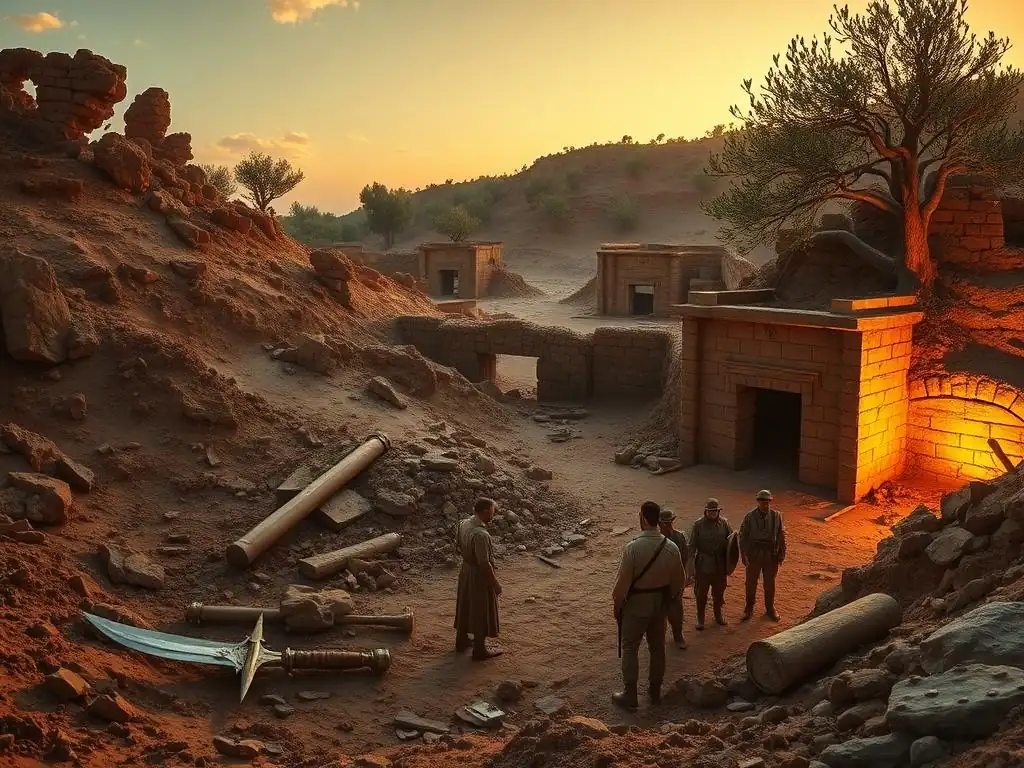
Welcome to ArchaeologyHub.org, your portal to the past! Ever wondered what secrets lie buried beneath the battlefields where empires clashed? Dive into our detailed analysis of recent archaeological finds revealing stunning Roman military equipment recovered from key Republican battlefields. Unlock the stories etched in iron and bronze, and discover how these artifacts are reshaping our understanding of Roman military tactics and the lives of the soldiers who wielded them. Curious to learn more? The adventure begins now...
- Introduction: Unearthing Roman Military History on Republican Battlefields
- Case Studies: Key Republican Battlefields and Their Artifacts
- Analyzing Roman Military Equipment: Types, Materials, and Functionality
- The Impact of Battlefield Archaeology on Understanding Roman Military History
- Conclusion: Roman Military Equipment Battlefield Finds - A Window into the Republic's Wars
-
Frequently Asked Questions
- How does the discovery of Roman military equipment on battlefields contribute to our understanding of Republican Roman history?
- What types of Roman military equipment are most commonly found on Republican battlefields?
- Can the distribution of Roman military equipment across a battlefield reveal information about the course of a battle?
- What excavation techniques are used to uncover and preserve fragile Roman military equipment from battlefields?
- How does ArchaeologyHub.org organize and present information about Roman military equipment finds from battlefields?
- Final Reflection: Echoes of Legionary Steel
- Unearth Your Inner Archaeologist: Explore, Share, and Preserve History!
Introduction: Unearthing Roman Military History on Republican Battlefields
Understanding Roman Military Organization Through Artifacts
The meticulous study of Roman military equipment battlefield finds offers an unparalleled window into the internal structure and evolution of the Roman army during the Republican era. Analyzing the distribution, quantity, and specific types of weaponry and armor unearthed at ancient battle sites allows archaeologists to infer details about legionary composition, the integration of auxiliary forces, and even the logistical capabilities of the Roman state. For instance, discovering standardized pilum heads alongside varying helmet types can suggest a hierarchy of equipment or regional manufacturing influences within the army.
Furthermore, the presence of specific armaments can delineate the roles of different units within a legion or the distinctions between citizen soldiers and allied contingents. The sheer volume of certain Roman military equipment battlefield finds, such as thousands of discarded javelin heads or broken sword blades, provides tangible evidence of the scale of Roman military engagements and the density of their formations. This material evidence often corroborates or even challenges existing historical narratives, offering a more nuanced understanding of Roman military organization.
Republican Era Roman Legionary Equipment: An Overview
During the Republican era, the standard Roman military equipment of a legionary underwent significant evolution, reflecting tactical changes and technological advancements. Key defensive pieces included the scutum, a large rectangular or oval shield often made of layered wood and covered in leather, reinforced with a central metal boss. For personal protection, legionaries typically wore the lorica hamata, a flexible mail shirt constructed from thousands of interlinked iron rings, providing excellent protection against slashing blows. Helmets, primarily of the Montefortino and later Coolus types, offered crucial head protection, often crafted from bronze or iron.
Offensively, the gladius hispaniensis, a short, double-edged thrusting sword, became the iconic sidearm, highly effective in close-quarters combat. Complementing the gladius was the pilum, a heavy javelin with a distinctive long, slender iron shank designed to bend upon impact, rendering it unusable by the enemy. Less common but still vital items among Roman military equipment battlefield finds include the pugio (a small dagger), occasional greaves for leg protection, and early forms of lorica squamata (scale armor), indicating the diverse protective gear employed by Republican forces.
Case Studies: Key Republican Battlefields and Their Artifacts
The Battle of Telamon: Unveiling Legionary Arms and Armor
The Battle of Telamon (225 BC), a decisive Roman victory against a large Gallic coalition, represents a crucial moment in the middle Republic, solidifying Roman dominance in Italy. Archaeological investigations in the presumed battle area have yielded significant Roman military equipment battlefield finds, providing direct insights into the arms and armor of both combatants. The context of this battle, occurring before the widespread adoption of the gladius hispaniensis as the sole standard, makes the weapon finds particularly illuminating regarding the transition of Roman weaponry.
Excavations have uncovered a range of artifacts consistent with early Republican Roman military gear, often intermingled with Gallic weaponry. The distribution of these Roman military equipment battlefield finds across the landscape helps reconstruct the battle lines and movements, illustrating the Roman legion's disciplined formation against the more individualistic fighting style of the Gauls. The preservation conditions, while varying, have allowed for the identification of specific components, contributing to a clearer picture of the equipment used in this pivotal engagement.
Discoveries of Roman Swords and Daggers at Telamon
Among the most telling Roman military equipment battlefield finds from Telamon are the remnants of swords and daggers. While the gladius hispaniensis was emerging, evidence suggests the continued use of earlier sword types, possibly influenced by Celtic designs, with blades typically ranging from 60 to 70 cm in length. Fragments of these iron blades, often corroded but identifiable, have been recovered, some exhibiting the characteristic leaf-shaped profile of early Roman swords.
Alongside swords, archaeological surveys have also yielded components of daggers, or pugiones. These smaller, utilitarian blades, usually around 20-30 cm long, served as secondary weapons or tools. The presence of these specific Roman military equipment battlefield finds at Telamon underscores the transition in Roman armament during the 3rd century BC, moving towards the more standardized and efficient weaponry that would define the later Republic and Imperial periods.
Identifying Roman Shield Fragments and Pilum Remains at Telamon
Defensive Roman military equipment battlefield finds at Telamon include numerous fragments of shields ( scuta) and the distinctive pilum. Shield remains, primarily consisting of bronze bosses (the central shield boss) and occasional wood or leather fragments, indicate the widespread use of the large, protective scutum. These bosses, often circular or oval, served to protect the hand and reinforce the shield's center, absorbing impacts from enemy blows.
Pilum remains are particularly significant, as their design for single use (bending upon impact) means their presence often marks areas of intense Roman engagement. Iron pilum heads, sometimes found bent or broken, have been recovered, confirming their deployment in volleys against the advancing Gallic lines. These Roman military equipment battlefield finds collectively paint a vivid picture of the Roman legionary's defensive and offensive capabilities in the early phases of Republican expansion.
Excavations at Cannae: Insights into Roman Military Tactics
The Battle of Cannae (216 BC), a catastrophic defeat for Rome against Hannibal's Carthaginian forces, is one of the most studied engagements in military history. The sheer scale of Roman casualties—estimated at 50,000 to 70,000 soldiers—makes Cannae an exceptionally rich site for Roman military equipment battlefield finds. Extensive archaeological surveys have been conducted, revealing a dense concentration of artifacts that shed light on the brutal realities of the battle and the tactical failures that led to the Roman rout.
The distribution and state of preservation of the Roman military equipment battlefield finds at Cannae vividly illustrate the encirclement and annihilation of the Roman legions. Artifacts are often found densely packed in specific areas, indicating zones of desperate last stands and mass slaughter. This material evidence provides a tangible complement to ancient historical accounts, allowing modern researchers to reconstruct the final moments of thousands of Roman soldiers.
Unearthing Roman Helmets and Greaves at Cannae
Among the most poignant Roman military equipment battlefield finds at Cannae are the remnants of Roman helmets and greaves. Numerous fragments of bronze helmets, predominantly of the Montefortino type, have been recovered, many bearing signs of severe impact or crushing. The Montefortino helmet, characterized by its conical or hemispherical bowl and small neck guard, was standard issue for Republican legionaries. The quantity of these finds underscores the massive loss of life.
While less common, fragments of iron greaves, designed to protect the shins, have also been identified. These finds suggest that some legionaries, possibly those of higher rank or wealthier background, utilized additional leg protection. The condition of these Roman military equipment battlefield finds at Cannae—often broken, bent, or severely damaged—serves as a stark testament to the ferocity of the fighting and the overwhelming defeat suffered by the Roman army.
Analyzing Projectile Weapons: Roman Arrows and Sling Stones from Cannae
The battlefield of Cannae also yields significant Roman military equipment battlefield finds related to projectile weapons, offering insights into the diverse combat roles present. Hundreds of lead sling bullets, many inscribed with names or symbols, have been unearthed. These bullets, typically weighing between 20 to 50 grams, indicate the substantial presence and effectiveness of allied slingers, such as those from the Balearic Islands, who fought alongside the Roman legions.
Furthermore, iron arrowheads, consistent with those used by auxiliary archers, are among the Roman military equipment battlefield finds. While the Roman legionary primarily relied on the pilum, allied contingents provided specialized long-range support. The discovery of these projectile weapons not only confirms the composition of the Roman army, including its auxiliary elements, but also helps to reconstruct the initial phases of the battle, where volleys of missiles would have preceded close-quarters engagement.
The Battlefield of Alesia: Evidence of Roman Siege Warfare
The Siege of Alesia (52 BC), a pivotal engagement in Caesar's Gallic Wars, represents the zenith of Republican Roman siege warfare. The archaeological landscape of Alesia is uniquely preserved, featuring extensive remains of the Roman circumvallation and contravallation lines—fortifications stretching over 20 kilometers. This makes Alesia an unparalleled site for Roman military equipment battlefield finds related to siege operations, offering detailed insights into Roman engineering, logistics, and combat during a prolonged siege.
The sheer scale of the Roman earthworks, including multiple ditches, ramparts, and fortified camps, is reflected in the abundance of artifacts. The Roman military equipment battlefield finds at Alesia are not only concentrated within the siege lines but also distributed across the areas of fighting, providing a comprehensive view of the Roman war machine at its most complex. This site has been meticulously excavated, allowing for precise mapping of artifact distribution and a deeper understanding of the siege's mechanics.
Roman Siege Equipment Fragments: Ballista Bolts and Catapult Stones at Alesia
Alesia offers extraordinary Roman military equipment battlefield finds pertaining to siege artillery. Excavations have uncovered thousands of iron ballista bolts, ranging in length from 30 to 60 cm, scattered along the Roman siege lines and in areas of intense fighting. These bolts, designed to be fired from large crossbow-like machines (ballistae), demonstrate the Romans' heavy reliance on mechanical artillery to suppress enemy defenses and assault fortified positions. The sheer quantity indicates a sustained bombardment.
In addition to ballista bolts, numerous spherical stones, weighing from 10 to over 50 kg, have been identified as catapult projectiles. These stones were launched by onagers and other catapults, designed to breach walls or cause widespread destruction within the besieged oppidum. The presence and distribution of these Roman military equipment battlefield finds provide direct archaeological confirmation of Caesar's detailed accounts of his engineering feats and the formidable array of siege engines deployed at Alesia.
Personal Items and Equipment: Soldiers' Belongings Found at Alesia
Beyond standard weaponry, Roman military equipment battlefield finds at Alesia include a fascinating array of personal items and everyday soldier's belongings, offering a more intimate glimpse into the lives of the legionaries enduring the prolonged siege. These finds provide a human dimension to the military campaign, illustrating the realities of campaigning life. Artifacts such as hobnails from caligae (military sandals) are ubiquitous, indicating the presence of thousands of soldiers and their movements within the siege works.
Other significant Roman military equipment battlefield finds include small bronze buckles, fragments of ceramic mess kits, occasional coins, and even pieces of personal adornment. These items, often discarded or lost during the siege, paint a picture of daily routines, logistical challenges, and the personal sacrifices made by Roman soldiers. Their discovery alongside more direct military hardware helps to contextualize the grand strategic narrative with the lived experience of the individual legionary.
Analyzing Roman Military Equipment: Types, Materials, and Functionality
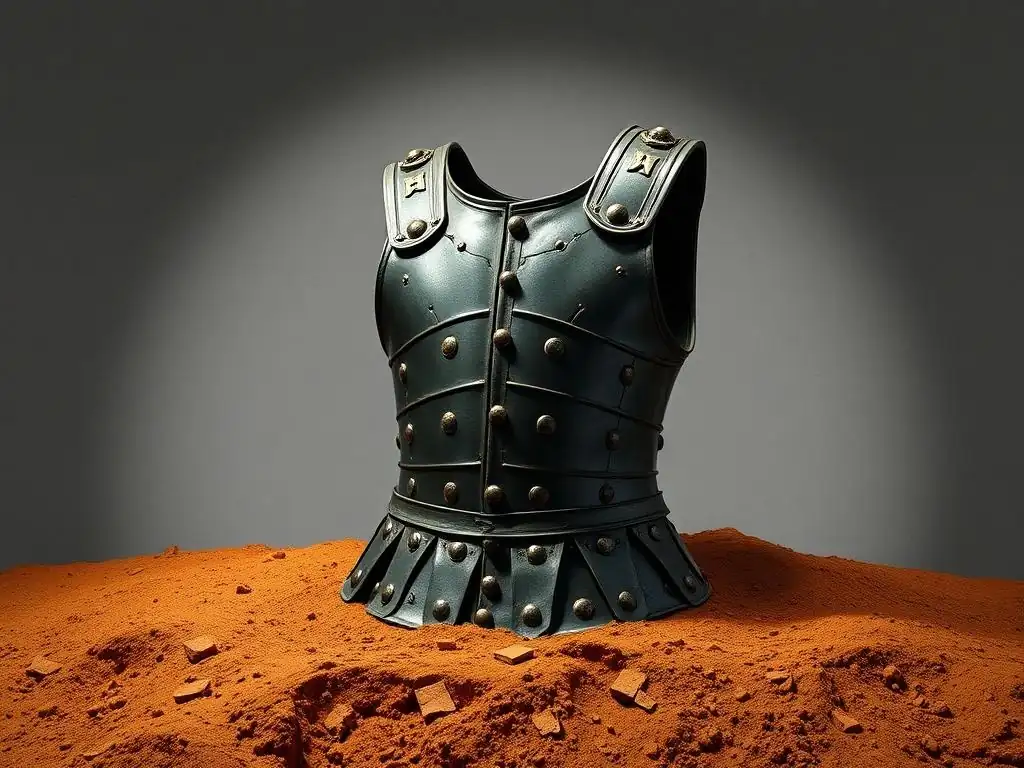
Republican Roman Legionary Armor: From Mail to Segmentata
Republican Roman legionary armor primarily consisted of the lorica hamata (mail shirt) and, to a lesser extent, the lorica squamata (scale armor). The lorica hamata, made of thousands of interlocking iron rings, was remarkably flexible and offered excellent protection against slashing and piercing blows. Each shirt could weigh between 8 to 15 kg, providing substantial defense without overly restricting movement. Roman military equipment battlefield finds of mail fragments are common, showcasing the widespread use and durability of this armor type throughout the Republic.
While the iconic lorica segmentata (segmented plate armor) is characteristic of the Imperial period, early forms of plate protection were experimented with during the late Republic, though not as standardized or widespread. Lorica squamata, composed of overlapping bronze or iron scales sewn onto a fabric or leather backing, also saw use, particularly among officers or specialized units. The analysis of these Roman military equipment battlefield finds allows archaeologists to trace the evolution of Roman defensive technology and its adaptation to different combat scenarios.
Roman Weaponry: Swords, Spears, and Projectile Weapons of the Republican Army
The offensive Roman military equipment of the Republican army was designed for efficiency in close-quarters combat and initial engagement. The gladius hispaniensis, a short, double-edged sword typically 50-60 cm long, was optimized for thrusting, making it devastating in the tight formations of the Roman legion. Its iron blade was capable of delivering fatal wounds with minimal space. Roman military equipment battlefield finds of gladius blades and hilt components are common, reflecting their central role.
The pilum, a heavy javelin, was equally critical. Its design, featuring a long, slender iron shank that would bend upon impact, prevented enemies from throwing it back and often rendered enemy shields useless by embedding itself firmly. Legionaries would typically carry two pila, launching them from a distance of 15-30 meters before closing for melee. Alongside these, projectile weapons like lead sling bullets and iron arrowheads, particularly from auxiliary units, were vital for harassing and breaking enemy formations before the legionary charge.
The Role of Auxiliary Troops and Their Equipment in Republican Battles
While the legionaries formed the core of the Roman army, auxiliary troops played an indispensable role in Republican battles, often bringing specialized skills and distinct Roman military equipment. These allied contingents, drawn from various conquered or allied peoples, provided cavalry, archers, and slingers, complementing the legion's infantry focus. Their equipment often reflected their cultural origins, providing a fascinating contrast to the standardized Roman legionary gear.
For example, Balearic slingers, renowned for their accuracy, used lead sling bullets, many of which are identifiable among Roman military equipment battlefield finds at sites like Cannae. Gallic and Germanic auxiliaries often employed longer swords and different shield types than their Roman counterparts. The analysis of these diverse Roman military equipment battlefield finds is crucial for understanding the full composition and tactical versatility of the Republican Roman army, highlighting how Rome integrated diverse fighting styles into its formidable military machine.
The Impact of Battlefield Archaeology on Understanding Roman Military History
Reconstructing Roman Military Tactics and Strategies
Battlefield archaeology has profoundly reshaped our understanding of Roman military tactics and strategies, moving beyond literary accounts to direct material evidence. The spatial analysis of Roman military equipment battlefield finds allows researchers to reconstruct battle lines, troop movements, and the dynamics of engagement with remarkable precision. For instance, the clustering of specific weapon types can pinpoint where a Roman charge occurred, or where a unit made its last stand.
At sites like Cannae, the distribution of thousands of discarded Roman weapons and armor fragments provides a chilling testament to the encirclement and destruction of the Roman legions, illustrating the effectiveness of Hannibal's envelopment strategy. Similarly, the meticulous mapping of Roman military equipment battlefield finds at Alesia has confirmed the extensive Roman siege works and the intensity of the fighting along the circumvallation lines, giving tangible proof to Caesar's strategic genius and the scale of his engineering efforts.
The Value of Artifact Analysis in Dating and Contextualizing Battles
The rigorous analysis of Roman military equipment battlefield finds is invaluable for dating and contextualizing ancient battles. Typological analysis, which compares artifact styles and designs to known chronological sequences, can often confirm or refine the dates of engagements. For example, the presence of specific helmet types or sword designs can place a battle within a particular period of Republican military evolution. Furthermore, stratigraphic analysis, examining the layers of soil in which artifacts are found, provides crucial context about the sequence of events.
Beyond dating, the material composition and craftsmanship of Roman military equipment battlefield finds can offer insights into Roman manufacturing capabilities, supply chains, and even the economic status of the soldiers. The unique characteristics of certain pieces can sometimes indicate regional workshops or even specific units, adding layers of detail to historical narratives that might otherwise be sparse or biased. This scientific approach provides a robust framework for interpreting historical events through tangible evidence.
Preserving and Interpreting Roman Military Equipment for Future Generations
The preservation and interpretation of Roman military equipment battlefield finds are critical for ensuring that these invaluable historical assets continue to inform and educate future generations. Upon excavation, ancient iron and bronze artifacts are highly susceptible to degradation, necessitating immediate and specialized conservation treatments such as electrolysis, desalination, and controlled atmospheric storage. These meticulous processes stabilize the artifacts, preventing further corrosion and decay.
Beyond physical preservation, the interpretation of Roman military equipment battlefield finds is crucial for making their historical significance accessible. This involves detailed scholarly publications, creating comprehensive digital databases, and developing engaging museum exhibitions. Organizations like ArchaeologyHub.org play a vital role in disseminating this knowledge, allowing researchers, students, and the general public to explore the tangible legacy of Roman military history, fostering a deeper appreciation for the ingenuity and struggles of ancient armies.
Conclusion: Roman Military Equipment Battlefield Finds - A Window into the Republic's Wars
Frequently Asked Questions
How does the discovery of Roman military equipment on battlefields contribute to our understanding of Republican Roman history?
The analysis of Roman military equipment found on battlefields provides tangible evidence of battle tactics, troop deployment, and the logistical capabilities of the Roman Republican army. These finds offer insights that textual sources often lack.
What types of Roman military equipment are most commonly found on Republican battlefields?
Common finds include projectile points (pilum and arrows), fragments of armor (lorica hamata), and weaponry (gladius and pugio). Also, personal equipment like belt buckles and tent pegs are often discovered.
Can the distribution of Roman military equipment across a battlefield reveal information about the course of a battle?
Yes, the spatial distribution of artifacts can suggest troop movements, engagement zones, and retreat routes. For example, a concentration of pila might indicate a throwing line before a charge.
What excavation techniques are used to uncover and preserve fragile Roman military equipment from battlefields?
Archaeologists employ careful troweling, sifting, and metal detecting to locate artifacts. Specialized conservation techniques are then used to stabilize and preserve fragile organic materials and corroded metals.
How does ArchaeologyHub.org organize and present information about Roman military equipment finds from battlefields?
ArchaeologyHub.org categorizes finds by geographic region, time period, and artifact type. Detailed profiles, timelines, and interpretive analyses provide a comprehensive overview of Roman military equipment in its historical context.
Final Reflection: Echoes of Legionary Steel
The meticulous study of Roman military equipment battlefield finds transcends mere historical cataloging; it offers a tangible connection to the lives and deaths of soldiers who shaped the course of Western civilization. The artifacts unearthed from key Republican battlefields, meticulously analyzed and presented in this article, are not just relics of a bygone era, but powerful reminders of the human cost of empire and the enduring legacy of Roman military prowess.
The impact of these discoveries extends far beyond academic circles. Each corroded gladius, each dented scutum boss, whispers stories of courage, strategy, and the brutal realities of ancient warfare. These tangible links to the past allow us to connect with the Roman soldier on a deeply personal level, fostering a greater understanding of their world and their sacrifices. History is who we are and why we are the way we are.
- David McCullough. This quote encapsulates the profound importance of studying these artifacts, as they illuminate the very foundations upon which our modern world is built.
As we reflect on the echoes of legionary steel unearthed from these battlefields, let us not merely admire the craftsmanship or analyze the strategic implications. Instead, let us contemplate the human stories embedded within each artifact. Consider the weight of the armor, the fear in the eyes of the soldier, the unwavering discipline that drove them forward.
By understanding their struggles, we can gain a deeper appreciation for the complexities of history and the enduring power of the human spirit. Let the lessons learned from these Roman military equipment battlefield finds inspire us to build a future where conflict is replaced by understanding and empathy.
Thank you for delving into the fascinating world of Roman military equipment and Republican battlefields! We hope you've gained a deeper appreciation for the incredible insights these archaeological finds provide. Now, let's take that knowledge and turn it into action!
Here are a few ways you can continue your journey:
- Visit a local museum to see real Roman artifacts and explore exhibits on ancient warfare. Understanding the tangible history is the first step.
- Share this article with friends and family who might be interested in Roman history, sparking their curiosity about the past.
- Consider joining a local archaeology club or historical society to learn more and participate in preservation efforts. You might even find yourself on a dig one day!
What new perspective did you gain from these Roman military finds, and how will you apply it to your understanding of ancient history?