
Music and Dance in the BactriaMargiana Archaeological Complex: Indirect Evidence and Reconstructions

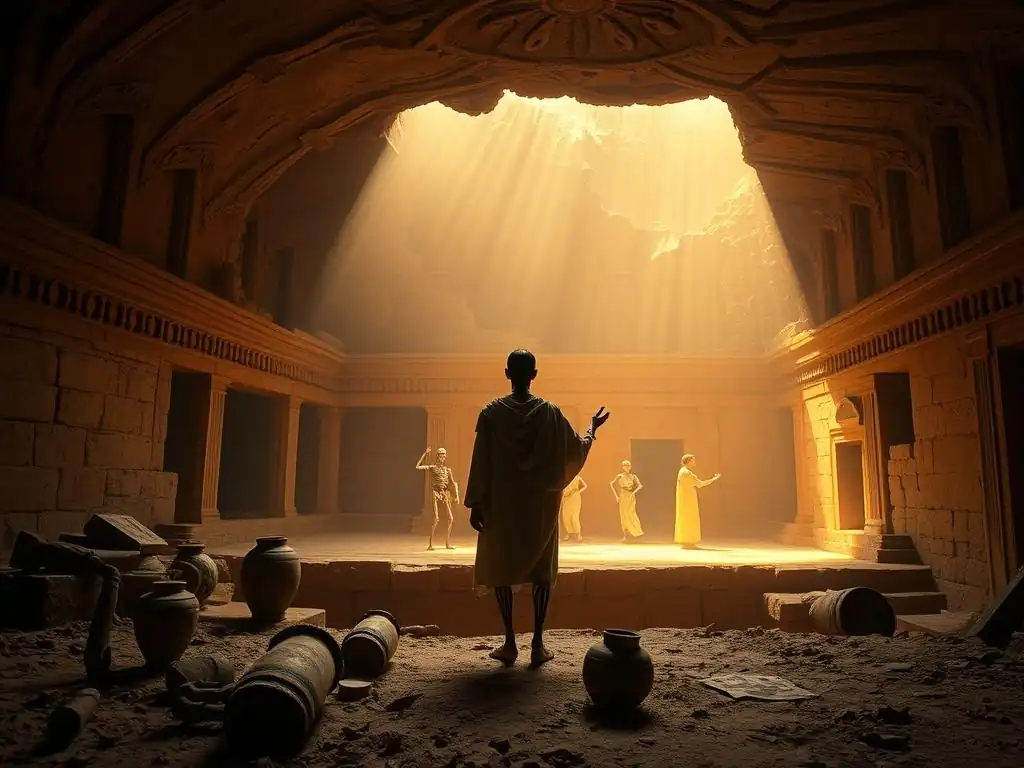
Welcome to ArchaeologyHub.org, your gateway to unraveling the mysteries of the past. Delve into a world of ancient civilizations, groundbreaking discoveries, and meticulous excavation techniques.
Ever wondered what life sounded like millennia ago? Our featured article, "Music and Dance in the BactriaMargiana Archaeological Complex: Indirect Evidence and Reconstructions," offers a fascinating glimpse into a lost world. Discover how archaeologists are piecing together fragments of the past to reconstruct the rhythms and movements of a vibrant culture. Prepare to be captivated by the intriguing clues hidden within the BactriaMargiana Archaeological Complex. Explore further and let the echoes of history resonate.
- Introduction: Unveiling the Sounds and Movements of the BMAC
- Indirect Evidence for Music in the BMAC: A Symphony of Clues
- Decoding Dance in the BactriaMargiana Archaeological Complex: Rhythms in the Ruins
- Challenges and Methodologies in Reconstructing BMAC Music and Dance
- Case Studies: Specific Examples of Music and Dance Reconstruction in the BMAC
- The Role of Music and Dance in BMAC Society: Social Cohesion and Cultural Identity
- BactriaMargiana Music Dance Reconstruction: Conclusions and Future Directions
-
Frequently Asked Questions
- What kind of direct evidence exists for music and dance from the BactriaMargiana Archaeological Complex (BMAC)?
- What types of indirect evidence do archaeologists use to reconstruct music and dance in the BMAC?
- How reliable are reconstructions of BMAC music and dance based on indirect evidence?
- What role did geography and trade play in the musical and dance traditions of the BMAC?
- What is the significance of understanding the music and dance of the BMAC?
- Final Reflection: Echoes of Ancient Rhythms
- Unearth the Rhythms of the Past!
Introduction: Unveiling the Sounds and Movements of the BMAC
The Enigma of BactriaMargiana Culture: Reconstructing Lost Traditions
The Bactria-Margiana Archaeological Complex (BMAC), also known as the Oxus Civilization, flourished in Central Asia from approximately 2300 to 1700 BCE. This Bronze Age culture is renowned for its monumental architecture, intricate metallurgy, and distinctive material culture, yet many aspects of its intangible heritage, such as music and dance, remain elusive. The absence of written records from this period means that archaeologists must rely on indirect evidence to piece together these vital elements of daily life and ritual, presenting a significant challenge in cultural reconstruction.
Despite the inherent difficulties, the pursuit of understanding BMAC music and dance is crucial for a holistic appreciation of this sophisticated civilization. Reconstructing these lost traditions, even speculatively, allows us to move beyond mere material remains and delve into the sensory and emotional lives of the BMAC people. Such BactriaMargiana music dance reconstruction efforts are essential for comprehending the full spectrum of their social interactions, spiritual beliefs, and communal expressions.
ArchaeologyHub.org and the Exploration of Central Asian Heritage
ArchaeologyHub.org serves as a comprehensive digital repository for archaeological discoveries, offering detailed analyses of ancient civilizations and their cultural practices. Our platform aims to illuminate the rich heritage of regions like Central Asia, providing accessible information on sites, artifacts, and interpretive theories that shape our understanding of the past. This article contributes to our mission by exploring a less tangible but equally profound aspect of the BMAC: its soundscapes and movements.
By delving into the indirect evidence for music and dance within the BMAC, this article exemplifies ArchaeologyHub.org's commitment to presenting detailed and nuanced studies of ancient cultures. It highlights the interpretive nature of archaeological research, demonstrating how specialists synthesize disparate clues—from artifact morphology to artistic depictions and site layouts—to reconstruct the vibrant, albeit silent, traditions of the past, thereby enriching our knowledge of Central Asian heritage.
Indirect Evidence for Music in the BMAC: A Symphony of Clues
Archaeological Finds Suggesting Musical Instruments: Stone rattles, ceramic whistles, and possible flute fragments
While no complete musical instruments have been definitively identified from BMAC contexts, several small, intriguing artifacts suggest the presence of sound-making devices. Among the most compelling are perforated stone objects, often made of marble or alabaster, found at prominent sites like Gonur Depe and Togolok 21. These objects, typically spherical or disc-shaped with diameters ranging from 5 to 10 cm, exhibit wear patterns consistent with being shaken or clapped, leading archaeologists to interpret them as rattles or clappers used for rhythmic accompaniment.
Further indirect evidence comes from ceramic artifacts, particularly small, hollow objects with multiple holes, resembling whistles or ocarinas. Examples from sites such as Sapalli Tepe and Djarkutan demonstrate the technological capability to produce such instruments. Although fragmented, some bone or reed pieces found in waterlogged contexts could potentially be parts of flutes or pipes, though their identification remains speculative due to poor preservation. These scattered finds, despite their ambiguity, provide the most direct physical evidence for the sonic dimensions of BMAC life.
Depictions in BMAC Art: Visual Representations of Musical Performance
BMAC art, primarily found on seals, chlorite vessels, and anthropomorphic figurines, offers tantalizing glimpses into various aspects of their culture, including potential musical performances. While explicit scenes of musicians playing instruments are rare, certain artistic conventions or narrative depictions may imply sonic activity. The stylized nature of BMAC iconography often requires careful interpretation, as figures engaged in ritual or communal activities could be accompanied by music, even if the instruments themselves are not explicitly shown.
The challenge in interpreting these visual representations lies in distinguishing actual musical instruments from other ritual objects or tools. However, the sheer volume of artistic output, particularly the intricate carvings on chlorite vessels and the detailed figurines, provides a rich canvas for inferring cultural practices. Analyzing these visual narratives, even when abstract, is a key component of any BactriaMargiana music dance reconstruction effort, as they offer unique insights into the social and ritual contexts where music might have been performed.
Analyzing Figurines and Pottery for Musical Iconography
Anthropomorphic figurines, often crafted from terracotta or stone and found predominantly in ritual or cultic contexts, are a significant source for inferring musical iconography. While no figurine is definitively depicted holding a musical instrument, some exhibit postures, gestures, or accessories that could be interpreted as elements of performance. For instance, certain stylized female figurines with raised arms or specific hand positions might be seen as holding a now-lost instrument or performing a rhythmic action.
Pottery decoration, while largely geometric or zoomorphic, occasionally features human figures in stylized poses. These depictions, though abstract, sometimes show figures in communal settings or engaged in activities that imply group participation, which could have been accompanied by music. The highly stylized nature of BMAC art means that direct visual evidence of musical instruments is scarce, but the consistent appearance of certain motifs in ritual contexts strengthens the hypothesis that music was an integral part of their ceremonial life, contributing to our understanding of the BactriaMargiana music dance reconstruction.
Ritual Contexts and Soundscapes: Connecting Music to BMAC Beliefs
The majority of potential musical instrument fragments and artistic depictions are unearthed in ritualistic or funerary contexts, strongly suggesting that music was not merely entertainment but deeply embedded in BMAC spiritual life. Major temple complexes at sites like Gonur Depe, with their elaborate altars and cult rooms, likely served as venues for ceremonies where music played a crucial role, perhaps in invoking deities, facilitating trance states, or accompanying rites of passage. The presence of numerous fire altars further suggests a multi-sensory ritual environment.
Considering the "soundscape" of BMAC settlements provides further insight. The architectural design of large structures, such as the monumental buildings at Gonur Depe, would have influenced how sounds resonated within their enclosed spaces and open courtyards. The rhythmic sounds of rattles, whistles, or drums, combined with chanting or singing, would have created an immersive auditory experience for participants, enhancing the spiritual potency of the rituals and contributing to a comprehensive BactriaMargiana music dance reconstruction.
Decoding Dance in the BactriaMargiana Archaeological Complex: Rhythms in the Ruins
Representations of Movement: Interpreting Figurines and Seals
Direct evidence of dance in the BMAC is, by its very nature, elusive due to the ephemeral quality of movement. However, archaeologists interpret static artistic representations, particularly figurines and seals, for clues about choreographed actions. Numerous human figurines, often found in cultic areas, display highly stylized forms. While not explicitly dancing, some possess dynamic postures that suggest movement, such as bent knees, twisted torsos, or raised arms, hinting at ritualistic performances.
BMAC seals, often made of stone or metal, are another important source. These intricate carvings frequently depict human or hybrid figures in active poses. Some figures are shown in symmetrical arrangements or with gestures that could be interpreted as steps or sequences of a dance. For instance, the fluidity of certain figures on chlorite vessels from Margiana, with their serpentine or flowing forms, might represent stylized movements central to a ceremonial dance, providing a basis for BactriaMargiana music dance reconstruction.
The Significance of Posture and Gesture in BMAC Art
A detailed analysis of specific postures and gestures in BMAC art reveals potential insights into their dance forms. Figures with raised arms, sometimes holding symbolic objects, or those with knees bent in a dynamic stance, are recurrent motifs that suggest deliberate, choreographed movement rather than static representation. These postures are often found on artifacts associated with religious or funerary practices, reinforcing the hypothesis that they represent sacred or ceremonial dances.
The repetition of certain postures across different artifacts, such as seals, figurines, and chlorite vessels, implies a standardized lexicon of movements within BMAC culture. This consistency suggests that these were not random poses but established forms of expression, perhaps conveying specific meanings or narratives within a ritual context. Understanding these repeated gestures is fundamental to any attempt at BactriaMargiana music dance reconstruction, allowing scholars to speculate on the forms and functions of their ancient dances.
Spatial Layout and Dance: Hypotheses About Dance Spaces and Their Functions
The architectural design of major BMAC centers like Gonur Depe provides important clues about potential spaces for communal gatherings and performances, including dance. The presence of large, open courtyards within the monumental "temple-palace" complex at Gonur North, spanning over 25 hectares, suggests areas capable of accommodating numerous participants or observers for public or semi-public ceremonies. These courtyards could have served as venues for large-scale ritual dances, perhaps during seasonal festivals.
Beyond the grand courtyards, smaller, more enclosed rooms within the cultic complexes might have hosted more intimate or restricted dances, perhaps performed by a select few initiates or priests. The layout of ritual spaces, with their altars and specific arrangements of cultic objects, could have dictated the flow and movements of participants during ceremonies. The existence of these defined spaces, coupled with the interpretive evidence from art, strengthens the argument for organized dance as a component of BMAC societal and religious life.
Dance and Ritual: Potential Connections Between Dance and Religious Practices
The strong association between dance and ritual is a pervasive theme across many ancient cultures, and the BMAC is unlikely to have been an exception. Many figurines and seals depicting movement are found in contexts clearly identified as religious or funerary, suggesting that dance was integral to their spiritual practices. Dance could have served as a powerful medium for communicating with the divine, a form of sympathetic magic to ensure fertility or a successful harvest, or a means of honoring ancestors.
Furthermore, dance, particularly when combined with rhythmic music, has the capacity to induce altered states of consciousness or communal ecstasy, which were often central to ancient religious experiences. The repetitive nature of certain movements, perhaps accompanied by the sounds of rattles or drums, would have facilitated such states. This interpretive framework is vital for BactriaMargiana music dance reconstruction, allowing us to understand how movement was employed to deepen spiritual engagement and reinforce communal bonds within the BMAC.
Challenges and Methodologies in Reconstructing BMAC Music and Dance
The Limitations of Indirect Evidence: Discuss Data Gaps and Biases
Reconstructing music and dance from the BMAC faces significant challenges primarily due to the limitations of indirect evidence. The perishable nature of most musical instruments (e.g., those made from wood, animal skins, or plant fibers) means they rarely survive in the archaeological record, leaving us with only durable materials like stone or ceramic. Similarly, dance, being an ephemeral art form, leaves no direct physical trace, relying solely on artistic interpretations that are often stylized and open to multiple readings.
Furthermore, the archaeological record itself can be biased. The discovery of a few stone rattles might suggest their prevalence, but it doesn't account for the potential existence of numerous other instrument types made from less durable materials. The lack of written accounts or ethnographic descriptions from the period means archaeologists must rely on comparative methods and informed speculation, acknowledging the inherent data gaps and potential biases in their interpretations of BactriaMargiana music dance reconstruction.
Comparative Ethnography: Insights from Contemporary Central Asian Traditions
Despite the temporal gap, comparative ethnography offers a valuable methodology for inferring aspects of BMAC music and dance. By studying the living musical and dance traditions of contemporary Central Asian cultures (e.g., Uzbek, Turkmen, Tajik), which share geographical and historical roots with the BMAC, scholars can gain analogous insights. While not direct descendants, these cultures may preserve echoes of ancient practices, particularly in their rural and ceremonial contexts.
For instance, the widespread use of frame drums (like the doira), various types of flutes (such as the nay), and stringed instruments (like the tanbur) in modern Central Asian rituals, as well as the prevalence of communal circle dances, can inform hypotheses about the types of instruments and social functions of music and dance in the BMAC. This comparative approach, though speculative, helps to generate plausible scenarios for BactriaMargiana music dance reconstruction, grounding interpretations in the broader cultural landscape of the region.
Experimental Archaeology: Recreating Instruments and Movements
Experimental archaeology provides a hands-on methodology for testing hypotheses about BMAC music and dance. Researchers can attempt to replicate potential BMAC instruments, such as ceramic whistles or stone rattles, using materials and techniques available in the Bronze Age. By doing so, they can assess the acoustic properties of these reconstructed instruments, understanding their sound production capabilities, tonal range, and potential rhythmic uses. For example, a replicated ceramic whistle might produce a shrill sound suitable for signaling, or a stone rattle a percussive beat for dance.
While more challenging, experimental archaeology can also extend to recreating movements. By interpreting the postures and gestures depicted in BMAC art, researchers can physically test how these movements feel in motion, how they might integrate with the sounds produced by reconstructed instruments, and how they might have been performed in the context of BMAC architectural spaces. This practical approach provides experiential data that complements theoretical interpretations, enriching the BactriaMargiana music dance reconstruction process.
Case Studies: Specific Examples of Music and Dance Reconstruction in the BMAC
Analysis of Chlorite Vessels and Their Musical Implications
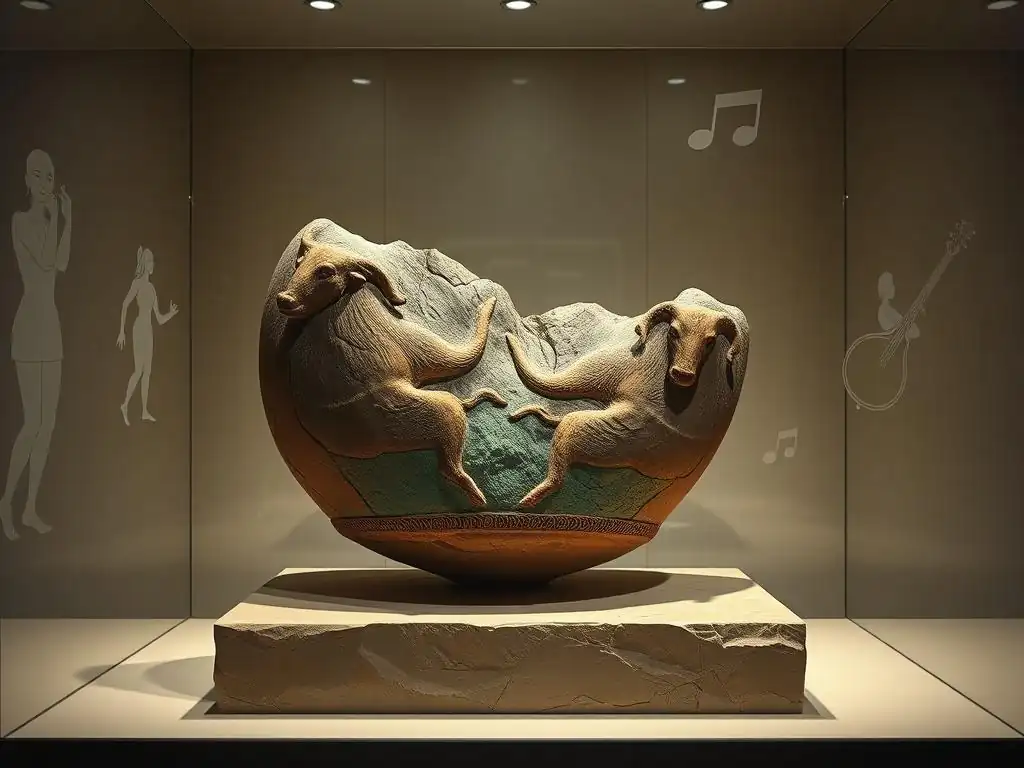
Chlorite vessels, distinctive for their intricate carvings and fine craftsmanship, are a hallmark of BMAC material culture. These vessels, typically ranging from 10 to 30 cm in height, are often adorned with detailed scenes depicting mythological narratives, composite creatures, human figures, and architectural elements. Their widespread distribution across BMAC sites and beyond, often in elite or ritual contexts, underscores their significance.
While not explicitly musical instruments, the narrative quality of these vessels suggests a multi-sensory experience during their use. For example, the "Cultic Scene" vessel from Gonur Depe shows figures in procession or interaction, which could imply a sonic backdrop to the depicted activity. The vessels themselves, when handled or tapped, might have produced subtle sounds, contributing to the overall soundscape of a ritual. Their visual narratives, combined with their probable use in libations or the storage of precious substances, indicate that they were central to ceremonies where sound and movement were likely integral.
Detailed Description of the Vessels and Their Context
BMAC chlorite vessels, crafted from steatite or chlorite, are characterized by their dark, often greenish-black stone and intricate relief carvings. Common motifs include winged goddesses, composite beasts (such as lion-headed eagles), and processions of human or anthropomorphic figures. These vessels are typically found in temple complexes, elite burials, or ritual deposits at sites like Gonur Depe, Togolok, and Sapalli Tepe, suggesting a high ritual or social value. Their presence alongside altars and other cultic paraphernalia reinforces their association with ceremonial activities.
The contexts in which these vessels are found are crucial for interpretation. For example, a vessel depicting a procession of figures might have been used in a ritual where participants mimicked the depicted movements or narratives. The act of pouring libations from such a vessel, perhaps accompanied by chanting or the rhythmic shaking of rattles, would have created a complex sensory experience. This integration of visual art, ritual function, and potential sound provides a rich foundation for speculative BactriaMargiana music dance reconstruction.
Reconstruction of a Possible Ritual Performance
Based on the iconography of chlorite vessels, a hypothetical ritual performance can be reconstructed. Imagine a ceremony taking place in the central courtyard of a BMAC temple, perhaps during a significant agricultural festival. A chlorite vessel depicting a procession of figures is centrally placed, perhaps on an altar. Participants, adorned in ceremonial attire (as suggested by elaborate figurines), move in a structured, rhythmic manner, echoing the figures on the vessel. This could involve circular movements or a linear procession.
The sounds accompanying this ritual would likely include the rhythmic shaking of stone rattles, the sharp calls of ceramic whistles, and perhaps the low thud of drums made from perishable materials. Chanting or singing, possibly led by a high-ranking priest or priestess, would fill the air, creating a hypnotic and immersive atmosphere. The movements, sounds, and visual focus on the chlorite vessel would collectively aim to connect the human participants with the divine or to ensure the fertility of the land, providing a vivid BactriaMargiana music dance reconstruction.
Examining Iconography and Ritual Context at Gonur Depe
Gonur Depe, a vast archaeological site in Margiana, is arguably the most important BMAC center, known for its monumental architecture and extensive evidence of ritual activity. The "temple-palace" complex at Gonur North, with its massive defensive walls, central courtyard, and numerous cult rooms containing altars and offering tables, clearly served as a primary locus for religious ceremonies. The sheer scale and complexity of the site point to highly organized and elaborate rituals.
While explicit musical instruments are rare finds at Gonur Depe, the abundance of ritual paraphernalia, including anthropomorphic figurines, seals depicting composite creatures, and symbolic motifs, strongly suggests a rich ceremonial life. Small bronze bells or clappers have occasionally been found, though their precise function is debated. The overall archaeological context indicates that sensory experiences, including sound and movement, were integral to the religious practices conducted within these sacred spaces.
Description of the Iconography and Site Layout
The layout of Gonur North is characterized by its concentric walls, enclosing a vast central courtyard surrounded by various structures, including a "temple" area, a "palace" area, and residential quarters. Many rooms within the cultic complex show evidence of fire altars and elaborate offering deposits. The iconography found at Gonur Depe includes intricate seals depicting scenes of human-animal interaction, mythological figures, and geometric patterns, often interpreted as having symbolic or ritualistic meaning.
While no direct "dance" scenes are definitively identified, the overall ritualistic nature of the site, combined with the presence of spacious courtyards and dedicated cult rooms, implies that formalized movement was part of the ceremonies. The arrangement of cultic objects and altars within specific rooms might have dictated a choreographed sequence of actions for participants, suggesting a structured ritual practice that extended beyond static offerings and into dynamic performance.
Interpretation of Dance as Part of a Ritual Practice
Synthesizing the architectural evidence with the limited iconography, it is highly plausible that dance was a core component of rituals at Gonur Depe. The stylized postures of some figurines and the dynamic compositions on seals, combined with the structured nature of the cultic spaces, suggest formal, perhaps trance-inducing, movements. These dances could have been performed in the large central courtyard for communal participation or in smaller, more sacred rooms by priests or elite individuals.
Such ritual dances, possibly involving participants adorned with elaborate costumes (implied by the details on some figurines), would have served multiple functions: to connect with the divine, to mark significant calendrical events (e.g., solstices, harvests), or to initiate individuals into religious societies. The repetitive nature of these movements, accompanied by rhythmic sounds from percussion instruments, would have created a powerful, immersive experience for participants, solidifying the interpretation of dance as a vital element in BactriaMargiana music dance reconstruction.
The complexity and artistry involved in crafting some of the potential BMAC musical instruments, as well as the intricate details on chlorite vessels depicting ritual scenes, suggest that music was not merely an informal activity but possibly a specialized craft. This specialization implies that musicians and performers may have held a particular status within society, perhaps supported or patronized by the elite. The concentration of valuable ritual artifacts in high-status areas, such as elite burials at Gonur Depe, suggests that elaborate ceremonies, almost certainly involving music, were controlled or commissioned by the ruling class.
While direct evidence of musicians' social standing is absent, the investment in complex ritual architecture and precious cultic objects points to a society where resources were allocated to maintain religious and ceremonial life. It is plausible that skilled musicians and dancers were part of the retinue of the elite, performing at significant state or religious events. Their performances would have reinforced social hierarchies and displayed the power and wealth of their patrons, contributing to our understanding of the social dimensions within BactriaMargiana music dance reconstruction.
Dance and Community Building: The Function of Dance in Festivals and Celebrations
Beyond elite patronage, communal dances likely served as powerful mechanisms for social cohesion within BMAC society. In an agrarian culture heavily dependent on seasonal cycles, shared rituals and festivals would have been crucial for reinforcing community bonds and collective identity. Large courtyards at major sites, such as Gonur Depe, could have accommodated hundreds of participants or observers, fostering a sense of shared purpose through collective movement and celebration.
These events would have provided opportunities for social interaction, the display of individual or group status (through elaborate costumes or skilled performance), and the intergenerational transmission of cultural values. Dances performed during planting or harvest seasons, or at rites of passage, would have integrated individuals into the community's rhythm, reinforcing shared beliefs and traditions. The collective energy of such events would have been fundamental to maintaining societal unity and cultural continuity, insights vital for BactriaMargiana music dance reconstruction.
The Transmission of Musical and Dance Traditions: Hypotheses About How These Practices Were Passed Down
Given the absence of a writing system in the BMAC, musical and dance traditions were almost certainly transmitted orally and through practical apprenticeship. This suggests a master-apprentice system, where experienced musicians and dancers would instruct younger generations in the specific forms, rhythms, and ritualistic meanings of their performances. Such a system would ensure the continuity and fidelity of these complex cultural practices across generations.
Furthermore, the BMAC maintained extensive trade networks, evidenced by the discovery of BMAC artifacts in regions as far as the Indus Valley and Mesopotamia. It is plausible that these interactions also facilitated the exchange of intangible cultural elements, including musical instruments, performance styles, or ritual dances. This cultural diffusion could have led to a rich tapestry of influences, where local traditions were both preserved and enriched by external contacts, making the study of BactriaMargiana music dance reconstruction a fascinating exploration of ancient cultural exchange.
BactriaMargiana Music Dance Reconstruction: Conclusions and Future Directions
Summarizing the Current State of Knowledge
While direct and unequivocal evidence for music and dance in the Bactria-Margiana Archaeological Complex remains scarce, a compelling body of indirect clues strongly suggests their presence and significant role. Potential musical instruments, such as stone rattles and ceramic whistles, alongside intricate iconography on seals and figurines depicting dynamic postures, provide tantalizing insights. These finds, primarily discovered in ritual contexts, indicate that music and dance were deeply interwoven with BMAC religious life, communal cohesion, and cultural expression.
The BactriaMargiana music dance reconstruction efforts are necessarily interpretive, relying on careful archaeological analysis, comparative ethnographic studies, and experimental archaeology. These methodologies allow scholars to move beyond mere material culture and speculate on the sensory and performative dimensions of this ancient civilization. It is clear that these practices were integral to the spiritual well-being, social organization, and identity formation of the BMAC people.
Identifying Areas for Further Research
To further refine our understanding of BMAC music and dance, future research should focus on several key areas. Continued archaeological excavations, particularly in waterlogged or exceptionally preserved contexts, might yield more definitive fragments of perishable instruments. The application of advanced analytical techniques, such as microarchaeology and residue analysis on artifacts, could potentially reveal traces of materials used in instrument construction or performance.
Moreover, more detailed iconographic studies, employing sophisticated image analysis, could uncover subtle cues in BMAC art that have previously gone unnoticed. Expanding comparative ethnographic research to include a broader range of Central Asian and Near Eastern cultures, focusing on the social functions and structures of music and dance, could provide richer analogies for BactriaMargiana music dance reconstruction. Finally, acoustic analysis of BMAC architectural spaces could offer insights into how sounds would have resonated within specific ritual environments.
The Broader Significance of BMAC Music and Dance for Understanding Ancient Central Asia
Understanding the music and dance of the BMAC elevates our perception of this Bronze Age civilization from merely an impressive material culture to a vibrant, complex society with rich spiritual and social dimensions. It allows us to appreciate the full spectrum of human expression in ancient Central Asia, moving beyond economic and political structures to grasp the emotional and communal lives of its inhabitants.
The ongoing BactriaMargiana music dance reconstruction effort is crucial for creating a more complete and nuanced picture of life in the Bronze Age. It highlights the ingenuity of archaeological interpretation in uncovering intangible heritage and underscores the universal human need for rhythmic expression, communal celebration, and spiritual engagement through the arts. Ultimately, this research offers a deeper connection to the ancient past, revealing the enduring power of sound and movement in shaping human culture.
Frequently Asked Questions
What kind of direct evidence exists for music and dance from the BactriaMargiana Archaeological Complex (BMAC)?
Unfortunately, there is little to no direct evidence like musical instruments or depictions of dance found within the BMAC itself. Our understanding relies heavily on indirect evidence and comparative analysis.
What types of indirect evidence do archaeologists use to reconstruct music and dance in the BMAC?
Archaeologists analyze artifacts like figurines, seals, and pottery fragments that may depict scenes related to music or ritual. They also consider regional cultural connections and analogies with contemporary cultures to infer practices.
How reliable are reconstructions of BMAC music and dance based on indirect evidence?
Reconstructions are inherently speculative and interpretive. While informed by evidence, they are subject to scholarly debate and may change as new discoveries are made.
What role did geography and trade play in the musical and dance traditions of the BMAC?
The BMAC's location at the crossroads of civilizations suggests cultural exchange with Mesopotamia, the Indus Valley, and other regions. This likely influenced the development of unique musical and dance styles.
What is the significance of understanding the music and dance of the BMAC?
Reconstructing these aspects provides a more holistic understanding of BMAC culture, including its social structures, religious beliefs, and artistic expressions. It helps us appreciate the complexity of this ancient civilization.
Final Reflection: Echoes of Ancient Rhythms
The exploration of music and dance within the BactriaMargiana Archaeological Complex (BMAC), while relying on indirect evidence, reveals a profound truth: the human need for artistic expression transcends time and material limitations. Even without direct recordings or detailed depictions, the artifacts and architectural contexts we've examined paint a vibrant picture of a society deeply connected to rhythm and movement, reminding us that culture is built not just on survival, but on the shared experience of beauty.
This journey into the past underscores how music and dance, though ephemeral in nature, leave indelible marks on the cultural landscape. The echoes of BMAC's potential performances resonate even today, reminding us of the power of art to connect us to our ancestors and to each other. Music is the universal language of mankind.
- Henry Wadsworth Longfellow. This sentiment rings especially true when considering the BMAC, where the absence of written language makes the potential for music and dance to communicate values and beliefs all the more significant.
As we close this exploration of BactriaMargiana music dance reconstruction, I invite you to consider the role of art in your own life. What rhythms move you? What stories do you tell through movement and sound? Let the imagined melodies and dances of the BMAC inspire you to seek out and celebrate the artistic expressions that enrich your own world, and to recognize the enduring power of art to connect us across time and cultures.
Unearth the Rhythms of the Past!
Thank you for delving into the fascinating world of music and dance in the Bactria-Margiana Archaeological Complex. We hope you've enjoyed uncovering the subtle clues that bring this ancient culture to life. Now, let's translate that knowledge into action:
- Embark on a journey of discovery by visiting your local museum or searching online for similar artifacts from ancient civilizations and consider how music might have been a part of their daily lives.
- Share this article with fellow history enthusiasts and spark a conversation about the role of music and dance in ancient societies.
- Try to recreate a possible BMAC musical instrument from clay or other craft materials based on the descriptions and images you saw.
What other seemingly ordinary objects might hold hidden clues about the lives and cultures of those who came before us?