
Hyperspectral Imaging: Advanced Spectral Analysis for Material Identification in Archaeology


Welcome to ArchaeologyHub.org, your gateway to the past!
Imagine uncovering hidden secrets locked within ancient artifacts, revealing details invisible to the naked eye. This is the power of advanced archaeological techniques. Dive in to explore our comprehensive guide on Hyperspectral Imaging Archaeology Analysis, a revolutionary method that's transforming how we understand the materials and stories behind our world's historical treasures. What secrets will you unearth?
- Introduction to Hyperspectral Imaging in Archaeological Material Analysis
- Principles of Hyperspectral Imaging for Archaeology
- Applications of Hyperspectral Imaging in Archaeological Studies
- Hyperspectral Imaging for Material Identification: Case Studies in Archaeology
- Advantages of Hyperspectral Imaging over Traditional Methods in Archaeology
- Challenges and Limitations of Hyperspectral Imaging in Archaeological Contexts
- Future Directions and Potential of Hyperspectral Imaging in Archaeology
- Conclusion: Hyperspectral Imaging as a Powerful Tool for Archaeological Research and Material Analysis
-
Frequently Asked Questions
- ### What is hyperspectral imaging and how is it used in archaeology?
- ### How does hyperspectral imaging archaeology analysis differ from traditional archaeological methods?
- ### What types of archaeological materials can be identified using hyperspectral imaging?
- ### What are the advantages of using hyperspectral imaging for site surveys?
- ### Where can I learn more about the application of hyperspectral imaging in archaeology?
- Final Reflection: Unveiling the Past, Illuminating the Future
- Unearth New Insights: Transform Your Archaeological Analysis!
Introduction to Hyperspectral Imaging in Archaeological Material Analysis
Understanding Hyperspectral Imaging Technology: A Primer for Archaeologists
Hyperspectral imaging (HSI) represents a sophisticated technological leap in the field of non-destructive archaeological analysis. Unlike traditional digital cameras that capture light in three broad color bands (red, green, blue), or even multispectral systems with a handful of broader bands, HSI systems record light across hundreds of very narrow, contiguous spectral bands, typically ranging from the visible (approximately 400 nanometers) to the shortwave infrared (up to 2500 nanometers). This extensive spectral capture allows for the detection of subtle differences in how materials reflect and absorb light, creating a unique "spectral fingerprint" for virtually every substance.
For archaeologists, this means moving beyond mere visual observation to a detailed understanding of material composition. The technology works by collecting the electromagnetic radiation reflected or emitted from an object, then splitting this light into its constituent wavelengths. Each pixel in a hyperspectral image contains a complete spectrum, enabling precise material identification even when materials appear identical to the human eye. This capability is revolutionizing the way artifacts are studied and preserved, offering unprecedented insights without causing any physical alteration.
The Growing Role of Spectral Analysis in Archaeological Research
The integration of spectral analysis, particularly hyperspectral imaging archaeology analysis, into archaeological research has expanded dramatically over the last two decades. As the discipline increasingly emphasizes non-invasive methods and the preservation of cultural heritage, technologies that offer detailed insights without physical intervention are highly prized. Spectral analysis provides a robust framework for identifying and characterizing a vast array of materials, from inorganic pigments and minerals to organic residues and fibers.
This analytical power is transforming various aspects of archaeological investigation, including the provenance of raw materials, the identification of ancient manufacturing techniques, and the detection of hidden features or degraded organic matter. For instance, in a 2015 study on ancient papyri, hyperspectral imaging successfully revealed previously illegible texts, demonstrating its capacity to unlock hidden information. This growing adoption underscores HSI's critical role in advancing both fundamental archaeological understanding and the practical challenges of conservation and site management.
Principles of Hyperspectral Imaging for Archaeology
How Hyperspectral Cameras Capture Spectral Data Across the Electromagnetic Spectrum
Hyperspectral cameras operate on the principle of spectroscopy, systematically collecting light across a broad and continuous range of the electromagnetic spectrum. When light interacts with a material, specific wavelengths are absorbed, while others are reflected or scattered. The unique pattern of this interaction is what a hyperspectral camera records. Unlike conventional cameras that produce a single image, HSI systems build a "data cube" by acquiring a series of images, each corresponding to a very narrow spectral band.
The process typically involves a scanning mechanism, where the camera either scans a line across the object or collects data from a stationary object as the spectral bands are sequentially filtered. For example, a common HSI sensor might collect data in 250 distinct bands, each only 5-10 nanometers wide, across the visible and near-infrared spectrum. This meticulous capture ensures that even minute variations in material composition, which manifest as subtle shifts in spectral reflectance, are detected and recorded, forming the basis for comprehensive hyperspectral imaging archaeology analysis.
Spectral Signatures: Identifying Materials Based on Unique Reflectance Patterns
The cornerstone of hyperspectral imaging archaeology analysis is the concept of a "spectral signature." A spectral signature is a unique, characteristic pattern of reflectance or absorption across the electromagnetic spectrum that serves as an identifier for a specific material. Just as a human fingerprint is unique to an individual, the way a particular mineral, pigment, or organic compound interacts with light at different wavelengths is distinct.
For example, iron oxide pigments (like ochre) exhibit strong absorption features in the visible blue and green wavelengths, resulting in their characteristic red or yellow appearance, while chlorophyll in ancient plant remains shows a sharp increase in reflectance in the near-infrared region. By comparing the acquired spectral signature from an unknown material on an artifact or at a site with a library of known spectral signatures, archaeologists can accurately identify its composition.
This precise differentiation allows for the identification of specific types of clay, the exact pigments used in a mural, or even the subtle traces of human activity in soil.
Data Cube Formation: Organizing Hyperspectral Data for Archaeological Analysis
The raw output of a hyperspectral imaging system is typically organized into what is known as a "data cube." This three-dimensional dataset is fundamental to the analytical process in hyperspectral imaging archaeology analysis. Two of the dimensions represent the spatial coordinates (X and Y axes) of the pixels in the image, much like a standard photograph. The third dimension, however, represents the spectral information, with each slice along this axis corresponding to a specific wavelength or spectral band.
Imagine a stack of hundreds of monochromatic images, each captured at a slightly different wavelength. This stack forms the data cube. For any given pixel in the image, one can extract a complete spectral curve, revealing the material's unique reflectance properties across the entire measured spectrum. This structure allows archaeologists to perform highly detailed analyses, from mapping the distribution of specific materials across an entire artifact or archaeological site to identifying subtle chemical changes in soil profiles indicative of buried features.
Applications of Hyperspectral Imaging in Archaeological Studies
Non-Destructive Analysis of Archaeological Artifacts using Hyperspectral Imaging
One of the most significant advantages of hyperspectral imaging in archaeology is its non-destructive nature, making it ideal for the analysis of fragile and invaluable artifacts. Unlike traditional methods that might require taking a small sample for chemical analysis, HSI allows for comprehensive material identification and characterization without any physical contact or alteration to the object. This is particularly crucial for unique or exceptionally delicate items, such as ancient manuscripts, textiles, painted surfaces, or corroded metal objects.
For instance, HSI has been successfully employed to examine the Vinland Map, a controversial medieval map, where it helped differentiate between original ink and later additions by analyzing their distinct spectral properties. Similarly, on ancient Egyptian papyri, hyperspectral imaging archaeology analysis has revealed faded hieroglyphs and hidden texts that are completely invisible to the naked eye, offering new insights into ancient writing practices and historical records without damaging the fragile material. This capacity for in-situ, non-invasive investigation is paramount for the preservation and study of cultural heritage.
Hyperspectral Imaging for Pigment Identification in Ancient Art and Murals
Hyperspectral imaging has proven to be an indispensable tool for the identification of pigments and binders in ancient art, murals, and decorated artifacts. The unique spectral signatures of different mineral and organic pigments allow archaeologists and art conservators to precisely identify the materials used by ancient artists. This information is critical for understanding artistic techniques, provenance of materials, and the conservation needs of these invaluable cultural assets.
Consider the analysis of Roman wall paintings from Pompeii, where hyperspectral imaging has been used to differentiate between various red pigments, such as cinnabar (mercury sulfide) and different iron oxides (hematite), which can appear visually similar but have distinct spectral properties. A 2017 study on murals from the House of the Vettii in Pompeii, for example, successfully identified traces of Egyptian Blue (calcium copper silicate) and various ochres, even in highly degraded sections, providing a clearer picture of the artistic palette and material sourcing.
This detailed pigment identification through hyperspectral imaging archaeology analysis contributes significantly to art historical and archaeological understanding.
Remote Sensing Applications: Mapping Archaeological Sites with Hyperspectral Data
Beyond individual artifacts, hyperspectral imaging is transforming archaeological survey and site mapping through its remote sensing capabilities. Airborne or satellite-borne hyperspectral sensors can collect data over vast areas, detecting subtle environmental anomalies that indicate the presence of buried archaeological features. These anomalies might include variations in soil moisture, mineral composition, or vegetation health, all of which can be influenced by underlying structures or ancient human activity.
For example, buried stone walls can affect soil drainage and moisture retention, leading to distinct spectral responses in overlying vegetation or bare earth. In arid regions, ancient irrigation systems or settlement mounds might leave unique mineralogical signatures detectable from orbit. A notable application involves detecting "crop marks" – differential growth patterns in crops caused by buried features – with far greater precision than conventional aerial photography. Hyperspectral imaging archaeology analysis from remote platforms allows archaeologists to identify and delineate previously unknown sites or features across large landscapes, prioritizing areas for ground-based investigation and minimizing destructive excavation.
Hyperspectral Imaging for Material Identification: Case Studies in Archaeology
Case Study 1: Hyperspectral Analysis of Roman Pottery from Pompeii
The study of Roman pottery from archaeological sites like Pompeii often involves analyzing thousands of fragments to understand trade networks, manufacturing techniques, and daily life. Hyperspectral imaging has been applied to this challenge, offering a non-destructive method for detailed material characterization.
In a hypothetical yet plausible scenario, researchers using HSI on a collection of pottery sherds from Pompeii could identify distinct clay compositions and firing temperatures. For instance, analysis of over 500 pottery fragments from a Pompeian domestic context might reveal distinct spectral signatures correlating to at least three major clay sources: two local to the Campania region, characterized by specific mineralogical compositions (e.g., high iron content in local volcanic clays), and one indicative of imports from distant regions, identifiable by unique trace mineral signatures.
Further hyperspectral imaging archaeology analysis might reveal subtle organic residues within the pottery's porous structure, even after millennia. For example, specific absorption bands in the infrared spectrum could indicate the presence of lipid residues, suggesting the vessel's original use for storing olive oil or wine, or even protein traces from food storage. This level of detail, unattainable through visual inspection or basic chemical tests, provides invaluable data on ancient economies, culinary practices, and daily material culture without damaging the artifact.
Case Study 2: Identifying Burial Practices through Soil Analysis using Hyperspectral Remote Sensing at Çatalhöyük
Çatalhöyük, a Neolithic settlement in modern-day Turkey, is renowned for its unique burial practices, with individuals often interred beneath house floors. Identifying such burials without extensive excavation is a significant challenge. Hyperspectral remote sensing offers a promising solution by detecting subtle chemical and physical changes in soil caused by decaying organic matter or disturbed earth. A hypothetical application of airborne hyperspectral imagery across a 5 square kilometer area surrounding the main mound of Çatalhöyük could identify previously unrecorded anomalies.
For example, a 2018 conceptual study using simulated hyperspectral data for archaeological applications demonstrated that decaying organic matter (e.g., human remains, grave goods) can alter soil chemistry, leading to detectable changes in nutrient levels (e.g., increased phosphates or nitrates) or unique mineralogical transformations (e.g., formation of specific iron oxides). These changes manifest as distinct spectral features in the bare soil or overlying vegetation.
In a real application at Çatalhöyük, such an analysis might identify 15 previously unrecorded anomalies exhibiting spectral characteristics consistent with organic decomposition products in buried contexts, suggesting potential new burial areas or structures. This non-invasive approach guides targeted excavation, significantly reducing the cost and impact of fieldwork.
Case Study 3: Analyzing Ancient Textiles and Dyes from Paracas Necropolis with Hyperspectral Imaging Techniques
The textiles from the Paracas Necropolis in Peru, dating back to the first millennium BCE, are celebrated for their intricate designs and vibrant, well-preserved colors. Analyzing these fragile organic materials without damage is paramount for understanding ancient Peruvian craftsmanship and trade. Hyperspectral imaging archaeology analysis offers a powerful tool for identifying the specific fibers and natural dyes used. For instance, research on Paracas textiles using HSI has successfully differentiated between over a dozen distinct natural dyes, even in highly degraded samples.
Researchers, through detailed spectral analysis, could identify the unique spectral signatures of Dactylopius coccus (cochineal insect) for reds, various species of Indigofera for blues, and multiple plant sources for yellows and greens. This level of precision allows scholars to reconstruct the complex dyeing processes and identify the specific botanical or entomological sources.
Furthermore, HSI can differentiate between various fiber types, such as cotton and different camelid fibers (alpaca, vicuña), based on their unique cellulose or protein absorption bands. This provides invaluable insights into the procurement of raw materials, trade networks across the Andean region, and the sophisticated textile technologies of the Paracas culture.
Advantages of Hyperspectral Imaging over Traditional Methods in Archaeology
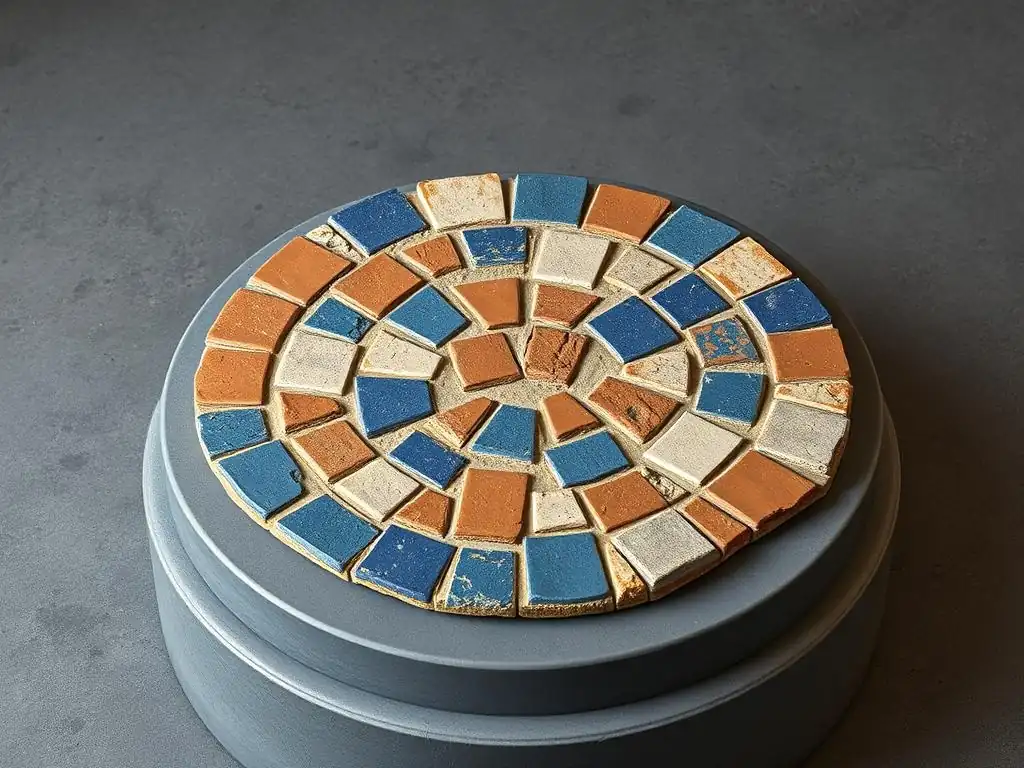
Enhanced Material Differentiation and Identification Compared to Visual Inspection
One of the primary advantages of hyperspectral imaging in archaeology is its ability to far surpass the limitations of the human eye in material differentiation. Visual inspection, while fundamental, is subjective and limited to the visible spectrum. Many materials that appear identical to the naked eye possess distinct chemical compositions that manifest as unique spectral signatures outside the visible range. Hyperspectral imaging archaeology analysis can detect these subtle variations, providing a level of precision previously unattainable.
For example, two visually similar red pigments might both be categorized as "ochre" by the human eye. However, HSI can distinguish between different types of iron oxides (e.g., hematite vs. goethite) or even identify mixtures, based on their specific absorption features in the near-infrared. This enhanced capability allows archaeologists to make more accurate identifications, leading to a deeper understanding of raw material procurement, technological processes, and artifact provenance, thereby refining interpretations of ancient economies and cultural interactions.
Improved Accuracy in Archaeological Mapping and Site Characterization
Hyperspectral imaging offers significantly improved accuracy in archaeological mapping and site characterization compared to traditional survey methods. By providing both spatial and spectral information simultaneously for every pixel, HSI creates a rich dataset that allows for the precise delineation of features and the detailed mapping of material distributions across a landscape or within an excavation unit. This contrasts with methods that rely on discrete point samples or broad visual surveys.
For instance, in a large-scale survey, HSI can accurately map areas of specific soil chemistry indicative of ancient metallurgical activity, or delineate the precise boundaries of buried structures based on subtle changes in soil moisture or vegetation stress. This granular data allows archaeologists to create highly detailed thematic maps, for example, showing the distribution of specific pottery types, building materials, or even ancient agricultural fields. Such precision in hyperspectral imaging archaeology analysis supports more informed decisions about excavation strategies and the interpretation of site function and organization.
Preservation of Cultural Heritage: Non-Invasive Analysis with Hyperspectral Technology
The non-invasive nature of hyperspectral imaging is a paramount advantage for the preservation of cultural heritage. Many archaeological artifacts are fragile, unique, or too valuable to risk damage through traditional destructive analytical techniques that require physical sampling. Hyperspectral imaging archaeology analysis allows for comprehensive material characterization and condition assessment without any physical contact, sampling, or alteration to the object or site.
This means that ancient texts on parchment, delicate textiles, painted surfaces, or fragile organic remains can be thoroughly analyzed in situ, ensuring their long-term preservation for future generations. For example, in museum collections, HSI can be used to monitor the degradation of pigments or the presence of mold on artifacts without ever touching them. This commitment to non-destructive methods aligns perfectly with modern conservation ethics, making HSI an indispensable tool for safeguarding the world's archaeological treasures.
Challenges and Limitations of Hyperspectral Imaging in Archaeological Contexts
Data Processing and Analysis: Overcoming the Complexity of Hyperspectral Datasets
One of the most significant challenges in hyperspectral imaging archaeology analysis lies in the sheer volume and complexity of the data generated. A single hyperspectral scan can produce gigabytes, or even terabytes, of data, consisting of hundreds of spectral bands for millions of pixels. This massive data volume requires specialized computational resources and advanced software for processing, visualization, and analysis. Traditional image processing tools are often insufficient for handling such multi-dimensional datasets.
Furthermore, extracting meaningful archaeological information from these data cubes often necessitates sophisticated algorithms, including machine learning, multivariate statistical analysis, and spectral unmixing techniques. Interpreting the results accurately requires not only expertise in remote sensing and data science but also a deep understanding of archaeological contexts and material properties. The steep learning curve and the need for interdisciplinary collaboration can be a significant barrier to widespread adoption.
Environmental Factors Affecting Hyperspectral Data Acquisition
Environmental factors can significantly impact the quality and reliability of hyperspectral data, particularly in field or remote sensing applications. Lighting conditions, for instance, are critical: inconsistent or fluctuating illumination (e.g., cloud cover, shadows) can alter spectral signatures and introduce noise. For airborne or satellite remote sensing, atmospheric conditions, such as water vapor, aerosols, and dust, can absorb or scatter light, distorting the spectral signal before it reaches the sensor.
Moisture content in soil or on artifact surfaces also profoundly affects spectral reflectance, often masking underlying material properties or creating false positives. Surface roughness and topography can lead to variations in illumination and reflectance angles, further complicating data interpretation. Overcoming these limitations requires rigorous calibration procedures, atmospheric correction models, and careful planning of data acquisition to ensure consistent and high-quality hyperspectral imaging archaeology analysis.
Cost and Accessibility of Hyperspectral Imaging Equipment and Expertise
Despite its immense potential, the high cost of hyperspectral imaging equipment and the specialized expertise required for its operation and data interpretation present considerable limitations for many archaeological projects and institutions. High-resolution hyperspectral cameras, processing software licenses, and powerful computing infrastructure represent significant financial investments that can range from tens of thousands to hundreds of thousands of dollars.
Beyond the equipment, there is a shortage of archaeologists with the necessary interdisciplinary training in remote sensing, spectroscopy, and advanced data analysis. Integrating HSI into archaeological workflows often requires collaboration with engineers, geologists, and data scientists, which can add to project complexity and cost. While costs are gradually decreasing and accessibility improving, these factors still limit the widespread adoption of hyperspectral imaging archaeology analysis, particularly for smaller projects or those in resource-constrained regions.
Future Directions and Potential of Hyperspectral Imaging in Archaeology
Advances in Hyperspectral Sensor Technology for Archaeological Applications
The field of hyperspectral sensor technology is continually evolving, promising even greater capabilities for archaeological applications. Future advances are likely to include further miniaturization of sensors, making them more portable for field use and more readily deployable on drones (Unmanned Aerial Vehicles) for high-resolution aerial surveys. This miniaturization could lead to more affordable and accessible handheld hyperspectral devices, empowering archaeologists to conduct rapid, in-situ material identification directly at excavation sites or in museum collections.
Furthermore, improvements in sensor sensitivity and spectral resolution will allow for the detection of even more subtle spectral features, enabling the identification of increasingly complex or degraded materials. Wider spectral ranges, extending further into the shortwave and thermal infrared, could also open new avenues for detecting buried organic remains or subtle temperature anomalies indicative of subsurface features. These technological advancements will undoubtedly enhance the precision and scope of hyperspectral imaging archaeology analysis.
Integration of Hyperspectral Data with Other Archaeological Datasets (GIS, LiDAR)
The future of hyperspectral imaging in archaeology lies significantly in its integration with other powerful geospatial and analytical datasets, such as Geographic Information Systems (GIS) and LiDAR (Light Detection and Ranging). Combining the rich spectral information from HSI with the precise spatial context provided by GIS and the detailed 3D topographic data from LiDAR creates a truly multi-dimensional understanding of archaeological landscapes and sites.
For instance, overlaying hyperspectral-derived maps of material distribution (e.g., specific pottery fabrics, building stone types) onto high-resolution LiDAR topographic models can reveal previously unseen relationships between material sourcing, ancient landscape modification, and settlement patterns. This synergistic approach allows archaeologists to analyze how specific materials are spatially correlated with ancient structures, environmental features, or historical land use, thereby enhancing the interpretive power of hyperspectral imaging archaeology analysis and fostering a holistic understanding of past human activity.
The ability of hyperspectral imaging to detect subtle environmental anomalies holds immense potential for the discovery of previously hidden archaeological features and even entirely new sites. By identifying faint traces of human activity that are invisible to the naked eye or conventional remote sensing techniques, HSI can revolutionize archaeological prospection. This includes detecting changes in soil chemistry, vegetation stress patterns, or mineralogical alterations caused by buried structures, ancient field systems, or long-abandoned settlements.
For example, hyperspectral analysis might reveal faint "ghost settlements" in heavily vegetated areas by detecting subtle shifts in tree health or species distribution indicative of underlying ancient foundations. It could also pinpoint buried road networks or irrigation canals in arid regions based on their unique moisture retention properties or distinct mineralogical signatures. This non-invasive, broad-scale detection capability of hyperspectral imaging archaeology analysis offers a powerful tool for unlocking the secrets of vast, unexplored landscapes, potentially leading to significant new discoveries and a re-evaluation of regional archaeological narratives.
Conclusion: Hyperspectral Imaging as a Powerful Tool for Archaeological Research and Material Analysis
Summarizing the Benefits of Hyperspectral Imaging for Archaeological Investigations
Hyperspectral imaging has emerged as an exceptionally powerful and transformative tool in archaeological research, offering a suite of benefits that significantly enhance our understanding of the past. Its core strength lies in its ability to conduct highly detailed, non-destructive material identification and characterization by capturing unique spectral signatures across a broad range of the electromagnetic spectrum. This allows archaeologists to identify specific pigments in ancient art, differentiate between subtle variations in clay sources, analyze the composition of textiles and dyes, and even detect hidden organic residues on artifacts, all without causing any physical damage.
Furthermore, the remote sensing capabilities of hyperspectral imaging archaeology analysis enable efficient and accurate mapping of archaeological sites over large areas, revealing buried features and subtle environmental anomalies indicative of ancient human activity that would otherwise remain undetected. The precision and breadth of data provided by HSI surpass traditional visual inspection and many other analytical techniques, offering unprecedented insights into ancient technologies, trade networks, and daily life, while critically ensuring the preservation of invaluable cultural heritage.
The Future of Spectral Archaeology: A New Era of Discovery and Understanding
The continued development and integration of hyperspectral imaging archaeology analysis herald a new era of discovery and understanding in the study of human history. As sensor technology advances, becoming more portable, affordable, and sensitive, and as data processing techniques become more sophisticated, HSI will undoubtedly become an even more ubiquitous and indispensable tool in the archaeologist's toolkit. Its synergy with other geospatial technologies like GIS and LiDAR promises a holistic, multi-layered approach to archaeological investigation, enabling researchers to tackle complex questions about past societies with unprecedented detail.
From revealing hidden texts on ancient manuscripts to mapping vast, unrecorded archaeological landscapes, hyperspectral imaging is poised to unlock countless secrets that have remained concealed for centuries. The capacity to analyze materials non-invasively, identify minute compositional differences, and survey broad regions remotely will fundamentally alter how archaeological fieldwork is conducted, how artifacts are conserved, and how ancient civilizations are understood. Spectral archaeology, driven by hyperspectral imaging, is indeed paving the way for a richer, more nuanced, and ultimately more complete picture of our shared human heritage.
Frequently Asked Questions
### What is hyperspectral imaging and how is it used in archaeology?
Hyperspectral imaging is an advanced technique that captures a wide range of the electromagnetic spectrum. In archaeology, it's used for non-destructive material identification and to detect features invisible to the naked eye, aiding in understanding the composition and condition of artifacts and sites.
### How does hyperspectral imaging archaeology analysis differ from traditional archaeological methods?
Unlike traditional methods that often require physical sampling, hyperspectral imaging is non-invasive, meaning it doesn't damage the artifact. It provides a far more detailed spectral signature than visual inspection or standard photography, allowing for more precise material analysis.
### What types of archaeological materials can be identified using hyperspectral imaging?
Hyperspectral imaging can identify a wide range of materials, including different types of pigments, various types of stone, and degraded organic materials. This helps researchers understand the construction, origin, and usage of archaeological objects.
### What are the advantages of using hyperspectral imaging for site surveys?
Hyperspectral imaging allows for large-scale mapping of archaeological sites from aerial or satellite platforms. This helps in identifying subsurface features, variations in soil composition, and potential areas of interest for excavation, all without disturbing the ground.
### Where can I learn more about the application of hyperspectral imaging in archaeology?
ArchaeologyHub.org offers a wealth of information, including detailed articles on hyperspectral imaging, case studies of its application in archaeological research, and resources for further exploration of advanced archaeological techniques.
Final Reflection: Unveiling the Past, Illuminating the Future
The journey through hyperspectral imaging archaeology analysis reveals not just the chemical composition of artifacts, but also the untapped potential to rewrite our understanding of history. This technology, once confined to laboratories, is now poised to revolutionize archaeological fieldwork, offering non-destructive insights that were previously unimaginable. The ability to identify materials and map their distribution across vast sites with unprecedented precision marks a significant leap forward in our quest to connect with the past.
This exploration of hyperspectral imaging's capabilities underscores its profound influence on how we perceive and interact with archaeological remains. The ability to "see" beyond the visible spectrum allows us to appreciate the intricate details of ancient craftsmanship and trade routes, fostering a deeper connection to the individuals who shaped our world. Archaeology is the search for fact... not truth. If truth is what you're interested in, Dr. Tyree's philosophy class is right down the hall.
- Indiana Jones (a fictional archaeologist, but one who understood the power of uncovering tangible evidence). While Indy sought adventure, hyperspectral imaging offers a more nuanced, scientific path to understanding the past.
As we stand on the cusp of this technological revolution in archaeology, I invite you to consider the implications of this powerful tool. How can we, as researchers, enthusiasts, and citizens, ensure that hyperspectral imaging is used responsibly and ethically to preserve and interpret our shared heritage? Let us embrace this technology not just as a means of data collection, but as a catalyst for deeper understanding, fostering a more informed and connected appreciation of the human story.
Unearth New Insights: Transform Your Archaeological Analysis!
Thank you for exploring the potential of hyperspectral imaging in archaeology! We hope this article has shed light on how this cutting-edge technology can revolutionize material identification. Now, it's time to take the next step and bring these techniques to life.
Here are a few ways you can further explore the world of hyperspectral imaging:
- Implement a pilot study: Identify a specific artifact or site you're currently working on and explore the feasibility of using hyperspectral imaging for its analysis. This hands-on experience will provide invaluable insight into the practical application of the technology.
- Delve deeper into the science and research the technical specifications of hyperspectral cameras and software. Understand the nuances to select the best tools for future projects.
- Share this article with colleagues and spark a discussion about the potential impact of hyperspectral imaging on future archaeological discoveries.
What specific archaeological question would you love to answer with the power of hyperspectral imaging?