
Water Management Systems in Postclassic Maya Cities and their Relevance Today

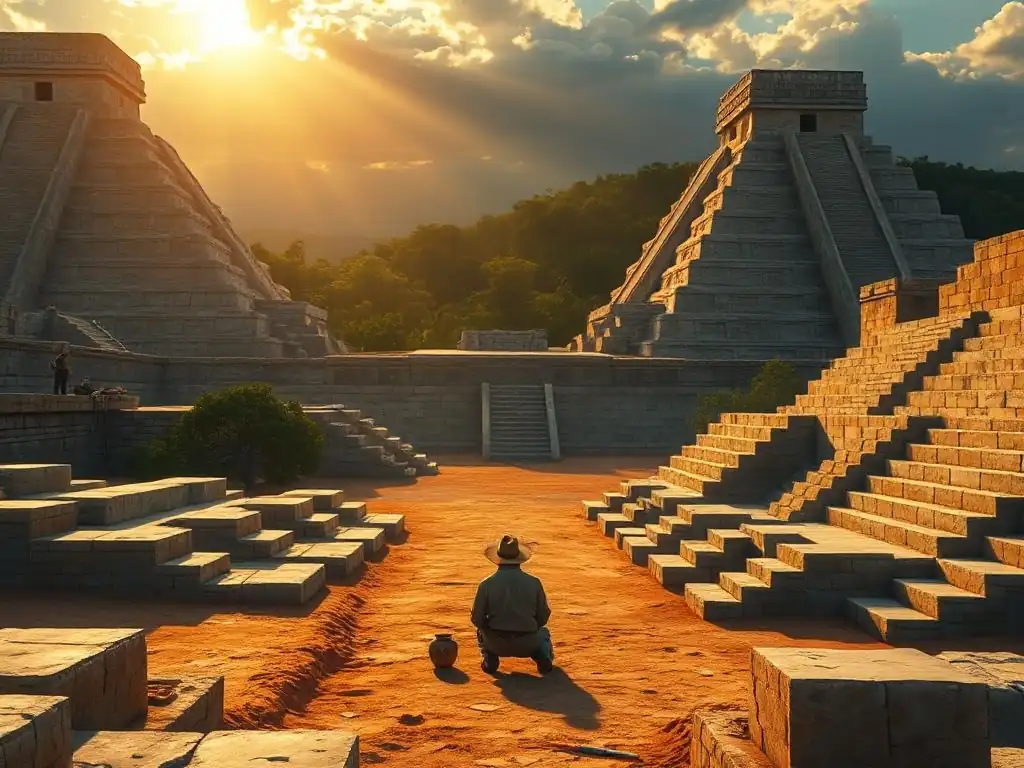
Welcome to ArchaeologyHub.org, your gateway to unlocking the secrets of the past! Delve into the rich tapestry of human history, from groundbreaking discoveries to cutting-edge excavation techniques. Ever wondered how ancient civilizations thrived in seemingly impossible environments? Our exploration of water management systems in Postclassic Maya cities offers a fascinating glimpse into their ingenuity and, surprisingly, their relevance for our future. Discover how these ancient techniques can inform our modern approaches to sustainability and resilience. Intrigued? Read on to uncover the enduring legacy of the Maya and their sophisticated strategies for survival.
- Introduction: The Ingenuity of Postclassic Maya Water Management
- The Postclassic Maya: A Context for Water Management
- Key Water Management Techniques Employed by the Postclassic Maya
- Case Studies: Examining Specific Examples of Maya Water Systems
- The Decline of Maya Civilization and the Role of Water Management
- Relevance of Maya Water Management Techniques for the Future
- Maya Water Management Techniques: A Sustainable Future?
- Conclusion: Preserving the Legacy of Maya Water Wisdom
-
Frequently Asked Questions
- What were the main water management techniques employed by the Maya in Postclassic cities?
- How did the Maya adapt their water management strategies to different environmental conditions?
- How did social organization influence the development and maintenance of Maya water management systems?
- What lessons can modern societies learn from the Maya's approach to water management, particularly in the face of climate change?
- How can archaeological research on Maya water management techniques contribute to future water resource planning?
- Final Reflection: Echoes of Innovation, Seeds of Sustainability
- Unearth Solutions: Apply Ancient Wisdom to Modern Water Challenges
Introduction: The Ingenuity of Postclassic Maya Water Management
Understanding the Environmental Challenges Faced by the Postclassic Maya
The Postclassic Maya, flourishing from approximately 900 to 1521 CE, inhabited a diverse range of environments, from the arid northern Yucatán Peninsula to the riverine lowlands of Belize and the highlands of Guatemala. A pervasive challenge across these regions was the highly seasonal rainfall pattern, characterized by a distinct wet season (typically May to October) followed by a prolonged dry season.
In the karst landscapes of the Yucatán, this challenge was compounded by the porous limestone geology, which rapidly absorbed surface water, leaving few permanent rivers or lakes. This hydrological reality meant that access to reliable freshwater sources was a constant, critical concern for urban centers and agricultural productivity.
Beyond seasonal variability, the Maya also contended with the specter of multi-year droughts, events that could severely strain their resource base. Archaeological and paleoclimate studies, drawing on evidence from lake sediments and speleothems, indicate periods of significant aridity, such as those that affected parts of the Yucatán around 1020-1100 CE, coinciding with shifts in population centers. Such environmental pressures necessitated not just basic water collection, but sophisticated and resilient water management systems capable of sustaining large, dense populations through extended periods of water scarcity, demonstrating remarkable foresight and engineering prowess.
Why Study Ancient Maya Water Systems for Modern Solutions?
Studying the ancient Maya water management techniques offers invaluable insights into sustainable living, particularly in an era grappling with global climate change and increasing water scarcity. The Maya developed ingenious strategies to capture, store, distribute, and even purify water, adapting their methods to specific ecological niches with remarkable success over centuries. Their reliance on local materials and deep understanding of their environment resulted in systems that were largely self-sustaining and integrated seamlessly with their urban and agricultural landscapes.
These ancient solutions provide a compelling counter-narrative to modern large-scale, often energy-intensive water infrastructure projects. By examining how the Maya managed water with limited technology but profound ecological knowledge, we can uncover principles applicable to contemporary challenges. For instance, their emphasis on decentralized systems, rainwater harvesting, and natural filtration offers a blueprint for building resilience in communities facing similar hydrological stresses today. The enduring legacy of Maya water management techniques future-proofs our understanding of resource stewardship.
The Postclassic Maya: A Context for Water Management
Defining the Postclassic Period in Maya Civilization
The Postclassic Period of Maya civilization, generally dated from around 900 CE to the arrival of the Spanish in 1521 CE, represents a significant transformation from the preceding Classic Period. While some southern lowland centers experienced decline, the northern Yucatán Peninsula witnessed a resurgence of population and political complexity, with cities like Chichen Itza, Mayapan, and Tulum rising to prominence. This era saw shifts in political organization, with a move towards more decentralized, possibly confederated, states in some regions, and a continued emphasis on trade networks that extended across Mesoamerica and the Caribbean.
Unlike the Classic Period's emphasis on monumental stelae and elaborate royal dynasties, Postclassic sites often exhibit different architectural styles, a greater focus on defensive features, and evidence of more extensive mercantile activities. Despite these changes, the fundamental reliance on agricultural production and the critical need for effective water management remained paramount. The ability to secure and control water resources continued to be a cornerstone of urban viability and political power, influencing settlement patterns and the very survival of these dynamic Postclassic polities.
Settlement Patterns and Population Density in Postclassic Maya Cities
Postclassic Maya settlement patterns often reflected a strategic response to both environmental conditions and evolving socio-political landscapes. Cities like Mayapan, estimated to have housed between 12,000 and 15,000 people at its peak, exhibited dense urban cores surrounded by residential sprawl, necessitating robust water infrastructure. Many settlements were strategically located near natural water sources, such as cenotes (natural sinkholes) in the Yucatán, or along rivers and coastlines in other regions. This proximity was vital, but it also demanded sophisticated systems to manage water distribution within the urban fabric and ensure supply during dry seasons.
The high population densities in many Postclassic centers placed immense pressure on available water resources, driving innovation in collection, storage, and conservation. Unlike some Classic Period centers that might have relied more on dispersed populations, Postclassic cities often featured concentrated populations within defensive walls or tightly packed residential zones. This urban configuration required efficient water delivery networks to support daily life, agriculture within or near the city, and ritual practices, making the development of advanced Maya water management techniques a critical factor for urban sustainability and growth.
The Importance of Water in Maya Religion and Cosmovision
For the ancient Maya, water was far more than a mere physical resource; it was imbued with profound spiritual significance, deeply intertwined with their religion and cosmovision. Water sources like cenotes were considered sacred portals to the Xibalba, the underworld, and were often sites for offerings and rituals aimed at appeasing deities associated with rain, fertility, and the earth. Chaac, the rain god, was a central figure in the Maya pantheon, his benevolence crucial for agricultural success, particularly the growth of maize, the staple crop.
This spiritual reverence for water directly influenced the design and placement of water management systems. Ritual activities often accompanied the construction and maintenance of reservoirs and canals, emphasizing the communal effort and sacred duty involved in securing this vital element. The cycles of rainfall and drought were understood as manifestations of divine will, reinforcing the importance of harmonious interaction with the natural world. Therefore, the Maya water management techniques were not purely engineering feats but also expressions of their deep cosmological beliefs, reflecting a holistic understanding of their environment and their place within it.
Key Water Management Techniques Employed by the Postclassic Maya
Reservoirs and Cisterns: Capturing and Storing Rainfall
A cornerstone of Postclassic Maya water management was the extensive use of reservoirs and cisterns to capture and store precious rainfall. In the northern Yucatán, where surface water was scarce, the Maya developed chultunes, bottle-shaped underground cisterns carved into the limestone bedrock. These sophisticated structures, often plastered with lime mortar to prevent leakage, collected rainwater channeled from plastered courtyards or rooftops. A single chultun could hold thousands of liters, providing a crucial water supply for individual households or small community groups during the dry season.
Beyond individual cisterns, larger urban centers constructed extensive public reservoirs, often referred to as aguadas or bajos. These were typically large, artificially modified depressions or natural low-lying areas lined with impermeable clay or plaster to minimize seepage. At sites like Mayapan, multiple such reservoirs were strategically located to collect runoff from large urban areas, providing water for thousands of inhabitants.
Some aguadas were equipped with sophisticated sedimentation ponds or filtering systems, demonstrating an awareness of water quality. These large-scale storage solutions were fundamental to the survival of dense populations, illustrating the advanced Maya water management techniques employed to overcome environmental limitations.
Terraces and Agricultural Systems: Reducing Runoff and Soil Erosion
The Postclassic Maya ingeniously integrated water management with their agricultural practices, notably through the widespread use of terraces and modified agricultural fields. On hillsides, stone-faced terraces were constructed to transform sloping land into stepped, arable platforms. These terraces served a dual purpose: they minimized soil erosion by slowing down the flow of rainwater, preventing valuable topsoil from being washed away, and they simultaneously created level surfaces conducive to cultivation. The retaining walls of the terraces also helped to capture and hold moisture, allowing it to slowly infiltrate the soil and sustain crops during drier periods.
In wetland or low-lying areas, the Maya developed sophisticated raised fields, sometimes referred to as chinampas or similar systems adapted to local conditions. These involved constructing elevated platforms of soil, often surrounded by canals.
The canals served multiple functions: they provided drainage during periods of high water, supplied moisture to the raised beds through capillary action during dry spells, and allowed for the accumulation of nutrient-rich muck which could be periodically added to the fields. This integrated approach not only maximized agricultural productivity but also demonstrated a profound understanding of hydrological processes, showcasing sustainable Maya water management techniques that enhanced both food security and environmental stability.
Canals and Drainage Systems: Controlling Water Flow and Preventing Flooding
Controlling the flow of water and preventing destructive flooding were critical aspects of Postclassic Maya urban planning and agricultural development. The Maya engineered elaborate canal and drainage systems, particularly evident in cities located near rivers or in areas prone to seasonal inundation. These systems ranged from simple ditches designed to divert excess rainwater from residential areas to more complex networks of channels that managed water for agricultural intensification. In some urban centers, paved plazas and causeways were subtly sloped to direct runoff towards reservoirs, effectively functioning as large-scale collection surfaces.
Evidence from sites like Lamanai in Belize suggests the use of canals not just for drainage but also for facilitating canoe transport and potentially for irrigation of nearby fields. These channels were meticulously maintained, often requiring periodic dredging to prevent silting. The ability to manage water flow prevented structural damage to buildings, reduced the spread of waterborne diseases, and ensured the viability of agricultural lands. This mastery of hydraulic engineering underscores the sophisticated Maya water management techniques employed to create resilient and thriving urban and rural landscapes, allowing them to harness water's power while mitigating its destructive potential.
Constructed Wetlands and Filtration Methods: Purifying Water Resources
While direct evidence for explicitly "constructed" wetlands solely for purification in the Postclassic Maya context is still an area of ongoing research, archaeological findings strongly suggest the utilization of natural or semi-natural wetlands and sedimentation processes for improving water quality. Large aguadas and reservoirs often incorporated features that facilitated the natural filtration of water. These might include intake channels designed to slow water flow, allowing heavier sediments to settle before reaching the main reservoir, or the strategic placement of vegetation that would naturally filter out impurities.
Furthermore, some researchers propose that the Maya consciously managed the vegetation around their water sources to enhance natural filtration. The presence of specific plant species known for their phytoremediation properties, even if not deliberately planted for that sole purpose, would have contributed to cleaner water. The very act of collecting rainwater from clean, plastered surfaces and storing it in chultunes also inherently improved its quality by reducing contact with ground contaminants. This demonstrates an implicit understanding of basic water purification principles, a subtle yet effective component of their overall Maya water management techniques.
Case Studies: Examining Specific Examples of Maya Water Systems
Mayapan: A Walled City with Sophisticated Water Infrastructure
Mayapan, the dominant Postclassic center in the northern Yucatán from the 13th to the 15th centuries, exemplifies a city whose very existence was predicated on sophisticated water management. With an estimated population of 12,000 to 15,000 inhabitants within its defensive walls, Mayapan lacked natural surface water sources. Its primary water supply came from a handful of cenotes located within or just outside the city, supplemented by an extensive network of artificial water features. The city's inhabitants relied heavily on rainwater harvesting, collecting runoff from plastered plazas and rooftops into numerous chultunes scattered throughout residential compounds.
Archaeological investigations at Mayapan have revealed over 20,000 chultunes, underscoring their critical role in sustaining the dense population. Additionally, several large aguadas or reservoirs were strategically located to collect water from broader urban areas. Some of these reservoirs show evidence of being lined with plaster to prevent seepage, and interconnected channels may have helped distribute water or manage overflow. This complex system of cenote access, individual chultunes, and communal aguadas demonstrates the advanced Maya water management techniques required to support a major Postclassic urban center in a water-scarce environment.
Lamanai: Integrating Water Management with Trade and Agriculture
Lamanai, located on the New River in present-day Belize, represents a Postclassic Maya city with a remarkably long and continuous occupation, spanning over three millennia. Its strategic position on a major river provided a constant source of water for drinking, agriculture, and crucially, for long-distance trade. The New River served as a vital transportation artery, connecting Lamanai to coastal trade routes and the interior, facilitating the exchange of goods like obsidian, jade, and ceramics. This riverine setting meant Lamanai's water management focused less on scarcity and more on harnessing and controlling the river's flow.
While less reliant on chultunes than inland Yucatán sites, Lamanai’s inhabitants developed systems to manage seasonal river fluctuations and to support intensive agriculture. Evidence suggests the use of canals for drainage, potentially for limited irrigation, and for facilitating access to fields. The river itself was managed as a resource for both sustenance and commerce, illustrating how Maya water management techniques were adapted to diverse hydrological contexts, integrating environmental resources directly into the city's economic and social fabric.
Cozumel: Managing Freshwater Resources on a Caribbean Island
The island of Cozumel, a significant Postclassic Maya trading port off the eastern coast of the Yucatán Peninsula, presented unique challenges for freshwater management. As a low-lying Caribbean island, Cozumel lacks rivers or large lakes, and its freshwater lens (a layer of freshwater floating atop denser saltwater) is susceptible to saltwater intrusion. The island's inhabitants, therefore, relied primarily on groundwater accessed through numerous cenotes and shallow wells. These natural sinkholes and excavated wells were the lifeblood of the island's settlements, providing drinking water for its residents and for the many pilgrims who visited the island's shrines.
Archaeological surveys on Cozumel have identified hundreds of cenotes and wells, many of which show evidence of ancient use and modification, such as carved steps or plastered linings. The strategic placement of settlements near these water sources was paramount. Given the limited and vulnerable nature of island freshwater, the Cozumel Maya likely practiced careful conservation and management of these resources, understanding the delicate balance between withdrawal and replenishment. Their ability to sustain a thriving population and a major trading hub on such a challenging hydrological landscape speaks volumes about their adaptive Maya water management techniques.
The Decline of Maya Civilization and the Role of Water Management
Environmental Factors: Droughts and Climate Change
While the "collapse" of Maya civilization was a complex, multi-causal phenomenon that varied by region and time period, environmental factors, particularly prolonged droughts and climate change, played a significant role in several instances. Paleoclimate data from lake sediments and speleothems indicate severe and prolonged dry periods, particularly during the Terminal Classic period (c. 800-1000 CE), which coincided with the decline of many southern lowland centers. These droughts, lasting for decades in some cases, would have severely stressed Maya water management systems, diminishing reservoir levels and impacting agricultural yields across wide areas.
The cumulative effect of reduced rainfall, coupled with potential deforestation and soil erosion from intensive agriculture, could have led to a critical threshold where the existing water infrastructure was no longer sufficient to support large urban populations. Even the sophisticated Maya water management techniques, while resilient, had limits. The inability to consistently provide food and water for a growing populace would have placed immense pressure on social and political structures, contributing to widespread abandonment of cities and population dispersal in affected regions.
Beyond environmental pressures, social and political instability also profoundly impacted the efficacy and maintenance of Maya water management systems. Complex water infrastructure, such as large reservoirs, canal networks, and terraced fields, required significant communal labor for construction and ongoing maintenance. A strong, centralized authority or a cohesive social structure was often necessary to organize and mobilize this labor. As political fragmentation occurred, or as warfare between polities intensified, the ability to coordinate such efforts would have diminished.
Disruptions to trade routes, internal conflicts, or external invasions could have directly threatened water sources or disrupted the supply chains necessary for maintaining infrastructure (e.g., lime for plastering). The breakdown of social cohesion might have led to neglect of shared water systems, increasing their vulnerability to silting or damage. In some instances, control over vital water sources could have become a flashpoint for conflict, further exacerbating scarcity. Thus, the intricate relationship between environmental stress and socio-political dynamics highlights how breakdowns in governance could undermine even the most advanced Maya water management techniques, leading to societal decline.
Lessons Learned from the Maya Collapse: A Cautionary Tale
The study of Maya decline offers a potent cautionary tale for contemporary societies grappling with environmental challenges and resource management. One key lesson is the inherent fragility of even highly advanced civilizations when faced with prolonged environmental stress, especially when coupled with internal vulnerabilities. The Maya demonstrated incredible ingenuity in their Maya water management techniques, yet their inability to adapt effectively to extreme climatic shifts or to maintain social cohesion during crises ultimately contributed to their regional transformations or collapses.
This historical narrative underscores the importance of diversified resource strategies and adaptive governance. Over-reliance on a single agricultural system or a fixed water infrastructure, even if sophisticated, can be risky in the face of unpredictable climate variability. Furthermore, the Maya experience highlights how social inequality, political rivalries, and a failure to adapt institutional structures can exacerbate environmental problems. Understanding these interconnected factors provides critical insights into building more resilient societies for the future, emphasizing that technological solutions alone are insufficient without robust social and political frameworks.
Relevance of Maya Water Management Techniques for the Future
Adapting Ancient Strategies for Modern Water Scarcity
The ancient Maya's profound understanding of their local hydrology and their innovative solutions for water management hold significant relevance for addressing modern water scarcity. Their emphasis on decentralized, localized systems, such as rainwater harvesting from rooftops into cisterns (akin to chultunes), offers a viable model for communities in arid or semi-arid regions today. Instead of relying solely on large, centralized infrastructure that is often costly and vulnerable, modern cities can learn from the Maya's approach to capture and store water at the household or neighborhood level, building resilience from the ground up.
Furthermore, the Maya's use of aguadas and natural depressions for communal water storage provides a blueprint for contemporary stormwater management and groundwater recharge projects. By mimicking these naturalistic designs, urban planners can reduce runoff, prevent flooding, and replenish aquifers, creating sustainable water cycles within urban environments. The adaptability of these Maya water management techniques future-proofs their utility, offering practical, low-tech, and environmentally friendly solutions that can be scaled to various needs, from individual homes to entire communities facing water stress.
Sustainable Water Management Practices Inspired by the Maya
Several sustainable water management practices can be directly inspired by the Maya's approach. Their integrated land-use systems, where agricultural terraces simultaneously managed water flow and prevented erosion, offer a model for modern agro-ecological initiatives. Implementing similar terracing or contour farming techniques can improve soil health, conserve moisture, and reduce the need for external irrigation in rain-fed agricultural zones. This holistic view of land and water as interconnected resources is a key takeaway.
Another inspiration lies in the Maya's apparent reliance on natural filtration processes. While not always explicit, the design of their reservoirs often facilitated sedimentation, allowing coarser particles to settle. Modern constructed wetlands, designed to treat wastewater or filter stormwater runoff using natural plant and microbial processes, echo this ancient wisdom. By embracing these Maya water management techniques, we can move towards more environmentally benign and cost-effective solutions for water quality improvement, reducing our reliance on chemical treatments and energy-intensive filtration plants.
Implementing Maya-Inspired Solutions in the Yucatán Peninsula
The Yucatán Peninsula, still home to many Maya communities, is a prime region for implementing Maya-inspired water solutions. Many contemporary indigenous communities continue to rely on traditional knowledge and practices that echo ancient methods, such as the use of cenotes and hand-dug wells. Modern initiatives can build upon this existing knowledge base by promoting the widespread adoption of rainwater harvesting systems for homes and public buildings, especially in areas distant from cenotes or municipal water lines.
For instance, non-governmental organizations and government programs could subsidize or provide technical assistance for the construction of modern cisterns, drawing on the principles of ancient chultunes. Furthermore, efforts to protect and restore cenotes and aguadas from pollution and over-extraction, integrating traditional ecological knowledge with modern hydrological science, are crucial. By revitalizing these traditional Maya water management techniques, communities in the Yucatán can enhance their water security and foster a deeper connection to their ancestral heritage, providing a tangible pathway for the future.
Combining Ancient Knowledge with Modern Technology for Water Security
The true potential for future water security lies in the synergistic combination of ancient Maya water management techniques with cutting-edge modern technology. Geographic Information Systems (GIS) and remote sensing, for example, can be used to map ancient water infrastructure, identify optimal locations for new rainwater harvesting systems, and monitor water levels and quality in a way the Maya could only dream of. Drone technology can quickly survey vast areas to identify ancient terraces or drainage patterns, providing data for contemporary land management.
Advanced materials science can improve the efficiency and durability of modern cisterns and reservoirs, making them more resilient than their ancient counterparts, while still adhering to the Maya principles of decentralized storage. Furthermore, modern water quality testing and purification technologies can be integrated with natural filtration methods, creating hybrid systems that are both effective and environmentally sound. This fusion of historical wisdom and technological innovation offers a compelling vision for the future of Maya water management techniques, ensuring sustainable access to this vital resource for generations to come.
Maya Water Management Techniques: A Sustainable Future?
The Need for Interdisciplinary Approaches: Archaeology and Engineering
Achieving a sustainable future for water management, particularly in regions facing increasing scarcity, necessitates a robust interdisciplinary approach that bridges the gap between archaeology and modern engineering. Archaeologists, through their meticulous study of ancient Maya water management techniques, can uncover the sophisticated design principles, construction methods, and long-term performance of these systems. This historical data provides critical context and proven solutions that have withstood centuries of environmental change.
Engineers, on the other hand, possess the technical expertise to analyze these ancient designs through a modern lens, assessing their hydraulic efficiency, structural integrity, and potential for adaptation to contemporary standards. They can apply computational modeling, material science, and hydrological analysis to optimize ancient concepts for modern implementation. This collaboration allows for the translation of historical wisdom into practical, scalable solutions, ensuring that the lessons of Maya water management techniques future-proof our efforts in sustainable water resource development.
Community Engagement and Traditional Knowledge in Water Management Projects
The success of any sustainable water management project, especially those inspired by ancient practices, hinges critically on genuine community engagement and the integration of traditional knowledge. Many indigenous communities, including the modern Maya, retain invaluable ancestral knowledge about local hydrological cycles, traditional conservation practices, and the sustainable use of natural resources. This deep, experiential understanding is often overlooked in top-down development initiatives but is essential for creating solutions that are culturally appropriate, economically viable, and truly sustainable in the long term.
Involving local communities from the outset ensures that projects meet their specific needs and are embraced as their own, fostering a sense of ownership and responsibility for maintenance. Furthermore, traditional knowledge can provide nuanced insights into landscape management, plant species suitable for natural filtration, and methods for predicting weather patterns – all elements that complement scientific data. By valuing and integrating this traditional wisdom, the practical application of Maya water management techniques can lead to more resilient and equitable water futures.
Policy Implications: Promoting Sustainable Water Resource Management
The lessons derived from Maya water management techniques have profound policy implications for promoting sustainable water resource management at local, regional, and national levels. Governments and international organizations should consider policies that incentivize decentralized water solutions, such as rainwater harvesting mandates for new constructions or subsidies for household cisterns. This shifts the paradigm from solely large-scale infrastructure to a more distributed and resilient approach, mirroring the Maya's adaptive strategies.
Furthermore, policies should support integrated land and water management, recognizing the interconnectedness of forests, agricultural lands, and water bodies, much like the Maya did with their terracing and drainage systems. This includes promoting agro-ecological practices that conserve soil and water, and protecting critical natural water sources like cenotes and wetlands through strict zoning and conservation efforts. By incorporating these principles, policies can foster a more holistic and sustainable approach to water security, ensuring that the wisdom of Maya water management techniques informs the regulatory frameworks of the future.
Conclusion: Preserving the Legacy of Maya Water Wisdom
The Enduring Relevance of Maya Water Management Techniques
The study of Postclassic Maya water management techniques reveals a civilization that mastered the art of living in harmony with its environment, developing sophisticated and sustainable solutions to overcome significant hydrological challenges. From intricate chultunes and sprawling aguadas to ingenious terracing and drainage systems, the Maya demonstrated an unparalleled understanding of water capture, storage, and distribution. Their innovations were not merely engineering feats but were deeply interwoven with their social structure, agricultural practices, and spiritual beliefs, forming a holistic approach to resource stewardship.
In an era defined by accelerating climate change and increasing global water scarcity, the ingenuity of the Maya offers a timeless blueprint. Their emphasis on localized, decentralized systems, natural filtration, and integrated land-water management provides practical, resilient, and environmentally sound alternatives to conventional solutions. The enduring relevance of Maya water management techniques underscores the profound value of archaeological research in informing contemporary sustainability efforts, proving that ancient wisdom holds vital keys to our future.
Call to Action: Investing in Sustainable Water Solutions for a Resilient Future
The lessons from the Postclassic Maya compel us to act. Investing in sustainable water solutions inspired by ancient Maya water management techniques is not merely an academic exercise but a critical imperative for building a resilient future. This requires a multi-faceted approach:
- Support interdisciplinary research: Foster collaboration between archaeologists, hydrologists, engineers, and climate scientists to further unlock the secrets of ancient water systems.
- Promote traditional knowledge: Empower indigenous communities and integrate their ancestral wisdom into modern water management strategies and policy development.
- Implement Maya-inspired projects: Fund and pilot projects that adapt ancient technologies, such as modern cisterns, constructed wetlands, and integrated agricultural practices, in water-stressed regions.
- Advocate for policy change: Encourage governments and policymakers to adopt regulations that incentivize decentralized water solutions, protect natural water sources, and promote sustainable land use.
By embracing the enduring legacy of Maya water wisdom, we can forge a path towards greater water security, fostering communities that are not only resilient in the face of environmental challenges but also deeply connected to the ingenuity of the past. The Maya water management techniques future-proof our efforts to ensure water for all, transforming ancient ingenuity into modern hope.
Frequently Asked Questions
What were the main water management techniques employed by the Maya in Postclassic cities?
The Maya utilized sophisticated systems including reservoirs (chultuns), canals, and raised fields to manage water resources. These systems were crucial for agriculture and daily life, particularly during the dry season. They also used filtration methods using natural materials.
How did the Maya adapt their water management strategies to different environmental conditions?
The Maya adapted by constructing systems suited to their local landscape. This included terraces in hilly areas to conserve water and dams in lowland areas to control flooding and store water. Understanding local geology was key to their success.
Maya society likely required cooperative labor and centralized planning to build and maintain these large-scale systems. Elite groups probably played a key role in organizing and overseeing these projects. This indicates a complex system of social hierarchies.
What lessons can modern societies learn from the Maya's approach to water management, particularly in the face of climate change?
The Maya's focus on water conservation and sustainable use offers valuable insights. Their techniques, like rainwater harvesting and efficient irrigation, are relevant in a world facing increasing water scarcity and climate change. Learning from their integrated approach is crucial.
How can archaeological research on Maya water management techniques contribute to future water resource planning?
Archaeological research can identify proven sustainable practices used by the Maya. By understanding how they adapted to past climate variability, we can develop more resilient water management strategies for the future. This can inform policy and infrastructure development.
Okay, here's a final reflection designed to close your article on Maya water management systems, optimized for the keyword "Maya water management techniques future" and following the structure you provided:
Final Reflection: Echoes of Innovation, Seeds of Sustainability
The ingenuity of the Postclassic Maya in crafting sophisticated water management systems is not merely a historical curiosity; it is a vital lesson in resilience and adaptation that resonates profoundly in our current era of climate change and increasing water scarcity. Their ability to thrive in challenging environments through innovative techniques underscores the enduring relevance of their knowledge for building a more sustainable future.
The Maya's deep understanding of their environment and their commitment to resource management continues to influence our perspective on sustainable development. Witnessing the remnants of their reservoirs, canals, and filtration systems evokes a sense of responsibility to learn from their successes and failures. We do not inherit the earth from our ancestors; we borrow it from our children.
This ancient proverb encapsulates the Maya's approach to resource management, a philosophy we must embrace to ensure a water-secure future for generations to come.
As we face unprecedented environmental challenges, let us draw inspiration from the Maya's legacy of innovation and foresight. Consider how their principles of water conservation, rainwater harvesting, and integrated resource management can be adapted and applied in your own communities. The future of water security depends on our collective willingness to learn from the past and embrace sustainable practices that honor the wisdom of those who came before us.
Unearth Solutions: Apply Ancient Wisdom to Modern Water Challenges
Thank you for exploring the fascinating world of Postclassic Maya water management and its enduring lessons. Now, it's time to translate that knowledge into action!
Here's how you can contribute to sustainable water practices today:
- Embrace the principles of rainwater harvesting: Start small by collecting rainwater at home for gardening or non-potable uses. Consider researching larger-scale community rainwater harvesting projects in your area.
- Delve deeper: Research the specific water management techniques used in a Postclassic Maya city that piqued your interest and compare it to modern sustainable water management techniques.
- Share your insights: Post a thread on ArchaeologyHub.org's forum about a Postclassic Maya water management technique that could be revived and improved with modern technology.
What small change can you make this week to be more conscious of water conservation, inspired by the ingenuity of the ancient Maya?