
Animal Sacrifice in Etruscan Religious Ceremonies: Procedures and Significance

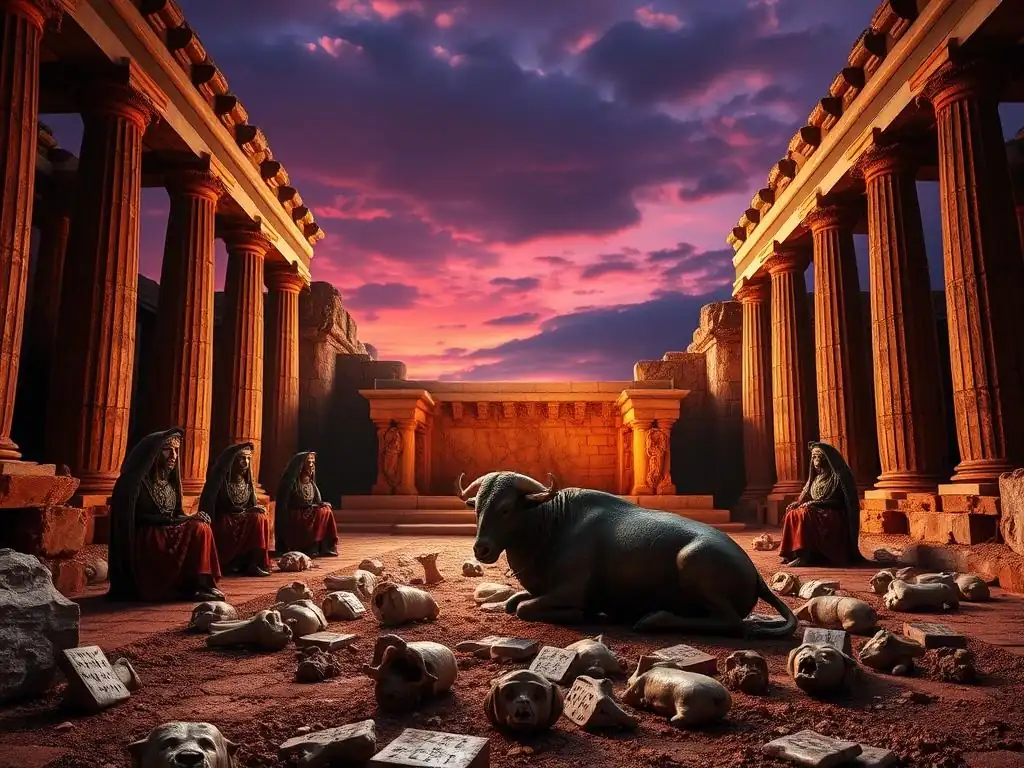
Welcome to ArchaeologyHub.org, your gateway to unlocking the secrets of the past! Delve into the fascinating world of ancient civilizations and uncover the stories etched in stone and artifact. Are you ready to explore the intricate tapestry of Etruscan life? Our latest in-depth study unravels the mysteries surrounding Etruscan animal sacrifice rituals, offering a compelling look at their procedures, symbolism, and the profound significance they held within this enigmatic culture. What can these ancient practices tell us about their beliefs and worldview? Prepare to journey back in time and discover more...
- Introduction: Unveiling Etruscan Animal Sacrifice Rituals
- The Purpose and Significance of Etruscan Animal Offerings
- Animals Chosen for Etruscan Sacrificial Rites
- The Procedure of Etruscan Animal Sacrifice: A Step-by-Step Breakdown
- Interpreting Omens: Hepatoscopy in Etruscan Religion
- Archaeological Evidence of Etruscan Animal Sacrifice
- Etruscan Animal Sacrifice Compared to Other Ancient Cultures
- The Decline of Etruscan Animal Sacrifice Rituals
- Conclusion: Understanding the Legacy of Etruscan Animal Sacrifice
-
Frequently Asked Questions
- What types of animals were typically sacrificed in Etruscan rituals?
- How were Etruscan animal sacrifices performed?
- What was the purpose of examining the entrails of sacrificed animals in Etruscan society?
- Where did Etruscan animal sacrifices typically take place?
- What significance did animal sacrifice hold in Etruscan religious beliefs?
- Final Reflection: Echoes of Ancient Devotion
- Unearth Your Own Etruscan Connection!
Introduction: Unveiling Etruscan Animal Sacrifice Rituals
The Role of Animal Sacrifice in Etruscan Religion
Animal sacrifice stood at the very core of Etruscan religious life, serving as the primary means for humans to communicate with their complex pantheon of deities. Far from being mere acts of slaughter, these Etruscan animal sacrifice rituals were meticulously orchestrated ceremonies, believed to be essential for maintaining cosmic balance, securing divine favor, and averting misfortune. Every significant public event, from the dedication of a temple to the declaration of war, likely began with such an offering, underscoring its profound integration into the fabric of Etruscan society.
The Etruscans believed that the gods provided signs and omens in response to these offerings, and it was the duty of skilled priests, particularly the haruspices, to interpret these divine messages. Through the precise execution of Etruscan animal sacrifice rituals, the community sought to ensure prosperity, fertility, and protection, thereby shaping their destiny in accordance with the perceived will of the heavens. This ritualistic interaction with the divine was not a peripheral activity but a central pillar of their worldview, influencing political decisions, agricultural cycles, and even personal well-being.
Contextualizing Etruscan Rituals within Ancient Italy
The religious practices of the Etruscans, including their distinctive Etruscan animal sacrifice rituals, represent a unique synthesis within the broader landscape of ancient Italic religions. While sharing some commonalities with their Latin and Umbrian neighbors, particularly in the fundamental concept of offering to deities, the Etruscans developed a highly formalized and intricate system, often termed the disciplina Etrusca. This body of knowledge encompassed divination through lightning, bird augury, and crucially, hepatoscopy – the examination of animal livers.
This intricate ritual system profoundly influenced later Roman religious practices, particularly in the realm of divination. Roman emperors and generals frequently consulted Etruscan haruspices well into the Imperial period, demonstrating the enduring respect for their divinatory expertise rooted in these sacrificial traditions. Understanding these elaborate Etruscan animal sacrifice rituals is therefore not only vital for comprehending the Etruscan civilization itself but also for tracing the lineage of religious thought and practice across ancient Italy, highlighting a significant cultural transfer that shaped the Roman world.
The Purpose and Significance of Etruscan Animal Offerings
Appeasing the Gods: Divine Favor and Etruscan Sacrifices
One of the primary objectives of Etruscan animal sacrifice rituals was to appease the gods and secure their divine favor. The Etruscans believed that their deities, such as Tinia (equivalent to Jupiter), Uni (Juno), and Menrva (Minerva), actively intervened in human affairs, and positive outcomes depended on maintaining a harmonious relationship with them. Sacrifices were seen as a direct form of communication, a solemn contract or gift offered to elicit blessings, ensure good harvests, or bring success in military campaigns.
These offerings were meticulously performed, often involving specific animals dedicated to particular deities. For instance, oxen might be offered to Tinia for overarching blessings, while sows could be sacrificed to fertility goddesses like Cel. The act of offering was not merely symbolic; it was a tangible demonstration of piety and respect, intended to create a reciprocal bond with the divine. A well-executed sacrifice was believed to open the channels for divine beneficence, ensuring the prosperity and protection of the individual, family, or city-state.
Propitiation and Atonement Through Animal Sacrifice
Beyond seeking favor, Etruscan animal sacrifice rituals were frequently performed for propitiation and atonement, particularly when negative omens appeared or calamities struck. The concept of piaculum, an expiatory sacrifice, was crucial for purifying individuals or communities from perceived ritual impurities or divine displeasure. If a prodigy occurred, such as an unusual lightning strike or a strange birth, it was interpreted as a sign of divine anger or a broken covenant, necessitating immediate and precise sacrificial rites to restore order.
For example, a plague, a devastating fire, or a military defeat might prompt large-scale public sacrifices aimed at placating angry deities or atoning for communal transgressions. The blood and life force of the sacrificed animal were believed to cleanse and purify, offering a substitute for human suffering or guilt. These propitiatory offerings were not only about averting immediate danger but also about re-establishing pax deorum – the peace of the gods – ensuring the continued well-being of the Etruscan people.
Funerary Rites: The Role of Animal Sacrifice in Etruscan Afterlife Beliefs
Etruscan animal sacrifice rituals extended beyond the realm of the living, playing a significant role in their elaborate funerary rites and beliefs about the afterlife. The Etruscans held complex views on the journey to the underworld, believing that the deceased required assistance and sustenance to navigate this transition successfully. Animal offerings were integral to these ceremonies, performed both at the time of burial and during subsequent commemorative rituals.
Archaeological evidence from Etruscan tombs, particularly in areas like Tarquinia and Caere, frequently reveals animal bones, often from oxen, sheep, or pigs, alongside human remains. These findings suggest that animals were sacrificed as part of funerary banquets, providing nourishment for the deceased's journey or serving as offerings to chthonic deities. Furthermore, some tomb frescoes depict scenes that might allude to funerary sacrifices or the provision of animals for the underworld, underscoring the belief that these rituals were essential for ensuring a peaceful and prosperous existence for the departed in the realm beyond.
Animals Chosen for Etruscan Sacrificial Rites
Identifying Sacrificial Animals: Cattle, Sheep, and Pigs
Zooarchaeological studies of Etruscan sanctuary sites and urban settlements have provided significant insight into the types of animals primarily used in Etruscan animal sacrifice rituals. The most commonly identified species are cattle (including oxen), sheep, and pigs, reflecting their prominence in ancient Mediterranean agricultural economies. For instance, excavations at the Portonaccio Sanctuary in Veii have yielded substantial quantities of cattle bones, often displaying evidence of burning or butchery consistent with ritual practices.
While cattle remains frequently dominate assemblages from major sanctuaries, suggesting their use for important public sacrifices, ovicaprids (sheep and goats) and pigs also feature prominently. Sheep and goats were likely more accessible and thus used for a wider range of offerings, including smaller-scale private rituals. Pigs, particularly sows, were often associated with fertility rites and chthonic deities, and their remains are also found in significant numbers at various sites, providing a clear picture of the animals central to Etruscan animal sacrifice rituals.
The Significance of Specific Animals in Etruscan Rituals
The choice of animal for Etruscan animal sacrifice rituals was rarely arbitrary; it was deeply imbued with symbolic meaning and often dictated by the specific deity being honored or the purpose of the offering. Large, powerful animals like oxen were typically reserved for major deities of the sky and state, such as Tinia or Uni, symbolizing strength, wealth, and profound reverence. Their substantial size also allowed for larger communal feasts following the ritual.
Smaller animals, such as sheep and goats, were often associated with agricultural fertility, pastoral deities, or the chthonic underworld, offered to ensure bountiful harvests or to appease spirits of the dead. Pigs, particularly sows, were frequently sacrificed in rites related to purification, fertility, and earth deities like Maris. The specific color, age, and sex of the animal could also be prescribed, further tailoring the offering to the precise ritual intent and divine recipient, highlighting the nuanced understanding within Etruscan animal sacrifice rituals.
Determining the Ideal Animal: Physical Attributes and Symbolic Value
The selection of an animal for Etruscan animal sacrifice rituals was a meticulous process, guided by strict criteria regarding its physical attributes and symbolic value. Animals chosen for sacrifice were required to be integer – perfect, unblemished, and healthy, without any physical defects or signs of disease. This standard of purity reflected the belief that only the finest and most perfect offering was acceptable to the gods, ensuring the efficacy of the ritual.
Beyond general health, specific traits might have been sought, such as a particular color of hide, a certain age (often young, prime animals), or even the animal's temperament. For example, a pure white bull might be preferred for a major offering to Tinia, symbolizing purity and divine majesty. The haruspex or other priests would carefully inspect the animal before the ceremony, ensuring it met all ritual requirements. This rigorous selection process underscored the gravity of Etruscan animal sacrifice rituals and the profound respect accorded to the divine.
The Procedure of Etruscan Animal Sacrifice: A Step-by-Step Breakdown
Preparations for the Ritual: Sacred Spaces and Offerings
The execution of Etruscan animal sacrifice rituals began with elaborate preparations, ensuring the sacredness of the space and the purity of all participants. Sacrifices typically took place at designated altars, often located within temple precincts, in open-air sanctuaries, or at specific sites of religious significance. The area would be purified, and participants, including the priests and the supplicants, would undergo ritual cleansing.
Alongside the animal, other offerings were prepared, including libations of wine, incense, grain, or specially prepared cakes ( mola salsa). These additional offerings were presented to the deities as supplementary gifts, enhancing the overall efficacy and reverence of the ritual. The atmosphere would be solemn and purposeful, with specific hymns or invocations recited to invite the divine presence and set the stage for the crucial act of offering.
The Role of the Haruspex: Divination and Animal Selection
Central to the Etruscan animal sacrifice rituals was the haruspex, a specialized priest whose expertise lay in divination. Before the sacrifice, the haruspex would perform an initial inspection of the chosen animal, often observing its behavior and physical condition for any preliminary omens. This pre-sacrificial scrutiny ensured the animal's suitability and confirmed that the gods were receptive to the offering.
During the ceremony itself, the haruspex guided the entire procedure, ensuring every step adhered to strict ritual protocol. Their deep understanding of the disciplina Etrusca meant they were responsible for interpreting the signs revealed throughout the process, particularly during the examination of the animal's entrails. The haruspex's role was paramount, transforming a mere act of killing into a profound moment of divine communication, making them indispensable to Etruscan animal sacrifice rituals.
Slaughtering the Animal: Techniques and Implements
The actual slaughter of the animal in Etruscan animal sacrifice rituals was a precise and ritualized act, not a haphazard killing. The animal was typically led to the altar, often adorned with ribbons or garlands, and its head was usually raised, facing the sky or towards the deity's statue. The killing was performed with specialized implements, such as sharp bronze or iron knives ( secespita), or sometimes axes or mallets for larger animals.
The most common technique involved a swift cut to the jugular vein, ensuring a rapid death and the collection of the blood, which itself held ritual significance. The blood might be collected in a bowl and poured onto the altar or into the ground as an offering to chthonic deities. The precision of the act was crucial, as any struggle or blemish during the killing could be interpreted as a bad omen, necessitating further propitiation or even the repetition of the entire Etruscan animal sacrifice rituals.
Examining the Animal's Liver: Hepatoscopy and Divination Practices
Immediately following the slaughter, the most critical phase of Etruscan animal sacrifice rituals began: hepatoscopy, the examination of the animal's liver. The haruspex would quickly remove the liver, often while it was still warm, and meticulously scrutinize its various lobes, vessels, color, and any abnormalities. This practice was considered the pinnacle of Etruscan divination, as the liver was believed to be the organ where the gods inscribed their will.
The haruspex would interpret the liver's appearance based on a complex system of correspondences, where different sections of the liver related to specific deities or aspects of life. A healthy, well-formed liver with clear markings was a positive sign, indicating divine approval, while a shriveled, diseased, or abnormally colored liver, or one with unusual growths, signaled divine displeasure or impending misfortune. This intricate divinatory practice was unique in its sophistication and formed the heart of Etruscan religious communication.
Interpreting Omens: Hepatoscopy in Etruscan Religion
The Significance of the Liver in Etruscan Divination
In Etruscan religion, the liver was considered the most vital and sacred organ, believed to be the direct conduit for divine messages. Unlike other forms of divination, such as augury from bird flights, hepatoscopy offered a tangible, internal "map" of the divine will. The Etruscans held a sophisticated anatomical understanding of the liver, dividing it into numerous sections, each corresponding to a specific deity or cosmic domain. This belief stemmed from the conviction that the gods manifested their intentions directly within this organ, making its examination paramount in Etruscan animal sacrifice rituals.
The liver's centrality also stemmed from its perceived role as the "seat of life" or the "seat of the soul" in ancient thought. Its health, size, and appearance were thought to directly reflect the state of the relationship between the human and divine realms. Therefore, a successful Etruscan animal sacrifice rituals culminated not just in the offering itself, but in the precise and accurate interpretation of the liver, which could reveal blessings, warnings, or commands from the gods.
Reading the Signs: Interpreting Abnormalities and Markings
The haruspex's skill lay in their ability to "read" the signs inscribed on the liver, interpreting abnormalities and markings according to a vast body of traditional knowledge. They would examine the liver's color (e.g., dark or pale spots), texture (e.g., rough or smooth), and the condition of its various lobes and vessels. For instance, a liver that was shriveled, discolored, or had unusual growths or scars would be interpreted as a negative omen, indicating divine displeasure or an impending disaster.
Conversely, a liver that was robust, symmetrically formed, and of a healthy color with clear, well-defined markings was considered a highly favorable omen, signifying divine approval and good fortune. Specific veins or ducts might be associated with particular outcomes, and their appearance could indicate success in war, a bountiful harvest, or good health. This complex system of interpretation, honed over centuries, made the haruspices indispensable figures in every major public and private decision, underscoring the depth of belief in Etruscan animal sacrifice rituals.
The Etruscan Model Liver: A Guide to Divination
Perhaps the most compelling evidence for the complexity and systematic nature of Etruscan hepatoscopy is the Piacenza Liver. Discovered in 1877 near Piacenza, Italy, this bronze model of a sheep's liver dates to the late 2nd or early 1st century BCE. It is meticulously inscribed with the names of 16 Etruscan deities around its perimeter and various other divine names and celestial divisions across its surface.
The Piacenza Liver is believed to have served as a teaching tool or a ritual guide for haruspices, illustrating the specific regions of the liver that corresponded to different gods and celestial phenomena. Each of the 16 outer sections likely represented a "house" in the heavens, associated with a particular deity, indicating where a divine message originating from that deity would appear on the liver. This remarkable artifact provides invaluable insight into the highly structured and theological framework underlying Etruscan animal sacrifice rituals and their divinatory practices, demonstrating a sophisticated cosmology.
Archaeological Evidence of Etruscan Animal Sacrifice
Examining Etruscan Tombs and Sanctuaries: Discoveries of Animal Remains
Archaeological excavations have provided substantial physical evidence confirming the widespread practice of Etruscan animal sacrifice rituals. At numerous Etruscan sanctuary sites, such as the Portonaccio Sanctuary at Veii, the sanctuary at Pyrgi (Santa Severa), and the urban sanctuary at Populonia, archaeologists have unearthed vast deposits of animal bones. These bone assemblages often show clear signs of ritual activity, including cut marks from butchery, charring from burning, and specific patterns of deposition.
For example, at Pyrgi, large quantities of burnt sheep and goat bones have been found near altars, indicating repeated public sacrifices. Similarly, investigations of Etruscan tombs, particularly those from Tarquinia and Caere, have revealed animal bones, often from domestic animals like cattle, sheep, and pigs, interred alongside human remains. These findings suggest that animal offerings were an integral part of funerary rites, supporting the belief that Etruscan animal sacrifice rituals extended to honor the deceased and facilitate their journey into the afterlife.
The material culture associated with Etruscan animal sacrifice rituals is rich and varied, providing further archaeological insights into their procedures. Specialized bronze and iron knives, often with distinctive shapes, have been recovered from sanctuary sites, consistent with their use for ritual slaughter. Iron spits, used for roasting portions of the sacrificed animal, are also commonly found, indicating the communal feasting that often followed the offering.
Altars, ranging from simple stone blocks to more elaborate structures, are central features of Etruscan sanctuaries and temples, serving as the focal point for sacrifices. Many altars bear traces of burning and libations. Additionally, votive offerings, often in the form of small bronze animals, terracotta figurines of animals, or even anatomical models like miniature livers, have been discovered in large quantities. These votives were left at sanctuaries as expressions of gratitude, prayers, or dedications following successful Etruscan animal sacrifice rituals, providing tangible links to their religious practices.
Analyzing Iconographic Representations of Sacrifice in Etruscan Art
Etruscan art offers a vibrant visual record of Etruscan animal sacrifice rituals, complementing the archaeological findings. Frescoes in tombs, particularly those from Tarquinia like the Tomb of the Augurs or the Tomb of the Bulls, depict scenes that are interpreted as sacrificial rites or funerary games involving animal offerings. These detailed paintings provide invaluable context, showing priests, attendants, sacrificial animals, and ritual implements in action.
Beyond tomb paintings, scenes of sacrifice appear on sarcophagi, cinerary urns, and bronze mirrors. These depictions often show figures in ritual attire, leading animals to altars, or performing specific actions associated with the offering. For instance, some mirrors might show a haruspex examining an animal's entrails. By analyzing these iconographic representations in conjunction with excavated remains and artifacts, scholars can reconstruct the visual and performative aspects of Etruscan animal sacrifice rituals, gaining a more holistic understanding of their religious significance.
Etruscan Animal Sacrifice Compared to Other Ancient Cultures
Similarities and Differences with Roman Sacrificial Practices
The Etruscan animal sacrifice rituals share significant similarities with later Roman sacrificial practices, largely due to the profound influence of Etruscan religion on early Roman customs. Both cultures employed similar types of animals (cattle, sheep, pigs) and emphasized the selection of unblemished specimens. The use of altars, the pouring of libations, and the communal feasting following the sacrifice were common elements. Crucially, the Roman practice of haruspicina, or divination through entrails, was directly inherited from the Etruscans, with Roman haruspices often being of Etruscan descent or trained in the disciplina Etrusca.
However, key differences existed. While Roman state religion eventually formalized a rigid system of augury and haruspicina for public affairs, the Etruscan emphasis on liver divination was arguably more central and intricate in its original form, permeating a wider range of daily decisions. Roman sacrifice often focused more on maintaining the pax deorum through precise ritual formulae and less on the detailed, moment-to-moment interpretation of omens from the liver that characterized the core of Etruscan animal sacrifice rituals.
Comparing Etruscan Rituals to Greek and Near Eastern Traditions
Comparing Etruscan animal sacrifice rituals to those of the Greeks and Near Eastern cultures reveals both shared Indo-European roots and distinct developments. Like the Greeks, Etruscans performed thysia-like sacrifices where portions of the animal were offered to the gods (e.g., fat and bones burnt on the altar), and the remaining meat was consumed by participants. Both cultures also valued the unblemished nature of the sacrificial animal and used similar domestic species. Near Eastern cultures, particularly the Babylonians, also practiced liver divination, suggesting a possible ancient shared tradition or diffusion of this specific divinatory technique across the Mediterranean.
Yet, the Etruscan system of hepatoscopy stands out in its documented complexity and its integration with a specific pantheon mapped onto the liver's surface, as exemplified by the Piacenza Liver. While Greek sacrifice often emphasized the communal feast and direct interaction with the divine through prayer, Etruscan rituals placed a unique and unparalleled emphasis on the detailed, almost scientific, interpretation of the liver as the primary means of receiving divine communication. This detailed internal examination was far more central to Etruscan religious life than in most Greek or even some Near Eastern traditions, making Etruscan animal sacrifice rituals distinctive.
Unique Aspects of Etruscan Animal Sacrifice
The most unique aspect of Etruscan animal sacrifice rituals lies in the unparalleled sophistication and centrality of hepatoscopy. While other ancient cultures practiced some form of extispicy (entrails divination), the Etruscans developed it into a highly formalized, systematic, and complex discipline, the disciplina Etrusca. Their haruspices were not merely interpreters of signs but masters of a vast body of knowledge, capable of reading intricate patterns on the liver to discern the will of a specific deity or to predict precise outcomes.
Furthermore, the Etruscan priesthood, particularly the college of haruspices, held a unique and powerful position within society, often advising rulers and influencing major state decisions based on their interpretations from Etruscan animal sacrifice rituals. This level of institutionalization and reliance on internal omens from sacrificed animals was arguably more pronounced and pervasive in Etruria than in many contemporary cultures, distinguishing their approach to divine communication and making their sacrificial practices particularly noteworthy in the ancient world.
The Decline of Etruscan Animal Sacrifice Rituals
The Impact of Roman Influence on Etruscan Religion
The gradual decline of distinct Etruscan animal sacrifice rituals is inextricably linked to the increasing political and cultural dominance of Rome. As Roman power expanded throughout the Italian peninsula from the 4th to the 1st centuries BCE, Etruscan city-states were progressively incorporated into the Roman Republic. This integration led to a significant syncretism in religious practices, with Roman deities and rituals gradually blending with or superseding local Etruscan traditions.
While the Romans highly respected and selectively adopted elements of the disciplina Etrusca, particularly haruspicina, the broader, elaborate public Etruscan animal sacrifice rituals as a distinct system began to wane. Roman state religion, with its own established pantheon and sacrificial calendar, became the official norm. Etruscan priests and their practices were not entirely eradicated but were often absorbed into the Roman religious framework, losing their independent prominence and unique ritual forms over time.
The Evolution of Religious Practices in Etruria
As Roman influence solidified, the religious landscape of Etruria underwent a significant evolution. While local cults and traditional Etruscan deities continued to be venerated, their worship often adopted Roman forms and associations. The large-scale, distinct Etruscan animal sacrifice rituals that once defined public life likely diminished in frequency, replaced by Roman-style sacra publica (public rites) or more localized, less elaborate offerings.
Archaeological evidence from later Roman period sites in Etruria often shows temple structures and altars that conform more closely to Roman architectural and ritual norms, indicating a shift away from purely Etruscan religious expressions. While the specialized knowledge of the haruspices remained influential, particularly in times of crisis, the comprehensive system of Etruscan animal sacrifice rituals as a daily and public institution gradually faded as the Etruscan identity itself became more assimilated into the broader Roman world.
Shift Towards Bloodless Offerings and Syncretism
The decline of elaborate Etruscan animal sacrifice rituals also coincided with a broader trend towards less intensive forms of worship, including an increasing emphasis on bloodless offerings. While animal sacrifice never completely disappeared, votive gifts, incense, libations of wine or oil, and offerings of grain or cakes became more prevalent and often simpler alternatives for expressing piety or making requests to the gods.
This shift was part of the wider syncretism that characterized the Romanization of Etruria. Etruscan deities were often equated with their Roman counterparts (e.g., Tinia with Jupiter, Uni with Juno), and their worship blended. While Etruscan animal sacrifice rituals had been a cornerstone of their unique religious identity, the pragmatic and often less resource-intensive Roman approach to worship, combined with political integration, led to a gradual, but irreversible, transformation of Etruscan religious practices.
Conclusion: Understanding the Legacy of Etruscan Animal Sacrifice
The Enduring Significance of Etruscan Religious Practices
The Etruscan animal sacrifice rituals were far more than simple acts of offering; they were the very bedrock of Etruscan religious, social, and political life. These meticulously performed ceremonies, particularly the intricate practice of hepatoscopy, provided a profound means of communication with the divine, guiding decisions from agricultural cycles to military campaigns. The unique emphasis on the interpretation of animal livers set Etruscan religious practices apart, demonstrating a sophisticated and systematic approach to understanding divine will.
Despite the eventual decline of their independent political power, the legacy of Etruscan animal sacrifice rituals endured, most notably through their profound influence on Roman religion. The Roman adoption of haruspicina and other divinatory techniques speaks volumes about the respect and perceived efficacy of Etruscan religious knowledge. Thus, understanding these ancient rituals is crucial not only for appreciating the rich tapestry of Etruscan civilization but also for tracing the development of religious thought and practice across the broader ancient Mediterranean world.
The Potential for New Discoveries Through Interdisciplinary Approaches
While much has been learned about Etruscan animal sacrifice rituals through textual sources, archaeological excavations, and art historical analysis, the potential for new discoveries remains significant. Future interdisciplinary approaches, combining traditional archaeological methods with advanced scientific techniques such as archaeozoology, stable isotope analysis, and DNA sequencing of ancient animal remains, can yield unprecedented insights into the specific species used, their origins, and the precise dietary and ritual roles of animals.
Moreover, the ongoing re-evaluation of existing archaeological collections and the application of new theoretical frameworks to iconographic evidence can further illuminate the nuances of Etruscan religious beliefs and practices. Continued research, perhaps even the discovery of new sites or hitherto unknown texts, promises to deepen our understanding of these fascinating rituals, offering a more complete picture of how the Etruscans interacted with their gods and shaped their destiny through the solemn and intricate acts of Etruscan animal sacrifice rituals.
Frequently Asked Questions
What types of animals were typically sacrificed in Etruscan rituals?
Etruscan animal sacrifice rituals primarily involved domesticated animals such as cattle, sheep, and pigs. The choice of animal often depended on the specific deity being honored and the purpose of the sacrifice.
How were Etruscan animal sacrifices performed?
The process usually involved a carefully orchestrated ceremony, including prayers, processions, and the preparation of the animal. The animal was typically slaughtered at a designated altar, and its entrails were examined for omens.
What was the purpose of examining the entrails of sacrificed animals in Etruscan society?
Examining the entrails (haruspicy) was a crucial part of Etruscan divination. Priests, known as haruspices, believed they could interpret the signs in the organs to predict the future or understand the will of the gods.
Where did Etruscan animal sacrifices typically take place?
Sacrifices were often performed at temples or sacred enclosures, spaces specifically dedicated to religious practices. These sites were carefully chosen and often featured altars and other ritualistic structures.
What significance did animal sacrifice hold in Etruscan religious beliefs?
Animal sacrifice was central to Etruscan religion, serving as a means of communication and appeasement with the divine. It was believed to maintain cosmic balance and ensure the well-being of the community.
Okay, here's a final reflection designed to close your article on Etruscan animal sacrifice rituals, formatted in Markdown and following your specified structure.
Final Reflection: Echoes of Ancient Devotion
The exploration of Etruscan animal sacrifice rituals, as we've seen, offers a fascinating glimpse into a world driven by profound spiritual beliefs. The echoes of these ancient practices, though seemingly distant, resonate even today, reminding us of humanity's enduring quest to understand and connect with the divine. The meticulous procedures and multifaceted significance attached to these rituals underscore the depth of Etruscan religious life, a life that continues to intrigue and inform our understanding of the ancient world.
The study of Etruscan animal sacrifice is not merely an academic exercise; it's a journey into the heart of a civilization that shaped the very foundations of Roman culture. Understanding these rituals allows us to appreciate the complex interplay of belief, power, and social structure in Etruscan society, and to recognize the enduring human need to find meaning and purpose through ritual. The past is never dead. It's not even past.
- William Faulkner. This quote encapsulates the enduring relevance of studying ancient practices, as they continue to inform our understanding of human nature and the evolution of religious thought.
As we conclude this exploration of Etruscan animal sacrifice rituals, I invite you to consider the enduring power of ritual in your own life. What practices, both ancient and modern, shape your understanding of the world and your place within it? Let the meticulous devotion of the Etruscans inspire you to reflect on the rituals that give meaning to your own existence, and to appreciate the profound connection between humanity and the sacred, a connection that transcends time and culture.
Unearth Your Own Etruscan Connection!
Thank you for delving into the fascinating world of Etruscan animal sacrifices. We hope this exploration has shed light on the rituals and beliefs of this ancient civilization. Now, let's bring that knowledge to life!
Here are a few ways you can continue your Etruscan adventure:
- Imagine and write: Craft a fictional diary entry from the perspective of an Etruscan priest preparing for an animal sacrifice, detailing their thoughts, feelings, and the steps involved.
- Research: Delve deeper into the specific types of animals sacrificed in Etruscan rituals and the associated deities.
- Share: Discuss the ethical considerations of animal sacrifice in ancient religions with friends or in online forums.
What unique question about Etruscan religious practices does this article spark in your mind?