
Interpreting Social Change Through Ceramic Analysis: Style Evolution, Functional Shifts, and Identity Transformations


Welcome to ArchaeologyHub.org, your portal to unlocking the mysteries of the past!
Delve into the intricate world where fragmented pottery shards whisper tales of bygone eras. Ever wondered how something as seemingly simple as a broken pot can illuminate the complexities of ancient societies? This article explores just that, offering a fascinating deep dive into ceramic analysis and its power to reveal profound social change. Prepare to discover how style evolution, functional shifts, and the transformative power of identity are all encoded within these resilient remnants of the past. Read on to unravel the secrets!
- Ceramic Analysis as a Window into Social Dynamics in Archaeology
- Style Evolution in Ceramics: Reflecting Shifting Social Norms
- Functional Shifts in Ceramic Vessels: Adapting to Changing Social Needs
- Ceramic Analysis and Identity Transformations: Constructing and Negotiating Social Roles
- Methodological Approaches to Ceramic Analysis for Social Interpretation
- Challenges and Future Directions in Ceramic Analysis and Social Change Research
-
Frequently Asked Questions
- How can ceramic analysis help us understand social change?
- What are some key indicators of social change that can be identified through ceramic analysis?
- How can the geographical distribution of specific ceramic styles reveal information about social change?
- What are some limitations of using ceramic analysis to study social change?
- How does the function of ceramic vessels inform us about social change?
- Final Reflection: Echoes of Society in Clay
- Unearth Your Own Insights: Become an Archaeology Enthusiast!
Ceramic analysis stands as a cornerstone of archaeological inquiry, offering unparalleled insights into the dynamic processes of human societies. As one of the most abundant and durable artifact categories found across diverse archaeological contexts, pottery provides a tangible record of human ingenuity, resourcefulness, and cultural expression over millennia.
Its ubiquity and fragmented nature mean that even small excavation units can yield thousands of sherds, each a potential fragment of information about past lives. By meticulously examining attributes such as form, fabric, decoration, and distribution, archaeologists can reconstruct not just daily activities but also profound shifts in social organization, economic practices, and belief systems.
The resilience of pottery in the archaeological record makes it an exceptionally sensitive indicator of change. Unlike more ephemeral materials, ceramics survive fires, floods, and the passage of time, preserving evidence of production techniques, consumption patterns, and symbolic meanings. This rich material record allows researchers to trace subtle modifications in cultural practices that accumulate over generations, eventually leading to significant social transformations. Understanding how these changes manifest in the material culture of ceramics is crucial for interpreting the complex narratives of past human societies.
The Power of Pottery: How Ceramic Analysis Illuminates Past Societies
The analytical power of pottery lies in its multifaceted nature, reflecting a spectrum of human activities from the mundane to the ceremonial. Archaeologists leverage ceramic analysis social change by examining how shifts in pottery characteristics illuminate the evolution of past societies. For instance, changes in production technology, such as the adoption of the potter's wheel around 3500 BCE in Mesopotamia, signal the emergence of specialized craftspeople and more complex economic systems. This shift from household production to dedicated workshops indicates a fundamental reorganization of labor and a move towards greater social stratification.
Furthermore, the distribution patterns of specific ceramic types can map ancient trade routes, interaction spheres, and political boundaries. The widespread occurrence of specific types of Roman terra sigillata pottery across the empire, for example, speaks volumes about standardized production, extensive trade networks, and the integration of diverse regions into a unified economic system. Conversely, the localized distribution of certain indigenous pottery traditions can highlight self-sufficient communities or distinct cultural identities. Through careful ceramic analysis social change becomes visible, revealing the intricate web of relationships that defined ancient human groups.
Decorative motifs on pottery are far from mere aesthetic choices; they are often deeply imbued with cultural meaning, acting as visual markers of social identity, affiliation, and belief systems. These motifs, whether geometric patterns, zoomorphic figures, or abstract symbols, can communicate shared values within a community or differentiate one group from another.
Changes in the prevalence, complexity, or iconography of these designs over time can therefore signal shifts in group identity, inter-group relations, or the adoption of new cultural ideologies. For example, the emergence of specific clan symbols on Ancestral Pueblo pottery in the American Southwest during the 13th and 14th centuries CE often correlates with increasing population aggregation and the need to visually reinforce social cohesion among diverse groups.
Studying the evolution of ceramic styles allows archaeologists to trace processes like acculturation, assimilation, or resistance. When one cultural group adopts stylistic elements from another, it can indicate periods of intensified interaction, trade, or even conquest. Conversely, the deliberate preservation of traditional styles in the face of external influences might signify a conscious effort to maintain cultural distinctiveness. The shift from elaborate, regionally distinct pottery styles to more uniform, mass-produced wares in certain regions of the Roman Empire, for instance, reflects the powerful influence of Romanization and the integration of local populations into a broader imperial identity.
Technological innovations in pottery production are direct indicators of social progress, reflecting advancements in knowledge, organization, and resource management. The transition from open-pit firing to sophisticated kilns, for example, represents a significant leap in control over temperature and atmosphere, leading to stronger, more durable vessels and often more vibrant surface treatments. This technological shift, often requiring collective labor and specialized knowledge, points to a greater degree of craft specialization within a society. In many parts of the world, the development of complex kilns around the Neolithic period coincides with the rise of settled agricultural communities and increasing social complexity.
Further examples include the development of finer clay preparation techniques, the use of different tempers to improve durability, or the invention of new forming methods like mold-making. The widespread adoption of mold-made pottery in the Roman world during the 1st century CE, exemplified by the mass production of terra sigillata bowls, allowed for standardization and efficiency on an unprecedented scale.
This technological advancement not only met the demands of a growing population but also underscored the economic organization and logistical capabilities of the Roman state. Such innovations are critical for understanding ceramic analysis social change in terms of economic structure and labor organization.
Ancestral Pueblo pottery provides a compelling case study for understanding ceramic analysis social change through stylistic evolution. Over centuries, from approximately 500 CE to 1500 CE, the pottery traditions of the Four Corners region of the American Southwest underwent dramatic stylistic transformations, directly reflecting major social reorganizations. Early Basketmaker III pottery, such as Lino Gray and White Mound Black-on-white (c. 500-750 CE), featured relatively simple designs, often reflecting a more mobile, household-based production.
As Ancestral Pueblo societies grew and aggregated into larger villages and eventually massive multi-story pueblos, their pottery styles evolved to reflect these shifts. The rise of Chaco Canyon as a regional center (c. 850-1150 CE) saw the emergence of highly standardized, finely made Chaco Black-on-white pottery, often produced in specialized workshops and widely distributed, indicating a complex regional network and increased social integration.
Following the abandonment of Chaco and the subsequent aggregation into large cliff dwellings and mesa-top pueblos (c. 1200-1300 CE), styles like Mesa Verde Black-on-white became dominant. These later wares often exhibited more complex, tightly organized geometric designs, which some archaeologists interpret as a visual expression of social solidarity and collective identity in the face of environmental stress and population movements.
The eventual dispersal and reorganization into smaller, more autonomous communities around 1300 CE is likewise reflected in a return to more localized and diverse pottery traditions, illustrating how stylistic changes directly mirror social cohesion, fragmentation, and adaptation.
The primary function of ceramic vessels often undergoes significant transformations, mirroring shifts in daily life, economic practices, and even belief systems within a society. Initially, pottery primarily served utilitarian purposes such as cooking, storage, and serving. However, as societies evolved, so too did the specialized roles of ceramic forms.
A change in the average size of storage vessels, for instance, might indicate a shift from small-scale household provisioning to larger-scale communal storage or surplus production, reflecting changes in subsistence strategies or population density. For example, the increase in very large storage jars ( pithoi) in Minoan palaces on Crete around 1700 BCE points to centralized control over agricultural surpluses and a more complex redistributive economy.
Beyond the utilitarian, ceramics frequently acquired profound social and ritual significance. The appearance of specialized ceremonial vessels, incense burners, or votive offerings indicates the development of more formalized religious practices and a growing emphasis on ritual in daily life. For example, the elaborate effigy vessels found in Mesoamerican contexts, often depicting deities or ancestral figures, were clearly not for mundane use but played a central role in religious ceremonies and offerings, reflecting complex cosmological beliefs and the structured nature of their societies. These functional shifts are key to understanding ceramic analysis social change.
The evolution of culinary practices is intimately linked to the design and function of ceramic vessels, providing a direct lens into social change. As diets shifted from hunting and gathering to agriculture, or as new food processing techniques emerged, pottery forms adapted accordingly.
For instance, the widespread adoption of maize agriculture in the American Southwest around 800 CE led to the proliferation of specialized ceramic cooking pots designed for boiling and stewing grains, distinct from earlier, simpler forms. Similarly, the development of fermented beverages like beer or wine often correlated with the production of specific fermentation and serving vessels, indicating new forms of social consumption and feasting.
Changes in dining etiquette and social stratification also left their mark on ceramic design. In many complex societies, the shift from communal dining to more individualized serving practices is reflected in the diversification of plate, bowl, and cup forms. In Roman villas, for example, the increasing variety and refinement of tablewares from the 1st to 3rd centuries CE, including specialized serving dishes and individual cups, illustrate evolving social hierarchies and the emphasis on elaborate banquets as displays of status. Such transformations in ceramic assemblages reveal significant ceramic analysis social change related to social customs and economic activities.
Residue analysis, a powerful scientific technique, involves the chemical examination of organic traces absorbed into the pores of ancient pottery. This method provides direct evidence of the contents of vessels, offering unparalleled insights into past diets, food processing, and the specific functions of different ceramic forms. For instance, the identification of milk fats in early Neolithic pottery from sites like Çatalhöyük in Turkey (around 7000 BCE) provides direct evidence for the early use of dairy products, signaling a shift in subsistence strategies towards animal husbandry.
The implications of residue analysis for understanding ceramic analysis social change are profound. By identifying specific food or beverage residues in different vessel types or across various social contexts, archaeologists can infer patterns of consumption related to social status, gender, or ritual.
For example, the presence of wine residues in fine drinking cups found in elite burials, contrasted with the prevalence of beer residues in more utilitarian vessels from common households, can illuminate ancient social hierarchies and dietary distinctions. Tracking changes in the prevalence of certain residues over time can also reveal long-term shifts in diet due to environmental changes, trade, or the adoption of new agricultural practices, providing concrete evidence of economic and social transformations.
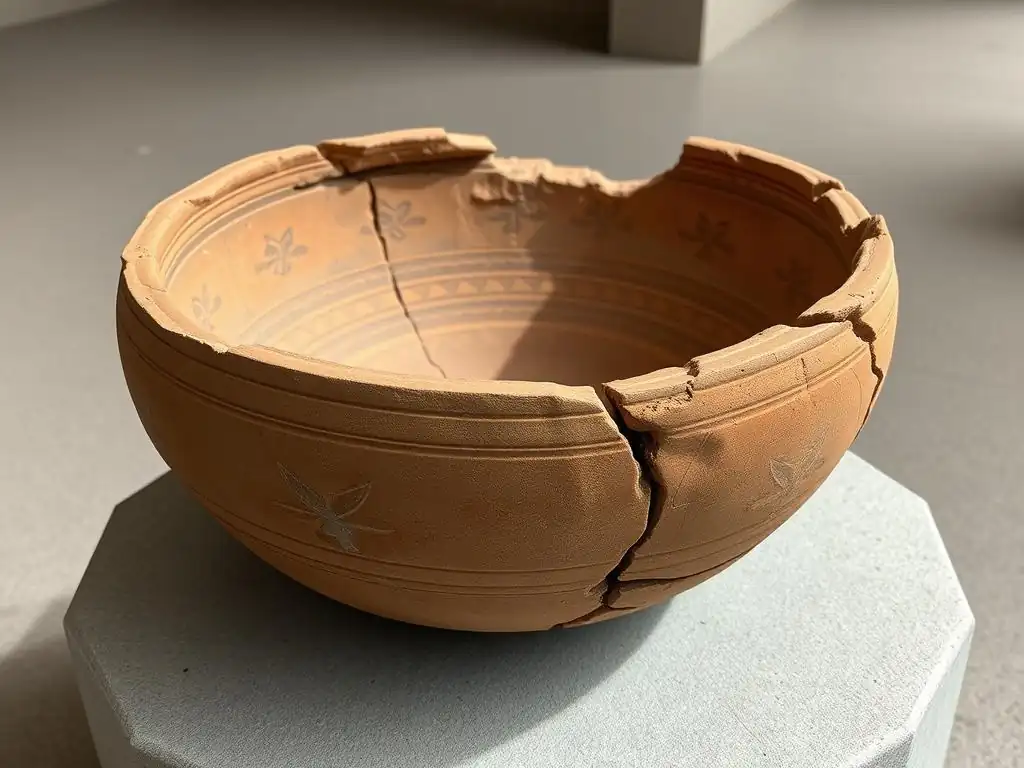
Pottery as a Symbol of Group Affiliation: Ethnicity and Ceramic Traditions
Pottery traditions often serve as powerful, tangible symbols of group affiliation and ethnic identity. The shared knowledge of clay procurement, forming techniques, firing methods, and decorative styles within a community helps to reinforce a collective identity. People learn these traditions from their elders and peers, embedding cultural norms and boundaries within the very fabric of their material culture. The distinct pottery styles of different Native American groups in the North American Eastern Woodlands, for example, often demarcated tribal territories and cultural boundaries, with specific decorative motifs acting as visual signatures of individual groups.
Changes in these ceramic traditions can signal significant transformations in group affiliation, migration, or cultural interaction. The widespread distribution of Bell Beaker pottery across much of Europe between 2800 and 1800 BCE is a classic example. While its exact interpretation remains debated, the shared stylistic elements and forms across vast distances suggest a network of shared ideas, mobile groups, or intensive interaction, rather than a single 'ethnic' group.
Conversely, the sudden appearance of entirely new pottery traditions in an archaeological sequence can indicate population movements, conquest, or the assimilation of new groups. Ceramic analysis social change in this context allows archaeologists to reconstruct dynamic processes of cultural contact and identity negotiation.
Gender and Ceramics: Exploring Roles and Representations in Pottery Production and Use
The study of ceramics offers a unique window into gender roles and representations in past societies. Ethnographic studies from around the world frequently demonstrate gendered divisions of labor in pottery production, with women often being the primary potters in many traditional societies (e.g., in sub-Saharan Africa or the American Southwest), while men might specialize in more technologically complex tasks like firing large kilns or trading wares.
Archaeologists can infer similar patterns by examining the scale of production (household vs. specialized workshop), the tools used, and the types of vessels produced. A shift from predominantly hand-built, household pottery to wheel-thrown, standardized wares might indicate a change in gendered labor roles, potentially reflecting the entry of male specialists or a greater commercialization of production.
Furthermore, ceramic iconography can directly represent gendered activities, myths, or social ideals. Depictions on Moche pottery from ancient Peru (c. 100-800 CE) frequently illustrate scenes of daily life, ritual, and warfare, providing insights into the roles and status of men and women within their society. Changes in these representations over time can reflect shifts in social norms, power dynamics, or the perceived importance of different gendered activities. Thus, through ceramic analysis social change, researchers can reconstruct nuanced aspects of gender relations and social organization.
Beyond their utilitarian functions, ceramics played a crucial role in expressing and reinforcing social beliefs, rituals, and ceremonies. Specialized vessels were often created for offerings, feasting events, or funerary practices, acting as tangible manifestations of spiritual beliefs and social hierarchies.
The elaborate funerary pottery of ancient China, such as the detailed miniature houses and figures found in Han Dynasty tombs (206 BCE – 220 CE), served to equip the deceased for the afterlife and visually underscore their status in society. These artifacts were not just grave goods but active participants in the ritual of burial and the expression of cosmological views.
Changes in the forms, decoration, or deposition patterns of ritual ceramics often signal shifts in religious practices, political ideologies, or social structures. For example, the sudden appearance of specific types of incense burners or cultic vessels in a temple context might indicate the adoption of new deities or ritual practices, potentially reflecting a significant religious or political transformation.
Similarly, the destruction and fragmentation of specific ceremonial vessels in archaeological contexts can be interpreted as ritual termination, marking the end of a social phase or the transition to a new order. The analysis of these ritual ceramics is therefore vital for understanding the deeper cultural and spiritual dimensions of ceramic analysis social change.
Typological analysis is a fundamental methodological approach in ceramic studies, involving the systematic classification of pottery into types based on shared attributes such as form, decorative motifs, and fabric composition. This process allows archaeologists to organize vast quantities of fragmented material, establish chronological sequences, and identify distinct cultural traditions or periods. By defining specific pottery types (e.g., "Middle Minoan Kamares Ware" or "Late Classic Maya Polychrome"), researchers create a framework for comparative study and temporal ordering.
The application of typological analysis to ceramic analysis social change is profound. By tracking the appearance, prevalence, and disappearance of specific pottery types across different archaeological layers or sites, archaeologists can delineate cultural horizons, identify periods of stability or disruption, and infer patterns of interaction, migration, or cultural continuity. For instance, the consistent presence of a particular ceramic type across a wide geographic area might indicate a shared cultural identity or extensive trade networks, while a sudden shift in dominant types could signify population replacement, technological innovation, or significant social upheaval.
Petrographic Analysis: Tracing Ceramic Origins and Exchange Networks
Petrographic analysis is a powerful scientific method that involves preparing thin sections of ceramic sherds and examining them under a polarized light microscope. This technique allows archaeologists to identify the mineral inclusions, rock fragments, and temper (materials added to clay) within the pottery fabric. By comparing the geological characteristics of these components with known geological sources, petrographic analysis can pinpoint the precise origin of the clay and temper, thus revealing where the pottery was manufactured.
This sourcing capability makes petrographic analysis invaluable for understanding ceramic analysis social change related to economic systems and social interaction. By tracing the origins of pottery found at a site, archaeologists can reconstruct ancient trade routes, identify exchange networks between different communities, and understand patterns of interaction, alliance, or conflict. For example, the identification of Sardinian-sourced pottery at Roman sites in North Africa demonstrates long-distance maritime trade. Similarly, the presence of imported prestige wares in elite burials, as revealed by petrographic analysis, can provide concrete evidence of social stratification and access to exotic goods within past societies.
Given the often enormous quantities of pottery recovered from archaeological sites, statistical analysis has become an indispensable tool for quantifying ceramic data and revealing underlying social trends. Methods such as seriation, cluster analysis, and correspondence analysis allow archaeologists to identify patterns, correlations, and significant variations in ceramic assemblages that might not be apparent through qualitative observation alone. Seriation, for instance, orders archaeological assemblages based on the changing popularity of ceramic types, creating relative chronologies that reflect social shifts over time.
For ceramic analysis social change, statistical methods are crucial for moving beyond anecdotal observations to robust, data-driven interpretations. By quantifying the proportions of different vessel forms, decorative styles, or fabric types across various archaeological contexts (e.g., different household units, social strata, or chronological periods), researchers can identify shifts in consumption patterns, changes in economic organization, or degrees of cultural interaction. For example, a statistically significant increase in the proportion of serving wares relative to cooking wares in a particular period might suggest changes in dining habits or social display, providing quantitative evidence for evolving social behaviors.
Addressing Bias in Ceramic Interpretation: A Critical Approach
Despite its immense value, ceramic analysis is not without its challenges, particularly concerning interpretive biases. Archaeologists must critically address how their own theoretical frameworks, cultural backgrounds, and even the biases inherent in the archaeological record itself can influence interpretations of past societies. Preservation biases, for example, mean that certain types of pottery or contexts might be overrepresented, while others are entirely lost, potentially skewing our understanding of overall production and consumption patterns. Similarly, excavation strategies might inadvertently prioritize elite areas, leading to an overemphasis on prestige wares and obscuring the daily lives of non-elite populations.
To mitigate these biases, a critical approach emphasizes the need for self-reflection and multi-vocal perspectives. Researchers should strive to consider diverse social groups and avoid oversimplification of complex social processes. This involves actively seeking out evidence from all social strata, integrating diverse datasets, and acknowledging the limitations of the material record.
For instance, while elaborate ritual vessels offer insights into belief systems, equally important are the utilitarian wares that reflect the daily routines and economic realities of the majority of a population. A nuanced approach to ceramic analysis social change requires constant vigilance against preconceived notions and a commitment to comprehensive data interpretation.
Integrating Ceramic Data with Other Archaeological Evidence: A Holistic Perspective
The most robust interpretations of social change through ceramic analysis emerge when ceramic data are integrated with other lines of archaeological evidence. Pottery provides a crucial piece of the puzzle, but a holistic perspective requires cross-referencing ceramic findings with information from faunal remains (diet, animal husbandry), botanical remains (agriculture, environment), architectural analysis (settlement patterns, social organization), mortuary practices (social status, belief systems), and lithic technology (tool use, resource procurement). Examining ceramics in isolation risks drawing incomplete or even misleading conclusions about past social dynamics.
For example, a shift in ceramic cooking vessel forms might be more fully understood when correlated with changes in subsistence strategies revealed by faunal and botanical data, indicating a dietary adaptation or technological innovation. Similarly, the appearance of specialized ritual ceramics gains greater meaning when examined alongside changes in monumental architecture or burial practices, reflecting broader transformations in religious or political authority. This interdisciplinary integration allows for cross-validation of hypotheses and provides a far more comprehensive and nuanced reconstruction of ceramic analysis social change, weaving together disparate threads of evidence into a coherent narrative of human history.
The Future of Ceramic Studies: New Technologies and Interdisciplinary Collaboration
The future of ceramic studies is poised for exciting advancements, driven by new technologies and an increasing emphasis on interdisciplinary collaboration. Emerging analytical techniques, such as portable X-ray fluorescence (pXRF), allow for rapid, non-destructive elemental analysis of pottery, enabling archaeologists to source ceramics directly in the field or museum without extensive sampling.
3D scanning and photogrammetry are revolutionizing the documentation and analysis of vessel forms, enabling precise comparisons and virtual reconstructions that were once impossible. Furthermore, the application of machine learning and artificial intelligence is beginning to automate aspects of ceramic classification and pattern recognition in large datasets, enhancing efficiency and identifying subtle trends.
Beyond technological innovations, the growing importance of interdisciplinary collaboration is pushing the boundaries of what can be learned from pottery. Partnerships with material scientists, chemists, computer scientists, and ethnographers are enriching ceramic analysis with new perspectives and methodologies.
For instance, collaborations with ethnoarchaeologists who study contemporary potters in traditional societies provide invaluable insights into production processes, social meanings, and the gendered division of labor, offering crucial analogies for interpreting ancient remains. This synergy between cutting-edge technology and diverse scholarly expertise promises even deeper, more nuanced insights into the intricate relationship between ceramics and social change, continually refining our understanding of past human societies.
Frequently Asked Questions
Ceramic analysis provides insights into past societies by examining changes in pottery style, function, and production techniques. These shifts can reflect alterations in social organization, trade networks, or cultural identities, revealing social transformations over time.
Changes in ceramic style, such as new decorative motifs or vessel shapes, may indicate shifts in cultural identity or the adoption of new beliefs. Functional shifts, like changes in vessel size or design, can reflect alterations in food preparation or storage practices, revealing changes in daily life.
The spread of a particular ceramic style across a region can indicate migration patterns, the exchange of ideas, or the expansion of a particular social group's influence. Conversely, the localized persistence of certain styles may reflect social isolation or resistance to change.
Ceramic analysis alone cannot provide a complete picture of past societies. It is essential to consider other forms of archaeological evidence, such as architectural remains, burial practices, and written texts, to develop a more holistic understanding of social change.
Changes in the function of ceramic vessels, such as a shift from storage to ritual use, can reflect fundamental alterations in social practices and beliefs. This highlights how people's daily lives and cultural priorities have evolved over time.
Final Reflection: Echoes of Society in Clay
The journey through ceramic analysis reveals more than just broken potsherds; it unveils the intricate tapestry of past societies. Today, understanding the power of material culture to reflect social dynamics is more critical than ever, as we navigate rapid technological and societal shifts that leave their own indelible marks on the objects we create and consume. By studying the evolution of ceramic styles, functional adaptations, and the symbolic expressions embedded within them, we gain invaluable insights into the human condition and the forces that shape our collective identity.
The enduring legacy of ceramic analysis lies in its ability to connect us to the lived experiences of those who came before us. This connection fosters empathy and a deeper understanding of the complexities of social change, reminding us that even the simplest objects can hold profound meaning. Archaeology is anthropology with a time machine,
as Kent Flannery famously stated, and ceramic analysis is a key that unlocks that time machine, allowing us to witness the unfolding drama of human history through the silent testimony of clay.
As we conclude this exploration of ceramic analysis and its role in interpreting social change, I invite you to consider the objects that surround you. What stories do they tell about our society? What values do they reflect?
Let us all become mindful observers of the material world, recognizing that every artifact, from the humblest pot to the most sophisticated technology, is a mirror reflecting the ever-evolving landscape of human culture. Embrace the power of observation and critical thinking to decipher the silent narratives embedded in the objects around you, and contribute to a richer, more nuanced understanding of our shared human story.
Unearth Your Own Insights: Become an Archaeology Enthusiast!
Thanks for diving into the fascinating world of ceramic analysis and its power to reveal social transformations! Hopefully, you now have a deeper appreciation for how pottery shards can speak volumes about past societies. Ready to get your hands dirty?
Here are a few ways to continue your archaeological journey:
- Become a Citizen Scientist: Participate in a local archaeological dig or survey – many organizations welcome volunteers to help uncover and catalog artifacts.
- Delve deeper into ceramic analysis techniques. Explore online resources and workshops offered by archaeological societies.
- Share this article with a friend or colleague to spark a conversation about the hidden stories within everyday objects.
What surprising artifact or archaeological find has captured your imagination and made you think differently about the past?