
Patty Jo Watson: Championing Scientific Rigor and Processual Approaches in American Archaeology


Welcome to ArchaeologyHub.org, your gateway to the fascinating world of archaeological discovery. Ever wondered how archaeologists transform fragments of the past into compelling narratives? Dive in to explore the core concepts, methods, and theories that drive this incredible field, beginning with a deep dive into the groundbreaking work of Patty Jo Watson and her championing of scientific rigor and processual approaches in American archaeology. Prepare to uncover the secrets of excavation techniques, artifact analysis, and the interpretive analyses that bring ancient civilizations to life!
- Introduction to Patty Jo Watson and Her Impact on American Archaeology
- Early Life and Academic Background of Patty Jo Watson
- Patty Jo Watson's Pioneering Work in Processual Archaeology
- Key Contributions to Archaeological Theory and Methodology
- Critiques and Re-evaluations of Watson's Processual Approach
- Legacy and Influence on Contemporary Archaeological Practice
- Patty Jo Watson: A Summary of Her Lasting Contributions to Archaeology
-
Frequently Asked Questions
- ### Who was Patty Jo Watson and what is her significance in archaeology?
- ### What is "processual archaeology," and how did Patty Jo Watson contribute to its development?
- ### What methodologies did Patty Jo Watson advocate for in archaeological research?
- ### Where did Patty Jo Watson conduct her most notable archaeological work?
- ### How can I learn more about Patty Jo Watson's work and the principles of processual archaeology?
- Final Reflection: The Enduring Legacy of Rigorous Inquiry
- Embrace Archaeological Discovery!
Introduction to Patty Jo Watson and Her Impact on American Archaeology
ArchaeologyHub.org Presents: A Profile of a Leading Figure in Archaeological Theory
Patty Jo Watson stands as a towering figure in the annals of American archaeology, renowned for her unwavering commitment to scientific rigor and her pivotal role in the development and popularization of Processual Archaeology, often termed the "New Archaeology." Born in 1932, Watson's career spanned decades, during which she profoundly influenced the discipline's methodological and theoretical foundations. Her work transformed archaeology from a largely descriptive and historical pursuit into a more explanatory, hypothesis-driven science, emphasizing objective data collection and analysis.
Through her extensive fieldwork, particularly in the challenging environments of dry caves, and her influential publications, Watson consistently advocated for a robust, explicit, and replicable archaeological methodology. Her contributions helped solidify the scientific credibility of archaeology, encouraging practitioners to move beyond simple artifact cataloging to investigate the underlying processes of cultural change and adaptation. This focus on process, rather than just historical events, became a hallmark of her approach and significantly shaped the trajectory of archaeological research in the latter half of the 20th century.
The Significance of Patty Jo Watson's Contributions to Archaeological Methodology
The significance of Patty Jo Watson's contributions to archaeological methodology cannot be overstated. She was instrumental in advocating for the application of the scientific method—including the formulation of testable hypotheses, systematic data collection, and quantitative analysis—to archaeological inquiry. This was a radical departure from earlier culture-historical approaches, which primarily focused on establishing chronological sequences and defining cultural areas through trait lists. Watson argued for a problem-oriented approach, where research questions guided fieldwork and analysis, leading to more robust and verifiable conclusions about past human behavior.
Her work underscored the importance of interdisciplinary collaboration, particularly with specialists in fields such as botany and zoology, to gain a more holistic understanding of ancient lifeways. By championing a rigorous, empirically grounded, and theoretically informed Patty Jo Watson archaeological methodology, she equipped generations of archaeologists with the tools to conduct more sophisticated and insightful research. Her advocacy for explicit methods and transparent reasoning helped elevate the academic standing of archaeology and fostered a culture of critical self-assessment within the discipline.
Early Life and Academic Background of Patty Jo Watson
Influences Shaping Watson's Approach to Archaeological Research
Patty Jo Watson's distinctive approach to archaeological research was significantly shaped by the intellectual currents and influential figures she encountered early in her academic journey. A crucial influence was her association with the Oriental Institute at the University of Chicago, where she was exposed to the interdisciplinary and problem-oriented archaeology practiced by scholars like Robert J. Braidwood. Braidwood's pioneering work in the Near East, which integrated environmental and biological sciences with archaeological excavation to understand the origins of agriculture, provided Watson with a foundational model for scientifically rigorous and holistically conceived research.
Furthermore, the broader anthropological discourse of the mid-20th century, particularly the emerging ideas of cultural ecology and systems theory championed by figures such as Leslie White and Julian Steward, profoundly impacted her thinking. These theoretical frameworks, which sought to explain cultural similarities and differences through environmental adaptation and interconnected cultural subsystems, resonated deeply with Watson’s burgeoning commitment to identifying generalizable processes in human history. These influences collectively steered her towards a methodology that prioritized explicit scientific inquiry and a systemic understanding of cultural phenomena.
Education and Training: The Foundation of Watson's Career
Patty Jo Watson’s robust academic training laid the essential groundwork for her distinguished career and her development of a pioneering archaeological methodology. She pursued her undergraduate studies at the University of Chicago, a hotbed of anthropological and archaeological innovation during the mid-20th century. It was there that she immersed herself in a comprehensive curriculum that emphasized both theoretical anthropology and practical archaeological techniques, culminating in her Bachelor of Arts degree in 1956.
She continued her graduate education at the University of Chicago, earning her Ph.D. in Anthropology in 1959. Her doctoral research, which focused on the prehistory of the Near East, provided her with intensive fieldwork experience and exposed her to diverse archaeological problems.
This rigorous academic environment, characterized by its emphasis on critical thinking, interdisciplinary approaches, and a strong grounding in scientific principles, profoundly influenced her subsequent advocacy for a more systematic and scientific Patty Jo Watson archaeological methodology. Her training instilled in her the importance of meticulous data collection, analytical precision, and the development of explicit theoretical frameworks to interpret archaeological evidence.
Patty Jo Watson's Pioneering Work in Processual Archaeology
Defining Processual Archaeology: A Shift in Archaeological Thinking
Processual Archaeology, often referred to as the "New Archaeology," emerged in the 1960s as a transformative paradigm shift, fundamentally challenging the prevailing culture-historical approach that had dominated the discipline. This new school of thought, heavily influenced by logical positivism and general systems theory, advocated for archaeology to become a more objective, explanatory science rather than merely a descriptive historical endeavor. Key tenets of processual archaeology included the application of the scientific method—involving hypothesis formulation, empirical testing, and the search for universal laws of human behavior—and an emphasis on cultural systems, adaptation to environment, and internal cultural dynamics.
Processualists argued that archaeological remains were not just static representations of past cultures but rather reflections of dynamic systems that could be understood through rigorous, scientific analysis. This shift aimed to move beyond simply documenting "what" happened to explaining "how" and "why" cultural changes occurred. Patty Jo Watson, alongside contemporaries like Lewis Binford, was at the forefront of this movement, passionately advocating for this transformative Patty Jo Watson archaeological methodology that prioritized explicit research designs, quantitative analysis, and a focus on cultural processes.
Watson's Application of Processual Methods: Case Studies and Examples
Patty Jo Watson’s commitment to processual methods was vividly demonstrated through her extensive fieldwork, most notably her groundbreaking research at Mammoth Cave in Kentucky. Beginning in the late 1960s, Watson led a multi-disciplinary team to systematically investigate the archaeological deposits within the dry caves of the Mammoth Cave system. Unlike previous excavations that often focused on finding impressive artifacts, Watson's project was explicitly problem-oriented, aiming to understand the prehistoric human adaptation to and utilization of the cave environment, particularly focusing on subsistence strategies and resource management.
Her team employed meticulous excavation techniques, systematic sampling strategies, and rigorous quantitative analysis of perishable organic remains, such as seeds, fibers, and animal bones, which were remarkably preserved in the dry cave conditions. For instance, the analysis of thousands of desiccated plant remains revealed detailed insights into the cultivation of native seed plants like chenopod and sunflower by prehistoric populations, challenging earlier assumptions about their diet. This project exemplifies Watson’s insistence on a scientific Patty Jo Watson archaeological methodology, transforming the study of cave archaeology into a systematic investigation of human-environment interactions and cultural adaptations over millennia.
The Importance of Scientific Rigor in Watson's Archaeological Methodology
Central to Patty Jo Watson’s entire career and intellectual contribution was her unwavering insistence on scientific rigor in archaeological methodology. She firmly believed that for archaeology to advance as a credible academic discipline, it needed to adopt the same standards of objectivity, replicability, and explicit reasoning found in the natural sciences. This meant moving away from intuitive interpretations or anecdotal evidence towards systematic data collection, precise measurement, and statistically defensible analyses.
Watson championed the use of explicit research designs, where hypotheses were clearly stated before fieldwork began, guiding data collection and ensuring that evidence could genuinely test theoretical propositions. Her work, particularly in paleoethnobotany and the analysis of perishable materials, demonstrated how meticulous control over excavation, recovery, and laboratory analysis could yield highly reliable and verifiable data. This commitment to a rigorous Patty Jo Watson archaeological methodology not only elevated the quality of archaeological research but also fostered a culture of accountability and transparency within the discipline, setting a high bar for future generations of scholars.
Key Contributions to Archaeological Theory and Methodology
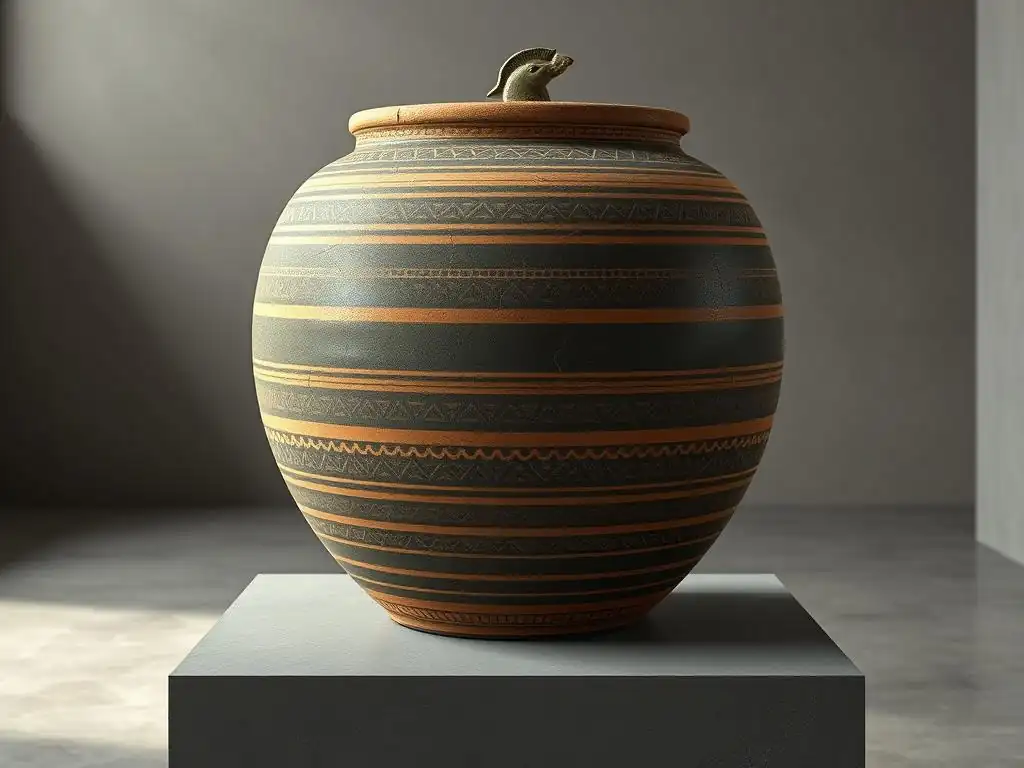
Watson's Research on Mammoth Cave Archaeology
Patty Jo Watson's extensive research at Mammoth Cave, Kentucky, stands as a landmark achievement in American archaeology, primarily due to her innovative application of processual methods to a richly preserved environment. From the late 1960s into the 1980s, her long-term project systematically explored the vast, dry cave system, which offered unparalleled preservation of organic materials—a rarity in archaeological contexts. Watson's team recovered thousands of desiccated plant remains, including seeds, nutshells, and cultivated plants, providing an unprecedented window into the subsistence strategies of prehistoric Eastern North American populations.
Her meticulous analysis of these materials, often involving collaboration with botanists, revealed that early inhabitants of the region were actively cultivating native seed plants such as sumpweed (Iva annua), goosefoot (Chenopodium berlandieri), and sunflower (Helianthus annuus) long before the widespread adoption of maize agriculture. This evidence challenged prevailing notions that prehistoric diets were solely based on hunting and gathering or late adoption of agriculture. Watson's work at Mammoth Cave fundamentally reshaped understandings of agricultural origins and development in the Eastern Woodlands, demonstrating the immense value of a rigorous, interdisciplinary Patty Jo Watson archaeological methodology focused on perishable remains.
Innovations in Archaeological Data Analysis Introduced by Watson
Beyond her iconic fieldwork, Patty Jo Watson was a tireless advocate for and practitioner of innovative approaches to archaeological data analysis. She was among the early proponents of applying quantitative methods and statistical analysis to archaeological datasets, moving the field beyond qualitative descriptions. Watson recognized the immense potential of systematic data recording and the use of early computational tools to process and interpret large volumes of information, a significant departure from the more impressionistic analyses common in prior eras.
Her publications, including "Explanation in Archaeology: An Explicitly Scientific Approach" (1971, co-authored), provided practical guidelines for formulating testable hypotheses, designing rigorous sampling strategies, and employing statistical techniques to evaluate archaeological evidence. She championed the idea that archaeological conclusions should be empirically verifiable and logically sound, emphasizing the need for transparent analytical procedures. This commitment to a data-driven Patty Jo Watson archaeological methodology helped establish new standards for analytical precision and objectivity, influencing how archaeologists worldwide approached the interpretation of material culture.
Patty Jo Watson's Influence on Paleoethnobotany
Patty Jo Watson's influence on the sub-discipline of paleoethnobotany is profound and enduring. Through her seminal work at Mammoth Cave and other sites, she demonstrated the critical importance of systematically recovering and analyzing botanical remains to reconstruct ancient diets, agricultural practices, and environmental adaptations. Prior to her efforts, plant remains were often overlooked or poorly understood in archaeological excavations, viewed as secondary to more visually impressive artifacts.
Watson, however, meticulously documented and interpreted thousands of desiccated plant specimens, transforming paleoethnobotany from a nascent field into a rigorous and indispensable component of archaeological research. She not only advanced the methodologies for identifying and interpreting ancient plant use but also actively promoted interdisciplinary collaboration between archaeologists and botanists. Her work provided concrete examples of how detailed paleoethnobotanical data could address significant questions about human subsistence evolution, resource management, and the origins of agriculture, solidifying its status as a vital part of comprehensive Patty Jo Watson archaeological methodology.
Critiques and Re-evaluations of Watson's Processual Approach
Addressing Criticisms of Processual Archaeology
While Patty Jo Watson was a staunch proponent of Processual Archaeology, the paradigm itself faced significant critiques, particularly from the late 1970s onwards with the rise of Post-Processual Archaeology. Critics argued that processualism, in its zealous pursuit of scientific objectivity and universal laws, often neglected the crucial roles of human agency, ideology, symbolism, and individual experience in shaping past cultures. Some felt that its focus on environmental adaptation and systemic processes led to a form of environmental or economic determinism, overlooking the rich tapestry of human thought and social meaning.
Watson and other leading processualists responded to these criticisms by emphasizing that their aim was not to deny the complexity of human culture but to establish a robust empirical foundation upon which more nuanced interpretations could be built. While maintaining her core commitment to scientific rigor, Watson's later work implicitly acknowledged the need for a balanced approach, recognizing that while scientific methods are essential for data collection and analysis, archaeological interpretation also benefits from historical context and an understanding of humanistic dimensions.
Her steadfast belief in the scientific Patty Jo Watson archaeological methodology, however, remained central to her intellectual stance.
The Evolution of Watson's Thinking Over Time
Despite her foundational role in establishing processual archaeology, Patty Jo Watson's thinking was not static; it evolved and matured over her extensive career, reflecting the ongoing intellectual debates within the discipline. While she remained a firm advocate for scientific rigor and explicit methodology, her later works demonstrated a nuanced understanding of the complexities inherent in archaeological interpretation. She continued to emphasize the importance of empirical data and testable hypotheses but also increasingly acknowledged the interpretive challenges posed by the fragmentary nature of the archaeological record and the limitations of purely objective analysis.
This evolution was not a rejection of her core principles but rather a refinement, recognizing that while a scientific Patty Jo Watson archaeological methodology provides the necessary foundation for sound research, the ultimate goal of understanding human behavior requires a broader, more flexible perspective. She maintained that rigorous data collection and analysis were indispensable for any credible archaeological endeavor, even as the theoretical frameworks for interpreting that data expanded to include more social, symbolic, and historical considerations. Her sustained intellectual engagement ensured that her contributions remained relevant amidst changing theoretical landscapes.
Legacy and Influence on Contemporary Archaeological Practice
Patty Jo Watson's Impact on Future Generations of Archaeologists
Patty Jo Watson's impact on future generations of archaeologists is profound and far-reaching, extending well beyond her direct students. As a distinguished professor at Washington University in St. Louis for many decades, she mentored numerous doctoral candidates who went on to become influential scholars in their own right, carrying forward her commitment to scientific rigor and systematic inquiry. Her teaching emphasized critical thinking, meticulous research design, and the importance of interdisciplinary collaboration, shaping the intellectual habits of countless emerging archaeologists.
Beyond direct mentorship, her prolific publications, particularly her methodological treatises and detailed site reports from Mammoth Cave, served as essential textbooks and exemplars for students worldwide. These works not only disseminated the principles of a scientific Patty Jo Watson archaeological methodology but also demonstrated how these principles could be applied to yield groundbreaking insights into prehistoric life. Her legacy is evident in the widespread adoption of explicit research designs, quantitative analysis, and a problem-oriented approach in contemporary archaeological curricula and fieldwork practices across North America and beyond.
The Enduring Relevance of Watson's Methodological Contributions
The enduring relevance of Patty Jo Watson's methodological contributions is undeniable, even in an archaeological landscape that has diversified significantly since the heyday of processualism. While theoretical perspectives have expanded to include post-processual, indigenous, and historical archaeology, the fundamental principles of data collection, analysis, and interpretation that Watson championed remain foundational to all robust archaeological practice. Her insistence on systematic sampling, meticulous excavation, and transparent analytical procedures forms the bedrock upon which any credible archaeological research, regardless of its theoretical persuasion, must be built.
Her work on paleoethnobotany, for instance, continues to be a standard reference for how to approach the recovery and interpretation of plant remains. The core tenets of a rigorous, empirically grounded Patty Jo Watson archaeological methodology—such as formulating explicit research questions, testing hypotheses against evidence, and striving for replicable results—are still considered best practices. These contributions ensure that archaeological findings are not merely speculative but are grounded in verifiable data, maintaining the discipline's academic integrity and public trust.
Watson's National Academy of Sciences Membership
A testament to Patty Jo Watson's extraordinary contributions and intellectual stature within the scientific community was her election to the National Academy of Sciences (NAS) in 1988. This prestigious honor is bestowed upon scientists and engineers in the United States who are recognized for their distinguished and continuing achievements in original research. At the time of her election, she was one of the very few archaeologists, and even fewer women archaeologists, to be inducted into this elite body, underscoring the exceptional impact of her work.
Her membership in the NAS signified official recognition of archaeology as a rigorous science capable of generating fundamental new knowledge about the human past. It validated her lifelong advocacy for a scientific Patty Jo Watson archaeological methodology and acknowledged her pioneering role in transforming the discipline. This recognition not only celebrated her personal achievements but also elevated the standing of archaeology within the broader scientific establishment, affirming its capacity for systematic inquiry and significant discovery.
Patty Jo Watson: A Summary of Her Lasting Contributions to Archaeology
Reinforcing the Importance of Scientific Rigor in Archaeological Interpretation
Patty Jo Watson's most profound and lasting contribution to archaeology lies in her relentless reinforcement of the importance of scientific rigor in archaeological interpretation. She spearheaded a movement that fundamentally shifted the discipline from a largely descriptive, historically focused endeavor to a more analytical, explanatory science. Watson consistently argued that archaeological conclusions should be derived from explicit methodologies, testable hypotheses, and empirically verifiable data, rather than intuition or subjective interpretation.
Her work demonstrated how the systematic application of the scientific method—from research design and field excavation to laboratory analysis and statistical interpretation—could yield robust and reliable insights into past human behavior. This commitment to a rigorous Patty Jo Watson archaeological methodology ensured that archaeological findings were not just interesting narratives but verifiable contributions to our understanding of human history and cultural processes. Her legacy is a discipline that, while embracing diverse theoretical perspectives, remains grounded in the principles of systematic inquiry and evidence-based reasoning.
Patty Jo Watson's Role in Shaping Modern Archaeological Theory
Patty Jo Watson played an indispensable role in shaping modern archaeological theory, particularly through her foundational contributions to Processual Archaeology. As one of its most articulate and influential proponents, she helped establish a new paradigm that emphasized the scientific investigation of cultural processes, human adaptation, and environmental interactions. Her theoretical framework encouraged archaeologists to look beyond individual artifacts to understand the dynamic systems that produced them, seeking generalizable explanations for cultural change.
While subsequent theoretical developments, such as Post-Processualism, offered critiques and alternative perspectives, the core tenets of systematic inquiry and explicit methodology that Watson championed remain integral to contemporary archaeological practice. Her intellectual leadership ensured that archaeology moved beyond mere description to engage in robust theoretical debates and the systematic testing of ideas. The influence of Patty Jo Watson archaeological methodology continues to underpin much of today's archaeological research, providing a solid scientific foundation upon which new theoretical insights can be built and evaluated.
Frequently Asked Questions
### Who was Patty Jo Watson and what is her significance in archaeology?
Patty Jo Watson was a prominent American archaeologist known for her contributions to scientific rigor and the adoption of processual approaches in the field. She championed systematic data collection and quantitative analysis.
### What is "processual archaeology," and how did Patty Jo Watson contribute to its development?
Processual archaeology emphasizes the study of cultural processes and seeks to explain cultural change through scientific methods. Watson helped solidify its foundation by advocating for hypothesis testing and objective analysis.
### What methodologies did Patty Jo Watson advocate for in archaeological research?
Watson advocated for methodologies that emphasized systematic data collection, quantitative analysis, and the application of scientific principles. These included careful excavation techniques and detailed record keeping.
### Where did Patty Jo Watson conduct her most notable archaeological work?
While she worked on various projects, Watson's most notable work often centered around the Mammoth Cave area in Kentucky. She focused on understanding the prehistoric use of this unique environment.
### How can I learn more about Patty Jo Watson's work and the principles of processual archaeology?
You can explore the ArchaeologyHub.org website for detailed profiles, timelines, and analyses related to Patty Jo Watson and her archaeological methodology. Also, consider researching her published works and academic articles.
Final Reflection: The Enduring Legacy of Rigorous Inquiry
The journey through Patty Jo Watson's contributions to archaeology reveals more than just a historical narrative; it underscores the critical importance of scientific rigor in understanding our past. In a world increasingly driven by narratives and interpretations, Watson's unwavering commitment to processual approaches and meticulous methodology remains a beacon, guiding us toward more accurate and objective understandings of human history. Her influence is not confined to academia; it permeates how we interpret evidence and construct narratives in all facets of life.
This exploration of Watson's work has profoundly highlighted the necessity of questioning assumptions and embracing critical thinking in every endeavor. Her dedication to data-driven conclusions and her insistence on rigorous testing have shaped the field of archaeology and continue to inspire generations of scholars. Archaeology is not about finding things; it's about finding out about things.
This quote, often attributed to her, encapsulates the essence of her approach: a relentless pursuit of knowledge through systematic investigation and analysis.
As we conclude this examination of Patty Jo Watson's archaeological methodology, I invite you to reflect on the principles she championed. Consider how you can apply her commitment to scientific rigor and processual thinking in your own life, whether in your professional pursuits or your personal explorations. Embrace the challenge of questioning assumptions, seeking evidence, and constructing narratives based on verifiable data. By doing so, you contribute to a world where understanding is built on a foundation of truth and informed by the wisdom of the past.
Embrace Archaeological Discovery!
Thank you for exploring the journey of Patty Jo Watson and her contributions to archaeology. Your newfound appreciation for scientific rigor and processual approaches can now fuel your own exploration and engagement!
Here's how you can take the next step:
- Delve deeper into processual archaeology by researching a specific archaeological site or research project that utilizes this approach. Understand its application in real-world scenarios.
- Share this article with fellow archaeology enthusiasts on social media. Let's get more people discussing the importance of method and theory!
- Consider volunteering at a local archaeological dig site or museum to experience the thrill of discovery firsthand.
What specific aspect of Patty Jo Watson's work inspires you the most, and how might you apply that inspiration to your own exploration of the past?