
The Parkin Site: A Late Mississippian Fortified Town in Arkansas, Possibly Visited by De Soto

Welcome to ArchaeologyHub.org, your gateway to unlocking the secrets of the past. Delve into a world where ancient civilizations rise from the dust, and forgotten stories are brought to light. Curious about the pre-Columbian history of the Americas? Our featured article explores the Parkin Site, a fascinating Late Mississippian fortified town in Arkansas, potentially encountered by Hernando de Soto himself. What mysteries lie within its earthen walls? Join us as we uncover the evidence and piece together the puzzle of this remarkable archaeological site.
- Introduction to the Parkin Site: A Key Mississippian Archaeological Location
- The History and Cultural Context of the Parkin Site
- Archaeological Investigations at the Parkin Site
- The Parkin Site and the De Soto Expedition
- Architecture and Layout of the Parkin Site
- The Parkin Site's Economy and Subsistence
- The Decline and Abandonment of the Parkin Site
- Preservation and Interpretation of the Parkin Site Today
- The Parkin Site within the Broader Mississippian World
-
Frequently Asked Questions
- What is the Parkin Site and why is it significant?
- Where is the Parkin Site located, and what geographical region does it belong to archaeologically?
- What evidence suggests that the Parkin Site might have been visited by Hernando de Soto?
- What types of archaeological features are found at the Parkin Site, and what do they tell us about Mississippian life?
- What excavation techniques are used at the Parkin Site, and what types of artifacts have been discovered?
- Final Reflection: Echoes of the Past, Seeds of the Future
- Unearth Your Own Archaeological Adventure!
Introduction to the Parkin Site: A Key Mississippian Archaeological Location
Overview of the Parkin Site's Significance
The Parkin Site stands as a pivotal archaeological location, representing a remarkably preserved Late Mississippian fortified town in eastern Arkansas. Its exceptional state of preservation offers an unparalleled window into the complex societal structures, defensive strategies, and daily life of the Mississippian culture, which flourished across the southeastern United States from approximately AD 800 to 1600. Researchers widely consider the Parkin Site to be the most probable location of "Casqui," a major native town visited by the Hernando de Soto expedition in 1541, making it a critical bridge between pre-Columbian archaeology and early European historical accounts.
This Mississippian fortified town's significance extends beyond its potential connection to De Soto. It provides invaluable data for understanding the dynamics of chiefdoms, the organization of labor for monumental construction (such as mounds and palisades), and the resilience of indigenous communities in the face of inter-group conflict. Recognized as a National Historic Landmark and protected as Parkin Archeological State Park, the site serves as a cornerstone for archaeological research and public education regarding the rich history of the Mississippian people in the Lower Mississippi Valley.
Parkin Site's Location and Geographical Context within Arkansas
The Parkin Site is strategically situated near the modern-day town of Parkin in Cross County, Arkansas, specifically at the confluence of the St. Francis River and the Tyronza River. This prime location on a natural levee within the expansive St. Francis River floodplain offered numerous advantages to its ancient inhabitants. The fertile alluvial soils of the surrounding area were ideal for intensive agriculture, particularly maize cultivation, supporting a large and dense population. Furthermore, its position at the convergence of two waterways provided excellent access for travel, trade, and resource exploitation.
This geographical context within the Lower Mississippi Valley is crucial for understanding the Parkin Site's role in the broader Mississippian world. The region was a network of interconnected chiefdoms, and the Parkin Site's location facilitated its participation in extensive trade routes and cultural exchanges. The abundant aquatic resources, including fish and waterfowl from the rivers and oxbow lakes, further supplemented the agricultural base, contributing to the long-term sustainability and prosperity of this Mississippian fortified town.
The History and Cultural Context of the Parkin Site
The Mississippian Culture and the Parkin Phase
The Mississippian culture, spanning roughly AD 800 to 1600, was a complex pre-Columbian civilization known for its distinctive features: large-scale maize agriculture, monumental earthen mounds, hierarchical chiefdoms, and elaborate ceremonial practices. The Parkin Site belongs to the "Parkin Phase," a specific regional manifestation of the Late Mississippian period, generally dated from approximately AD 1350 to 1650. This phase is characterized by a unique set of material culture traits and settlement patterns that distinguish it from other contemporary Mississippian groups.
Key defining characteristics of the Parkin Phase include distinctive ceramic styles, such as Parkin Punctated and Parkin Incised pottery, which feature unique decorative motifs and vessel forms. Settlements like the Parkin Site were typically large, nucleated villages, often fortified with impressive palisades, reflecting a period of increased inter-chiefdom warfare. The social structure was highly organized, with a centralized leadership overseeing agricultural production, trade, and the construction of public works, embodying the zenith of Mississippian societal complexity in the region.
Dating the Parkin Site: Late Mississippian Period Chronology
The chronology of the Parkin Site has been established through a combination of archaeological dating methods, primarily radiocarbon dating and ceramic seriation. Radiocarbon analysis of organic materials, such as charcoal and charred plant remains recovered from secure archaeological contexts, consistently places the main occupation of the Parkin Site within the Late Mississippian period, specifically between approximately AD 1350 and 1650. These dates align with the appearance of distinctive Parkin Phase pottery styles, which serve as crucial chronological markers.
Further chronological refinement comes from comparative analysis with other well-dated Mississippian sites in the region, such as Nodena and Walls. By observing the stylistic evolution of pottery and the stratigraphic relationships of different cultural deposits, archaeologists have been able to construct a detailed timeline for the Parkin Site's occupation. This precise dating is paramount for correlating the archaeological record with historical accounts, particularly the De Soto expedition, allowing researchers to explore the dynamics of this Mississippian fortified town on the eve of European contact.
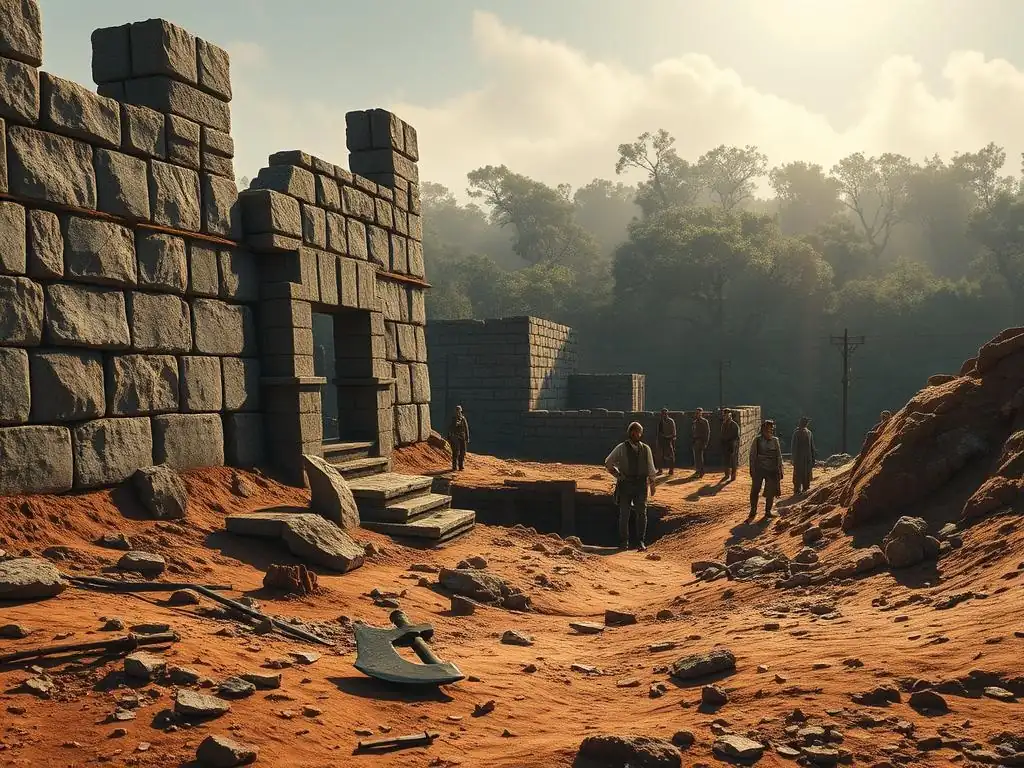
A defining characteristic of the Parkin Site is its substantial fortification, which clearly identifies it as a Mississippian fortified town. Archaeological investigations have revealed the remains of a massive defensive palisade that encircled the entire settlement. This palisade was constructed from upright logs, likely reaching heights of 10 to 15 feet, and featured bastions or watchtowers at regular intervals, providing strategic vantage points for defense. Such an elaborate defensive structure indicates a significant investment of communal labor and suggests a need for protection against external threats from rival chiefdoms.
The presence of such a formidable fortification speaks volumes about the social structure of the Parkin Site. The construction and maintenance of a palisade of this scale would have required a highly organized and centralized authority capable of mobilizing and directing a large workforce. This suggests a powerful chiefdom with the ability to command resources and labor, reinforcing social hierarchies. The constant threat of warfare, evidenced by these defenses, likely fostered strong community cohesion and loyalty within this Mississippian fortified town.
Archaeological Investigations at the Parkin Site
Early Explorations and Discoveries at Parkin
The impressive earthworks of the Parkin Site did not go unnoticed by early observers. European American settlers and antiquarians noted the prominent mounds and defensive features in the 19th century. Early archaeological reconnaissance in the region, including limited surveys by figures such as Clarence B. Moore in the early 20th century, documented the site's extensive features, including its large central mound and the surrounding ditch that marked the palisade line. These initial observations, though not systematic excavations, helped establish the site's importance within the archaeological landscape of eastern Arkansas.
Later, the comprehensive survey work of Phillips, Ford, and Griffin in the 1940s further categorized the Parkin Site within the regional archaeological framework, recognizing its distinct cultural phase. These early explorations, while often limited to surface collections or small test pits, provided the foundational understanding of the site's layout and cultural affiliation. They highlighted the potential for significant archaeological discoveries and laid the groundwork for more intensive and scientifically rigorous investigations in subsequent decades at this Mississippian fortified town.
Modern Excavation Techniques and Findings at the Parkin Site
Systematic modern archaeological investigations at the Parkin Site began in the 1960s, intensifying significantly after the establishment of Parkin Archeological State Park in 1978. These excavations have employed a range of advanced techniques, including systematic grid excavation, which allows for precise mapping of features and artifacts in three dimensions. Remote sensing technologies, such as ground-penetrating radar (GPR) and magnetometry, have been used to identify subsurface features like house foundations, palisade trenches, and burial areas without disturbing the site. Flotation, a technique to recover small plant remains and seeds, has provided crucial insights into ancient diet and environment.
These modern efforts have yielded remarkable findings. Archaeologists have uncovered clear evidence of multiple construction phases for the central mound and the defensive palisade, indicating centuries of occupation and modification. The identification of numerous postmolds reveals the outlines of wattle-and-daub houses, offering details about residential architecture and community organization. Furthermore, the discovery of hearths, storage pits, and refuse middens provides direct evidence of daily life, subsistence activities, and craft production within the Parkin Site.
Key Artifacts Uncovered: Pottery, Tools, and Ornaments
The archaeological record at the Parkin Site is rich with artifacts that illuminate the lives of its Mississippian inhabitants. Pottery is particularly abundant and diagnostic, with characteristic types such as Parkin Punctated and Parkin Incised. Parkin Punctated pottery features small, repeated indentations or punctations, often arranged in patterns, while Parkin Incised ware is decorated with fine, incised lines forming geometric or curvilinear designs. These ceramic vessels, ranging from large storage jars to smaller bowls and effigy pots, provide insights into cooking, food storage, and possibly ceremonial practices.
Beyond ceramics, a variety of tools have been recovered. Chert hoes, used for cultivating maize, and projectile points (arrowheads) for hunting are common, reflecting the agricultural and hunting components of their economy. Bone tools, such as awls for working hides and fishhooks, also demonstrate their resourcefulness. Personal ornaments, though rarer, include shell beads, earspools made of copper or stone, and polished stone pendants, indicating a developed sense of aesthetics and the presence of specialized craftspeople within this Mississippian fortified town.
The Parkin Site and the De Soto Expedition
Evidence for De Soto's Possible Visit to the Parkin Site
The hypothesis that the Parkin Site is the protohistoric town of "Casqui," visited by Hernando de Soto's expedition in June 1541, is strongly supported by a convergence of historical and archaeological evidence. Chroniclers of the De Soto expedition, such as Garcilaso de la Vega and the Gentleman of Elvas, provide detailed geographical descriptions that align remarkably well with the Parkin Site's location. They describe a large, fortified town situated on a river, possessing a prominent mound from which the chief governed, and located a specific distance from other known sites.
Archaeological investigations at the Parkin Site have yielded a small but significant number of European artifacts consistent with the De Soto period. These include rare glass beads, fragments of chain mail, and iron tools. While such finds are not exclusive proof, their presence, combined with the precise matching of geographical and settlement descriptions from the historical accounts, makes the Parkin Site the leading candidate for Casqui. This potential identification links the ancient Mississippian fortified town directly to one of the earliest documented European encounters in the interior of North America.
Historical Accounts and Archaeological Corroboration
The historical accounts of De Soto's chroniclers offer vivid descriptions that find compelling corroboration in the archaeological features of the Parkin Site. The narratives detail a large, densely populated town protected by a formidable palisade—a feature prominently identified through excavation at Parkin. They also mention a large mound where the chief resided, which corresponds to Mound 1 at the Parkin Site, standing approximately 20 feet (6 meters) high and serving as a central platform for elite structures.
Furthermore, the chroniclers describe the town's location on a substantial river, consistent with the Parkin Site's position on the St. Francis River. Details such as the chief of Casqui requesting rain from De Soto, or the expedition's subsequent journey to a rival chiefdom, add layers of historical context. The alignment of these specific historical narratives with the physical layout and archaeological discoveries at the Parkin Site provides a powerful argument for its identification as Casqui, solidifying its place as a crucial point of contact between two vastly different cultures.
Impact of European Contact on the Parkin Site Community
The potential visit of the De Soto expedition in 1541, even if brief, likely had profound and devastating impacts on the community at the Parkin Site. The most immediate and catastrophic effect was the introduction of Old World diseases, such as smallpox, measles, and influenza, to which Native American populations had no natural immunity. While direct archaeological evidence of mass mortality is rare, epidemiological studies suggest that these diseases could decimate populations, with mortality rates potentially reaching 50-90% in subsequent decades, even from indirect contact.
Beyond disease, the expedition's demands for food, porters, and resources would have disrupted the local economy and social order. The presence of a large, armed foreign force could have destabilized political alliances and exacerbated existing inter-chiefdom conflicts. While the Parkin Site may not have been immediately abandoned after De Soto's visit, the cumulative effects of disease, social disruption, and ecological changes initiated by European contact undoubtedly contributed to the eventual decline and abandonment of this Mississippian fortified town and many other Mississippian centers in the subsequent century.
Architecture and Layout of the Parkin Site
Mound Construction and Purpose at the Parkin Site
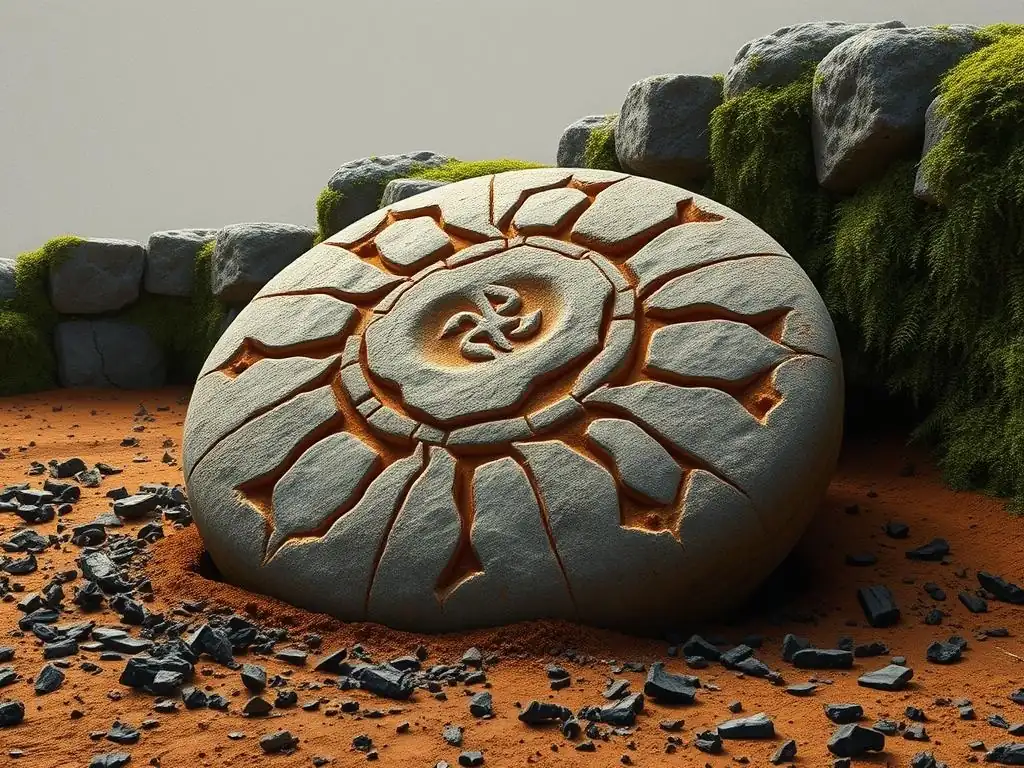
The Parkin Site features several earthen mounds, with Mound 1 being the most prominent and central, rising approximately 20 feet (6 meters) above the surrounding terrain. This large platform mound likely served as the foundation for the chief's residence or a major temple, signifying the spiritual and political heart of the Mississippian fortified town. The construction of these mounds was a monumental undertaking, requiring thousands of basket loads of earth to be moved by hand, reflecting the immense organizational capacity and communal labor resources available to the chiefdom.
The purpose of these mounds extended beyond mere elevation. They served as visible symbols of power, prestige, and social hierarchy, elevating the elite above the common populace. Ceremonial structures built atop the mounds were focal points for religious rituals and public gatherings, reinforcing the chief's authority and the community's shared beliefs. The strategic placement of Mound 1 within the palisaded enclosure further underscores its importance as the central axis of this Mississippian fortified town.
Residential Areas and Community Organization
Within the protective confines of the palisade at the Parkin Site, archaeological excavations have revealed evidence of extensive residential areas. The typical dwelling was a wattle-and-daub structure, constructed by weaving branches (wattle) and plastering them with mud (daub), supported by sturdy wooden posts. The arrangement of postmolds indicates that these houses were often rectilinear, with hearths located centrally. These residential structures were likely clustered around open plazas or courtyards, suggesting a well-organized and densely populated community.
The layout of the residential areas provides insights into the social organization of the Parkin Site. The concentration of dwellings within the fortified enclosure points to a nucleated settlement pattern, likely driven by the need for defense and efficient resource management. The presence of distinct activity areas, such as refuse pits and storage facilities associated with individual households, further illustrates the daily life and domestic practices of the inhabitants within this Mississippian fortified town, highlighting a cohesive and structured society.
The Palisade and Defensive Features of the Fortified Town
The palisade is arguably the most striking architectural feature of the Parkin Site, defining its identity as a Mississippian fortified town. This massive defensive wall, estimated to have enclosed approximately 17 acres (7 hectares), was constructed from hundreds, possibly thousands, of large upright logs, forming a formidable barrier. Archaeological evidence suggests the palisade was regularly maintained and potentially rebuilt over time, indicating a continuous need for defense throughout the site's occupation.
In addition to the main wall, the palisade incorporated strategic defensive features such as bastions or watchtowers, projecting outwards from the main wall at regular intervals. These bastions would have allowed defenders to fire upon attackers from multiple angles, providing flanking fire and enhancing the defensive capabilities of the Parkin Site. A large ditch, likely dug as part of the palisade construction, often accompanied the wall, further impeding potential invaders and underscoring the serious nature of warfare in the Late Mississippian period.
The Parkin Site's Economy and Subsistence
Agricultural Practices and Food Production
The economy of the Parkin Site was primarily based on intensive agriculture, with maize (corn) being the staple crop. The fertile alluvial soils of the St. Francis River floodplain, regularly replenished by seasonal floods, provided an ideal environment for high-yield cultivation. The "Three Sisters" agricultural complex—maize, beans, and squash—was central to their food production, providing a balanced diet and promoting soil health. Large chert hoes, recovered during excavations, are direct evidence of their advanced farming techniques.
Beyond agriculture, the inhabitants of the Parkin Site engaged in a diversified subsistence strategy to ensure food security for their large population. Hunting provided protein from deer, turkey, and smaller mammals. Fishing was also a significant activity, with abundant fish available from the St. Francis and Tyronza Rivers, as well as numerous oxbow lakes. The gathering of wild plant foods, such as nuts (e.g., hickory, pecan) and berries, further supplemented their diet, demonstrating a comprehensive approach to resource utilization within this Mississippian fortified town.
Trade Networks and Exchange Systems
The Parkin Site was not an isolated community but an active participant in extensive Mississippian trade networks that spanned vast distances. Archaeological evidence indicates the exchange of various goods, both utilitarian and exotic. Non-local chert, a high-quality stone essential for tool production, was imported from distant quarries, sometimes hundreds of miles away. Copper, used for ceremonial objects and ornaments, likely originated from the Great Lakes region, while marine shell, prized for beads and gorgets, came from the Gulf Coast.
These trade networks were likely facilitated by canoe transport along the interconnected river systems, allowing for efficient movement of goods and ideas across the Mississippian world. The presence of these non-local materials at the Parkin Site underscores its economic importance and its integration into a broader system of interaction and exchange. This participation in a wider economy allowed the Parkin Site to acquire resources not locally available and to maintain cultural connections with other Mississippian chiefdoms.
Resource Management within the Parkin Community
The long-term occupation and sustained growth of the Parkin Site attest to its inhabitants' effective resource management strategies. They skillfully managed the abundant natural resources of their environment, including timber for construction (palisades, houses) and fuel, clay for pottery production, and chert for stone tools. While direct evidence of sustainable forestry or specific conservation practices is limited, the continued viability of such a large and complex settlement over centuries implies a degree of conscious resource stewardship.
The organization of labor for resource extraction, processing, and distribution was likely a communal effort, overseen by the chiefdom. This centralized management would have ensured that essential resources were available to support the dense population and maintain the infrastructure of the Mississippian fortified town. Efficient resource management was a critical factor in the Parkin Site's ability to thrive as a significant regional center for an extended period.
The Decline and Abandonment of the Parkin Site
Factors Contributing to the Site's Abandonment
The abandonment of the Parkin Site, like many other Mississippian centers in the 16th and early 17th centuries, is primarily attributed to the devastating impact of Old World diseases introduced by European contact. Even if the De Soto expedition's visit was brief, it acted as a vector for pathogens to which indigenous populations had no immunity. Epidemics of smallpox, measles, and influenza could sweep through communities, leading to catastrophic population decline, estimated to be as high as 90% in some regions. This demographic collapse would have severely weakened the social and political structures of the Parkin chiefdom.
Beyond disease, other factors may have contributed to the site's decline. Increased inter-chiefdom warfare, potentially exacerbated by the disruption caused by European presence, could have put additional strain on the community. Environmental degradation, such as localized deforestation for timber and fuel, or soil exhaustion from intensive agriculture, might also have played a role, though these are less certain. The cumulative effect of these pressures likely led to the gradual or relatively rapid dispersal and abandonment of the Parkin Site as a major Mississippian fortified town.
Post-Mississippian Occupation and Land Use
Following the decline of the Mississippian chiefdom and the abandonment of the large, nucleated settlement, the Parkin Site area did not immediately see the rise of another complex society. Instead, it was likely utilized by smaller, more dispersed Native American groups who may have hunted, fished, or temporarily camped in the vicinity. These groups, often survivors of the post-contact demographic collapse, typically lived in smaller, less centralized communities, adapting to a drastically altered landscape and social environment.
In later centuries, as European American settlers moved into the region, the land encompassing the Parkin Site was converted primarily to agricultural use, particularly cotton farming. This agricultural activity, involving plowing and leveling, unfortunately led to the disturbance and destruction of some archaeological deposits and the gradual reduction in height of several mounds. The recognition of its historical and archaeological significance in the mid-20th century ultimately led to its protection, preventing further widespread damage to this important Mississippian fortified town.
Preservation and Interpretation of the Parkin Site Today
Parkin Archeological State Park: Protecting the Site
Recognizing the immense historical and archaeological value of the Parkin Site, Parkin Archeological State Park was established in 1978. This crucial step ensured the protection of one of the best-preserved Late Mississippian fortified towns in the United States from further agricultural damage and urban development. The park's primary mission is to preserve the integrity of the archaeological resources, which include the large central mound, the remnants of the palisade ditch, and thousands of subsurface features and artifacts.
Ongoing preservation efforts at the park involve careful land management, archaeological monitoring, and measures to mitigate environmental threats such as erosion and vegetation encroachment. The park serves as a living laboratory for archaeologists, allowing for continued research under controlled conditions. This dedicated protection ensures that future generations can learn from and appreciate the rich heritage of the Parkin Site and the Mississippian people who once thrived there.
Educational Programs and Public Outreach
Parkin Archeological State Park plays a vital role in educating the public about the Mississippian culture and the pre-Columbian history of Arkansas. The park offers a variety of educational programs, including guided tours of the site led by park interpreters, which provide insights into the daily lives, beliefs, and societal structures of the ancient inhabitants. A modern visitor center houses interpretive exhibits that display artifacts, reconstruct elements of the Mississippian fortified town, and explain the archaeological process.
These public outreach efforts are crucial for fostering a deeper appreciation for archaeology and Native American heritage. School programs, workshops, and special events engage diverse audiences, helping them connect with a significant period of North American history. By making the Parkin Site accessible and understandable, the park contributes significantly to the broader understanding of indigenous cultures and their profound impact on the landscape.
Ongoing Research and Future Directions at the Parkin Site
Archaeological research at the Parkin Site is an ongoing and dynamic process, continually yielding new insights into its ancient past. Researchers continue to employ cutting-edge technologies, such as advanced remote sensing and precise dating methods, to refine the site's chronology and map its subsurface features with greater accuracy. Detailed analysis of macrobotanical and faunal remains provides deeper understanding of subsistence patterns and environmental interactions.
Future directions for research at the Parkin Site include further exploration of residential areas to understand household dynamics and social organization in more detail. There is also continued interest in finding additional, unambiguous evidence related to the De Soto expedition, which could solidify the site's identification as Casqui. The Parkin Site remains a prime location for exploring the complexities of Late Mississippian chiefdoms and the profound impacts of early European contact on indigenous societies.
The Parkin Site within the Broader Mississippian World
Comparisons to Other Mississippian Centers like Cahokia
While the Parkin Site is a significant Mississippian fortified town, it existed within a broader network of Mississippian centers, each with its own unique characteristics. A common comparison is made with Cahokia Mounds, located near modern-day St. Louis, Missouri. Cahokia was significantly larger and earlier in its peak, covering approximately 2,200 acres and featuring over 100 mounds, including the massive Monks Mound. Its population may have reached 10,000-20,000 people at its zenith (c. AD 1050-1200).
In contrast, the Parkin Site, at roughly 17 acres, represents a later (Late Mississippian) and more regional manifestation of Mississippian complexity. Both sites share fundamental Mississippian traits, such as mound construction, intensive maize agriculture, and hierarchical societies. However, Parkin's smaller scale, its distinct ceramic styles (Parkin Phase), and its prominent palisade reflect regional adaptations and the specific challenges of the Late Mississippian period, particularly increased warfare, distinguishing it from the earlier, larger urbanism of Cahokia.
The Parkin Site's Unique Characteristics and Contributions
The Parkin Site holds several unique characteristics that make it exceptionally valuable for understanding Mississippian culture. Foremost among these is its remarkable state of preservation as a fortified town, with substantial portions of its palisade ditch and mound still intact, offering a clear view of its defensive architecture. This preservation is rare among Mississippian sites, many of which have been significantly altered by agriculture or development.
Furthermore, the Parkin Site's strong archaeological and historical association with the Hernando de Soto expedition positions it as a critical protohistoric site. It serves as a rare point of direct contact between archaeological data and early European historical narratives, providing invaluable insights into what a Mississippian chiefdom was like just before significant European influence. Its detailed record contributes uniquely to understanding the dynamics of chiefdoms in the Central Mississippi Valley on the eve of profound demographic and cultural transformation.
The Legacy of the Parkin Site and Mississippian Culture
The Parkin Site stands as an enduring testament to the sophistication, ingenuity, and resilience of Mississippian culture. Its well-preserved features and rich archaeological record allow us to reconstruct a vivid picture of a complex society that thrived in eastern Arkansas for centuries, building monumental earthworks, cultivating vast fields, and engaging in extensive trade. The site challenges simplistic notions of pre-Columbian North America, revealing advanced social organization and technological capabilities.
Today, the legacy of the Parkin Site extends beyond its archaeological significance. It serves as a vital educational resource, connecting contemporary audiences with the rich and diverse history of indigenous peoples in the Americas. The ongoing research and interpretive efforts at Parkin Archeological State Park ensure that the stories of this Mississippian fortified town and its people continue to be told, fostering a deeper understanding and respect for the profound achievements and experiences of ancient North American civilizations.
Frequently Asked Questions
What is the Parkin Site and why is it significant?
The Parkin Site is a Late Mississippian period fortified town located in northeast Arkansas. Its significance lies in its well-preserved features, including mounds and a palisade, and its potential connection to the Hernando de Soto expedition in the 16th century.
Where is the Parkin Site located, and what geographical region does it belong to archaeologically?
The Parkin Site is located in northeast Arkansas, specifically in Cross County. Archaeologically, it belongs to the Mississippian culture that flourished in the Mississippi River Valley and surrounding areas.
What evidence suggests that the Parkin Site might have been visited by Hernando de Soto?
Evidence includes the site's location along likely routes of the De Soto expedition, as well as the presence of European artifacts found during excavations, which could indicate contact with the Spanish.
What types of archaeological features are found at the Parkin Site, and what do they tell us about Mississippian life?
The site features earthen mounds, a fortified palisade, and evidence of residential structures. These features reveal aspects of Mississippian life such as their social organization, defensive strategies, and settlement patterns.
What excavation techniques are used at the Parkin Site, and what types of artifacts have been discovered?
Archaeologists employ techniques like systematic excavation, soil analysis, and dating methods. Artifacts discovered include pottery, stone tools, and potentially European items, providing insights into the site's inhabitants and their interactions and trade.
Final Reflection: Echoes of the Past, Seeds of the Future
The journey through the Parkin Site, a testament to the ingenuity and resilience of the Late Mississippian people, resonates powerfully today. Understanding the complexities of this fortified town, possibly touched by the hand of De Soto, offers invaluable insights into the dynamics of pre-Columbian societies and the profound impact of cultural contact. The Parkin Site is more than just an archaeological dig; it's a window into a world that shaped the very landscape we inhabit.
The enduring legacy of the Parkin Site continues to shape our understanding of the Mississippian culture and the early history of the Americas. The meticulous preservation and ongoing research at this site are crucial for connecting us to our past and informing our future. We are all connected to the past, and the past is connected to us. By understanding the past, we can better understand ourselves and our place in the world.
This connection underscores the importance of preserving such sites for future generations.
As we reflect on the Parkin Site and the stories it holds, let us consider the lessons it offers about community, resilience, and the enduring power of human ingenuity. Let us strive to appreciate the rich tapestry of cultures that have shaped our world and commit to preserving these invaluable pieces of our shared history for generations to come. Consider how you can contribute to the preservation and understanding of archaeological sites, ensuring that the echoes of the past continue to inspire and inform our future.
Unearth Your Own Archaeological Adventure!
Thank you for delving into the fascinating story of the Parkin Site. We hope you've gained a new appreciation for the rich history hidden beneath our feet. Now, let's take that newfound knowledge and turn it into action!
Here are a few ways you can continue your exploration:
- Plan a visit to the Parkin Archeological State Park and experience the site firsthand. Imagine walking in the footsteps of those who lived there centuries ago!
- Explore other local archaeological sites and museums in your area. You might be surprised at the hidden history right in your own backyard.
- Share this article with friends and family to spark their interest in archaeology and local history.
What other ancient mysteries in your region are you now curious to explore?