
Archaeological Excavations at Babylon: Uncovering the Old Babylonian Levels

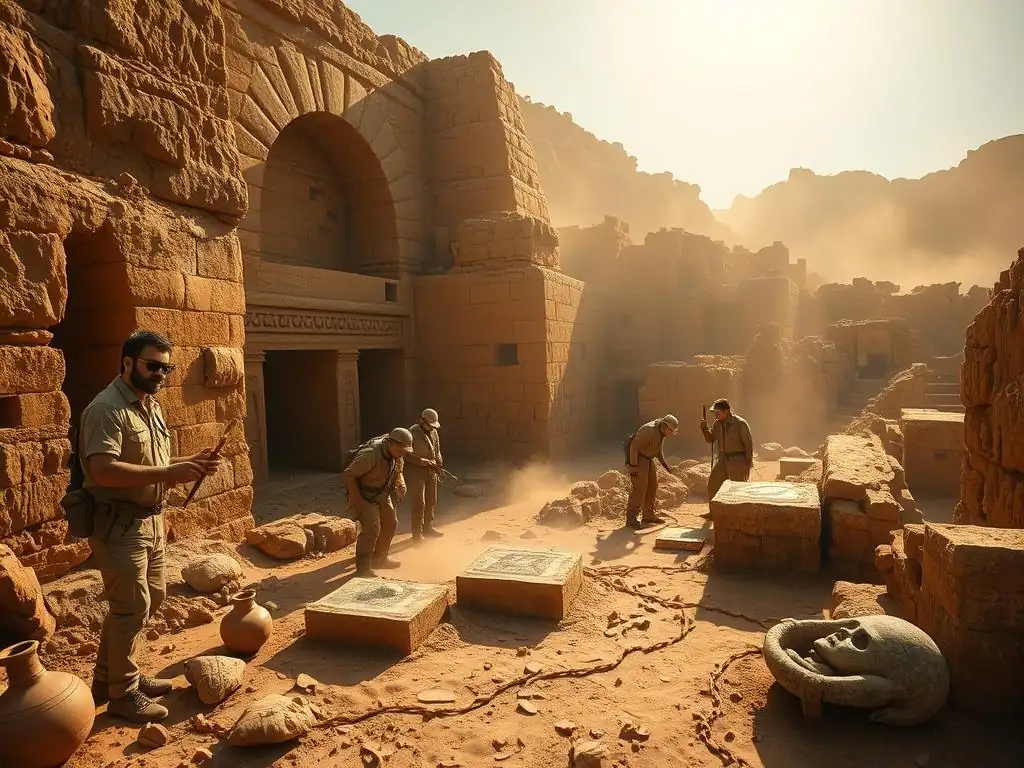
Welcome to ArchaeologyHub.org, your gateway to unlocking the secrets of the past. Have you ever wondered how archaeologists piece together history from fragments of earth? Dive into our latest exploration of Archaeological Excavations at Babylon, where we delve into the meticulous Babylon archaeological excavation techniques used to uncover the Old Babylonian levels. Prepare to journey back in time and discover the methods that reveal the stories buried beneath the sands. What will we unearth together?
- Archaeological Excavations at Tell Abu Duwarij: Uncovering the Neo-Babylonian Levels
- Introduction to Tell Abu Duwarij and its Archaeological Significance
- Historical Context: The Neo-Babylonian Period
- Tell Abu Duwarij Archaeological Excavation Techniques: An Overview
- Key Archaeological Discoveries from Neo-Babylonian Levels
- Specific Excavation Areas Within Tell Abu Duwarij: Case Studies
- Artifact Analysis: Decoding the Material Culture of Neo-Babylon
- Understanding Neo-Babylonian Society Through Archaeology
- Preserving and Interpreting the Archaeological Record of Tell Abu Duwarij
- Future Directions in Tell Abu Duwarij Archaeological Research
-
Frequently Asked Questions
- How are archaeological excavations at Babylon conducted?
- What challenges are unique to excavating at Babylon?
- What types of artifacts are typically found during excavations at Babylon?
- What is the significance of the Old Babylonian levels uncovered at Babylon?
- How does ArchaeologyHub.org contribute to understanding the excavations at Babylon?
- Final Reflection: Echoes of Babylon, Lessons for Today
- Unearth Your Inner Archaeologist!
Archaeological Excavations at Tell Abu Duwarij: Uncovering the Neo-Babylonian Levels
Introduction to Tell Abu Duwarij and its Archaeological Significance
Tell Abu Duwarij: A Neo-Babylonian Urban Center
Tell Abu Duwarij, located in the fertile plains of southern Mesopotamia, represents a significant, albeit lesser-known, urban center of the Neo-Babylonian Empire. Situated strategically along a paleochannel of the Euphrates River, this ancient mound covers an estimated area of approximately 40 hectares, with its highest point rising about 18 meters above the surrounding plain. Archaeological surveys indicate that the site was continuously occupied from the Uruk period through to the Seleucid era, but it reached its zenith during the Neo-Babylonian period, serving as a crucial regional hub for administration, agriculture, and trade.
Preliminary surface analyses and limited test excavations suggest that Tell Abu Duwarij likely housed several thousand inhabitants during its Neo-Babylonian phase, exhibiting a complex urban layout with distinct residential, administrative, and possibly industrial quarters. The architectural remains, primarily constructed from mudbrick, point to a well-organized settlement with planned streets and public spaces, indicative of the sophisticated urban planning characteristic of the Neo-Babylonian Empire. Its economic vitality was likely tied to its agricultural hinterland, producing staples such as barley and dates, and its role as a collection point for imperial taxes and tributes.
The Importance of Archaeological Research at Tell Abu Duwarij
Archaeological research at Tell Abu Duwarij is paramount for understanding the broader tapestry of the Neo-Babylonian Empire beyond its capital, Babylon. While Babylon itself offers insights into imperial grandeur, sites like Tell Abu Duwarij provide a vital regional perspective on daily life, provincial administration, and economic networks. Excavations here illuminate how imperial policies were implemented at a local level and how the population adapted to and contributed to the empire's prosperity.
The systematic application of advanced Babylon archaeological excavation techniques at Tell Abu Duwarij allows researchers to reconstruct the socio-economic dynamics of a provincial Neo-Babylonian city. By comparing findings from Tell Abu Duwarij with those from major centers like Babylon and Uruk, archaeologists can identify regional variations in material culture, religious practices, and administrative structures, thus offering a more nuanced and comprehensive understanding of this powerful ancient civilization. This comparative approach is essential for a complete historical narrative.
Focusing on the Neo-Babylonian Period (c. 626-539 BC)
The Neo-Babylonian period, spanning from approximately 626 BC to 539 BC, marks a remarkable resurgence of Mesopotamian power and cultural influence after centuries of Assyrian dominance. This era is characterized by monumental building projects, significant military expansion, and a flourishing of arts and sciences under powerful rulers like Nebuchadnezzar II. Focusing on this specific period at Tell Abu Duwarij is particularly valuable because it represents the site's most extensive occupation and provides direct evidence of imperial control and cultural imposition or adaptation.
The Neo-Babylonian levels at Tell Abu Duwarij are typically identified by distinctive ceramic typologies, architectural styles, and the presence of cuneiform tablets bearing Neo-Babylonian script. These archaeological layers offer a unique opportunity to study the material manifestations of a society at its peak, providing tangible links to historical records and shedding light on the daily routines, economic activities, and religious beliefs of its inhabitants. Understanding these levels through precise Babylon archaeological excavation techniques is crucial for historical reconstruction.
Historical Context: The Neo-Babylonian Period
Rise of Babylon under Nabopolassar
The Neo-Babylonian Empire emerged from the ashes of the collapsing Neo-Assyrian Empire, a process initiated by Nabopolassar. As a general under the Assyrian king Sinsharishkun, Nabopolassar seized control of Babylon in 626 BC, declaring himself king and effectively establishing the independent Neo-Babylonian dynasty. His reign marked a pivotal moment, as he spent years consolidating his power and systematically dismantling Assyrian strongholds throughout Mesopotamia.
In a decisive alliance with Cyaxares, the king of the Medes, Nabopolassar orchestrated the final defeat of the Assyrian Empire. Their combined forces sacked the Assyrian capital of Nineveh in 612 BC, followed by the destruction of Harran in 609 BC, thereby erasing Assyrian dominance from the Near East. This triumph allowed Babylon to reclaim its ancient prestige and laid the foundation for an empire that would soon rival, and in some respects surpass, its Assyrian predecessor, initiating a period of unprecedented prosperity and territorial expansion.
Key Rulers of the Neo-Babylonian Empire: Nebuchadnezzar II and Beyond
The most celebrated ruler of the Neo-Babylonian Empire was Nebuchadnezzar II, who reigned from 605 to 562 BC. His nearly 43-year rule witnessed extensive military campaigns that extended Babylonian control over Syria, Palestine, and parts of Egypt.
Most notably, he captured Jerusalem in 597 BC and again in 587/586 BC, leading to the destruction of the city and the exile of its Jewish population, events vividly recounted in biblical texts. Beyond military prowess, Nebuchadnezzar II transformed Babylon into a legendary metropolis, commissioning monumental projects such as the Ishtar Gate, the reconstruction of the Etemenanki ziggurat (often associated with the Tower of Babel), and vast palace complexes, including the famous Hanging Gardens, though their existence remains debated.
Following Nebuchadnezzar II, the empire experienced a period of instability with a succession of short-lived rulers, including Amel-Marduk, Neriglissar, and Labashi-Marduk. The final significant monarch was Nabonidus (556-539 BC), who showed an unusual devotion to the moon god Sin and spent a decade in the Arabian oasis of Teima, leaving his son Belshazzar in charge of Babylon. This internal division and a perceived neglect of the traditional Babylonian cults contributed to the empire's weakening, culminating in its peaceful fall to Cyrus the Great of Persia in 539 BC, marking the end of native Mesopotamian rule.
Neo-Babylonian society was highly stratified, with the king at its apex, followed by a powerful priestly class, scribes, military officials, and a vast populace comprising merchants, artisans, farmers, and slaves. The major temples, such as Esagila in Babylon dedicated to Marduk, were not only religious centers but also immense economic institutions, owning vast tracts of land, engaging in trade, and employing thousands of people. These temple complexes often functioned as banks, holding significant wealth and managing extensive archives of economic transactions.
The economy was predominantly agrarian, relying on the fertile lands of Mesopotamia and sophisticated irrigation systems, which were meticulously maintained and expanded. Barley was the staple crop, alongside dates, sesame, and various vegetables. Trade networks were extensive, reaching as far as Anatolia for metals, Egypt for luxury goods, and Arabia for incense and spices. Politically, the empire was a centralized monarchy, governed through a complex bureaucracy that utilized cuneiform for record-keeping, legal codes, and administrative decrees, ensuring control over its vast territories and diverse populations.
Tell Abu Duwarij Archaeological Excavation Techniques: An Overview
Remote Sensing and Geophysical Surveying
Before the initiation of physical excavation at Tell Abu Duwarij, remote sensing and geophysical surveying techniques were extensively employed to map the subsurface features of the site. Magnetometry, for instance, revealed numerous rectilinear anomalies across the tell, indicative of buried mudbrick walls and large structures, allowing archaeologists to identify potential residential quarters, public buildings, and defensive circuits without disturbing the ground. Ground-penetrating radar (GPR) was used in select areas to provide higher-resolution profiles of specific features, such as the depth of foundation walls or the presence of intact floors, crucial for understanding the Neo-Babylonian levels.
These non-invasive Babylon archaeological excavation techniques proved invaluable in formulating a strategic excavation plan, optimizing resource allocation, and minimizing the impact on the site. Aerial photography, including drone-based photogrammetry, complemented these surveys by providing detailed topographic maps and identifying subtle surface features, such as ancient irrigation channels or eroded building outlines, thereby guiding the placement of excavation trenches to target specific areas of Neo-Babylonian occupation. This preliminary work significantly enhanced the efficiency and scientific rigor of the subsequent fieldwork.
Stratigraphic Excavation and Documentation
The core of the fieldwork at Tell Abu Duwarij involved meticulous stratigraphic excavation, adhering to the principle of "single context recording." Each distinct archaeological layer or feature—whether a wall, a floor, a pit, or a fill deposit—was treated as a unique "context" and assigned a specific number. This rigorous approach ensures that the chronological sequence of the Neo-Babylonian levels is accurately established, allowing archaeologists to differentiate between periods of construction, use, and abandonment.
Detailed documentation was paramount: every context was photographed, drawn in plan and section, and described on standardized context sheets. The elevation of each feature was precisely recorded using a total station, creating a three-dimensional digital model of the excavation. This systematic application of Babylon archaeological excavation techniques enables the precise reconstruction of architectural phases and the association of artifacts with specific activities or events within the Neo-Babylonian occupation, ensuring the integrity and interpretability of the archaeological record.
Ceramic Analysis and Dating
Ceramic analysis constitutes one of the most fundamental Babylon archaeological excavation techniques for dating and understanding the Neo-Babylonian levels at Tell Abu Duwarij. Thousands of pottery sherds recovered from stratified contexts are meticulously washed, cataloged, and analyzed. Diagnostic pieces, such as rims, bases, and decorated body sherds, are particularly crucial as their forms and fabrics often exhibit specific characteristics unique to the Neo-Babylonian period, allowing for precise chronological assignments.
Typological studies compare the pottery from Tell Abu Duwarij with well-dated assemblages from other Neo-Babylonian sites, such as Babylon, Uruk, and Nippur. For instance, the prevalence of certain types of "flower pots" (beaker-like vessels) and specific forms of storage jars confirms the Neo-Babylonian date of many deposits. Furthermore, quantitative analysis of ceramic assemblages helps to infer the function of different areas (e.g., higher concentrations of cooking pots in domestic kitchens) and provides insights into local production versus imported wares, thus shedding light on trade networks and economic activities during the Neo-Babylonian era.
Key Archaeological Discoveries from Neo-Babylonian Levels
Unearthing Residential Quarters and Workshops
Excavations within the Neo-Babylonian levels at Tell Abu Duwarij have revealed extensive residential quarters, primarily composed of multi-roomed mudbrick houses arranged around central courtyards. These domestic units typically feature a main reception room, smaller private chambers, and areas for cooking and storage, often indicated by the presence of hearths, ovens, and large storage jars embedded in the floor. Artifacts recovered from these homes include grinding stones for grain, spindle whorls for textile production, simple ceramic vessels for daily use, and occasional personal ornaments, providing a glimpse into the daily lives of Neo-Babylonian families.
Interspersed within or adjacent to these residential areas, archaeologists have identified specialized workshops. For example, one area (approximately 100 square meters) yielded significant quantities of slag, crucible fragments, and small copper ingots, strongly suggesting metalworking activity. Another sector showed concentrations of bone and flint tools, alongside debitage, indicative of a craft area perhaps dedicated to bone carving or flint knapping. These discoveries highlight the diversified economic activities and craft specialization within the Neo-Babylonian urban fabric of Tell Abu Duwarij.
Religious Structures: Temples and Shrines of the Neo-Babylonian Era
Among the most significant discoveries from the Neo-Babylonian levels are the remains of several religious structures. While no monumental ziggurat has been identified, at least two smaller cultic buildings, interpreted as local shrines or minor temples, have been partially excavated. One such structure, approximately 15x20 meters in size, featured a typical Mesopotamian "bent-axis" approach to the main cella, where a mudbrick altar was found. Fragments of votive figurines, small ceramic stands, and incense burners were recovered from this area, suggesting regular cultic activity.
These religious buildings illustrate the deep integration of piety into Neo-Babylonian urban life. The specific deities worshipped at Tell Abu Duwarij, inferred from iconography on seals and fragments of cultic paraphernalia, appear to align with the broader Mesopotamian pantheon, including reverence for deities like Ishtar or Nabu, perhaps reflecting their imperial significance. The presence of these structures, even if modest compared to the grand temples of Babylon, underscores the importance of religious practices in maintaining social cohesion and imperial ideology at the provincial level.
Irrigation Systems and Agricultural Infrastructure
The prosperity of Tell Abu Duwarij, like most Mesopotamian cities, was heavily reliant on agriculture, supported by sophisticated irrigation systems. Excavations have revealed segments of ancient canals and feeder channels dating to the Neo-Babylonian period, approximately 2-3 meters wide and 1.5 meters deep, indicating a well-managed water distribution network that diverted water from the Euphrates paleochannel to the surrounding fields. These systems were crucial for cultivating barley, wheat, and date palms, sustaining the urban population.
Within the settlement itself, evidence of agricultural infrastructure includes large, subterranean storage pits, some measuring up to 3 meters in diameter, lined with mudbrick and bitumen, used for grain storage. Additionally, numerous large ceramic storage jars (pithoi) were found in domestic and administrative contexts, some with capacities exceeding 100 liters. These findings collectively paint a picture of a meticulously organized agricultural economy, essential for supporting the urban populace and contributing to the imperial food supply during the Neo-Babylonian period.
Specific Excavation Areas Within Tell Abu Duwarij: Case Studies
Area A: Uncovering a Potter's Workshop and Kiln
In Area A, a 20x15 meter trench located near the eastern perimeter of the Neo-Babylonian settlement, archaeologists made a remarkable discovery: a well-preserved potter's workshop. The most prominent feature was a large updraft kiln, roughly 2.8 meters in diameter and constructed of fired bricks, with a clearly discernible firing chamber and a separate stoking pit. Adjacent to the kiln, a compacted clay floor served as a working surface, littered with discarded pottery "wasters"—sherds of vessels that had been damaged during the firing process due to excessive heat or structural flaws.
Further investigation of Area A revealed small clay-lined pits, likely used for preparing and levigating clay, and concentrations of unfired pottery fragments, indicating the various stages of ceramic production. The types of pottery produced, primarily common domestic wares such as storage jars, bowls, and cooking pots, alongside some finer, wheel-made painted vessels, suggest a local industry catering to the daily needs of Tell Abu Duwarij's inhabitants. This insight into Babylon archaeological excavation techniques applied to industrial areas provides direct evidence for local craftsmanship and economic self-sufficiency.
Area B: Exploring a Possible Administrative Building
Area B, situated near the center of the tell and covering an area of 25x30 meters, yielded the remains of a substantial mudbrick building with unusually thick walls (up to 1.5 meters wide) and a complex layout of multiple interconnected rooms. Its formal plan, featuring a large central courtyard surrounded by smaller chambers, distinguishes it from typical domestic residences and suggests a public or administrative function. The most compelling evidence for this interpretation came from the discovery of approximately 45 cuneiform tablets within one of its rooms, carefully stored in a ceramic jar.
These tablets, primarily administrative records dating to the reigns of Nebuchadnezzar II and Nabonidus, detail transactions related to grain distribution, labor allocations, and tax collection from the surrounding agricultural lands. The presence of official seals on some of these documents further supports the identification of Area B as a regional administrative center, possibly a governor's residence or a tax collection office. This discovery significantly enhances our understanding of how the Neo-Babylonian empire managed its provincial resources through meticulous bureaucratic processes.
Area C: Analyzing a Series of Domestic Residences
Area C, a 30x20 meter excavation unit in the southwestern sector of Tell Abu Duwarij, provided a detailed cross-section of Neo-Babylonian domestic life. Here, archaeologists uncovered a series of three well-preserved private residences, each approximately 120-180 square meters in size, built with mudbrick walls and arranged around a central open-air courtyard. These houses shared common architectural features, such as single doorways leading from the street into a vestibule, and multiple rooms organized around the courtyard, including reception areas, bedrooms, and service rooms.
Variations in the artifact assemblages within these houses indicated different levels of wealth and social status. One residence, for example, yielded finely carved cylinder seals, imported glazed pottery fragments, and a small collection of bronze tools, suggesting a wealthier occupant. In contrast, an adjacent house contained simpler, locally produced ceramic wares and fewer luxury items, indicative of a more modest household. Studying these residences through Babylon archaeological excavation techniques provides invaluable data on social stratification, family structure, and daily routines within a provincial Neo-Babylonian urban setting.
Artifact Analysis: Decoding the Material Culture of Neo-Babylon
Stamp Seals: Identifying Administrative Control and Personal Identity
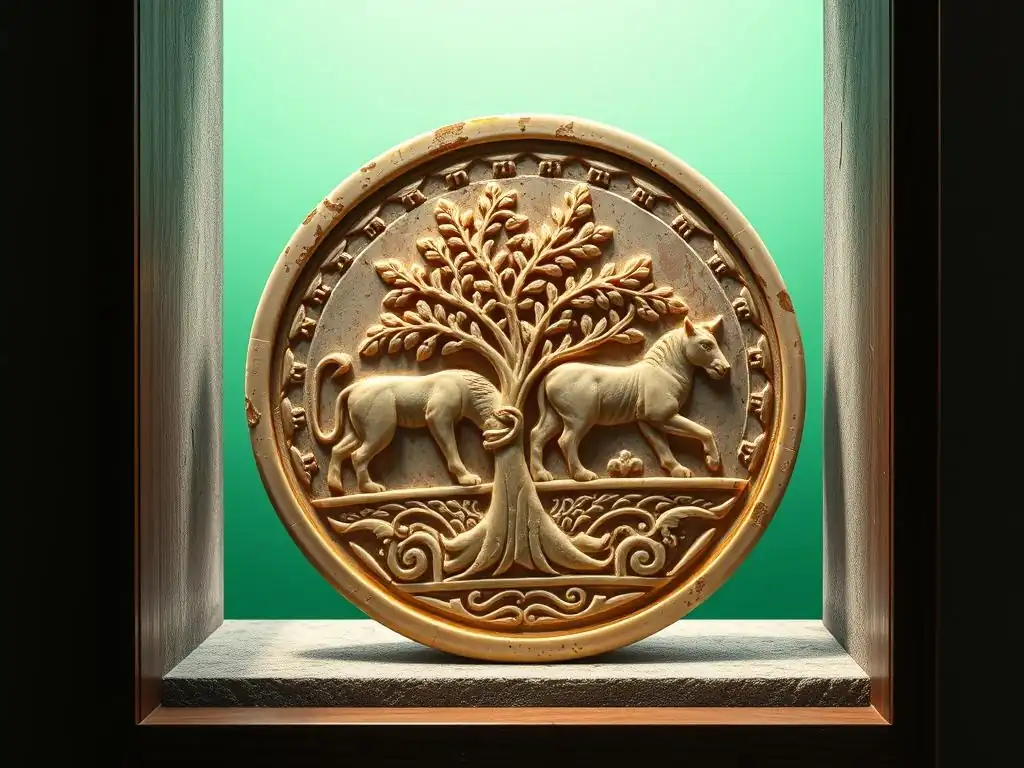
Among the most informative artifacts recovered from the Neo-Babylonian levels at Tell Abu Duwarij are stamp seals and cylinder seals. These small, intricately carved objects, typically made from semi-precious stones like carnelian, lapis lazuli, or serpentine, served a dual purpose: they were used to impress designs onto clay documents (such as tablets, bullae, or jar stoppers) to authenticate transactions or property, and they also functioned as personal identifiers or talismans. The iconography on these seals often depicts religious scenes, mythological creatures, or representations of deities, providing insights into personal piety and the official pantheon.
At Tell Abu Duwarij, approximately 30 Neo-Babylonian seals have been recovered, with a notable prevalence of stamp seals over cylinder seals, reflecting a shift in sealing practices during this period. The motifs frequently include worshipper figures before altars, symbols of major gods like Marduk's spade or Nabu's stylus, and sometimes short cuneiform inscriptions identifying the owner. Analysis of their distribution across the site, particularly their presence in administrative contexts like Area B, reinforces their role in bureaucratic control and economic transactions, while those found in domestic residences underscore their significance for personal identity and belief systems.
Bitumen: Its Use in Construction and Waterproofing
Bitumen, a naturally occurring asphalt-like substance, was a ubiquitous and essential material in ancient Mesopotamian construction, and its extensive use is clearly evident in the Neo-Babylonian levels at Tell Abu Duwarij. Its natural waterproof and adhesive properties made it invaluable for a variety of applications. Archaeologists have documented layers of bitumen used as mortar between courses of mudbrick walls, particularly in foundations and lower wall sections, to protect against rising damp and increase structural stability. For instance, sections of the major public buildings in Area B show a distinct 5-7 cm thick bitumen layer above the foundation courses.
Furthermore, bitumen was widely employed for waterproofing water features. Remains of bitumen lining have been observed in several wells, cisterns, and segments of the irrigation channels identified at the site, ensuring the efficient transport and storage of water. Its use as an adhesive is also apparent in the repair of broken pottery and in the attachment of decorative elements to objects. The presence of bitumen processing areas, characterized by large clay vats with bitumen residues, indicates that this vital resource was prepared and utilized on-site, showcasing the practical engineering skills of the Neo-Babylonians.
Animal Bones: Reconstructing Diet and Animal Husbandry
The analysis of animal bones (archaeozoology) from the Neo-Babylonian levels at Tell Abu Duwarij provides crucial information about the diet of the inhabitants and their animal husbandry practices. Over 5,000 identifiable faunal remains have been collected, revealing that sheep and goat constituted the overwhelming majority of consumed meat (approximately 60-70%), followed by cattle (15-20%) and pigs (5-10%). This reflects a typical Mesopotamian mixed farming economy, where small ruminants were primary sources of meat, milk, and wool.
Evidence of butchery marks on bones, such as cut marks and chop marks, indicates the methods of animal processing. Age profiles derived from tooth eruption and bone fusion patterns suggest that sheep and goats were often kept to maturity, indicating their value for wool and milk production before being slaughtered for meat.
The presence of fish bones and freshwater mollusk shells also points to the exploitation of local aquatic resources from the Euphrates paleochannel. This detailed faunal analysis, a key element of Babylon archaeological excavation techniques, offers a comprehensive picture of Neo-Babylonian subsistence strategies and their reliance on a diversified agricultural base.
Understanding Neo-Babylonian Society Through Archaeology
The archaeological findings at Tell Abu Duwarij provide compelling evidence for sophisticated urban planning and a clear social organization within the Neo-Babylonian city. The layout of the Neo-Babylonian levels reveals a relatively grid-like street system, particularly in the central and administrative sectors, suggesting a deliberate design rather than organic growth.
The distinct separation of large public buildings (like the administrative complex in Area B) from dense residential quarters and specialized craft areas (like the potter's workshop in Area A) indicates a functional zoning of the urban space. This structured approach to urban development reflects the centralized authority and administrative capacity of the Neo-Babylonian state.
Furthermore, the varying sizes and material wealth observed in the domestic residences in Area C point towards a stratified society. While all houses shared a common architectural style, the presence of luxury goods, imported items, and higher-quality craftsmanship in certain dwellings suggests a hierarchy of wealth and status among the inhabitants. This social differentiation, visible through the archaeological record, mirrors the textual evidence from Babylon regarding distinct social classes, from elite officials to common laborers, all contributing to the intricate social fabric of the Neo-Babylonian urban center.
Religious Beliefs and Cultic Practices
The excavated religious structures and associated artifacts at Tell Abu Duwarij offer significant insights into the religious beliefs and cultic practices of the Neo-Babylonian populace. The presence of local shrines, even if modest, underscores the pervasive role of religion in daily life, extending beyond the grand imperial temples of Babylon. Votive offerings, such as small clay figurines of deities or worshippers, and fragments of incense burners found within these structures, indicate regular ritual activity and personal devotion.
The iconography on stamp and cylinder seals, depicting deities like Marduk (the chief god of Babylon) and Nabu (god of wisdom and writing), along with various protective genii, confirms the adherence to the mainstream Mesopotamian pantheon. However, the specific prominence of certain local deities or cults at Tell Abu Duwarij might also reflect regional variations in religious practice. These archaeological findings, combined with textual evidence, help to reconstruct the complex interplay between imperial religious ideology and local popular piety in the Neo-Babylonian period, demonstrating the enduring power of religious traditions.
Economic Activities and Trade Networks
Archaeological evidence from Tell Abu Duwarij paints a vivid picture of a bustling Neo-Babylonian economy deeply integrated into wider trade networks. The discovery of specialized workshops, such as the potter's kiln in Area A and suspected metalworking areas, highlights local craft production that supplied the city's needs. Administrative tablets from Area B detailing grain distributions and labor allocations underscore the importance of agriculture as the economic backbone, managed through a centralized bureaucratic system.
Beyond local production, the presence of imported materials and artifacts indicates extensive trade connections. Fragments of glazed pottery, often associated with Elamite or Persian styles, suggest interaction with regions to the east. Analysis of certain stone types used for tools or seals, not native to southern Mesopotamia, points to long-distance trade routes reaching as far as the Iranian plateau or the Arabian peninsula. This intricate web of economic activities, from subsistence farming and local craftsmanship to regional and interregional trade, firmly establishes Tell Abu Duwarij as a dynamic participant in the broader Neo-Babylonian imperial economy.
Preserving and Interpreting the Archaeological Record of Tell Abu Duwarij
Site Management and Conservation Strategies
The preservation of Tell Abu Duwarij's archaeological record, particularly its fragile mudbrick architecture and the vulnerable Neo-Babylonian levels, presents significant challenges. Exposure to harsh climatic conditions, including intense sun and seasonal rains, rapidly degrades mudbrick structures. To mitigate this, comprehensive site management and conservation strategies have been implemented. Key excavated areas, especially those with well-preserved Neo-Babylonian architecture, are often backfilled with sand or soil after documentation to protect them from erosion and environmental damage.
In select areas, temporary shelters or protective coverings are erected to shield exposed remains. Furthermore, community engagement initiatives are crucial; local residents are educated about the historical significance of the site and involved in its protection, helping to deter illegal looting which remains a persistent threat. These proactive measures, guided by principles derived from decades of Babylon archaeological excavation techniques and site preservation efforts across Mesopotamia, aim to safeguard Tell Abu Duwarij for future research and public appreciation.
Challenges in Interpreting Fragmentary Architectural Remains
Interpreting the fragmentary architectural remains from the Neo-Babylonian levels at Tell Abu Duwarij poses a complex challenge for archaeologists. Mudbrick, the primary building material, degrades easily, often leaving only the lowest courses of walls or faint soil discolorations. This makes it difficult to reconstruct complete building plans, determine original heights, or fully understand the function of certain spaces. The repeated occupation and rebuilding over millennia at the tell have also led to significant disturbance of earlier levels, with later constructions often cutting into or reusing materials from Neo-Babylonian structures.
Moreover, post-depositional processes, such as rodent burrowing, root intrusion, and erosion, can further fragment and displace archaeological contexts, complicating the precise association of artifacts with specific architectural features. Archaeologists must rely heavily on meticulous stratigraphic analysis, comparative studies with better-preserved Neo-Babylonian sites, and often probabilistic reconstructions to piece together the urban fabric of Tell Abu Duwarij. This painstaking process is fundamental to the interpretive phase of Babylon archaeological excavation techniques.
The Importance of Community Engagement and Education
The long-term success and ethical responsibility of archaeological projects like that at Tell Abu Duwarij hinge significantly on robust community engagement and educational initiatives. Involving local communities, from providing employment opportunities during excavations to fostering a sense of ownership over their heritage, is paramount for site protection and sustainable research. Local residents often possess invaluable traditional knowledge about the landscape and its history, which can complement archaeological findings.
Educational programs, such as workshops for local schoolchildren, public lectures, and the development of small on-site museums or interpretive displays, are vital for sharing the discoveries and their significance with a wider audience. These initiatives not only raise awareness about the rich history of the Neo-Babylonian period and the importance of archaeological preservation but also inspire future generations to appreciate and safeguard their cultural heritage. This collaborative approach ensures that the insights gained from Babylon archaeological excavation techniques at Tell Abu Duwarij benefit both the academic community and the local populace.
Future Directions in Tell Abu Duwarij Archaeological Research
Expanding Excavations to Unexplored Sectors
Future archaeological research at Tell Abu Duwarij will prioritize the expansion of excavations into currently unexplored sectors of the site. Geophysical surveys have indicated the presence of extensive buried structures, particularly in the northern and western parts of the tell, which appear to represent different functional zones. Targeting these areas could reveal previously unexamined aspects of Neo-Babylonian urbanism, such as large-scale public works, fortified city walls, or even specialized commercial districts.
Vertical expansion of existing trenches is also planned to probe deeper into earlier occupational levels beneath the Neo-Babylonian strata. This would allow archaeologists to understand the site's development trajectory from the Old Babylonian or even earlier periods, providing crucial context for the Neo-Babylonian florescence. Such expanded excavation, guided by refined Babylon archaeological excavation techniques, promises to uncover new architectural complexes and artifact assemblages that will further enrich our understanding of Tell Abu Duwarij's long history.
Applying Advanced Scientific Techniques to Artifact Analysis
The next phase of research at Tell Abu Duwarij will increasingly incorporate advanced scientific techniques for artifact analysis, moving beyond traditional typological studies. For example, isotopic analysis of human and animal remains, if found, could provide detailed insights into ancient diet, migration patterns, and animal husbandry practices with unprecedented precision. DNA analysis of plant macro-remains or pollen could reconstruct the ancient environment and agricultural systems more accurately.
Furthermore, archaeometric techniques such as X-ray fluorescence (XRF) or inductively coupled plasma mass spectrometry (ICP-MS) will be applied to ceramics and metal artifacts to determine their chemical composition and provenience. This will help identify local production centers versus imported goods, thereby refining our understanding of trade networks and economic interactions within the Neo-Babylonian Empire. These cutting-edge scientific approaches will significantly enhance the interpretive power of Babylon archaeological excavation techniques applied at the site.
The Ongoing Quest to Understand Neo-Babylonian Urban Life
The archaeological excavations at Tell Abu Duwarij represent an ongoing quest to deepen our understanding of Neo-Babylonian urban life, providing a vital counterpoint to studies focused solely on the imperial capital. While significant progress has been made in uncovering residential quarters, administrative buildings, and craft areas, much remains to be explored regarding the daily experiences, social complexities, and economic resilience of this provincial city. The site offers a unique lens through which to examine how imperial power was manifested and experienced at the local level.
Continued research, combining traditional Babylon archaeological excavation techniques with innovative scientific methods and interdisciplinary collaboration, promises to unveil more secrets of Tell Abu Duwarij. This persistent effort is crucial for constructing a more complete and nuanced narrative of the Neo-Babylonian Empire, revealing the intricate details of its urban centers, the lives of its diverse inhabitants, and its enduring legacy in the ancient Near East.
Frequently Asked Questions
How are archaeological excavations at Babylon conducted?
Excavations at Babylon employ a combination of stratigraphic excavation and grid-based mapping. This allows archaeologists to meticulously document the layering of the site and the precise location of artifacts.
What challenges are unique to excavating at Babylon?
The fragile nature of mudbrick architecture and the high water table present significant challenges. Preserving these features requires specialized techniques like in-situ consolidation and careful drainage management.
What types of artifacts are typically found during excavations at Babylon?
Common finds include cuneiform tablets, pottery shards, cylinder seals, and remnants of mudbrick structures. These artifacts provide valuable insights into Babylonian daily life, religion, and administration.
What is the significance of the Old Babylonian levels uncovered at Babylon?
The Old Babylonian levels offer crucial information about the reign of Hammurabi and the development of Babylonian law and culture. They provide a window into a pivotal period in Mesopotamian history.
How does ArchaeologyHub.org contribute to understanding the excavations at Babylon?
ArchaeologyHub.org provides detailed profiles of artifacts, historical timelines, and interpretive analyses of Babylonian civilization. It helps to contextualize the excavation findings within a broader historical framework.
Final Reflection: Echoes of Babylon, Lessons for Today
The meticulous work of Babylon archaeological excavation techniques, as explored in this article, transcends mere historical curiosity. It offers a tangible connection to a civilization that laid the foundation for much of our modern world, reminding us that even the grandest empires are built on layers of human endeavor, painstakingly revealed through careful excavation and analysis. The lessons learned from Babylon's rise and fall, unearthed brick by brick, resonate profoundly in our contemporary landscape, urging us to consider the long-term consequences of our actions.
The enduring allure of Babylon, and the dedication required to understand its past, continues to shape our understanding of human history and archaeological practice. My own fascination with this field stems from the belief that the past holds invaluable keys to navigating the present and shaping a more informed future. The past is never dead. It's not even past.
- William Faulkner. This quote encapsulates the profound truth that the echoes of Babylon, meticulously uncovered through archaeological excavations, continue to inform our understanding of power, innovation, and the cyclical nature of civilizations.
As we conclude this exploration of Babylon archaeological excavation techniques, I invite you to reflect on the enduring legacy of this ancient city. Consider how the lessons learned from its rise and fall, and the methods used to uncover its secrets, can inform your own understanding of history, culture, and the human condition. Let the echoes of Babylon inspire you to appreciate the past, engage with the present, and build a future worthy of the civilizations that came before us.
Unearth Your Inner Archaeologist!
Thank you for joining us on this incredible journey through the sands of time at Babylon. We hope you've gained valuable insights into the Old Babylonian levels and the remarkable history they hold. Now, it's your turn to connect with the past.
Here are a few ways you can continue your exploration:
- Dive deeper by researching a specific artifact mentioned in the article. Uncover its story and significance within the context of Old Babylonian society.
- Share this article with fellow history enthusiasts and spark a conversation about the importance of preserving archaeological sites.
- Consider supporting organizations dedicated to archaeological research and preservation efforts worldwide.
What ancient mystery will you explore next?