
Phaistos: Exploring the Grandeur and Economic Significance of Southern Crete's Minoan Palace

Welcome to ArchaeologyHub.org, your gateway to unlocking the secrets of the past!
Delve into the fascinating world of ancient civilizations as we explore the grandeur and economic significance of one of Crete's most important Minoan sites. Uncover the layers of history surrounding Phaistos Minoan Palace History, and discover how this southern palace shaped the Minoan world. Prepare to embark on a journey through time, revealing the intricate details of its architecture, artifacts, and the civilization that thrived within its walls. What secrets will you uncover next?
- Introduction to Phaistos: Unveiling a Minoan Palace of Southern Crete
- The Historical Context of Phaistos: Minoan Civilization in Southern Crete
- Architectural Marvels of the Phaistos Minoan Palace
- The Phaistos Disc: An Enigmatic Artifact from Southern Crete
- Economic Significance of Phaistos: A Minoan Hub of Trade and Agriculture
- Comparing Phaistos with Other Minoan Palaces: Knossos and Malia
- The Excavation of Phaistos: Unearthing the Past of Southern Crete
- Preserving Phaistos: Challenges and Conservation Efforts
- Visiting Phaistos Today: Experiencing Minoan History in Southern Crete
-
Frequently Asked Questions
- What is the significance of Phaistos in Minoan history?
- Where is Phaistos located, and why was its location strategically important?
- What types of artifacts and architectural features are found at the Phaistos site?
- How did Phaistos contribute to the Minoan economy?
- How does Phaistos compare to other Minoan palaces like Knossos?
- Final Reflection: Echoes of Minoan Prosperity
- Unveil Phaistos' Secrets: Your Minoan Adventure Begins Now!
Introduction to Phaistos: Unveiling a Minoan Palace of Southern Crete
Locating Phaistos: A Key Minoan Site in the Mesara Plain
Phaistos, one of the most significant Minoan palatial centers, is strategically situated on a low hill at the western end of the fertile Mesara Plain in southern Crete. This prime location provided the ancient inhabitants with excellent views of the surrounding agricultural land and access to the sea via the nearby port of Kommos, approximately 10 kilometers to the southwest. Its geographical position was crucial for both agricultural prosperity and maritime trade, underpinning the extensive Phaistos Minoan Palace history.
The choice of this site was not accidental; the elevation offered natural defense, while the surrounding plain was ideal for cultivating staple crops like olives and grains, essential for sustaining a large population and generating surplus wealth. Furthermore, Phaistos's proximity to other important Minoan sites such as Ayia Triada, a wealthy villa or satellite palace, highlights its central role in the regional network of power and administration during the Bronze Age. The comprehensive history of Phaistos Palace is inextricably linked to its commanding position within this vital agricultural heartland.
Resources for Exploring Phaistos and Minoan Crete
For those interested in delving deeper into the Phaistos Minoan Palace history and the broader context of Minoan civilization, a wealth of resources is available. The Heraklion Archaeological Museum, located about an hour's drive from Phaistos, houses many of the most significant artifacts unearthed at the site, including the enigmatic Phaistos Disc, various seal stones, and exquisite Kamares ware pottery. These exhibits provide invaluable visual and contextual information, bringing the ancient palace to life beyond its ruins.
Beyond museum visits, scholarly publications, archaeological reports from the Italian Archaeological School at Athens (which has led excavations at Phaistos since 1900), and comprehensive guidebooks offer detailed analyses of the site's architecture, finds, and historical interpretations. Engaging with these academic and popular resources allows for a more profound understanding of the administrative, economic, and cultural significance that shaped the Phaistos Minoan Palace's remarkable past.
The Historical Context of Phaistos: Minoan Civilization in Southern Crete
Pre-Palatial Phaistos: Early Settlements and Foundations
The history of Phaistos Palace does not begin with the construction of its monumental structures. Evidence suggests the hill of Phaistos was inhabited as early as the Neolithic period, around 4000 BCE, with continuous occupation through the Early Minoan (EM) period (circa 3000-2000 BCE). Archaeological layers beneath the palace have revealed remains of early settlements, characterized by simple domestic structures and distinctive pottery, indicating a growing agrarian community.
During the Early Minoan I and II periods, the settlement expanded, and there is evidence of increasing social complexity, as indicated by more sophisticated burial practices and the emergence of early craft specialization. These formative centuries laid the essential groundwork, both in terms of population density and nascent organizational structures, that would eventually lead to the rise of the first grand Phaistos Minoan Palace around 1900 BCE.
The First Palace Period: Rise of Phaistos as a Minoan Center
The Protopalatial period, spanning roughly from 1900 to 1700 BCE, marked the construction of the first monumental Phaistos Minoan Palace. This initial complex was a sophisticated administrative, economic, and religious center, reflecting a significant leap in Minoan social and political organization. While much of this first palace lies beneath the later, better-preserved structure, excavations have revealed impressive features, including a large central court, extensive storage magazines, and well-planned residential quarters.
Phaistos quickly established itself as a dominant power in southern Crete, controlling the fertile Mesara Plain and its valuable agricultural output. The palace likely managed the collection and redistribution of surplus goods, oversaw regional trade, and served as a focal point for religious ceremonies. This period of rapid development and consolidation firmly cemented Phaistos's place as one of the preeminent centers in the burgeoning Minoan civilization, defining a crucial chapter in Phaistos Minoan Palace history.
The Second Palace Period: Phaistos' Golden Age and Architectural Marvels
Around 1700 BCE, the first Phaistos Minoan Palace suffered a catastrophic destruction, likely due to a major earthquake, a common occurrence in the seismically active Aegean. Undeterred, the Minoans rebuilt the palace on an even grander scale, ushering in the Neopalatial period (circa 1700-1450 BCE), often considered the golden age of Minoan civilization. The Second Palace at Phaistos, whose remains are largely visible today, showcased advanced architectural planning, superior craftsmanship, and impressive aesthetic sensibilities.
This rebuilt complex featured larger and more elaborate ceremonial spaces, extensive storage facilities, and refined residential areas, indicative of a flourishing and powerful elite. The meticulous design, including well-engineered drainage systems and sophisticated light wells, demonstrates the pinnacle of Minoan architectural prowess. The grandeur of the Second Palace period is central to understanding the peak of Phaistos Minoan Palace history and its enduring legacy.
The Decline of Phaistos: Factors Contributing to its Eventual Abandonment
The vibrant life of the Phaistos Minoan Palace began to wane around 1450 BCE, a period marked by widespread destructions across Crete, including at Knossos and Zakros. While the precise causes are debated, a combination of factors likely contributed to its decline. Natural disasters, such as further seismic activity, may have played a role, though archaeological evidence often points to human agency, possibly internal conflicts or external invasions.
The arrival of Mycenaean Greeks on Crete around this time is often cited as a significant factor in the collapse of the existing Minoan palatial system. While Phaistos was not immediately abandoned, its importance diminished significantly. Later, during the Postpalatial period, a much smaller, less centralized settlement existed on the site, but the monumental Phaistos Minoan Palace itself ceased to function as a major administrative and economic hub, marking the end of its active palatial history.
Architectural Marvels of the Phaistos Minoan Palace
The Central Court: A Hub of Minoan Life in Phaistos
At the heart of the Phaistos Minoan Palace, much like other Minoan palaces, lies the expansive Central Court, measuring approximately 50 meters in length and 22 meters in width. This large, rectangular paved area served as the primary communal space, connecting the various wings of the palace. Its impressive dimensions and central location suggest it was a focal point for a multitude of activities, from grand religious ceremonies and public gatherings to potentially theatrical performances or even the famed bull-leaping rituals.
The court was flanked by important administrative and residential buildings, with porticoes and colonnades providing access to different sections of the palace. The careful paving and the surrounding architectural elements underscore its significance as the symbolic and functional core of the Phaistos Minoan Palace, a place where the elite and commoners might have interacted, shaping the daily rhythm of Minoan life.
The Grand Staircase: Engineering and Design in Minoan Palaces
One of the most striking architectural features of the Phaistos Minoan Palace is its magnificent Grand Staircase, located on the western side of the Central Court. This monumental ascent, constructed with meticulously cut ashlar blocks, led visitors from the lower West Court up to the main palatial level. Its impressive scale, with broad steps and a commanding presence, suggests a deliberate design intended to impress and control access.
The engineering behind this staircase showcases the advanced building techniques of the Minoans, who were adept at working with large stone blocks and creating sophisticated multi-story structures. The Grand Staircase was not merely functional but also a statement of power and prestige, reflecting the architectural ambition and aesthetic sensibilities that defined the Phaistos Minoan Palace.
Royal Apartments and Elite Residences: Insights into Minoan Society at Phaistos
Within the Phaistos Minoan Palace complex, particularly in the northern and northeastern wings, archaeologists have identified sophisticated residential quarters believed to have belonged to the ruling elite. These "royal apartments" featured multiple stories, elaborate drainage systems, and the innovative use of light wells, which brought natural illumination and ventilation to interior rooms, even those on lower levels. Evidence of painted plaster and fine frescoes, though less preserved than at Knossos, hints at the decorative opulence of these living spaces.
The layout of these residences, with their private suites, reception areas, and proximity to administrative zones, provides crucial insights into the social hierarchy and daily lives of those who governed at Phaistos. The design emphasizes comfort and privacy, reflecting a refined lifestyle that was characteristic of the Minoan elite who held sway over the Phaistos Minoan Palace and its surrounding territories.
Storage Magazines and Workshops: Economic Activities within the Palace
The economic engine of the Phaistos Minoan Palace is vividly illustrated by its extensive storage magazines and workshops. The palace incorporated numerous long, narrow storage rooms, particularly on its western and northern sides, which housed large pithoi (storage jars) capable of holding vast quantities of olive oil, wine, grain, and other agricultural products. These magazines underscore the palace's role as a central collection and redistribution point for the surplus from the fertile Mesara Plain.
Adjacent to or integrated within the palace complex were various workshops, indicated by the discovery of tools, raw materials, and unfinished goods. Evidence suggests specialization in pottery production, including the fine Kamares ware, as well as metallurgy, textile manufacturing, and seal carving. These craft activities not only supplied the palace's needs but also produced goods for trade, cementing the Phaistos Minoan Palace's position as a vibrant economic hub.
The Phaistos Disc: An Enigmatic Artifact from Southern Crete
Deciphering the Phaistos Disc: Theories and Interpretations
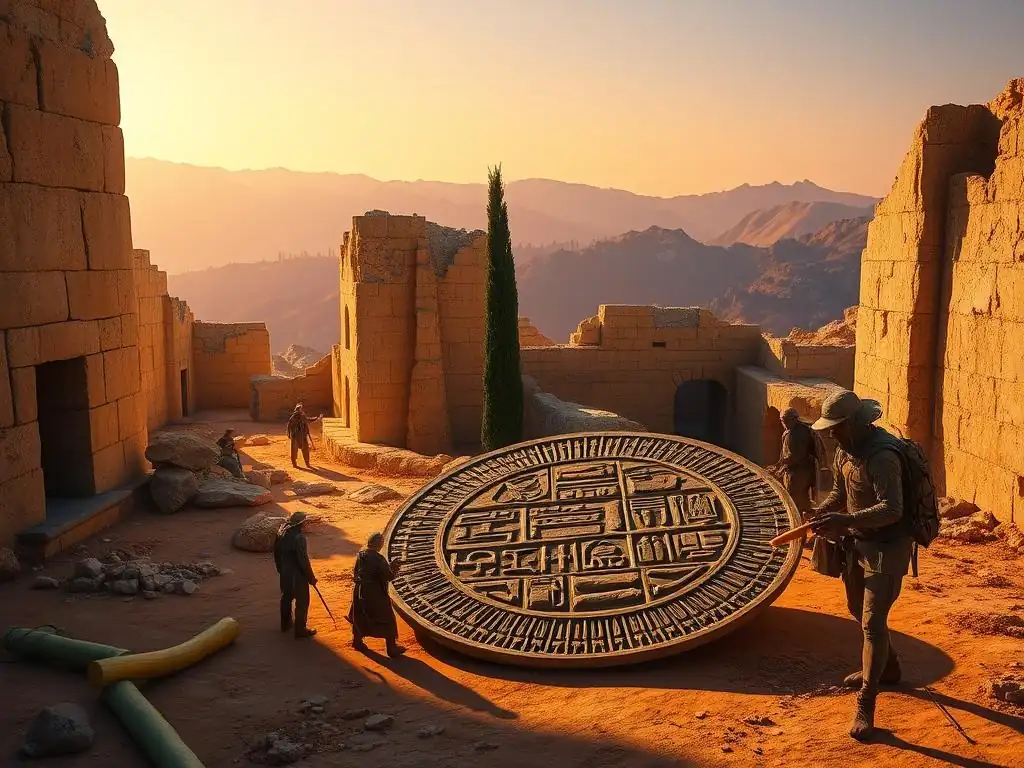
Discovered in 1908 during the Italian excavations of the Phaistos Minoan Palace, the Phaistos Disc is one of the most intriguing and mysterious artifacts from the Bronze Age Aegean. Dating to approximately 1700 BCE (Middle Minoan II period), this clay disc, roughly 15 cm in diameter, is inscribed on both sides with a unique spiral sequence of 241 pictographic symbols, impressed into the clay using stamps. Unlike Linear A or B, its script is unlike any other known Minoan writing system.
Despite numerous attempts by scholars over the decades, the Phaistos Disc remains undeciphered. Theories regarding its content range from it being a religious hymn or prayer, a historical record, a legal document, a board game, or even a calendar. The unique nature of its stamped symbols has also led to speculation that it represents an early form of 'printing'. The ongoing mystery surrounding its meaning only adds to the allure and scholarly fascination with the Phaistos Minoan Palace's most famous find.
Significance of the Phaistos Disc: Insights into Minoan Writing and Culture
Regardless of its undeciphered status, the Phaistos Disc holds profound significance for understanding Minoan writing and culture. Its existence demonstrates the Minoans' advanced intellectual capabilities and their engagement with various forms of communication beyond the known Linear A and Cretan Hieroglyphic scripts. The use of individual stamps for each symbol suggests a sophisticated method of inscription, potentially allowing for the rapid reproduction of texts, a concept far ahead of its time.
The disc's 45 distinct symbols, depicting human figures, animals, plants, and objects, offer a tantalizing glimpse into the visual world and symbolic language of the Minoans who inhabited the Phaistos Minoan Palace. While its message remains elusive, the artifact itself stands as a testament to the complex administrative, religious, or intellectual life that thrived within this ancient Cretan center, enriching the overall narrative of Phaistos Minoan Palace history.
Economic Significance of Phaistos: A Minoan Hub of Trade and Agriculture
Phaistos' Role in Minoan Trade Networks
The Phaistos Minoan Palace was a pivotal nexus in the extensive Minoan trade networks that spanned the Aegean and Eastern Mediterranean. Its strategic location in the Mesara Plain, coupled with its close proximity to the harbor town of Kommos, facilitated robust maritime connections. Archaeological finds at Phaistos, such as imported Egyptian artifacts (e.g., scarabs) and raw materials like Cypriot copper, provide tangible evidence of its participation in long-distance trade.
Conversely, Phaistos was a significant exporter of its own high-quality products. The palace economy likely controlled the production and distribution of surplus agricultural goods, particularly olive oil and wine, which were highly prized commodities. Additionally, fine Kamares ware pottery, originating from the Mesara region, has been found in distant markets, underscoring the Phaistos Minoan Palace's economic reach and its contribution to Minoan commercial prosperity.
Agricultural Production in the Mesara Plain and its Impact on Phaistos
The unparalleled fertility of the Mesara Plain was the fundamental bedrock of the Phaistos Minoan Palace's economic might. This vast, flat expanse of land, irrigated by seasonal rivers, was ideally suited for large-scale agriculture. Extensive cultivation of staple crops such as wheat and barley, along with the widespread planting of olive trees and vineyards, generated substantial agricultural surpluses.
These surpluses were centrally managed by the palace administration, collected from surrounding villages, and stored in the numerous magazines within the palace complex. This control over agricultural production provided the wealth and resources necessary to sustain the elite, support specialized craftspeople, and engage in extensive trade, directly influencing the administrative power and cultural development that shaped Phaistos Minoan Palace history.
Craft Specialization and Economic Activity within the Phaistos Palace
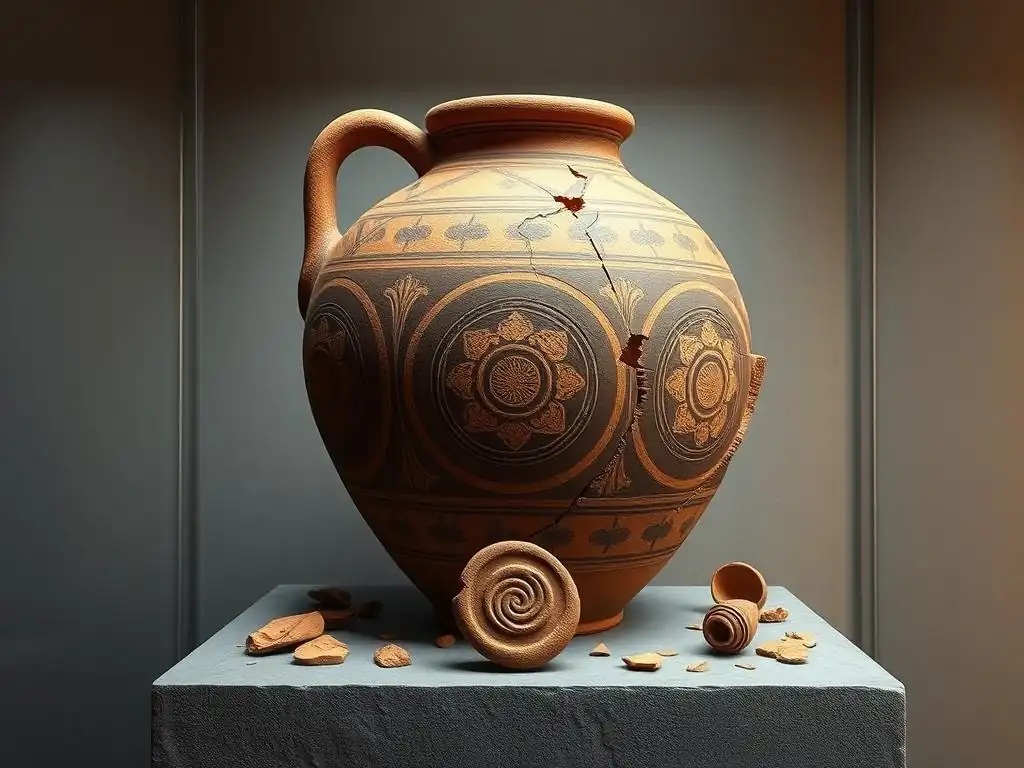
Beyond agriculture and trade, craft specialization played a crucial role in the economic vitality of the Phaistos Minoan Palace. Evidence from workshops within and around the palace indicates a high degree of skilled craftsmanship. Pottery production, in particular, flourished, with the region known for its distinctive and widely exported Kamares ware, characterized by its intricate polychrome decoration.
Metallurgy, seal carving, and possibly textile production also contributed to the palace's economic output. These specialized crafts not only met the needs of the palatial elite and local populace but also produced valuable goods for export, diversifying the palace's revenue streams. The integration of agricultural management, trade, and sophisticated craft production solidified the Phaistos Minoan Palace's standing as a multifaceted economic powerhouse in Minoan Crete.
Comparing Phaistos with Other Minoan Palaces: Knossos and Malia
Architectural Differences and Similarities between Phaistos, Knossos, and Malia
While all major Minoan palaces share fundamental architectural characteristics—such as a large central court, west courts, storage magazines, and elaborate drainage systems—each possesses unique features. Phaistos, for instance, is renowned for its particularly well-preserved and impressive Grand Staircase and its monumental West Court, which is perhaps more clearly defined than at Knossos or Malia. Unlike Knossos, which underwent extensive, sometimes controversial, reconstruction by Arthur Evans, Phaistos's ruins present a more "pure" Minoan archaeological landscape.
Malia, on the other hand, exhibits a slightly different layout, including a unique hypostyle hall and a more defined "quartier" system within its complex. Knossos, as the largest and most complex, boasts extensive fresco programs and a more sprawling, multi-level design. Despite these variations, the underlying principles of Minoan palatial architecture—centralized administration, ritual spaces, and economic functions—are consistent across Phaistos, Knossos, and Malia, reflecting a shared cultural and political ideology.
Political and Economic Relationships Between Minoan Palaces
The exact political and economic relationships between the major Minoan palaces like Phaistos, Knossos, and Malia remain a subject of scholarly debate. One prevailing theory suggests a hierarchical system, with Knossos potentially acting as a primus inter pares, wielding significant influence over the other centers. However, evidence also supports the idea that Phaistos, along with Malia and Zakros, functioned as relatively independent regional powers, each controlling its own hinterland and maritime trade routes.
Phaistos, commanding the fertile Mesara Plain and its access to the south coast, likely maintained its distinct sphere of economic and political influence. While there's evidence of shared artistic styles and administrative practices, suggesting interaction and cultural exchange, the specific nature of their alliances or rivalries is not fully understood. The individual strengths and unique contributions of each palace, including the distinct Phaistos Minoan Palace history, point to a complex network of inter-palatial relationships across Minoan Crete.
Unique Features of Phaistos' Architecture and History
Phaistos stands out for several distinctive elements that enrich its Phaistos Minoan Palace history. Architecturally, its Grand Staircase and the meticulously paved West Court are among the most visually striking and well-preserved examples of Minoan engineering and urban planning. The clarity of its two distinct palace periods, the Protopalatial and Neopalatial, offers archaeologists a clear stratigraphic sequence for studying the evolution of Minoan palatial architecture.
Historically, the discovery of the Phaistos Disc at the site provides Phaistos with a singular claim to fame, making it the origin point of one of archaeology's greatest unsolved mysteries. Furthermore, its strong connection to the rich agricultural resources of the Mesara Plain and its strategic link to the port of Kommos underscore its foundational economic role. These unique attributes contribute to Phaistos's distinct identity within the pantheon of great Minoan palaces.
The Excavation of Phaistos: Unearthing the Past of Southern Crete
Early Excavations at Phaistos: Discovering the Minoan Palace
The systematic excavation of the Phaistos Minoan Palace began in 1900, initiated by the Italian Archaeological School at Athens under the leadership of Federico Halbherr. This marked a pivotal moment in Cretan archaeology, coinciding with Arthur Evans's contemporary work at Knossos. Halbherr's team meticulously uncovered the extensive remains of the palace, revealing its sophisticated architecture, vast courtyards, and numerous rooms, quickly establishing Phaistos as a site of immense historical importance.
The early excavation methods, while by modern standards less refined, were pioneering for their time, emphasizing careful stratigraphic observation. The initial findings quickly demonstrated the grandeur and complexity of the Minoan civilization, providing crucial insights into its palatial system. This foundational work laid the groundwork for all subsequent research and contributed significantly to the burgeoning understanding of Phaistos Minoan Palace history.
Key Archaeological Finds at Phaistos: Artifacts and their Significance
Beyond the world-renowned Phaistos Disc, the excavations at the Phaistos Minoan Palace have yielded a wealth of other significant archaeological finds. These include a remarkable collection of Kamares ware pottery, known for its thin walls, elaborate shapes, and vibrant polychrome decoration, which offers insights into Minoan artistic prowess and trade networks. Numerous seal stones, often intricately carved with mythological creatures, human figures, and abstract designs, have also been discovered, shedding light on Minoan administration and belief systems.
While fewer in number than at Knossos, some Linear A tablets have been found, providing glimpses into the Minoan administrative bureaucracy and early forms of writing. Bronze tools, cult objects, and fragments of frescoes further enrich the understanding of daily life, religious practices, and the technological capabilities of the inhabitants of the Phaistos Minoan Palace. Each artifact contributes a piece to the complex puzzle of Phaistos Minoan Palace history.
Modern Archaeological Research at Phaistos: Ongoing Investigations
Archaeological research at the Phaistos Minoan Palace continues to this day, with the Italian Archaeological School at Athens maintaining its long-standing commitment to the site. Modern archaeological methods, including advanced geophysical surveys, precise dating techniques (such as radiocarbon dating), and detailed architectural analysis, are employed to refine and expand upon the initial discoveries. These ongoing investigations aim to clarify chronological sequences, understand the palace's relationship with its surrounding settlement and landscape, and explore its pre-palatial phases in greater depth.
Recent studies have focused on the wider Mesara Plain, examining the network of smaller settlements and agricultural infrastructure that supported the palace. This continuous commitment to research ensures that our understanding of Phaistos Minoan Palace history remains dynamic and ever-evolving, uncovering new facets of this remarkable Bronze Age civilization.
Preserving Phaistos: Challenges and Conservation Efforts
Threats to the Phaistos Archaeological Site
The Phaistos Minoan Palace site, like many ancient ruins, faces a range of significant threats that jeopardize its long-term preservation. Natural elements such as weathering, erosion from wind and rain, and seismic activity pose constant challenges to the exposed stone structures. Vegetation encroachment, particularly the roots of trees and shrubs, can cause considerable damage to foundations and walls if not regularly managed.
Human-induced factors also present risks. While managed tourism is vital for site sustainability, uncontrolled visitor access can lead to wear and tear on ancient surfaces, and in rare instances, vandalism or illicit digging can cause irreparable harm. The sheer scale of the Phaistos Minoan Palace complex also makes comprehensive monitoring and maintenance a continuous and resource-intensive endeavor.
Conservation Strategies and Practices at Phaistos
To mitigate these threats, various conservation strategies and practices are actively implemented at the Phaistos Minoan Palace. The Greek Ministry of Culture and Sports, in collaboration with the Italian Archaeological School, oversees ongoing preservation efforts. These include structural consolidation of fragile walls and foundations using modern, reversible techniques, and the implementation of effective drainage systems to prevent water damage.
Protective shelters have been erected over certain sensitive areas to shield them from direct exposure to the elements. Regular maintenance programs involve clearing vegetation, monitoring structural integrity, and carefully documenting any changes. These proactive measures are crucial for ensuring the long-term survival of the Phaistos Minoan Palace remains for future generations to study and appreciate.
Phaistos as a UNESCO World Heritage Site
The exceptional historical and archaeological significance of the Phaistos Minoan Palace has been formally recognized on the global stage. Phaistos is part of Greece's Tentative List for UNESCO World Heritage status, specifically under the nomination "Minoan Palatial Centres (Knossos, Phaistos, Malia, Zakros, Kydonia)." This designation acknowledges its outstanding universal value as a testament to the highly developed Minoan civilization and its unique architectural and cultural achievements.
Inclusion on the Tentative List signifies that the site meets rigorous criteria for potential inscription as a World Heritage Site, underscoring its importance to humanity's shared cultural heritage. This recognition not only helps to elevate the international profile of the Phaistos Minoan Palace but also encourages global cooperation and support for its continued preservation and research efforts.
Visiting Phaistos Today: Experiencing Minoan History in Southern Crete
Planning Your Visit to the Phaistos Archaeological Site
Visiting the Phaistos Minoan Palace offers a profound journey into the heart of Bronze Age Crete. The site is conveniently located in the Mesara Plain, approximately 60 kilometers south of Heraklion and easily accessible by car or local bus services, especially from nearby towns like Matala or Agia Galini. It is advisable to check the official opening hours, as these can vary seasonally, particularly between summer and winter.
To make the most of your visit, consider allocating at least 1.5 to 2 hours to explore the extensive ruins. Early mornings or late afternoons are often the best times to visit, as they offer cooler temperatures and fewer crowds, allowing for a more serene and reflective experience of the Phaistos Minoan Palace history. Combining your visit with nearby sites like the Minoan villa of Ayia Triada or the ancient port of Kommos can enrich your understanding of the regional Minoan landscape.
What to Expect When Exploring Phaistos Minoan Palace
Upon arrival at the Phaistos Minoan Palace, visitors will find a well-preserved archaeological site, thoughtfully laid out with clear pathways and informative signage in multiple languages. The ruins, largely comprising the foundations and lower walls of the Second Palace, provide a vivid impression of its original grandeur. Key features to explore include the magnificent Central Court, the monumental Grand Staircase, the impressive West Court, and the extensive storage magazines with their large pithoi.
Unlike Knossos, Phaistos has seen minimal modern reconstruction, allowing visitors to experience the site in a more authentic, unadorned state. This provides a powerful sense of connection to the ancient Minoans who once inhabited this grand complex, enabling one to visualize the administrative, ceremonial, and daily life that unfolded within the walls of the Phaistos Minoan Palace.
Tips for a Meaningful Visit to Phaistos
To enhance your experience at the Phaistos Minoan Palace, wear comfortable walking shoes, as the terrain involves uneven surfaces and steps. Bringing water, especially during the warmer months, is essential. While the site provides informational panels, considering a detailed guidebook or hiring a local guide can significantly deepen your understanding of the complex architecture and the rich Phaistos Minoan Palace history.
Allow yourself ample time to wander and absorb the atmosphere of this ancient site. Imagining the vibrant life that once thrived here—the bustling central court, the storage of vast quantities of olive oil and wine, and the rituals performed by the Minoan elite—can transform a simple visit into a truly meaningful encounter with one of Crete's most significant archaeological treasures.
Frequently Asked Questions
What is the significance of Phaistos in Minoan history?
Phaistos was a major Minoan palatial center in southern Crete, second only to Knossos. It served as a political, economic, and religious hub, showcasing the advanced civilization of the Minoans.
Where is Phaistos located, and why was its location strategically important?
Phaistos is situated on a hill overlooking the Messara Plain in southern Crete. Its location provided fertile agricultural lands and strategic control over trade routes to and from the island.
What types of artifacts and architectural features are found at the Phaistos site?
The site boasts impressive architectural remains, including the grand staircase, royal apartments, and the famous Phaistos Disc, a unique clay disk with undeciphered hieroglyphic symbols.
How did Phaistos contribute to the Minoan economy?
Phaistos was a vital agricultural center, managing the surrounding fertile lands. It also fostered craft production and trade, contributing significantly to the Minoan economic network across the Aegean.
How does Phaistos compare to other Minoan palaces like Knossos?
While Knossos was larger and more elaborate, Phaistos offers a glimpse into a different aspect of Minoan palatial life. It reveals regional variations in architecture and administration, providing valuable insights into Minoan diversity.
Final Reflection: Echoes of Minoan Prosperity
The journey through the history of Phaistos, as we've explored, isn't merely an archaeological excavation; it's a vital connection to the roots of European civilization. The enduring legacy of the Phaistos Minoan Palace speaks volumes about the sophisticated economic and social systems that thrived in Southern Crete millennia ago, reminding us that innovation and prosperity are not solely modern concepts, but rather echoes of a vibrant past that continue to resonate today.
The influence of Minoan culture, and Phaistos' role within it, continues to shape our understanding of early European history and the foundations of trade and governance. Witnessing the ingenuity and artistry of the Minoans through the ruins of Phaistos inspires a deep appreciation for the cyclical nature of history and the enduring power of human creativity. The past is never dead. It's not even past.
- William Faulkner. This quote encapsulates the feeling one gets when standing amidst the ruins of Phaistos, a tangible link to a civilization that laid the groundwork for so much of what we know today.
As we conclude this exploration of the Phaistos Minoan Palace, I invite you to consider the lessons embedded within its ancient stones. Let the story of Phaistos inspire you to appreciate the interconnectedness of history, the enduring power of innovation, and the importance of preserving our cultural heritage.
What can we learn from the Minoans' success in creating a thriving society, and how can we apply those lessons to build a more prosperous and equitable future? Let the grandeur of Phaistos not only captivate your imagination but also ignite a desire to contribute to a world that honors its past while striving for a brighter tomorrow.
Unveil Phaistos' Secrets: Your Minoan Adventure Begins Now!
Thank you for delving into the captivating history of Phaistos and its economic importance in Minoan Crete. We hope this exploration has sparked your curiosity about this fascinating civilization. Ready to take your understanding a step further?
Here are a few ways to connect with the legacy of Phaistos:
- Plan Your Visit: Discover the Palace of Phaistos firsthand! Research travel options, accommodations, and guided tours to experience the site's grandeur and imagine life in Minoan Crete.
- Delve deeper: Read "Minoans: Life and Legend" by Rodney Castleden.
- Share the wonder: Discuss the economic impact of Phaistos with friends or fellow history enthusiasts. Spark conversations and exchange insights on this pivotal Minoan center.
What specific aspect of Phaistos' economic role most intrigues you, and what questions does it raise about Minoan society as a whole?