
Chavín de Huántar: Architectural Marvels of a PreInca Religious Center

Welcome to ArchaeologyHub.org, your gateway to the past!
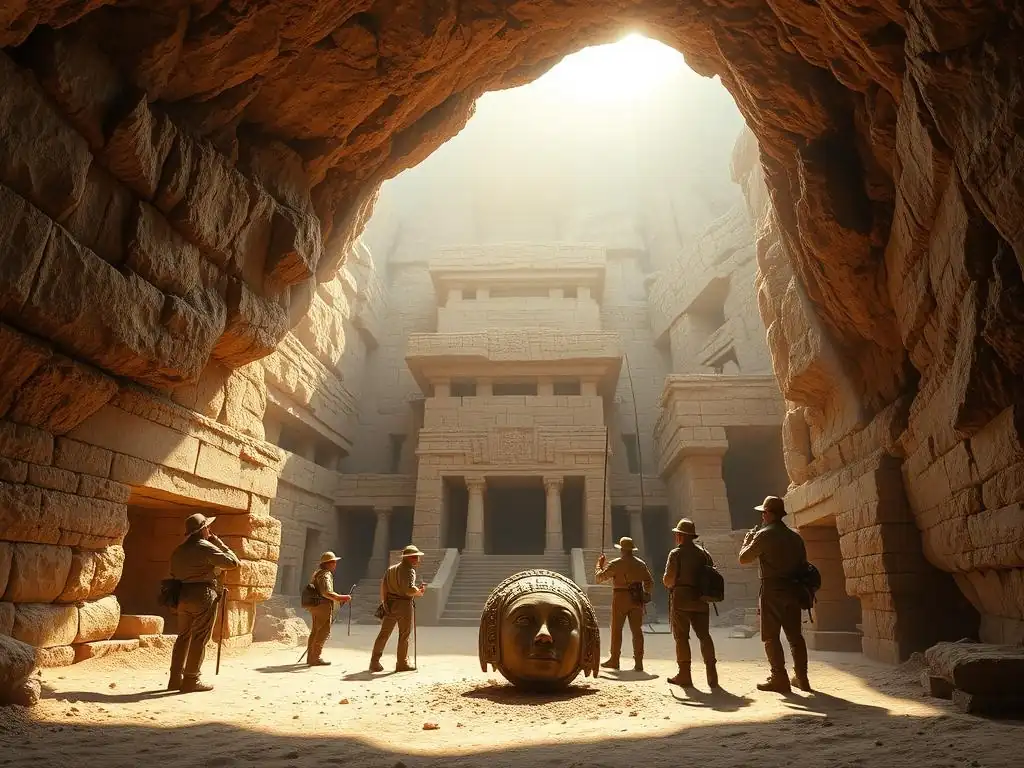
Delve into the mysteries of ancient civilizations and uncover the secrets buried beneath our feet. Curious about how archaeologists piece together the stories of forgotten worlds? In this article, we explore the ingenious Chavín de Huántar excavation techniques that are revealing the architectural marvels and profound religious significance of this pre-Inca ceremonial center. Prepare to journey back in time and discover how innovative methodologies are unlocking the secrets of Chavín de Huántar, inviting you to explore the rich tapestry of its history and leaving you wondering about the untold stories still waiting to be unearthed...
- Introduction to Chavín de Huántar: A Glimpse into Ancient Andean Religion
- Unveiling the Architectural Complex: Chavín de Huántar's Key Structures
- Chavín de Huántar Excavation Techniques: Unearthing the Past
- Decoding the Iconography: Religious Symbolism in Chavín Architecture
- Engineering and Construction: Advanced Techniques in Ancient Peru
- The Decline and Abandonment of Chavín de Huántar: Theories and Evidence
- Chavín de Huántar Today: Preservation and Tourism
-
Frequently Asked Questions
- What were some of the key Chavín de Huántar excavation techniques used to uncover the site's architectural marvels?
- How did Chavín de Huántar excavation techniques help archaeologists understand the function of the site as a pre-Inca religious center?
- What specific challenges did archaeologists face when applying Chavín de Huántar excavation techniques, given the site's complex architecture and history?
- How did the use of Chavín de Huántar excavation techniques contribute to our understanding of the Chavín culture's social and political organization?
- Beyond traditional digging, what other advanced Chavín de Huántar excavation techniques have been used to study the site?
- Final Reflection: Echoes of Innovation in Ancient Excavation
- Unearth the Mysteries: Become a Modern-Day Explorer!
Introduction to Chavín de Huántar: A Glimpse into Ancient Andean Religion
Locating Chavín de Huántar: Geographical and Historical Context
Chavín de Huántar is an extraordinary archaeological site nestled in the northern highlands of the Peruvian Andes, specifically in the Ancash region. Situated at an elevation of approximately 3,180 meters (10,430 feet) above sea level, it lies at the confluence of the Mosna and Wacheksa rivers, tributaries of the Marañón River. This strategic location, at the intersection of highland and lowland ecological zones, provided easy access to diverse resources and facilitated its role as a crucial nexus for communication and trade routes across a vast region of ancient Peru.
Historically, Chavín de Huántar flourished during the Early Horizon period, roughly spanning from 900 BCE to 200 BCE. It emerged as a dominant religious and ceremonial center, drawing pilgrims from distant corners of the Andean world. Its influence, often referred to as the "Chavín Horizon," manifested through a distinctive artistic style and shared religious iconography that permeated various regional cultures, demonstrating a powerful, albeit non-militaristic, form of cultural integration across the central Andes.
The Significance of Chavín de Huántar in Pre-Columbian Andean History
Chavín de Huántar holds unparalleled significance as a unifying cultural force in Pre-Columbian Andean history, long before the rise of the Inca Empire. It served as the ideological heart of a widespread religious movement, providing a common set of beliefs and symbols that transcended local boundaries. The site's monumental architecture and intricate iconography disseminated a pan-Andean cosmology, influencing the spiritual and artistic expressions of diverse groups from the coast to the highlands.
More than just a religious center, Chavín de Huántar was a hub for the dissemination of knowledge in areas such as astronomy, agricultural techniques, and sophisticated textile production. Its priests and artisans developed advanced systems of calendrical observation and hydraulic engineering, which were crucial for managing the challenging Andean environment. The enduring impact of Chavín's artistic and religious styles can be seen in later Andean civilizations, making it a foundational "mother culture" that laid the groundwork for subsequent complex societies.
Unveiling the Architectural Complex: Chavín de Huántar's Key Structures
The Old Temple: An Early Masterpiece of Chavín Architecture
The Old Temple, the earliest major construction phase at Chavín de Huántar, dates back to approximately 900-500 BCE. It is characterized by its massive stone construction and a distinctive U-shaped layout, encompassing a sunken circular plaza. This initial complex was designed to accommodate a limited number of participants for intimate, transformative rituals, with its most sacred element, the Lanzón Monolith, housed deep within its labyrinthine internal galleries.
The architectural ingenuity of the Old Temple is evident in its complex network of subterranean passages, chambers, and ventilation shafts. These dark, enclosed spaces were not merely structural but integral to the ritual experience, designed to disorient pilgrims and amplify sounds, creating an immersive and awe-inspiring atmosphere. The precise fitting of multi-ton stone blocks, without the use of mortar, demonstrates an advanced understanding of lithic engineering for its time.
The New Temple: Expansion and Evolution of Architectural Design
Around 500-200 BCE, Chavín de Huántar underwent a significant expansion, resulting in the construction of the New Temple. This phase saw the addition of a much larger rectangular plaza and a more imposing temple structure, reflecting a shift towards accommodating larger congregations of pilgrims. The New Temple showcases an evolution in architectural design, incorporating different types of stone, such as the striking black diorite and white granite used for the famed Black and White Portal, which once adorned its main entrance.
The New Temple's design emphasizes monumental scale and open ceremonial spaces, contrasting with the more enclosed nature of the Old Temple. This expansion suggests a growing influence and increased pilgrimage activity, necessitating grander public areas for rituals and processions. The strategic placement of iconic sculptures, such as the Tello Obelisk (though now in Lima, its original location was likely within the New Temple complex), further solidified the site's role as a preeminent religious and ideological center.
Subterranean Galleries and Chambers: The Labyrinthine Heart of Chavín
Beneath the massive stone structures of both the Old and New Temples lies an extensive and intricate network of subterranean galleries, passages, and chambers, forming the true labyrinthine heart of Chavín de Huántar. These dark, narrow tunnels, some stretching for hundreds of meters, were meticulously engineered with sophisticated ventilation and drainage systems. Their purpose was multifaceted, serving as ritual spaces, storage areas for offerings, and possibly even as acoustic conduits to manipulate sound during ceremonies.
The design of these subterranean spaces was deliberately crafted to enhance the spiritual experience of pilgrims. Moving through the dark, confined passages, often with the sound of rushing water from the "singing canals" echoing through the stone, would have induced sensory deprivation and disorientation, preparing participants for profound ritual encounters. Archaeological discoveries within these chambers, including ceramic fragments, bone tools, and remnants of offerings, provide invaluable insights into the esoteric practices and beliefs central to Chavín religion.
Chavín de Huántar Excavation Techniques: Unearthing the Past
Early Archaeological Investigations at Chavín de Huántar
The systematic archaeological investigation of Chavín de Huántar began in the early 20th century, notably with the pioneering work of Peruvian archaeologist Julio C. Tello. Starting in 1919, Tello undertook extensive surveys and initial excavations, meticulously mapping the site and identifying its monumental structures and distinct iconography. His foundational efforts, though limited by the technology of his era, were crucial in establishing Chavín de Huántar's pre-Inca chronology and its pivotal role in Andean civilization, challenging prevailing views that Inca culture was the earliest complex society.
Early Chavín de Huántar excavation techniques primarily involved manual labor, basic tools, and detailed descriptive documentation. Tello's team focused on clearing vegetation, exposing major stone structures, and recovering prominent artifacts like the Tello Obelisk and various tenon heads. While these early methods provided significant initial insights into the site's layout and key features, they often prioritized large-scale discoveries over the meticulous recording of stratigraphic layers and contextual data that are standard in modern archaeology.
Modern Excavation Techniques: Methods and Technologies
Contemporary Chavín de Huántar excavation techniques employ a sophisticated, multidisciplinary approach, integrating advanced technologies with meticulous fieldwork. Systematic grid-based excavation, a cornerstone of modern archaeology, allows for precise spatial recording of artifacts and architectural features. This is complemented by digital mapping, photogrammetry, and 3D scanning, which create highly accurate virtual models of the site and its finds, preserving contextual information in unprecedented detail.
Non-invasive subsurface exploration methods, such as ground-penetrating radar (GPR) and magnetometry, are frequently used at Chavín de Huántar to identify buried structures and anomalies before excavation, minimizing disturbance to the site. Furthermore, modern teams include specialists such as archaeobotanists, zooarchaeologists, geoarchaeologists, and conservators.
This holistic approach ensures that not only monumental architecture but also environmental data, dietary remains, and microscopic artifacts are analyzed, providing a far more comprehensive understanding of Chavín daily life, ritual practices, and the site's evolution. For instance, ongoing projects, like those led by Stanford University, have utilized these advanced methods to uncover previously unknown subterranean passages and activity areas.
Challenges in Archaeological Preservation at Chavín de Huántar
Preserving Chavín de Huántar presents significant and ongoing challenges, primarily due to its natural environment and the inherent fragility of ancient structures. The site is located in an active seismic zone, making it highly susceptible to earthquakes, which have historically caused considerable damage. Additionally, the region experiences heavy seasonal rainfall, leading to erosion, landslides, and the saturation of the ancient drainage systems. A notable example is the 1945 flood and subsequent mudslide that buried large sections of the site, including the sunken circular plaza, under meters of debris, necessitating extensive clearance and stabilization efforts.
Beyond natural threats, archaeological preservation at Chavín de Huántar also contends with anthropogenic factors. While large-scale looting is less prevalent today due to increased security and site protection, the cumulative impact of unregulated tourism can cause wear and tear on sensitive surfaces. The continuous need for structural reinforcement, maintenance of the complex hydraulic systems, and ongoing monitoring of the site's stability requires substantial financial resources and specialized expertise. Ensuring the long-term integrity of the structures and the continued effectiveness of Chavín de Huántar excavation techniques for future research remains a complex and demanding task.
Decoding the Iconography: Religious Symbolism in Chavín Architecture
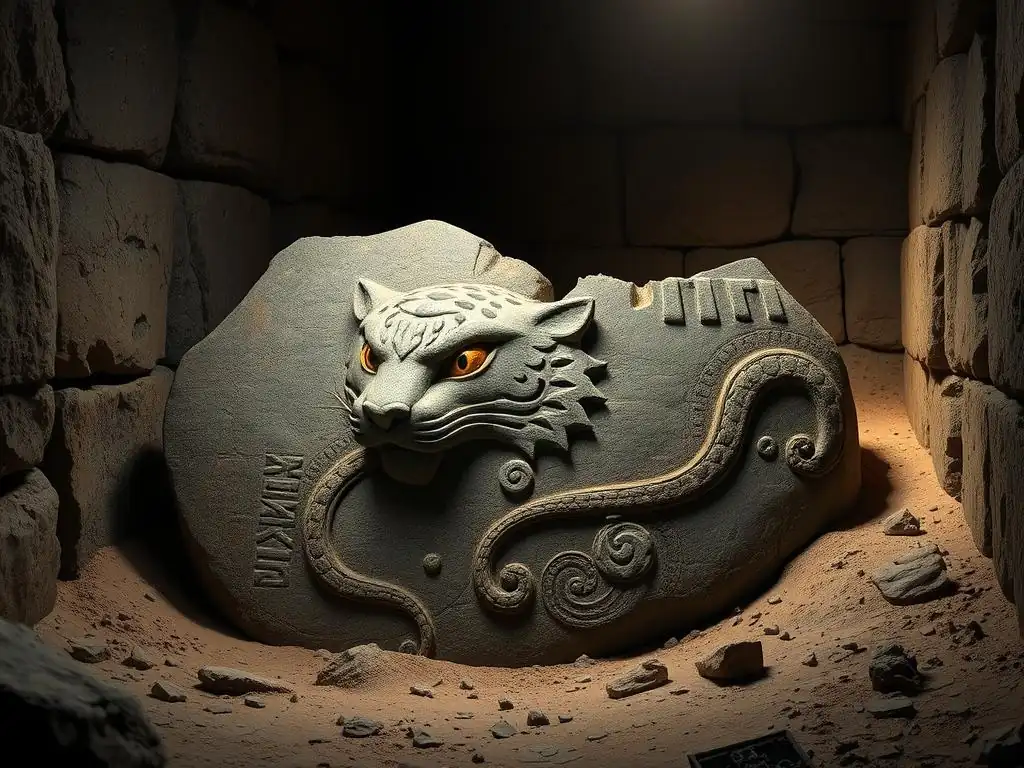
The Lanzón Monolith: Central Deity of Chavín Religious Beliefs
The Lanzón Monolith, a monumental carved granite stela, stands as the central cult image within the Old Temple's deepest subterranean gallery at Chavín de Huántar. Standing an impressive 4.5 meters (14.8 feet) tall, it is carved with the image of a fanged, anthropomorphic deity, often interpreted as the principal Chavín deity. Its iconography features snarling feline fangs, upturned eyes, and serpent or hair-like appendages, blending human and animal attributes, particularly those of the jaguar and caiman.
Crucially, the Lanzón is fixed in place, extending from the floor to the ceiling of its chamber, symbolizing an axis mundi—a cosmic pillar connecting the underworld, the earthly realm, and the celestial sphere. Pilgrims, guided through dark, disorienting passages, would eventually encounter this imposing figure in a confined space, enhancing its mystical power. Its unmovable nature suggests it was perceived not merely as a representation but as the living embodiment of the deity itself, making its chamber the most sacred space at the site.
Relief Carvings and Sculptures: Iconographic Motifs and Their Meanings
Beyond the Lanzón, Chavín de Huántar is adorned with a rich array of relief carvings and sculptures that articulate a complex religious cosmology. The Tello Obelisk, a 2.52-meter (8.3 feet) granite obelisk, now housed in Lima, is a prime example. It depicts a complex, multi-headed creature resembling a cayman, intertwined with botanical elements like manioc and peanuts, suggesting themes of agricultural fertility, dualism, and cosmic order. Its intricate details encode fundamental aspects of Chavín worldview.
Other significant examples include the Black and White Portal, which once flanked the New Temple's entrance, depicting male and female raptorial figures (likely jaguars or harpy eagles), symbolizing complementary forces. The numerous tenon heads, once protruding from the temple walls, often feature grotesque, transformative faces with feline fangs and serpent hair. These likely represent shamans in various stages of ritual transformation or powerful deities, reinforcing the site's emphasis on altered states of consciousness and the interplay between human and animal spirits.
The Role of Shamanism and Hallucinogens in Chavín Rituals
The iconography and architectural design of Chavín de Huántar strongly suggest that shamanism and the use of hallucinogenic substances were central to its religious rituals. Many carved figures depict individuals in transformative states, often with animalistic features, consistent with shamanic journeys. Archaeological finds at the site, such as snuff trays, bone spatulas, and bone tubes, are consistent with the preparation and ingestion of psychoactive plants.
One of the most widely theorized hallucinogens used was the San Pedro cactus ( Echinopsis pachanoi), which contains mescaline. The consumption of such substances, combined with the sensory-depriving environment of the subterranean galleries—darkness, echoing sounds, and controlled airflow—would have induced profound altered states of consciousness. These experiences were likely interpreted as direct communication with deities and spirits, reinforcing the authority and spiritual power of the priestly elite who mediated these profound encounters for the pilgrims.
Engineering and Construction: Advanced Techniques in Ancient Peru
Stone Quarrying and Transportation: Sourcing Materials for Chavín Architecture
The construction of Chavín de Huántar's monumental complex required an extraordinary feat of engineering, beginning with the meticulous process of stone quarrying and transportation. The site utilizes a variety of local stones, including granite, limestone, and sandstone, sourced from quarries within a few kilometers of the ceremonial center. The extraction of these massive blocks, some weighing several tons, was achieved without metal tools, relying instead on stone hammers, wedges, and the strategic use of water to split rock along natural fissures.
Once quarried, these colossal stones had to be transported to the construction site, often across uneven and challenging terrain. This monumental task likely involved thousands of laborers, employing sophisticated techniques such as ropes, rollers, and earthen ramps. The sheer scale of the operation, moving multi-ton blocks with precision, testifies to a highly organized society with advanced planning capabilities and a dedicated workforce, capable of coordinating immense human resources for collective projects.
Drainage Systems and Hydraulic Engineering: Controlling Water at the Site
Chavín de Huántar showcases remarkably advanced hydraulic engineering, particularly in its sophisticated drainage systems designed to manage water from the Mosna River and heavy seasonal rainfall. A complex network of subterranean canals and channels was meticulously constructed beneath the temple structures and plazas. These systems served a dual purpose: preventing erosion and flooding, which were critical for the preservation of the massive stone architecture, and potentially for ritualistic use.
A notable example of this ingenuity is the "singing canals" discovered within the Old Temple. These specially designed channels, when water flowed through them, produced a distinct roaring sound, mimicking a jaguar's growl. This acoustic phenomenon was likely incorporated into ceremonies, adding to the sensory experience of pilgrims and enhancing the site's mystical atmosphere. The precise gradients and alignments of these canals demonstrate an exceptional understanding of fluid dynamics and acoustics, far beyond what might be expected of a pre-Columbian civilization.
Seismic Resistance: Architectural Design for Earthquake-Prone Regions
Given its location in a highly active seismic zone within the Peruvian Andes, Chavín de Huántar's architects incorporated innovative techniques to enhance the earthquake resistance of its monumental structures. One primary method involved the precise fitting of massive, irregularly shaped stones without the use of mortar. This "dry masonry" technique allowed for slight movement and flexibility during tremors, dissipating seismic energy and preventing catastrophic collapse.
Furthermore, the construction of the temple walls often employed a slight inward slope, known as a talud-tablero style, which increased the stability of the structures. The sheer thickness and mass of the walls, combined with deeply set foundations, provided a robust base. The overall compact and interlocking design of the architectural elements, a testament to their engineering prowess, enabled Chavín de Huántar to withstand centuries of seismic activity, preserving its core structures for future generations.
The Decline and Abandonment of Chavín de Huántar: Theories and Evidence
Environmental Factors and Climate Change: Impact on the Chavín Culture
The decline and eventual abandonment of Chavín de Huántar around 200 BCE are attributed to a combination of complex factors, with environmental changes playing a significant role. Evidence suggests that the region experienced periods of prolonged drought or, conversely, increased intensity of rainfall and flooding. Such climatic shifts would have severely impacted agricultural productivity in the Andean highlands, leading to widespread food shortages and resource scarcity.
The El Niño-Southern Oscillation (ENSO) phenomenon, which causes extreme weather patterns in the Pacific, is also theorized to have intensified during this period. Disruptive ENSO events could have led to devastating floods on the coast and droughts in the highlands, undermining the agricultural base and potentially eroding the authority of the Chavín priestly elite, whose power was intrinsically linked to their ability to mediate with natural forces and ensure agricultural prosperity.
Beyond environmental pressures, social and political transformations across the Andes likely contributed to Chavín de Huántar's decline. As other regional centers began to emerge and develop their own distinct cultural identities and religious practices, Chavín's pan-Andean influence may have gradually waned. The rise of new competing ideologies or the strengthening of localized cults could have challenged the centralized authority and broad appeal of the Chavín religious system.
It is plausible that the extensive pilgrimage network, which was vital to Chavín's economic and ideological sustenance, began to fragment. A loss of faith in the Chavín deities, perhaps fueled by the inability of the priests to mitigate environmental crises, could have led to a decrease in pilgrimages and offerings. This gradual decentralization of power and the shift towards more regionalized political structures ultimately contributed to the site's abandonment as a major ceremonial center.
Legacy of Chavín de Huántar: Influence on Later Andean Civilizations
Despite its decline as an active ceremonial center, the legacy of Chavín de Huántar profoundly influenced subsequent Andean civilizations for centuries. Its distinctive artistic and religious iconography, characterized by fanged deities, composite creatures, and the use of monumental public architecture, became a foundational template. Elements of Chavín's aesthetic and spiritual worldview can be clearly traced in later cultures such as the Moche, Nazca, Paracas, and even the distant Inca Empire.
For instance, the emphasis on powerful animal-human transformations, the use of sacred substances in ritual, and the concept of a unifying cosmic order resonated deeply across the Andean landscape. Chavín de Huántar served as a pivotal "mother culture," providing a common ideological framework and a sophisticated artistic language that continued to inspire and shape the religious, artistic, and political expressions of complex societies that rose and fell in the Andes for over a millennium after its abandonment.
Chavín de Huántar Today: Preservation and Tourism
Conservation Efforts and Site Management
Chavín de Huántar is a UNESCO World Heritage site, designated in 1985, underscoring its global significance and the imperative for its preservation. The Peruvian Ministry of Culture, in collaboration with international organizations and academic institutions, leads ongoing conservation efforts. These initiatives include critical structural stabilization projects, particularly for the subterranean galleries and monumental walls, which are vulnerable to seismic activity and water damage.
Site management also involves maintaining the ancient drainage systems to prevent erosion, controlling vegetation growth that can damage structures, and implementing visitor management plans to minimize impact on sensitive areas. Continuous monitoring of the site's condition, along with regular maintenance work, is essential to protect this invaluable archaeological treasure from the relentless forces of natural decay and environmental threats, ensuring its long-term integrity for future generations.
Visiting Chavín de Huántar: Experiencing the Ancient Religious Center
Visiting Chavín de Huántar offers a truly immersive experience into a pivotal pre-Inca civilization, allowing travelers to walk through the very spaces where ancient rituals unfolded. Visitors can explore the main plazas, marvel at the scale of the Old and New Temples, and experience the unique atmosphere of the subterranean galleries, including the chamber housing the iconic Lanzón Monolith. Guided tours provide essential context, bringing the intricate iconography and the advanced engineering of the site to life.
Located in a scenic Andean valley, the site is complemented by a modern museum nearby, the Museo Nacional Chavín, which houses many of the exquisite artifacts recovered from the excavations, including tenon heads and ceramic vessels, offering a deeper understanding of Chavín culture and its daily life. Experiencing Chavín de Huántar firsthand provides a profound appreciation for the architectural ingenuity, religious complexity, and enduring legacy of this ancient Andean religious center.
Future Research and Discoveries at Chavín de Huántar
Despite over a century of archaeological investigations, Chavín de Huántar continues to hold many secrets, promising exciting future research and discoveries. Ongoing archaeological projects are focused on further mapping the extensive subterranean systems, some of which remain unexplored, potentially revealing new chambers or connections. Researchers are also delving deeper into the daily lives of the non-elite populations who supported the ceremonial center, using advanced analytical techniques on domestic remains and environmental data.
The application of cutting-edge Chavín de Huántar excavation techniques, including advanced remote sensing and new dating methodologies, holds the potential to refine our understanding of the site's construction phases, its occupational history, and the precise chronology of its influence. Future discoveries could shed new light on Chavín's societal structure, its agricultural practices, and the full extent of its pan-Andean interaction networks, ensuring that this extraordinary site remains a vibrant frontier for archaeological exploration for decades to come.
Frequently Asked Questions
What were some of the key Chavín de Huántar excavation techniques used to uncover the site's architectural marvels?
Archaeologists employed meticulous stratigraphic excavation, carefully documenting each layer of earth to understand the site's construction phases. They also used remote sensing techniques to identify potential underground structures before digging. Detailed photographic documentation was crucial for preserving a record of the excavation process.
How did Chavín de Huántar excavation techniques help archaeologists understand the function of the site as a pre-Inca religious center?
By carefully excavating and analyzing the location and context of artifacts, archaeologists could infer the rituals and ceremonies performed at the site. The discovery of specialized spaces and offerings provided clues about Chavín religious practices. Analysis of the architectural layout also revealed the importance of certain areas within the complex.
What specific challenges did archaeologists face when applying Chavín de Huántar excavation techniques, given the site's complex architecture and history?
The labyrinthine nature of the underground galleries made excavation difficult and dangerous. The site's history of multiple construction phases complicated the interpretation of the stratigraphic record. The preservation of fragile artifacts in a humid environment also presented a significant challenge.
The scale and complexity of the site revealed a highly organized society capable of large-scale construction projects. The presence of elite residences and specialized workshops suggested a hierarchical social structure. The distribution of resources within the site provided insights into economic control.
Beyond traditional digging, what other advanced Chavín de Huántar excavation techniques have been used to study the site?
Archaeologists have used LiDAR (Light Detection and Ranging) to create detailed 3D models of the site's topography. Ground-penetrating radar (GPR) helped to identify subsurface features without excavation. Isotopic analysis of artifacts has provided insights into trade networks and resource origins.
Final Reflection: Echoes of Innovation in Ancient Excavation
The exploration of Chavín de Huántar, as illuminated by modern excavation techniques, transcends mere archaeological inquiry; it resonates profoundly with our understanding of human ingenuity and the enduring power of cultural heritage. The meticulous methods employed to uncover the secrets of this pre-Inca religious center not only reveal its architectural marvels but also offer invaluable insights into the beliefs, social structures, and technological capabilities of a civilization that shaped the Andean world.
The impact of these discoveries extends far beyond the academic realm. Witnessing the careful unearthing of Chavín de Huántar reminds us of the importance of preserving and understanding our shared human history. The dedication and precision involved in these excavations highlight the ethical responsibility we have to protect these fragile remnants of the past for future generations. Archaeology is the only branch of anthropology that can tell us what our ancestors did, not just what they thought.
- Lewis Binford. This quote underscores the profound connection between excavation and our understanding of human behavior and societal development.
As we reflect on the architectural prowess and the sophisticated excavation techniques that bring Chavín de Huántar to light, let us consider the lessons it holds for us today. How can we apply the same dedication to understanding and preserving our own cultural heritage? Let us strive to be mindful stewards of the past, ensuring that the echoes of innovation from Chavín de Huántar continue to inspire and inform our present and future.
Unearth the Mysteries: Become a Modern-Day Explorer!
Thank you for journeying through the architectural wonders of Chavín de Huántar with us. We hope you found the exploration enlightening and inspiring. Now, it's your turn to engage further!
Here are some ways to continue your exploration:
- Visit a museum with a collection of Andean artifacts and immerse yourself in the artistry of the Chavín culture. Experiencing these objects firsthand can provide a deeper understanding of their significance.
- Share this article with fellow history enthusiasts on your social media to spark conversations and spread awareness about the fascinating civilization of Chavín de Huántar.
- Research a lesser-known aspect of Chavín society, such as their agricultural practices or belief system. What surprising discoveries can you make on your own?
What other Pre-Inca site do you find most captivating, and what specifically draws you to it?