
Archaeological Traces of Cambyses II's Occupation and Administration in Egypt

Welcome to ArchaeologyHub.org, your gateway to the past! Ever wondered what really happened after Cambyses II marched into Egypt? Delve into our comprehensive exploration of "Archaeological Traces of Cambyses II's Occupation and Administration in Egypt" and uncover the tangible remnants of his reign. From administrative reforms to cultural clashes, prepare to embark on a journey through time and discover the lasting impact of this pivotal period. What secrets will the sands reveal? Explore on!
- Introduction: Cambyses II and the Achaemenid Conquest of Egypt
- Evidence of Cambyses II's Military Campaigns in Egypt
- Administrative and Political Changes Under Cambyses II
- Religious Impact of Cambyses II's Rule: Temples and Cults
- Daily Life in Egypt Under Cambyses II: Material Culture
- Royal Inscriptions and Monuments of Cambyses II in Egypt
- The Legacy of Cambyses II in Egyptian Archaeology
- Conclusion: Understanding Cambyses II Through Egyptian Archaeological Finds
-
Frequently Asked Questions
- ### Was Cambyses II a significant figure in Egyptian archaeology?
- ### What types of archaeological sites reveal information about Cambyses II's presence in Egypt?
- ### How did Cambyses II's administration impact existing Egyptian religious practices?
- ### What artifacts are typically associated with the Persian occupation under Cambyses II?
- ### Where can I find more in-depth information about Cambyses II's impact on Egyptian archaeology?
- Final Reflection: Echoes of a Persian Pharaoh
- Unearth Your Inner Explorer: Journey Beyond the Page!
Introduction: Cambyses II and the Achaemenid Conquest of Egypt
The Historical Context: Egypt Before Cambyses II
Before the arrival of Cambyses II, Egypt was under the rule of the Twenty-sixth Dynasty, known as the Saite period (c. 664–525 BCE). This era marked a resurgence of Egyptian power and prosperity, following centuries of foreign domination and internal fragmentation. Pharaohs like Psamtik I and Amasis had successfully reunified the land, revitalized its economy through extensive trade networks, particularly with the Greek world, and sponsored significant building projects. Memphis and Sais flourished as administrative and religious centers, and Egypt maintained a strong military, capable of defending its borders against emerging Near Eastern powers.
However, the geopolitical landscape of the Near East was rapidly changing with the rise of the Achaemenid Persian Empire under Cyrus the Great. After conquering the Median Empire, Lydia, and Babylon, the Persians controlled a vast territory stretching from Anatolia to Central Asia. Egypt, with its immense wealth, strategic location, and fertile lands, represented the last major independent power in the region, making its conquest a logical next step for Persian expansion and consolidation of power. The stage was set for a direct confrontation between the ancient kingdom of the Nile and the burgeoning Achaemenid superpower.
Cambyses II: Persian Ruler and Pharaoh of Egypt
Cambyses II ascended to the Achaemenid throne in 530 BCE, inheriting his father Cyrus the Great's ambitions, including the conquest of Egypt. His military campaign against Egypt, culminating in the Battle of Pelusium in 525 BCE, swiftly brought the ancient kingdom under Persian dominion. Unlike earlier foreign rulers who might have been content with tribute, Cambyses II sought to integrate Egypt fully into the Achaemenid Empire, establishing it as the Sixth Satrapy. His rule marked a significant shift, as he adopted traditional Egyptian royal titles and iconography, presenting himself as a legitimate pharaoh rather than merely a foreign conqueror.
This dual role as both Persian emperor and Egyptian pharaoh is a key aspect of Cambyses II Egyptian archaeology. While classical Greek sources often portray him as a tyrannical and impious ruler who desecrated Egyptian temples, archaeological evidence provides a more nuanced picture. His adoption of pharaonic protocol, seen in inscriptions and monuments, suggests an attempt to legitimize his rule within the existing Egyptian religious and administrative framework. This complex portrayal necessitates a careful examination of the material record to understand the true nature of his occupation and administration.
Evidence of Cambyses II's Military Campaigns in Egypt
Archaeological Evidence of the Battle of Pelusium
The Battle of Pelusium, fought in 525 BCE, was the decisive engagement that opened Egypt to Persian conquest. Located on the eastern branch of the Nile Delta, Pelusium was a strategically vital fortress city, serving as the gateway to Egypt from the Levant. While direct archaeological evidence of the battle itself, such as extensive human remains or weapon caches, remains elusive due to the marshy environment and subsequent occupations, archaeological surveys and excavations in the Pelusiac branch of the Nile have revealed a long history of fortifications and military activity in the area.
Investigations at sites like Tell el-Farama (ancient Pelusium) have unearthed multiple layers of occupation, including fortifications and military installations dating to the Late Period and early Persian era. Although it is challenging to pinpoint specific features directly attributable to the 525 BCE battle, the presence of these defensive structures underscores the strategic importance of the region and the military preparations undertaken by both Egyptian and Persian forces.
The ongoing challenges of preserving and identifying such ephemeral battlefield evidence highlight the difficulties in reconstructing ancient military encounters solely through archaeology, yet the broader landscape analysis contributes to our understanding of the campaign's context.
Fortifications and Military Installations from the Persian Period
Following the conquest, the Achaemenid Empire established a series of crucial fortifications and military installations across Egypt, particularly along its eastern frontier. These structures were integral to maintaining control over the newly acquired satrapy and securing trade routes. Sites such as Tell el-Herr, located on the "Horus Military Road" (Via Maris), and Daphne (Tell Defenneh) became significant Persian garrisons. The fortifications often featured substantial mudbrick walls, sometimes reinforced with stone, indicative of Achaemenid military engineering principles.
Excavations at these sites have revealed distinct layers of Persian occupation, characterized by specific architectural styles and artifact assemblages. For instance, the layout of some forts suggests a planned, grid-like structure, differing from earlier Egyptian military architecture. The presence of large storage facilities, barracks, and administrative buildings within these complexes points to their role as sustained logistical hubs and centers of control for the Persian administration. This Cambyses II Egyptian archaeology provides concrete evidence of the military infrastructure put in place to secure the empire's new western frontier.
Excavations at Tell el-Herr (Migdol)
Among the most significant sites for understanding Persian military presence is Tell el-Herr, often identified with the ancient Migdol mentioned in both Egyptian and biblical texts. Located strategically on the eastern edge of the Nile Delta, it served as a primary point of entry and defense for Egypt. Extensive excavations, particularly by French archaeological missions, have revealed a complex sequence of occupation, with a prominent Persian-era fortress.
The findings at Tell el-Herr include a substantial mudbrick fortress, measuring approximately 200 x 200 meters, featuring massive walls and defensive towers. Within the fortress, archaeologists have uncovered barracks, administrative buildings, and workshops, alongside a wealth of material culture. This includes Achaemenid-style pottery, iron arrowheads, spearheads, and other military equipment, providing direct evidence of a significant Persian garrison stationed there. The continuity of occupation layers indicates that this site remained a vital military and administrative center throughout the early Achaemenid period, solidifying the Persian grip on the eastern approaches to Egypt.
Administrative and Political Changes Under Cambyses II
Persian Influence on Egyptian Administration
Upon conquering Egypt, Cambyses II integrated it into the Achaemenid Empire as the Sixth Satrapy, marking a profound shift in its political structure. The traditional pharaonic system, while partially retained, was subsumed under a new imperial hierarchy. Cambyses appointed a satrap, such as Aryandes, to govern the province, supported by a network of Persian officials responsible for taxation, justice, and military oversight. However, to ensure smooth governance and maintain stability, many existing Egyptian administrative structures and local officials were allowed to continue their roles, especially at the provincial and village levels.
This created a dual system where Persian imperial authority overlaid an indigenous Egyptian bureaucracy. Evidence for this integration comes from various sources, including administrative decrees and official correspondence. For example, records indicate that a significant portion of Egyptian revenue, particularly grain, was diverted to the imperial treasury, necessitating new systems of accounting and collection. The imposition of a uniform imperial administration, while respecting some local customs, fundamentally reshaped Egypt's internal governance and its relationship with the wider Achaemenid world.
Seals and Documents: Insights into Persian Bureaucracy
Archaeological finds of seals and administrative documents are crucial for understanding the intricacies of Persian bureaucracy in Egypt under Cambyses II. Cylinder seals and stamp seals, characteristic of Achaemenid administration, have been discovered at various sites, including Memphis, Saqqara, and Elephantine. These seals often depict Persian royal motifs, such as the hero fighting a monster, or court scenes, sometimes combined with Egyptian elements. Their presence on clay bullae, used to seal official documents or goods, confirms the extensive use of Persian administrative practices within Egypt.
The iconography and inscriptions on these seals provide insights into the titles and roles of Persian officials operating in Egypt, from satraps to lower-ranking administrators. They demonstrate the flow of official communication and the control over resources. Furthermore, the discovery of seals belonging to Egyptian officials who continued to serve under Persian rule highlights the integration of local elites into the new administrative framework, indicating a pragmatic approach to governance rather than outright replacement. This tangible evidence significantly contributes to Cambyses II Egyptian archaeology, detailing the mechanisms of imperial control.
Analysis of Demotic Papyri from the Saite-Persian Period
Demotic papyri, written in the cursive script that became prevalent in Egypt during the Late Period, offer invaluable textual insights into daily life, legal affairs, and administrative practices during the Saite-Persian period. Collections from sites like Saqqara, Elephantine, and Thebes contain contracts, legal judgments, tax receipts, and private letters that illuminate the socio-economic conditions under Cambyses II and his successors. These documents often detail land ownership, property disputes, and the collection of taxes, including new levies imposed by the Persian administration.
For instance, papyri from Elephantine reveal the presence of a Jewish military colony serving the Persians, providing unique insights into the multicultural composition of garrisons. Other texts discuss the payment of grain taxes to Persian authorities or transactions involving Persian currency (darics and siglos), which began to circulate in Egypt. The analysis of these Demotic papyri provides a ground-level perspective on how the Persian administration functioned, the economic impact of their rule, and the daily interactions between Egyptians and their new overlords, offering a rich counterpoint to the narratives of classical historians.
Religious Impact of Cambyses II's Rule: Temples and Cults
Destruction or Preservation? Examining Temple Remains
Classical Greek historians, particularly Herodotus, present a narrative of Cambyses II as a sacrilegious ruler who desecrated Egyptian temples and cults. However, archaeological evidence largely challenges this widespread destruction. While some instances of damage or neglect might have occurred, possibly due to military actions or initial unrest, widespread, systematic destruction of temples is not supported by the archaeological record. Many temples continued to function, and some even show signs of continued maintenance or minor additions during the early Persian period.
For example, excavations at temples like those at Hibis in the Kharga Oasis, or continued activity at Memphis, do not indicate a general policy of destruction under Cambyses II. Instead, the evidence suggests a more pragmatic approach, where the Persians, consistent with Achaemenid imperial policy, generally respected local religious practices to ensure stability and loyalty, as long as they did not challenge Persian authority. This reassessment through Cambyses II Egyptian archaeology provides a crucial corrective to the biased accounts of ancient authors.
Evidence of Persian Religious Practices in Egypt
While the Persians generally tolerated Egyptian cults, the presence of Persian administrators and garrisons naturally led to the introduction of some Achaemenid religious practices, primarily Zoroastrianism, among the Persian elite. Archaeological evidence for these practices in Egypt is subtle and less pervasive than for Egyptian cults, often limited to specific contexts. For example, some altars or architectural elements found within military garrisons, such as at Tell el-Herr, might suggest the performance of Persian fire rituals, although direct evidence is scarce and open to interpretation.
More broadly, the Achaemenid policy of respecting local deities was a pragmatic one, aiming to avoid religious conflict and facilitate governance. This is reflected in the continued support for certain Egyptian cults, particularly those with political significance. The interaction between Persian and Egyptian religious traditions was more about co-existence and occasional syncretism than outright conflict, with the Persian state often leveraging existing religious structures to legitimize its rule.
The Apis Bull Controversy: Examining the Historical Accounts and Archaeological Evidence
One of the most enduring and controversial accounts of Cambyses II's alleged impiety concerns his treatment of the sacred Apis Bull, the living manifestation of the god Ptah. Herodotus vividly describes Cambyses II mocking, stabbing, and ultimately killing the Apis Bull, leading to his subsequent madness and divine retribution. This narrative has significantly shaped Cambyses' negative image in Western historiography.
However, archaeological evidence provides a powerful counter-narrative to Herodotus's account. The most significant finding is the "Serapeum Stela," discovered in the Serapeum at Saqqara, the burial place of the Apis Bulls. This stela, dated to Year 6 of Cambyses' reign (525 BCE), explicitly records Cambyses II's participation in the elaborate burial rites for an Apis Bull.
It states that Cambyses provided the necessary funds and offerings for the bull's interment, an act entirely consistent with traditional pharaonic piety. This inscription, a direct contemporary Egyptian source, strongly contradicts Herodotus's portrayal, demonstrating that Cambyses II, at least publicly, adhered to Egyptian religious customs to legitimize his rule. This discovery is a cornerstone of Cambyses II Egyptian archaeology, compelling a re-evaluation of his religious policies.
Daily Life in Egypt Under Cambyses II: Material Culture
Pottery and Ceramics: Changes in Production and Style
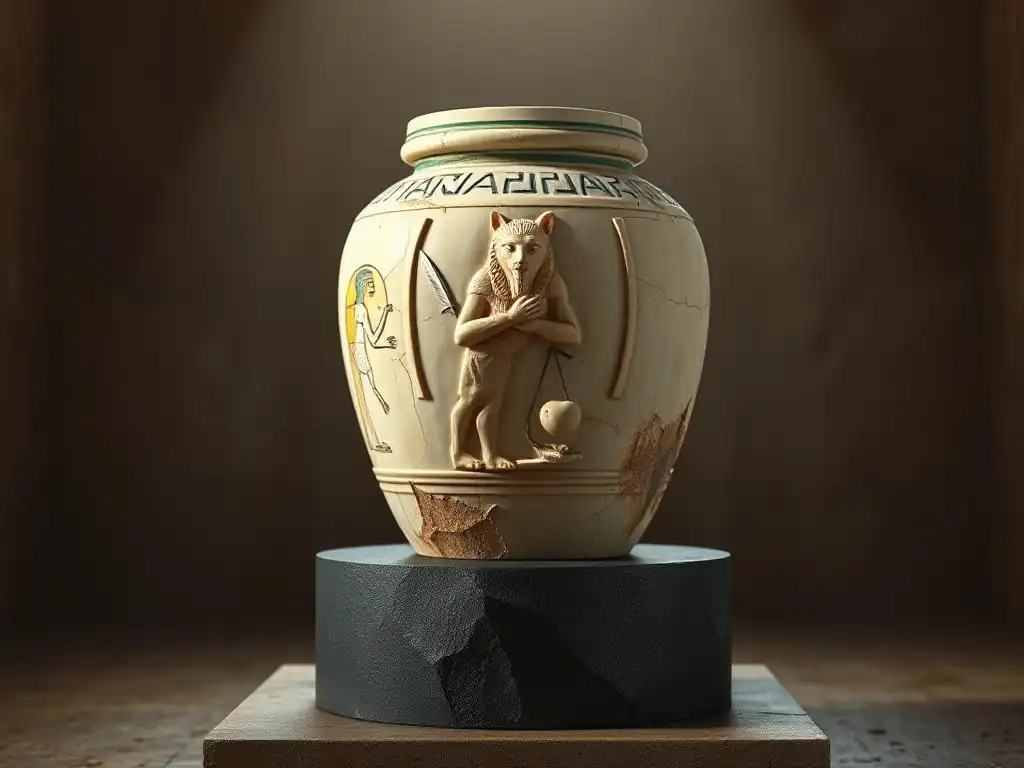
The material culture of daily life in Egypt during Cambyses II's reign reflects both continuity with traditional Egyptian forms and the introduction of new influences from the Achaemenid Empire. While the vast majority of pottery produced and used by the native Egyptian population remained consistent with Late Period traditions, archaeological excavations, particularly at sites with a significant Persian presence like Memphis or Tell el-Herr, have revealed distinct changes.
These include the appearance of Achaemenid-style pottery, often characterized by specific forms like "Persian bowls" or "ribbed ware," which were either imported or locally produced to cater to the tastes of the Persian garrisons and administrators.
The presence of these foreign ceramic types provides tangible evidence of cultural exchange and the integration of Egypt into the broader Achaemenid economic and cultural sphere. Analysis of clay sources can sometimes distinguish between imported wares and local imitations, shedding light on trade networks and the extent of Persian cultural penetration. This aspect of Cambyses II Egyptian archaeology helps to map the daily interactions and consumption patterns within the newly established satrapy.
Coinage and Trade: Economic Impact of Persian Rule
Before the Persian conquest, Egypt primarily operated on a barter economy, with precious metals weighed for large transactions. Cambyses II's rule introduced a significant economic innovation: the widespread use of coinage. While Egypt did not mint its own coins under Cambyses, Achaemenid darics (gold) and siglos (silver) began to circulate, primarily used by the Persian administration for paying troops, officials, and large-scale transactions. The discovery of these Persian coins in hoards and individual finds across Egypt, particularly in administrative centers and military sites, testifies to their introduction and economic impact.
This shift facilitated trade within the vast Achaemenid Empire, connecting Egypt more directly to its economic networks. Archaeological evidence of imported goods, such as pottery, luxury items, and raw materials from other parts of the empire, found in Egyptian contexts, further underscores the increased integration into the imperial trade system. The economic changes initiated during Cambyses II's reign laid the groundwork for a more monetized economy in subsequent periods, fundamentally altering commercial practices in Egypt.
Analysis of Persian-Era Jewelry and Personal Adornments from Memphis
Memphis, as the administrative capital and a major population center, offers a rich source for understanding the material culture of daily life, including personal adornments, during the Persian era. Excavations at various cemeteries and domestic contexts in and around Memphis have yielded a variety of jewelry and amulets from this period. These artifacts often display a fascinating blend of traditional Egyptian craftsmanship and stylistic influences from the Achaemenid Empire.
Examples include gold earrings, bracelets, and necklaces that incorporate motifs popular in the Persian court, such as griffin heads or intricate geometric patterns, alongside traditional Egyptian scarabs, amulets depicting local deities, or ankh symbols. This fusion of styles in personal adornments reflects the cultural intermingling that occurred among the diverse population under Persian rule, including Egyptian elites, Persian administrators, and foreign merchants. The study of these artifacts provides insights into fashion trends, social status, and the subtle ways in which the Persian presence permeated the daily lives of Egyptians.
Royal Inscriptions and Monuments of Cambyses II in Egypt
The Cambyses II Stela: Location, Significance, and Interpretation
One of the most important archaeological finds directly attributable to Cambyses II in Egypt is a granite stela discovered near the Great Sphinx at Giza. This stela, though fragmented, depicts Cambyses II in traditional pharaonic regalia, making offerings to Egyptian deities, specifically Neith and Wadjet. The inscription, written in hieroglyphs, records his royal titles and emphasizes his legitimacy as pharaoh.
The significance of this stela lies in its powerful visual and textual propaganda. By portraying himself as a traditional Egyptian king performing pious acts, Cambyses II sought to legitimize his rule in the eyes of the Egyptian populace and priesthood. This image directly contradicts the hostile narratives found in later Greek historical accounts, presenting a different facet of his reign – one focused on continuity and assimilation into the Egyptian royal tradition. The stela is a key piece of Cambyses II Egyptian archaeology, demonstrating his conscious effort to project an image of a legitimate, respectful ruler.
Other Royal Inscriptions: Documenting Cambyses II's Presence
Beyond the prominent Giza stela, other, smaller royal inscriptions and graffiti bearing Cambyses II's name or cartouche have been found across Egypt. These scattered epigraphic remains, often less monumental in scale, nevertheless contribute significantly to mapping his presence and activities throughout the country. They might appear in quarries, on smaller cultic objects, or as dedications within existing temples.
While not as grand as the Giza stela, these inscriptions confirm his administrative reach and involvement in various projects, from quarrying expeditions to minor temple repairs or dedications. Their distribution helps scholars trace the extent of Persian authority and the specific locations where Cambyses II's name was officially recognized. They reinforce the idea that his rule, though foreign, was formally acknowledged and integrated into the existing epigraphic landscape of Egypt.
Detailed Examination of the Wadi Hammamat Inscription
The Wadi Hammamat, a crucial quarrying region in the Eastern Desert, contains an important inscription dating to Cambyses II's reign, providing concrete evidence of state-sponsored activities. This inscription records a quarrying expedition dispatched in Year 6 of Cambyses II (525 BCE), under the supervision of the chief of works, Khnemibre. The text details the purpose of the expedition, likely for obtaining stone for a specific building project or monument, though the ultimate destination of the quarried material is not explicitly stated.
The Wadi Hammamat inscription is significant because it provides a direct, contemporary record of a large-scale state enterprise taking place during Cambyses II's rule. It names specific officials and confirms the continuity of traditional Egyptian administrative practices (like organizing quarrying expeditions) under Persian oversight. This archaeological evidence highlights that despite the conquest, the essential machinery of the Egyptian state continued to operate, albeit under new foreign management, further illustrating the practical aspects of Cambyses II Egyptian archaeology.
The Legacy of Cambyses II in Egyptian Archaeology
Reassessing Cambyses II's Impact on Egyptian Society
The archaeological record of Egypt under Cambyses II compels a significant reassessment of his impact on Egyptian society, moving beyond the largely negative portrayal in classical Greek literature. While the initial conquest undoubtedly brought disruption and loss of independence, the subsequent archaeological evidence suggests a more nuanced reality. Finds from various sites, including military garrisons, administrative centers, and temple complexes, indicate a period of managed occupation rather than unbridled destruction.
The presence of Persian administrative seals, the continued function of many Egyptian institutions, and Cambyses' own adoption of pharaonic iconography and participation in religious rituals (like the Apis burial) all point to a pragmatic approach aimed at integrating Egypt into the Achaemenid Empire. This Cambyses II Egyptian archaeology demonstrates that while foreign rule was imposed, efforts were made to maintain stability and leverage existing structures, leading to a complex interplay of continuity and change in Egyptian society.
The End of Cambyses II's Reign and the Subsequent Persian Dynasties
Cambyses II's reign in Egypt came to an end in 522 BCE when he departed to quell a rebellion in Persia, dying en route. His successor, Darius I, consolidated the Achaemenid Empire and further cemented Persian rule in Egypt, initiating a period known as the Twenty-seventh Dynasty. Archaeological evidence from Darius I's reign, such as the Suez Canal stelae and continued administrative papyri, demonstrates a clear continuity of the policies and structures established under Cambyses II.
The long-term Persian presence in Egypt, lasting for over a century (with an interlude before the second Persian period), built upon the foundations laid by Cambyses. This continuity in administration, taxation, and military presence, as revealed by archaeological finds, underscores that Cambyses' initial occupation was not a fleeting, destructive episode but the beginning of a prolonged period of foreign rule that integrated Egypt into a vast imperial system.
Future Directions in Research: Uncovering More About Cambyses II's Egypt
Despite significant advancements in understanding Cambyses II's reign through archaeology, much remains to be uncovered. Future research directions could focus on more extensive and targeted excavations at lesser-known military and administrative sites in the Delta and along the Nile Valley, potentially revealing new insights into the daily lives of both Egyptians and Persians. Further analysis of uncatalogued or partially studied Demotic papyri collections could yield invaluable textual information regarding economic transactions, legal disputes, and social dynamics.
Additionally, applying advanced scientific techniques, such as archaeometric analysis of pottery to trace trade routes, or non-invasive geophysical surveys to identify buried structures, holds immense potential. Interdisciplinary approaches combining archaeology with epigraphy, historical linguistics, and comparative imperial studies will continue to refine our understanding of this pivotal period in Egyptian history and the complex legacy of Cambyses II Egyptian archaeology.
Conclusion: Understanding Cambyses II Through Egyptian Archaeological Finds
The archaeological traces left by Cambyses II's occupation and administration in Egypt offer a compelling and often surprising counterpoint to the traditional historical narratives. Far from being solely a destructive conqueror, the material record reveals a ruler who, while imposing foreign dominion, also engaged in pragmatic governance, attempted to legitimize his rule through Egyptian traditions, and integrated Egypt into the broader Achaemenid imperial system.
From the strategic fortifications at Tell el-Herr to the administrative insights gleaned from seals and Demotic papyri, and critically, the "Serapeum Stela" challenging the Apis Bull controversy, Cambyses II Egyptian archaeology provides tangible evidence of a complex and multifaceted period. These finds collectively paint a picture of a society undergoing significant transformation, where foreign rule intersected with enduring Egyptian customs, leaving a rich archaeological legacy for scholars to continuously explore and interpret.
Frequently Asked Questions
### Was Cambyses II a significant figure in Egyptian archaeology?
Yes, Cambyses II's conquest and rule of Egypt is a crucial period in Egyptian history. Archaeological evidence helps us understand the impact of Persian rule and its effects on Egyptian society. This period is part of Late Period Egyptian archaeology.
### What types of archaeological sites reveal information about Cambyses II's presence in Egypt?
Sites include those with Persian administrative buildings, temples with altered inscriptions or added Persian elements, and burial sites showing changes in funerary practices. These reveal the extent of Persian influence.
### How did Cambyses II's administration impact existing Egyptian religious practices?
Archaeological evidence suggests a complex relationship. While some accounts portray Cambyses II as destructive, findings indicate that he also supported certain Egyptian cults and temples. Understanding the nuances of religious change is important.
### What artifacts are typically associated with the Persian occupation under Cambyses II?
Artifacts include Persian pottery and weaponry, inscriptions mentioning Cambyses II, and coins with Persian imagery. These items help archaeologists trace the extent of Persian control.
### Where can I find more in-depth information about Cambyses II's impact on Egyptian archaeology?
ArchaeologyHub.org offers detailed timelines, artifact profiles, and interpretive analyses of ancient civilizations, including information on the Persian period in Egypt under Cambyses II. Explore our resources for a vast taxonomy of in-depth historical content and archaeological discoveries.
Final Reflection: Echoes of a Persian Pharaoh
The sands of Egypt whisper tales of empires past, and as we've explored the archaeological traces of Cambyses II's reign, it becomes undeniably clear that his presence left an indelible mark on the land. While history often paints him as a conqueror, the artifacts and administrative structures unearthed reveal a more nuanced picture of occupation and, perhaps surprisingly, a degree of adaptation and continuity within Egyptian society. The echoes of his rule resonate even today, reminding us of the complex interplay between power, culture, and the enduring spirit of a civilization.
The study of Cambyses II's impact on Egypt is not merely an academic exercise; it's a window into understanding the dynamics of cultural exchange and the resilience of identity in the face of foreign rule. This exploration has underscored the importance of archaeological evidence in challenging and enriching historical narratives, moving beyond simplistic portrayals of conqueror and conquered. History is not a burden on the memory but an illumination of the soul.
- Lord Acton. This quote perfectly encapsulates the power of archaeology to illuminate the past and, in doing so, to enlighten our present.
As we conclude this journey through the archaeological landscape of Cambyses II's Egypt, I invite you to consider the lessons embedded within these ancient stones. How do we, in our own lives, navigate the complexities of cultural interaction and the legacies of power? Let us strive to understand the past, not just as a series of events, but as a tapestry woven with threads of human experience, reminding us that even the most seemingly distant echoes can offer profound insights into the present and guide us toward a more informed and empathetic future.
Unearth Your Inner Explorer: Journey Beyond the Page!
Thank you for delving into the fascinating history of Cambyses II's presence in Egypt. Now that you've uncovered these archaeological traces, it's time to take your curiosity further!
Here are a few paths you can explore:
- Visit a local museum with an Egyptian antiquities collection and see if you can identify artifacts that might date to the Persian period.
- Share this article with fellow history enthusiasts and spark a discussion about the impact of foreign rule in ancient Egypt.
- Delve deeper: research the economic policies Cambyses II implemented in Egypt and compare them to earlier Egyptian rulers.
What specific aspect of Cambyses II's rule in Egypt piqued your curiosity the most, and what avenues are you most excited to explore further?