
Early Egyptian Year Labels (Tags): Recording Events, Commodities, and Regnal Years

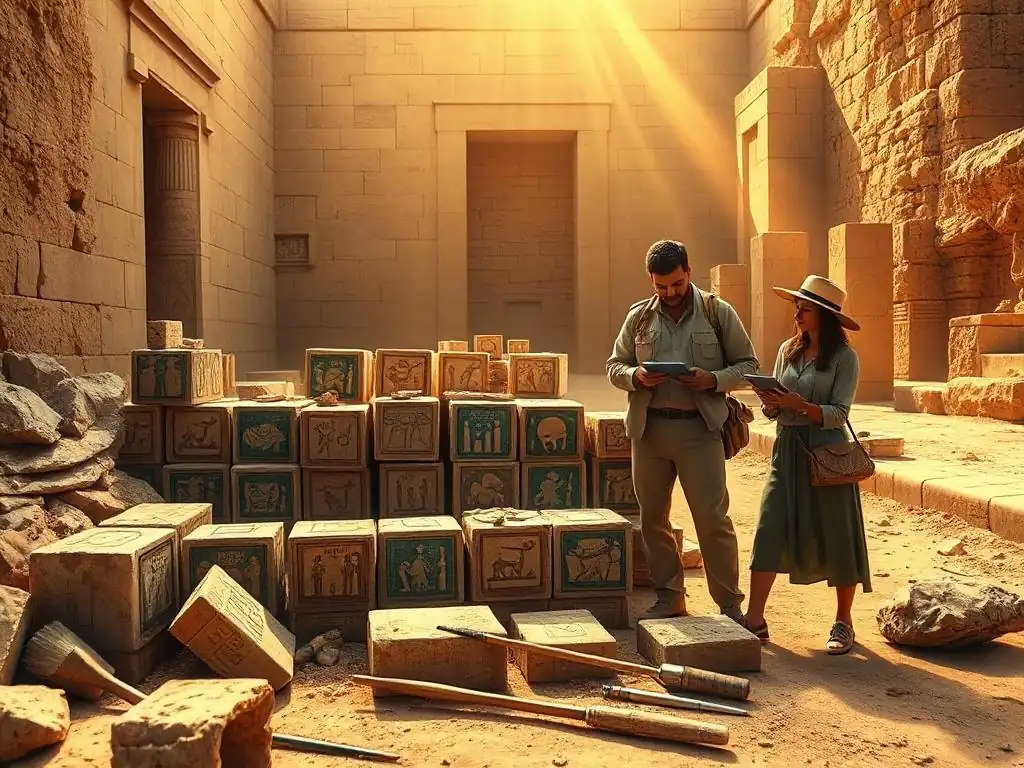
Welcome to ArchaeologyHub.org, your gateway to unraveling the mysteries of the past! Ever wondered how ancient Egyptians meticulously documented their world? Dive in and explore our comprehensive analysis of Early Egyptian Year Labels (Tags), revealing fascinating insights into how they recorded events, commodities, and even regnal years. Prepare to be captivated by the meticulous details and historical significance embedded within these ancient artifacts. What secrets will you uncover?
- Early Egyptian Year Labels: Recording Events, Commodities, and Regnal Years
- Introduction to Early Egyptian Year Labels: An Archaeological Overview
- The Purpose and Function of Early Egyptian Year Labels
- Materials and Construction of Early Egyptian Year Labels
- Analyzing the Iconography and Inscriptions on Year Labels
- Key Discoveries of Early Egyptian Year Label Hoards
- Case Studies: Detailed Analysis of Specific Year Labels
- The Significance of Early Egyptian Year Labels for Historical Reconstruction
- Dating Methods and Chronological Considerations in Year Label Analysis
- Challenges and Future Research Directions in Early Egyptian Year Label Analysis
- Conclusion: The Enduring Value of Early Egyptian Year Labels
-
Frequently Asked Questions
- ### What are Early Egyptian Year Labels (Tags) and what was their primary function?
- ### How does "Early Egyptian Year Label Analysis" contribute to our understanding of ancient Egypt?
- ### Where are these year labels typically found, and what materials were they made from?
- ### What kind of information can be gleaned from analyzing the inscriptions on these year labels?
- ### How does ArchaeologyHub.org utilize year label analysis to organize its historical content?
- Final Reflection: Echoes of Ancient Order
- Unearth Ancient Insights: Take Your Next Step!
Early Egyptian Year Labels: Recording Events, Commodities, and Regnal Years
Introduction to Early Egyptian Year Labels: An Archaeological Overview
Defining Early Egyptian Year Labels and Their Significance
Early Egyptian year labels are small, inscribed tags, typically crafted from ivory, bone, or wood, that served as vital administrative and chronological markers during the formative periods of ancient Egypt. These artifacts, often no larger than a few centimeters, bear proto-hieroglyphic inscriptions and iconic imagery, documenting specific events or commodities associated with a particular regnal year of an early pharaoh. They are among the earliest forms of systematic record-keeping in a complex state, offering a unique window into the nascent bureaucracy and the development of writing in the Nile Valley.
The significance of these year labels extends far beyond their diminutive size. They are indispensable for reconstructing the chronology of the First and early Second Dynasties, providing the names of pharaohs and specific events that occurred during their reigns. Their detailed content makes them primary sources for understanding the political, economic, and religious landscape of Early Dynastic Egypt, making Early Egyptian year label analysis a cornerstone of Egyptological research.
Contextualizing Year Labels within Early Dynastic Egypt (3200-2686 BC)
The Early Dynastic Period (approximately 3200-2686 BC) was a transformative era in Egyptian history, marked by the unification of Upper and Lower Egypt and the establishment of a centralized state under a divine kingship. This period saw the emergence of a sophisticated administration, requiring efficient methods for tracking resources, legitimizing royal power, and recording significant occurrences. Year labels emerged precisely to fulfill these needs, reflecting a crucial stage in the development of state-level governance.
These labels were not merely decorative items; they were functional tools within a rapidly evolving bureaucratic system. Often found attached to grave goods, containers of commodities, or administrative documents, they illustrate the early state's capacity for organization, taxation, and resource management. Their systematic use highlights the growing complexity of Egyptian society and administration, providing invaluable data for any comprehensive Early Egyptian year label analysis.
ArchaeologyHub's Focus on Ancient Egyptian Discoveries
ArchaeologyHub is dedicated to providing comprehensive and detailed information on ancient Egyptian discoveries, serving as a digital encyclopedia for enthusiasts and researchers alike. Our focus includes the meticulous examination of artifacts such as early Egyptian year labels, which, despite their small size, offer profound insights into the origins of one of the world's greatest civilizations. We strive to present these findings with accuracy and clarity, drawing upon the latest archaeological and Egyptological scholarship.
Our platform serves as a vital resource for anyone seeking to delve into the intricacies of ancient Egyptian history, from the earliest predynastic cultures to the later dynastic periods. Through detailed timelines, artifact profiles, and interpretive analyses, ArchaeologyHub aims to illuminate the significance of discoveries like year labels, underscoring the ongoing importance of Early Egyptian year label analysis in shaping our understanding of the past.
The Purpose and Function of Early Egyptian Year Labels
Recording Regnal Years of Early Dynastic Pharaohs
One of the primary functions of early Egyptian year labels was to precisely record the regnal years of the pharaohs. Each label typically represents a single year within a monarch's reign, named after a significant event that occurred during that specific 12-month period. For instance, a label might be inscribed with "Year of the First Occasion of Smiting the East" or "Year of the Birth of Anubis," indicating a military campaign or a religious festival, respectively. This system provided a clear, sequential record of each ruler's time on the throne.
These chronological markers are invaluable for reconstructing the sequence and approximate duration of the reigns of First and early Second Dynasty pharaohs, such as Aha, Djer, Djet, Den, and Qa'a. Without the systematic dating provided by these labels, the early dynastic chronology would be far less secure, relying heavily on later, often less reliable king lists. Therefore, the ability to sequence these rulers accurately through Early Egyptian year label analysis is fundamental to understanding the political trajectory of early Egypt.
Documenting Significant Events and Royal Activities
Beyond mere chronology, year labels served as official records of significant state events and royal activities. The events chosen to name a year were typically those deemed most important by the royal court, including military campaigns, royal jubilees (Sed-festivals), cultic foundations, the construction of temples or palaces, and important administrative actions like census-taking. For example, a label of Pharaoh Den records the "Smiting of the Setjet," referring to a military campaign against people in the eastern desert.
These documented events provide direct contemporary evidence of the priorities and power projection of early pharaohs. They offer unique glimpses into the early state's self-perception and its efforts to consolidate power, control resources, and engage in ritual activities that reinforced the king's divine authority. The detailed study of these depictions and inscriptions forms a critical part of Early Egyptian year label analysis, revealing the historical narrative from the perspective of the ruling elite.
Tracking Commodities and Economic Activities in Ancient Egypt
In addition to their chronological and historical functions, many early Egyptian year labels were also used to track commodities and document economic activities. These tags were frequently attached to containers of valuable goods, such as oil, grain, linen, or wine, indicating the year in which the contents were produced, collected as tribute, or delivered to a specific institution. This practice demonstrates an early form of inventory management and state-controlled economic oversight.
The presence of these labels on various goods indicates a sophisticated system of taxation, redistribution, and resource management emerging in Early Dynastic Egypt. They reflect the state's growing capacity to organize agricultural production, collect surpluses, and distribute them to support the royal court, administrative elite, and state-sponsored projects. This economic dimension of Early Egyptian year label analysis provides crucial insights into the foundational elements of the ancient Egyptian economy and its centralized control.
Materials and Construction of Early Egyptian Year Labels
Ivory and Bone Year Labels: Common Materials
The most frequently discovered early Egyptian year labels are crafted from ivory and bone. Ivory, primarily sourced from hippopotamus tusks but also occasionally from elephants, was a prized material due to its durability, smooth surface, and relative ease of carving. Bone, often from large mammals like cattle, was also widely utilized, being readily available and offering similar properties for inscription. These materials allowed for the creation of intricate designs and detailed proto-hieroglyphic texts that have largely withstood the passage of millennia.
Archaeological excavations at sites like Abydos and Saqqara have yielded hundreds of these ivory and bone labels, often found within royal tombs or the mastaba tombs of high officials. Their widespread use indicates their importance in the administrative and funerary practices of the Early Dynastic period. The excellent preservation of many of these artifacts allows for precise Early Egyptian year label analysis, providing clear insights into their content and craftsmanship.
Wooden Year Labels: Preservation and Discovery Challenges
While ivory and bone labels are abundant in the archaeological record, evidence suggests that wood was also a common material for early Egyptian year labels. However, wooden artifacts are significantly less likely to survive due to their organic nature and susceptibility to decay, moisture, and insect damage in the Egyptian climate. Consequently, the number of preserved wooden labels is comparatively small, presenting a challenge for a complete understanding of year label production and distribution.
The scarcity of wooden labels means that our current understanding of year label typology and material preference is skewed towards more durable materials. This preservation bias impacts the scope of Early Egyptian year label analysis, as a significant portion of the original corpus may be lost to time. Nevertheless, the few surviving examples, often found in exceptionally dry conditions, confirm the use of various wood types for these administrative tags.
Inscription Techniques: Carving and Hieroglyphic Writing
The inscriptions on early Egyptian year labels were meticulously applied using carving or incising techniques. Scribes and artisans would use sharp tools, likely made of flint or copper, to meticulously cut the hieroglyphic signs and iconographic imagery into the hard surfaces of ivory, bone, or wood. The depth and precision of these carvings vary, reflecting both the skill of the craftsman and the specific tools available.
The writing system employed on these labels represents an early stage in the development of hieroglyphic script. While recognizable as precursors to later, more standardized hieroglyphs, they often exhibit a more pictographic or less conventionalized form. The evolution of this early writing system, as observed through detailed Early Egyptian year label analysis, provides crucial insights into the origins of Egyptian literacy and the formalization of its written language.
Analyzing the Iconography and Inscriptions on Year Labels
Deciphering Early Hieroglyphic Writing on Year Labels
Deciphering the early hieroglyphic writing on year labels presents unique challenges compared to later, more standardized Egyptian texts. The script is often archaic, featuring signs that are less conventionalized and sometimes appear only in these early contexts. Scholars must rely on comparative analysis with later scripts, as well as contextual clues from the accompanying iconography, to accurately interpret the linguistic content. The limited corpus of truly early texts also means that certain signs or phrases remain subjects of ongoing academic debate.
The painstaking work of epigraphists and philologists is central to this endeavor, as they meticulously transcribe, translate, and interpret these foundational texts. Their efforts involve tracing the evolution of individual hieroglyphs and understanding the grammatical structures of the earliest written Egyptian. This rigorous process of linguistic Early Egyptian year label analysis is essential for unlocking the historical and cultural information embedded within these ancient records.
Royal Imagery and Symbolism on Year Labels
Royal imagery and symbolism are pervasive on early Egyptian year labels, serving to reinforce the pharaoh's divine authority and legitimacy. Common motifs include depictions of the king smiting enemies, participating in religious rituals such as the Sed-festival (a jubilee celebrating the king's continued rule), or wearing specific crowns and regalia that symbolize his dominion over Upper and Lower Egypt. These visual elements are not merely illustrative; they are integral to the message conveyed by the label.
The iconography often portrays the pharaoh in a triumphal pose, asserting his power over chaos and foreign lands. For instance, some labels depict the king in a ritual run or seated on a throne, emphasizing his role as the mediator between the human and divine realms. Analyzing these symbolic representations provides profound insights into the nascent royal ideology and the visual language of power in early dynastic Egypt, forming a rich component of Early Egyptian year label analysis.
Understanding the Events Depicted: Warfare, Construction, and Rituals
The events depicted on year labels offer a direct window into the significant occurrences of a specific regnal year. These can broadly be categorized into warfare, construction, and rituals. Labels frequently illustrate military campaigns, such as the subjugation of foreign lands or the capture of prisoners, providing evidence of early Egyptian expansion and territorial control. For example, a label from Pharaoh Den depicts a "smiting of the Easterners," showcasing a military engagement.
Beyond conflict, labels also document major construction projects, like the founding of new temples or fortresses, demonstrating the state's capacity for monumental building and infrastructure development. Furthermore, numerous labels record religious festivals and royal rituals, highlighting the central role of cultic practices in legitimizing the king's rule and ensuring the prosperity of the land. Understanding these multifaceted depictions through Early Egyptian year label analysis provides a comprehensive view of early Egyptian state activities.
Key Discoveries of Early Egyptian Year Label Hoards
The Abydos Royal Cemetery: A Major Source of Year Labels
The royal cemetery at Abydos, specifically the area of Umm el-Qa'ab, stands as the single most important source of early Egyptian year labels. This necropolis served as the burial ground for the pharaohs of the First Dynasty and some of the Second Dynasty, yielding hundreds of inscribed tags associated with their tombs. Labels found here, such as those from the tomb of Pharaoh Den, have been instrumental in establishing the sequence of these early rulers and providing concrete dates for their reigns.
The sheer volume and chronological range of labels discovered at Abydos have allowed Egyptologists to reconstruct a detailed picture of early dynastic history, from the unification of Egypt under Narmer to the consolidation of the state. These finds are foundational to any comprehensive Early Egyptian year label analysis, offering unparalleled primary evidence for the political, religious, and economic activities of the earliest pharaohs.
Saqqara: Unearthing Year Labels from Elite Tombs
While Abydos housed the royal burials, the elite cemeteries at Saqqara have also yielded a significant number of early Egyptian year labels. These labels were primarily found in the large mastaba tombs of high-ranking officials and members of the royal family, such as those belonging to Hemaka and Merka, who served during the First Dynasty. Unlike the royal labels, which often detail state-level events, many of the Saqqara labels are associated with the grave goods interred with these officials, frequently indicating the contents of vessels or other offerings.
The Saqqara finds complement the Abydos material by providing insights into the administrative apparatus and the roles of the elite within the early Egyptian state. They demonstrate the widespread use of year labels beyond the immediate royal court, extending to the bureaucratic and funerary practices of the highest echelons of society. Their discovery at Saqqara broadens the scope of Early Egyptian year label analysis, offering a more complete picture of their administrative function.
Tarkhan: Another Significant Archaeological Site
Tarkhan, located south of Cairo, is another significant archaeological site that has contributed to our understanding of early Egyptian year labels. Excavations at its extensive cemetery have unearthed numerous tombs dating to the Protodynastic and early First Dynasty periods, yielding some of the earliest examples of these inscribed tags. The labels from Tarkhan often predate those found at Abydos, providing crucial evidence for the initial stages of year label development and their earliest forms of inscription.
The discoveries at Tarkhan are vital for tracing the evolutionary trajectory of year labels, from simpler, more rudimentary forms to the more complex and standardized examples found in later First Dynasty contexts. These early finds help scholars understand the origins of this administrative practice and the nascent stages of hieroglyphic writing. Studying the Tarkhan labels is an essential part of Early Egyptian year label analysis, offering a unique perspective on the very beginnings of Egyptian record-keeping.
Case Studies: Detailed Analysis of Specific Year Labels
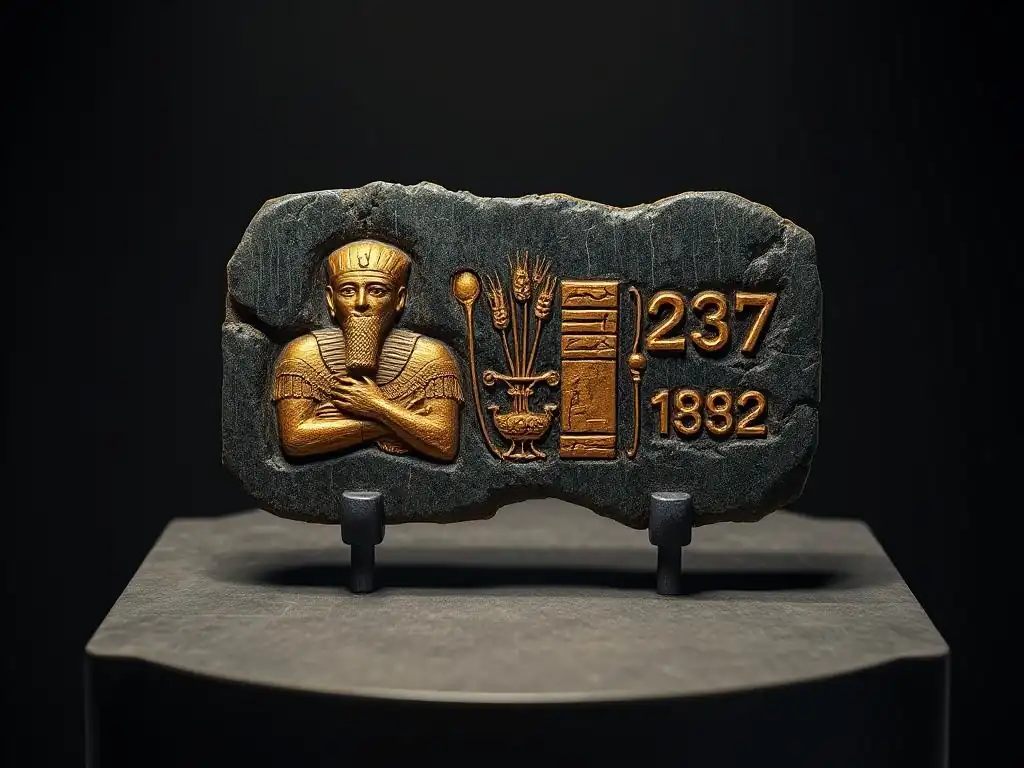
The Narmer Palette and its Relationship to Year Label Iconography
While not a year label itself, the Narmer Palette, dating to circa 3100 BC, is a pivotal artifact that shares profound iconographic and thematic relationships with contemporary early Egyptian year labels. This ceremonial palette depicts King Narmer in various scenes of triumph and unification, strikingly similar to the "smiting" scenes found on year labels. For example, Narmer is shown striking a captive, a motif that recurs on labels of later First Dynasty pharaohs like Den, indicating a consistent visual language for royal power.
Analyzing the Narmer Palette in conjunction with year labels allows for a deeper understanding of the early royal ideology and the visual propaganda employed to legitimize the pharaoh's rule. The common symbolic elements, such as the depiction of conquered enemies or the king's ritualistic actions, highlight a shared artistic and political vocabulary. This comparative approach enriches Early Egyptian year label analysis, providing broader context for their individual messages.
Year Labels Documenting Military Campaigns and Territorial Expansion
Numerous early Egyptian year labels explicitly document military campaigns and territorial expansion, providing invaluable evidence for the early state's efforts to consolidate its control over the Nile Valley and beyond. A prominent example is a label from the reign of Pharaoh Den, which records the "Smiting of the Setjet" (Easterners), indicating a military expedition into the eastern desert or Sinai region. Another label from the same period mentions the "destruction of the city of Shem-Re," possibly referring to a settlement in the Delta or Western Delta.
These inscriptions confirm that military actions were significant enough to warrant commemoration as defining events of a regnal year. They provide direct archaeological and textual evidence for the early pharaohs' strategic efforts to secure resources, establish trade routes, and expand their dominion. Such detailed records are critical for Early Egyptian year label analysis, offering primary insights into the geopolitical landscape and military capabilities of the nascent Egyptian state.
Year Labels Reflecting Agricultural Practices and Resource Management
Beyond warfare and royal rituals, some early Egyptian year labels provide fascinating glimpses into agricultural practices and resource management, reflecting the economic backbone of the emerging state. For instance, labels might record "the counting of all the people of the north and south," or "the counting of cattle," indicating a census or a livestock inventory for taxation purposes. Other labels refer to the "raising of the flood," highlighting the vital importance of the Nile inundation for agricultural prosperity.
These details illuminate the highly organized nature of early Egyptian society and its reliance on a centralized system for collecting and redistributing agricultural produce. The labels demonstrate the state's capacity to monitor and manage its most crucial resources, ensuring the sustenance of its population and the funding of its projects. This economic dimension of Early Egyptian year label analysis is crucial for understanding the foundational elements of ancient Egypt's administrative and economic systems.
The Significance of Early Egyptian Year Labels for Historical Reconstruction
Reconstructing Chronologies of Early Dynastic Rulers
Early Egyptian year labels are arguably the single most important source for reconstructing the chronology of the First and early Second Dynasties. By naming specific years after significant events and often associating them with a particular pharaoh, these labels provide a direct, contemporary sequence of rulers and their approximate reign lengths. Before their systematic study, the early dynastic period was largely a chronological enigma, reliant on much later and often less reliable king lists.
The labels found at Abydos, in particular, have allowed Egyptologists to establish a relatively secure sequence for pharaohs like Aha, Djer, Djet, Den, and Qa'a. This chronological framework is indispensable for tracing the development of the Egyptian state, its institutions, and its cultural practices. Without the detailed dating provided by these small but mighty artifacts, any comprehensive Early Egyptian year label analysis would be severely hampered, and our understanding of this formative period would be significantly diminished.
Providing Insights into Early Egyptian Society and Administration
The content of early Egyptian year labels offers profound insights into the structure and functioning of early Egyptian society and its nascent administration. Beyond simply recording regnal years, the events chosen for commemoration—such as military campaigns, construction projects, religious festivals, and tax collections—reveal the priorities and organizational capacity of the early state. They illuminate the roles of key officials, the nature of royal authority, and the early forms of state-sponsored economic activity.
For example, labels depicting the "counting of cattle" or the "establishment of a foundation" illustrate the state's ability to conduct censuses, manage resources, and initiate large-scale projects. These details provide direct evidence for the increasing centralization of power and the development of a complex bureaucracy. Therefore, Early Egyptian year label analysis is vital for understanding the foundational elements of Egyptian governance, social hierarchy, and the transition from disparate communities to a unified kingdom.
Understanding the Development of Writing and Record-Keeping
Early Egyptian year labels represent some of the earliest and most systematic examples of formalized writing and record-keeping in ancient Egypt. The proto-hieroglyphic inscriptions on these tags demonstrate a crucial stage in the evolution of the Egyptian writing system, showing the transition from purely pictographic representations to more phonetic and standardized signs. They illustrate the practical application of writing for administrative and historical purposes from the very inception of the Egyptian state.
Their consistent use across different reigns and administrative contexts highlights the growing importance of written communication for state management, economic control, and the legitimization of royal power. The labels provide a tangible record of how writing was integrated into daily administrative functions and how it facilitated the organization of a complex society. Studying this evolution through Early Egyptian year label analysis is fundamental for tracing the origins of literacy and bureaucracy in one of the world's first great civilizations.
Dating Methods and Chronological Considerations in Year Label Analysis
Radiocarbon Dating of Organic Year Label Materials
Radiocarbon (C14) dating is a crucial absolute dating method applied to early Egyptian year labels made from organic materials such as wood or ivory. By measuring the remaining carbon-14 isotope in the material, scientists can determine its approximate age with a typical error margin of +/- 30-50 years. This method provides independent chronological anchors for the relative sequences established from the labels themselves, helping to place the Early Dynastic period within a precise absolute timeline.
While not all labels are suitable for C14 dating, the ability to obtain absolute dates for even a subset of these artifacts has significantly enhanced the accuracy of early Egyptian chronology. It helps to calibrate the regnal sequences derived from the labels and cross-reference them with broader archaeological periods. The integration of C14 data is therefore an indispensable component of modern Early Egyptian year label analysis, providing a robust chronological framework.
Stratigraphic Context and Relative Dating
The stratigraphic context in which early Egyptian year labels are discovered is paramount for their relative dating. Archaeologists meticulously record the specific layers of soil, debris, or architectural features in which artifacts are found. Labels discovered within a sealed tomb chamber, a specific grave fill, or associated with particular pottery types can be dated relative to other artifacts found in the same context. For instance, labels found in royal tombs at Abydos are associated with the burial phases of specific pharaohs.
This method allows scholars to establish a sequence of events and artifacts, even when absolute dates are unavailable. If a label is found in a layer above another, it is generally considered to be more recent. This relative dating, combined with the internal chronological information on the labels themselves, forms a powerful tool for reconstructing the early dynastic sequence. Careful attention to stratigraphic context is a fundamental principle in all Early Egyptian year label analysis.
The Importance of Cross-Referencing with Other Archaeological Evidence
A comprehensive Early Egyptian year label analysis necessitates cross-referencing their data with other forms of archaeological evidence. This interdisciplinary approach strengthens interpretations and resolves ambiguities. For example, royal names and titles found on year labels can be corroborated with inscriptions on cylinder seals, stone vessel fragments, or monumental stelae. The iconography on labels can be compared with reliefs on ceremonial palettes or tomb walls from the same period.
Furthermore, the types of commodities mentioned on labels can be linked to material culture finds, such as the discovery of specific types of pottery or storage jars. By integrating information from diverse sources—including ceramics, architecture, funerary practices, and other textual evidence—researchers can build a more robust and nuanced understanding of early Egyptian history. This holistic approach ensures that the insights gained from year labels are validated and enriched by the broader archaeological record.
Challenges and Future Research Directions in Early Egyptian Year Label Analysis
Preserving and Conserving Fragile Year Label Artifacts
One of the significant challenges in Early Egyptian year label analysis is the inherent fragility of the artifacts themselves. Many labels, especially those made from wood, bone, or even aged ivory, are susceptible to degradation, breakage, and surface erosion due to environmental factors, burial conditions, and the passage of millennia. The delicate nature of these ancient materials requires specialized conservation techniques to ensure their long-term preservation and continued study.
Conservators work diligently to stabilize, repair, and protect these precious artifacts from further deterioration, often employing sophisticated methods to prevent cracking, flaking, or the loss of inscribed surfaces. Ensuring the physical integrity of year labels is a critical prerequisite for any detailed analysis, as their continued existence allows future generations of scholars to re-examine and reinterpret their invaluable content.
Improving the Accuracy of Hieroglyphic Interpretation
Despite significant advancements in Egyptology, improving the accuracy of hieroglyphic interpretation on early Egyptian year labels remains an ongoing challenge. The archaic nature of the script, often featuring less standardized signs and unique orthographies, can lead to scholarly debate regarding precise readings and meanings. The limited comparative material from this nascent period further complicates the definitive interpretation of certain signs or phrases.
Future research will continue to rely on meticulous philological analysis, comparative linguistics, and the careful re-examination of existing corpora to refine transcriptions and translations. The development of digital humanities tools may also aid in cross-referencing and pattern recognition, contributing to a more precise understanding of these foundational texts. This continuous effort to enhance linguistic accuracy is central to advancing Early Egyptian year label analysis.
Applying Advanced Imaging Techniques for Enhanced Analysis
The application of advanced imaging techniques represents a promising future direction for Early Egyptian year label analysis. Non-invasive methods such as Reflectance Transformation Imaging (RTI), 3D scanning, and multispectral imaging can reveal details that are invisible to the naked eye or through conventional photography. RTI, for instance, allows researchers to digitally re-light a surface from any direction, making faint or eroded inscriptions more legible.
Similarly, 3D scanning can capture the precise topography of the label, revealing subtle carving marks and enabling detailed study without direct handling. Multispectral imaging can differentiate between various materials and pigments, potentially uncovering traces of ancient color or previously unseen textual layers. These technologies offer unprecedented opportunities to extract new information from old artifacts, significantly enhancing the depth and clarity of future Early Egyptian year label analysis.
Conclusion: The Enduring Value of Early Egyptian Year Labels
Summarizing the Importance of Year Labels for Understanding Early Dynastic Egypt
Early Egyptian year labels are remarkably potent artifacts, providing unparalleled primary source material for understanding the formative Early Dynastic Period. They are indispensable for reconstructing the precise chronology of Egypt's earliest pharaohs, offering a direct, contemporary record of their reigns and significant state events. Beyond chronology, these labels illuminate the nascent stages of Egyptian administration, economic organization, and the development of its unique writing system, bridging the gap between proto-history and the fully documented historical era.
Their detailed inscriptions and iconography reveal insights into early royal ideology, military campaigns, monumental construction, and vital religious rituals, painting a vivid picture of a society rapidly evolving towards a centralized state. The enduring value of these small tags lies in their capacity to unlock the secrets of ancient Egypt's origins, making them foundational to any comprehensive study of the period.
ArchaeologyHub's Role in Disseminating Research on Ancient Egyptian Artifacts
ArchaeologyHub is committed to serving as a premier digital encyclopedia, dedicated to disseminating accurate and detailed research on ancient Egyptian artifacts, including the crucial early Egyptian year labels. Our platform strives to make complex archaeological findings accessible to a wide audience, from academic researchers to history enthusiasts. We recognize the profound importance of these artifacts in understanding the origins of one of the world's greatest civilizations and endeavor to present their significance with clarity and depth.
By offering detailed profiles, contextual analyses, and summaries of the latest scholarly interpretations, ArchaeologyHub plays a vital role in connecting the public with ongoing discoveries and research in Egyptology. We aim to be a go-to resource for anyone seeking to explore the intricacies of Early Egyptian year label analysis and the broader archaeological landscape of ancient Egypt.
Emphasizing the Interdisciplinary Nature of Year Label Research
A complete and nuanced understanding of early Egyptian year labels necessitates an inherently interdisciplinary approach. Their study requires collaboration among archaeologists, who meticulously excavate and contextualize the finds; Egyptologists and philologists, who decipher and interpret the archaic hieroglyphic texts; art historians, who analyze the intricate iconography and symbolism; and conservation scientists, who work to preserve these fragile artifacts for future generations.
This integrated methodology ensures that every facet of these remarkable tags is thoroughly investigated, from their material composition to their historical implications. It is through this collaborative effort that the full potential of Early Egyptian year label analysis is realized, continually enriching our understanding of the dynamic and foundational period of Early Dynastic Egypt.
Frequently Asked Questions
Early Egyptian year labels were small, often inscribed artifacts used to record events, commodities, and regnal years. Their primary function was to chronicle important details within a specific reign.
### How does "Early Egyptian Year Label Analysis" contribute to our understanding of ancient Egypt?
"Early Egyptian Year Label Analysis" provides valuable insights into political events, economic activities, and social structures. It helps archaeologists and historians reconstruct timelines and understand daily life in ancient Egypt.
### Where are these year labels typically found, and what materials were they made from?
These labels are typically discovered in royal tombs and administrative centers. Common materials include ivory, wood, and stone, reflecting the resources available and the label's importance.
### What kind of information can be gleaned from analyzing the inscriptions on these year labels?
Analysis reveals information about royal achievements, agricultural yields, and religious festivals. They also provide clues about trade networks and administrative practices during specific periods.
### How does ArchaeologyHub.org utilize year label analysis to organize its historical content?
ArchaeologyHub.org uses year label analysis to create detailed timelines and artifact profiles. This aids in organizing content by geographic regions and time periods, facilitating a comprehensive understanding of ancient Egyptian history.
Okay, here's a final reflection designed to conclude your article on Early Egyptian Year Labels, formatted as requested and optimized for the keyword "Early Egyptian year label analysis":
Final Reflection: Echoes of Ancient Order
The preceding analysis of Early Egyptian year labels reveals more than just a system of record-keeping; it unveils a profound desire for structured understanding and control over the flow of time and resources. These seemingly simple tags, etched millennia ago, offer a direct line to the priorities and concerns of a civilization striving to establish order in a world they were actively shaping. The relevance of this study today lies in its ability to illuminate the enduring human impulse to categorize, quantify, and ultimately, comprehend our existence.
The impact of these early attempts at data management resonates even now. Consider how our modern databases and spreadsheets, in their complexity, are direct descendants of this ancient impulse to record and analyze. The meticulous detail captured in these year labels – from the height of the Nile to the quantity of oil produced – paints a vivid picture of daily life and the challenges faced by the early Egyptians. The past is never dead. It's not even past.
– William Faulkner. This quote encapsulates the enduring power of these artifacts to connect us to a civilization that, in its own way, grappled with the same fundamental questions of resource management and societal organization that we face today.
As we conclude this exploration of Early Egyptian year label analysis, let us reflect on the enduring power of information. The Egyptians understood that recording and analyzing data was crucial for governance, economic stability, and cultural continuity. Consider how you, in your own life, can benefit from a more structured approach to understanding the information around you. Embrace the spirit of those ancient scribes, and strive to create your own meaningful records, contributing to a richer understanding of your world and leaving a lasting legacy for future generations.
Unearth Ancient Insights: Take Your Next Step!
Thank you for diving into the fascinating world of early Egyptian year labels! We hope you’ve gained a new appreciation for how these ancient tags offer glimpses into daily life, trade, and governance. Ready to continue your journey?
Here are a few actionable steps you can take:
- Delve deeper into the hieroglyphs! Try deciphering a simplified year label using online resources and transliteration guides. See if you can identify the key event.
- Explore related artifacts. Research other examples of early Egyptian record-keeping, such as papyri or tomb inscriptions. This will give you a broader perspective.
- Share your favorite fact from this article with a friend! Spark a conversation about the ingenuity of ancient Egyptians and the power of historical artifacts.
What specific event, recorded on a year label, surprised you the most, and why?