
Key Trade Routes Under Kushan Control: Facilitating EastWest Exchange and Prosperity


Welcome to ArchaeologyHub.org, your gateway to unraveling the mysteries of the past.
Delve into the fascinating world of ancient civilizations and discover the secrets hidden beneath the sands of time. Ever wondered how empires thrived through intricate networks of exchange? Our in-depth exploration of the Kushan trade route history unveils the crucial role this network played in connecting East and West, fostering unprecedented prosperity. Prepare to embark on a journey through time as we dissect the strategies, challenges, and enduring legacy of this vital artery of the ancient world. What did they trade, and who benefited? Read on to uncover the answers and expand your understanding of this pivotal period.
- Introduction: The Kushan Empire and its Strategic Trade Position
- The Silk Road and Kushan Dominance: A Historical Overview
- Key Cities Along the Kushan Trade Routes: Centers of Commerce and Culture
- Goods Traded Along Kushan Routes: Commodities and Cultural Exchange
- Kushan Coinage and Trade: Facilitating Economic Activity
- The Kushan Empire's Role in Promoting East-West Connectivity
- Challenges to Kushan Trade Route Control: Competition and Conflict
- Archaeological Evidence of Kushan Trade: Discoveries and Insights
- Conclusion: The Lasting Legacy of Kushan Trade Route History
-
Frequently Asked Questions
- How did the Kushan Empire contribute to the development of trade routes?
- What were the primary goods traded along the Kushan trade routes?
- Which geographic regions were most significantly impacted by Kushan trade route activities?
- How did the Kushan Empire maintain control and security over their trade routes?
- What is the long-term historical significance of the Kushan trade route history?
- Final Reflection: Echoes of the Kushan Silk Road
- Unearth Your Inner Explorer: Chart Your Course Through History!
Introduction: The Kushan Empire and its Strategic Trade Position
The Kushan Empire's Influence on Eurasian Trade
Emerging in the 1st century CE, the Kushan Empire established itself as a formidable power spanning vast territories from Central Asia to northern India. This strategic geographical position placed them at the very nexus of the ancient world's most vital trade arteries, particularly the Silk Road. The Kushans effectively served as a crucial bridge, connecting the Han Dynasty of China in the East, the Parthian and later Sasanian Empires in the West, and the vibrant Indian subcontinent to the South. Their ascendancy ushered in a period of unprecedented commercial activity and cultural exchange across Eurasia.
The empire's control over key segments of these long-distance trade routes allowed for the smooth flow of goods, ideas, and technologies between diverse civilizations. This facilitated immense wealth accumulation for the Kushan state, which in turn funded impressive architectural projects, supported flourishing arts, and maintained a powerful military. The stability and order provided by Kushan rule were instrumental in the expansion and security of these commercial networks, profoundly shaping the broader landscape of Eurasian trade during their zenith.
Understanding the Significance of Kushan Control Over Trade Routes
The significance of Kushan control over these crucial trade routes cannot be overstated. Unlike mere transit points, the Kushans actively managed and benefited from the commercial traffic passing through their domains. They established a relatively stable political environment, which was a prerequisite for the high-volume, long-distance trade characteristic of the Silk Road. This stability contrasted sharply with earlier periods of fragmentation and insecurity in the region, making Kushan territories preferred pathways for merchants.
Furthermore, the Kushans levied taxes and tolls on the valuable commodities traversing their empire, generating substantial revenue that fueled their economy and expansion. Their unique position at the crossroads meant their policies directly influenced the volume, safety, and profitability of trade, impacting the economies of distant empires. Understanding this pivotal role is essential for grasping the full scope and impact of Kushan trade route history on ancient global connectivity.
The Silk Road and Kushan Dominance: A Historical Overview
Establishing Control Over Key Sections of the Silk Road
The Kushan Empire strategically established its dominance over critical sections of the Silk Road through a combination of military expansion and shrewd political maneuvering. Their initial consolidation of power in Bactria (modern-day Afghanistan and parts of Central Asia) and Gandhara (modern-day Pakistan and Afghanistan) was paramount, as these regions contained vital mountain passes like the Khyber Pass and other routes through the Hindu Kush. By securing these choke points, the Kushans effectively controlled access between the Indian subcontinent, Central Asia, and the routes leading further east to China.
This period of peak control, roughly from the 1st to the 3rd century CE, witnessed unparalleled security and an increase in the volume of goods exchanged along these routes. The Kushan administration implemented measures that ensured the safety of merchant caravans, reducing the risks associated with long-distance travel. This active management and protection were key factors in the flourishing of the Silk Road during their reign, cementing their place in Kushan trade route history.
Mapping the Kushan Empire's Trade Network: Geographical Reach and Influence
The Kushan Empire's trade network was geographically extensive, stretching from its Central Asian heartlands (encompassing parts of modern-day Uzbekistan, Tajikistan, and Afghanistan) southward through Pakistan into significant portions of northern India, including regions like Uttar Pradesh and Punjab. This vast dominion allowed them to control crucial arteries connecting the Tarim Basin (and thus China) to the rich markets of India and, via Parthia, to the Roman world. Major routes ran from Bactria, through the Indus Valley, and then diverged towards the Indian interior or towards ports on the Arabian Sea for maritime trade.
This intricate network was not limited to land routes; it also connected to maritime pathways from Indian coastal cities like Barygaza (modern Bharuch). Goods could thus reach the Red Sea and ultimately the Roman Empire, complementing the overland journey. The sheer scale and complexity of this network underscore the Kushan Empire's profound influence on intercontinental commerce and are central to any study of Kushan trade route history.
Key Cities Along the Kushan Trade Routes: Centers of Commerce and Culture
Bactra (Balkh): A Hub for East-West Exchange Under Kushan Rule
Bactra, located in ancient Bactria (modern-day northern Afghanistan), was a city of immense historical significance and served as a vital hub under Kushan rule. Strategically positioned at the confluence of several major trade paths, it functioned as a primary transshipment point where goods from China (silk), India (spices, textiles), and the West (Roman gold, glass) converged before being redistributed. Its fertile hinterland also contributed agricultural products to the bustling markets.
Archaeological evidence from Bactra, including diverse coinage from various empires and a range of cultural artifacts, reflects its cosmopolitan nature and prosperity during the Kushan era. The city's wealth and strategic importance were further enhanced by its role as a significant spiritual center, particularly for Buddhism, which spread along these very trade routes. The vibrant commercial activity here was a cornerstone of Kushan trade route history.
Taxila: A Thriving Center of Learning and Trade on the Kushan Silk Road
Taxila, situated in modern-day Pakistan, boasted a long and illustrious history as an intellectual and commercial powerhouse, reaching its zenith under the Kushans. Its strategic location on the main overland route connecting the Indus Valley with Central Asia and beyond to the Roman world ensured its continuous prosperity. The city served as a critical nexus where goods flowing from Central Asia and China met those from the Indian subcontinent, facilitating a dynamic exchange.
Extensive archaeological remains at Taxila, including multiple city layers (such as Bhir Mound, Sirkap, and Sirsukh), reveal a meticulously planned urban center with evidence of workshops, stupas, and monasteries. It was a true melting pot where diverse goods, artistic styles, and philosophical ideas converged, making it an indispensable component of the Kushan trade network. The city's thriving economy directly supported its renowned institutions of learning, attracting scholars and artisans from across Eurasia.
Purushapura (Peshawar): A Center of Administration and Trade
Purushapura, modern-day Peshawar in Pakistan, ascended to prominence as a major Kushan capital, particularly under the reign of Kanishka I. Its strategic importance stemmed from its location at the mouth of the Khyber Pass, a critical gateway controlling access between the Afghan highlands and the fertile Indian subcontinent. As an administrative and military stronghold, it exerted direct influence over the flow of trade through this vital mountain pass.
The city's commercial vibrancy was immense, with goods from India, such as spices, textiles, and precious stones, flowing northward, while commodities like silk, horses, and various luxury items from Central Asia and China moved southward. Archaeological excavations in and around Peshawar have unearthed rich evidence of its wealth and cosmopolitan character, including impressive Buddhist stupas and monastic complexes, which were often supported by the prosperity derived from the Kushan trade routes.
Mathura: A Center for Religious Syncretism and Trade
Located in northern India, Mathura was a significant religious and artistic center that also served as a crucial commercial node within the Kushan Empire. Its importance extended beyond its spiritual renown, as it functioned as a key distribution point for goods within the Indian interior and a collection point for Indian commodities destined for Central Asian and Chinese markets. The city's artisans utilized the wealth generated from trade to produce distinctive works of art.
Mathura was a vibrant meeting point for various religious and artistic traditions, including Buddhism, Jainism, and Hinduism, leading to a unique syncretic culture. The commercial prosperity fueled by its position on the Kushan trade routes directly supported its flourishing artistic schools, such as the famous Mathura school of sculpture. The city's role in both cultural and material exchange highlights the multifaceted nature of Kushan trade route history.
Goods Traded Along Kushan Routes: Commodities and Cultural Exchange
The Flow of Luxury Goods: Silk, Spices, and Precious Metals
The Kushan trade routes were conduits for an astonishing array of luxury goods that commanded high prices across Eurasia. Silk from China was arguably the most coveted commodity, often exchanged for Roman gold and silver coinage, which flowed eastward in vast quantities. Indian spices, including pepper, cinnamon, and cardamom, were highly valued in the Roman world for culinary, medicinal, and ceremonial purposes.
Beyond these staples, other valuable commodities included precious gemstones like lapis lazuli from Badakhshan, turquoise, and jade. Pearls from the Indian Ocean, fine textiles (such as cotton and muslins from India), aromatic woods, and exotic animals also formed significant components of the trade. The Kushan state levied substantial taxes and tolls on these high-value items, contributing immensely to their imperial treasury and solidifying their economic power.
The Exchange of Ideas and Religious Beliefs: Buddhism and Beyond
Far more than just material goods, the Kushan trade routes served as vibrant arteries for the transmission of intellectual and spiritual ideas. Buddhism, particularly the Mahayana school, experienced a significant expansion along these very routes, spreading from India into Central Asia and further into China. Kushan rulers, notably Kanishka I, were patrons of Buddhism, contributing to its dissemination.
Buddhist monks and scholars frequently traveled with merchant caravans, establishing monasteries (viharas) that not only served as places of worship and learning but also as crucial resting points and logistical hubs for traders. Besides Buddhism, other philosophies, artistic conventions, and even aspects of Roman and Parthian culture filtered into the Kushan realm, contributing to the empire's rich syncretic heritage. This cultural diffusion is a vital, often overlooked, aspect of Kushan trade route history.
Impact of Kushan Trade on the Spread of Art and Technology
The extensive Kushan trade network had a profound impact on the spread and evolution of art and technology across Eurasia. The Gandhara art style, a striking fusion of Hellenistic, Roman, and indigenous Indian elements, is a prime example of the cultural syncretism fostered by Kushan rule and trade. Flourishing in regions like Gandhara, this art directly reflects the influx of diverse peoples, ideas, and artistic influences brought about by active commerce.
Technological transfers also occurred, albeit often subtly. Knowledge of advanced irrigation techniques, metallurgical processes, glassmaking, and architectural innovations likely moved along these routes. For instance, the discovery of sophisticated Roman glass and bronze objects in Kushan sites, such as the Begram hoard, indicates not just trade in finished goods but also an awareness and potential transfer of manufacturing expertise, profoundly influencing the material culture of the regions connected by Kushan trade routes.
Kushan Coinage and Trade: Facilitating Economic Activity
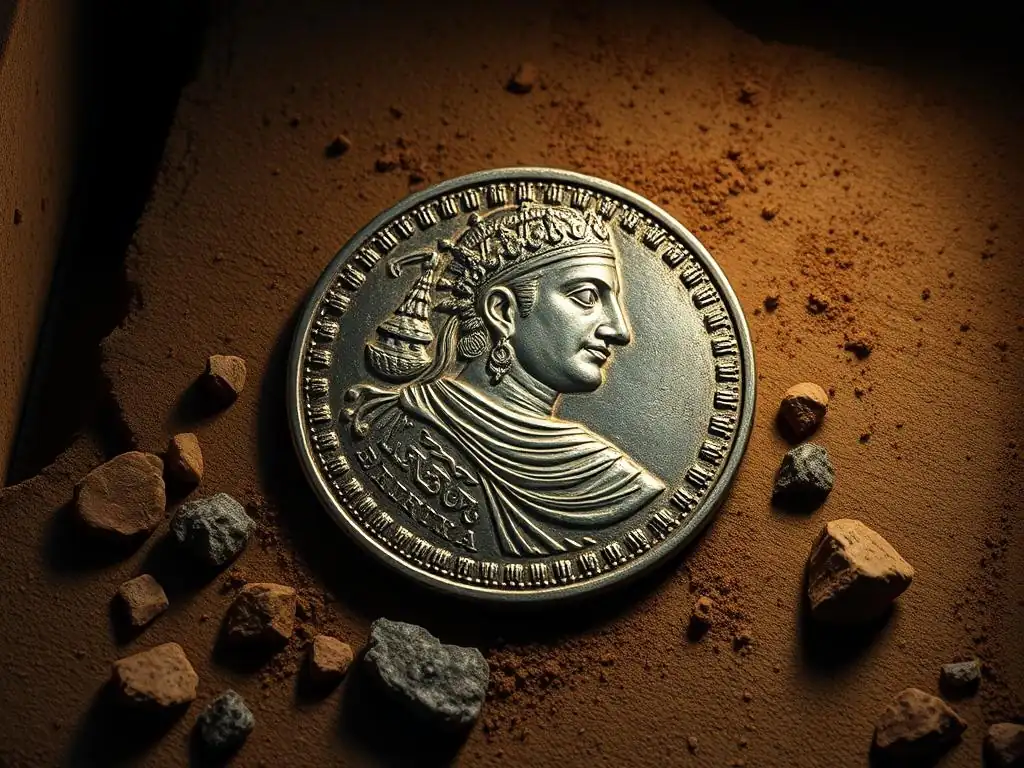
Kushan Currency as a Medium of Exchange: Standardization and Value
Kushan coinage played a pivotal role in facilitating economic activity across their vast empire and beyond. The Kushans issued a diverse range of coins, including impressive gold dinars, various copper denominations, and occasional silver issues. The gold coinage, particularly under emperors like Vima Kadphises, Kanishka I, and Huvishka, was renowned for its high purity, often mirroring the weight standards of the Roman aureus. This standardization and consistent quality made Kushan currency widely accepted in international trade.
The widespread circulation of these coins simplified commercial transactions, moving beyond the complexities of barter and enabling more efficient long-distance trade. The iconography on Kushan coins often reflected their syncretic culture, featuring a pantheon of Greek, Iranian, and Indian deities, which further underscored their role as a bridge between diverse cultural spheres and their deep connection to the Kushan trade route history.
Evidence of Trade in Kushan Coinage: Distribution and Usage
Archaeological discoveries provide compelling evidence of the extensive reach and usage of Kushan coinage in trade. Hoards of Kushan coins have been unearthed far beyond the empire's political borders, in regions of Central Asia, Iran, and even in parts of the Roman Empire, indicating their active role in international commerce. Conversely, a significant number of Roman gold coins (aurei) have been found in Kushan archaeological sites, particularly in hoard contexts.
This reciprocal presence of coinage vividly illustrates the active and integrated nature of the Kushan economy within the broader Eurasian trade network. The prevalence of Roman aurei in Kushan territories suggests a trade imbalance where the demand for Eastern luxury goods, such as silk and spices, was so high in the Roman Empire that it led to a substantial outflow of Roman currency to pay for them, often accumulating within the Kushan domain due to their central mediating role.
The Kushan Empire's Role in Promoting East-West Connectivity
The Kushan Influence on Trade Infrastructure: Roads, Caravanserais, and Security
The Kushan Empire actively invested in and maintained the vital infrastructure necessary for efficient long-distance trade. This included the upkeep of existing roads and the construction of new ones, ensuring smoother passage for merchant caravans. Crucially, they established and maintained a network of caravanserais – roadside inns or rest stops – along arid and mountainous stretches. These facilities provided shelter, water, and provisions for merchants and their animals, significantly reducing the perils and travel time associated with crossing vast distances.
The provision of reliable wells and watering holes in desolate areas was also a critical aspect of their infrastructure development. These improvements made long-distance trade more efficient, safer, and ultimately more profitable for all involved. The stability and organized infrastructure provided by Kushan rule were major factors in the flourishing of the Silk Road during their peak, a testament to their proactive engagement with Kushan trade route history.
Protecting Trade Routes: Kushan Military Presence and Diplomacy
To ensure the uninterrupted flow of goods and the safety of merchants, the Kushan Empire deployed military garrisons strategically along key segments of the trade routes. These forces were particularly concentrated in vulnerable mountain passes, desert fringes, and areas prone to banditry or tribal incursions. Their presence provided a crucial deterrent against robbers and ensured a level of security that was highly attractive to traders.
Beyond military might, the Kushans also engaged in sophisticated diplomacy with neighboring states, including the formidable Han Dynasty in China and the Parthian Empire (and later the Sasanian Empire) in Persia. These diplomatic efforts aimed to resolve trade disputes, negotiate passage rights, and maintain peaceful relations that were conducive to commerce. This combination of military protection and diplomatic acumen was fundamental to the longevity and prosperity of the Kushan trade network, solidifying their legacy in Kushan trade route history.
Challenges to Kushan Trade Route Control: Competition and Conflict
Internal Strife and External Threats: Impact on Trade Stability
Towards the later period of the Kushan Empire, roughly from the mid-3rd century CE onwards, internal dynastic struggles and the emergence of powerful regional factions began to erode the central authority. This fragmentation led to a decline in unified control over the vast trade network, resulting in increased insecurity along the routes. Localized conflicts and independent warlords posed new threats to merchant caravans, making long-distance trade more perilous and costly.
Concurrently, the empire faced significant external threats that further destabilized their control over trade. The rise of the formidable Sasanian Empire in Persia, which gradually absorbed the western territories of the Kushan Empire, disrupted crucial western trade links. Furthermore, nomadic incursions from the north, particularly from groups like the Kidarites and later the Hephthalites, severely impacted the Central Asian segments of the Silk Road, leading to diversions of routes or outright cessation of trade in certain areas.
The Decline of the Kushan Empire and its Effect on Trade Networks
The gradual weakening and eventual decline of the Kushan central authority had a profound and detrimental effect on the extensive trade networks they once so effectively managed. As imperial power waned, the Kushans' ability to protect and maintain the vast trade infrastructure—including roads, caravanserais, and military garrisons—diminished significantly. This led to a marked decrease in the volume of goods traded and a shift in some traditional routes as merchants sought safer, albeit often less direct, alternatives.
While trade across Eurasia did not cease entirely with the fall of the Kushans, the golden age of seamless and highly organized East-West exchange under their patronage came to an end. The fragmentation of the empire resulted in a more localized and less secure trade environment, where multiple smaller powers often controlled segments of the routes, leading to increased tolls and reduced efficiency. This period marks a significant turning point in Kushan trade route history, signaling the end of an era of unified control.
Archaeological Evidence of Kushan Trade: Discoveries and Insights
Artifacts Uncovered Along Kushan Trade Routes: Material Culture and Trade Goods
Archaeological excavations along the historical Kushan trade routes have yielded a wealth of artifacts that provide tangible proof of the empire's extensive commercial connections. Perhaps the most celebrated discovery is the "Begram Hoard" (from Kapisa, Afghanistan), unearthed from a sealed room, which contained an astonishing array of goods from across the ancient world. This includes exquisite Roman bronze statuettes, Hellenistic plaster medallions, Syrian glass, and Indian ivory carvings, all found together.
Similarly, fragments of Chinese silk have been identified in various Kushan-era sites, confirming the eastward flow of this prized commodity. While organic materials like spices rarely survive, the presence of pottery, coinage, and other durable goods from distant lands in Kushan cities like Taxila and Mathura unequivocally demonstrates the vast network of exchange. These material culture remains are invaluable for reconstructing the intricate patterns of Kushan trade route history.
Archaeological Sites as Windows into Kushan Trade Practices: Excavation Reports and Analyses
Beyond individual artifacts, archaeological sites themselves serve as critical windows into Kushan trade practices and the economic life of the empire. Sites like Begram, with its extraordinary assemblage of international goods, offer a snapshot of the diversity and volume of traded items. Systematic excavations at major urban centers such as Taxila, Purushapura (Peshawar), and Mathura reveal not only residential and administrative structures but also evidence of workshops, market areas, and storage facilities, indicating bustling commercial activity.
Furthermore, the study of Kushan coinage (numismatics), combined with epigraphic evidence (inscriptions on artifacts and monuments) and ancient textual accounts, allows scholars to reconstruct the complex economic dynamics of the Kushan Empire. Detailed analysis of archaeological reports from these sites provides crucial insights into the routes taken, the types of goods exchanged, and the cultural interactions fostered by the extensive Kushan trade network, enriching our understanding of Kushan trade route history.
Conclusion: The Lasting Legacy of Kushan Trade Route History
The Kushan Empire's Contribution to Global Trade Networks
The Kushan Empire's contribution to global trade networks was undeniably profound and enduring. By establishing and maintaining a vast and relatively secure empire at the crossroads of Eurasia, they provided a pivotal period of stability and organized infrastructure that allowed the Silk Road to flourish as never before. This facilitated an unprecedented exchange of goods, ideas, technologies, and cultures between the Roman world, Parthia, India, and China.
Their strategic control over key segments of these routes significantly influenced the economic prosperity and cultural development of not only their own empire but also distant civilizations that benefited from the flow of commodities and knowledge. The Kushans effectively served as a central conduit, enabling the interconnectedness of ancient societies on a scale that left an indelible mark on the course of Eurasian history. Their legacy is deeply intertwined with the very fabric of ancient global trade.
Lessons from Kushan Trade for Understanding Ancient Economies
Studying the Kushan trade route history offers invaluable lessons for understanding the mechanisms and complexities of ancient long-distance commerce. The Kushan example powerfully demonstrates the critical importance of political stability, a standardized and widely accepted currency, robust infrastructure (like well-maintained roads and caravanserais), and effective security measures in facilitating and sustaining large-scale trade. Without these elements, the risks and costs of commerce would have been prohibitive.
Moreover, the Kushan experience highlights the inseparable link between economic interactions and cultural diffusion. Their trade routes were not merely conduits for material wealth but also vibrant arteries for the spread of religious beliefs, artistic styles, and technological knowledge. Understanding this period is vital for comprehending the broader tapestry of ancient Eurasian economies and recognizing that trade was a multifaceted force that shaped societies, fostered innovation, and interconnected the ancient world in ways that continue to resonate today.
Frequently Asked Questions
How did the Kushan Empire contribute to the development of trade routes?
The Kushan Empire played a crucial role in facilitating East-West exchange by controlling and developing key sections of the Silk Road. Their strategic geographic location allowed them to connect diverse regions and cultures.
What were the primary goods traded along the Kushan trade routes?
Goods traded included silk, spices, precious stones, and textiles from the East, alongside horses, glassware, and wine from the West. This facilitated economic prosperity for the Kushan Empire.
Which geographic regions were most significantly impacted by Kushan trade route activities?
Central Asia, India, and regions connecting to the Mediterranean were significantly impacted. The Kushan Empire served as a cultural and economic bridge between these disparate areas.
How did the Kushan Empire maintain control and security over their trade routes?
The Kushans maintained control through military strength, strategic alliances, and the establishment of trading posts and infrastructure. This ensured the safe passage of goods and merchants.
What is the long-term historical significance of the Kushan trade route history?
The Kushan trade routes fostered cultural exchange and diffusion of ideas, impacting art, religion, and technology. Their legacy continues to influence our understanding of ancient trade networks.
Final Reflection: Echoes of the Kushan Silk Road
The intricate network of trade routes meticulously detailed throughout this article, once vital arteries of the Kushan Empire, are not merely relics of the past. They resonate profoundly today, reminding us that global interconnectedness and cultural exchange are not modern inventions, but deeply rooted aspects of human civilization. The Kushan trade route history, therefore, offers invaluable lessons about the enduring power of commerce to shape societies and foster mutual understanding across vast distances.
The legacy of the Kushan Empire, and its mastery of trade, continues to subtly influence our world. Understanding how they navigated complex political landscapes and facilitated the movement of goods and ideas is crucial for appreciating the long and often turbulent history of globalization. As the saying goes, Those who cannot remember the past are condemned to repeat it.
By studying the Kushan trade route history, we gain a deeper understanding of the challenges and opportunities inherent in building a more interconnected and prosperous future.
Now, take a moment to consider the lessons gleaned from the Kushan Empire's success. How can we, in our own lives and communities, foster the kind of open exchange and mutual respect that allowed the Kushan trade routes to flourish? Let us strive to build bridges, not walls, and to embrace the richness and diversity that comes from connecting with others across cultural and geographical boundaries. The spirit of the Kushan Silk Road, a spirit of collaboration and shared prosperity, can and should inspire us all.
Unearth Your Inner Explorer: Chart Your Course Through History!
Thank you for delving into the fascinating world of Kushan trade routes. We hope you’ve gained a new appreciation for the intricate networks that connected East and West. Now, it's time to translate that knowledge into action!
Here are a few ways to continue your exploration:
- Delve deeper: Research a specific Kushan trading city or artifact that piqued your interest. Uncover even more about their rich history.
- Share your newfound knowledge: Discuss the impact of Kushan trade on cultural exchange with friends or family, and inspire them to explore this era.
- Consider visiting a local museum with relevant collections: Sometimes seeing these amazing artifacts in person is the best way to truly understand the magnitude of their impact.
What single Kushan trade good do you believe had the most significant impact on the regions it touched, and why? Let's discuss in the comments!