
AngloSaxon Kingdoms: Settlement Patterns, Burials, and Material Culture

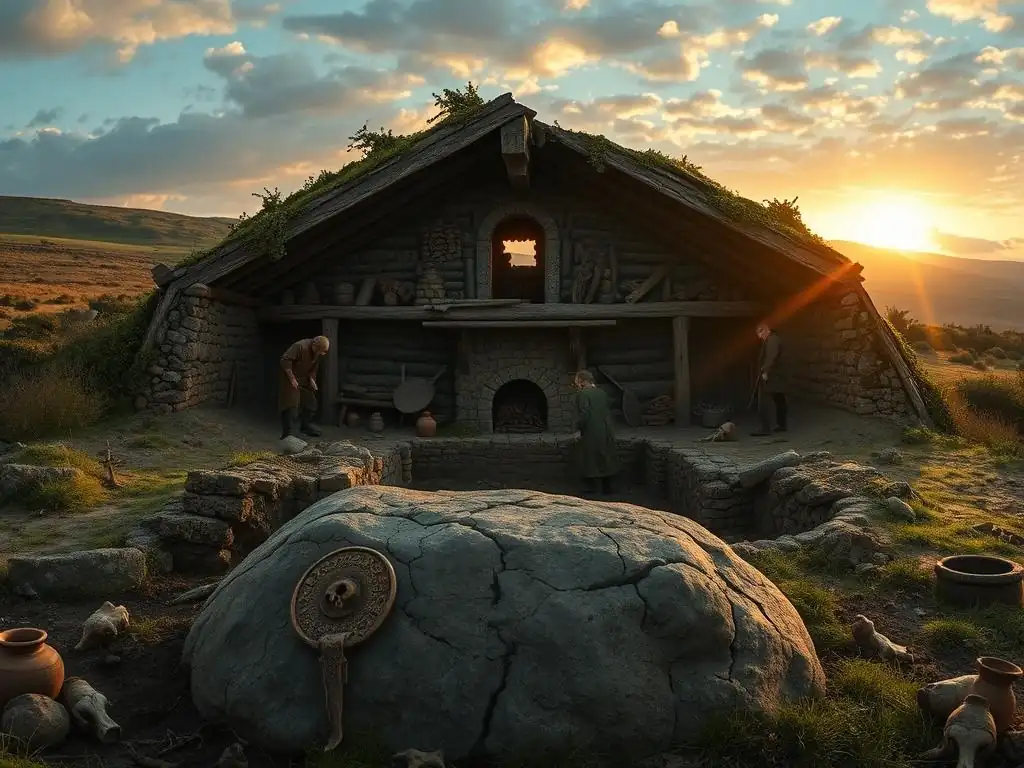
Welcome to ArchaeologyHub.org, your gateway to unraveling the mysteries of the past. Ever wondered how AngloSaxon settlement patterns burial rituals reveal the intricate social structures of early England? Dive into our comprehensive analysis of AngloSaxon Kingdoms, exploring their distinctive burial practices and how these insights illuminate the distribution of power and influence across the landscape. Prepare to embark on a journey through time, uncovering the secrets buried beneath our feet.
- Introduction to Anglo-Saxon Archaeology
- Anglo-Saxon Settlement Patterns in Early England
- Anglo-Saxon Burial Practices: A Window into Beliefs
-
Frequently Asked Questions
- What were the common types of Anglo-Saxon settlements?
- How did burial practices reflect social status in Anglo-Saxon society?
- What can archaeological evidence tell us about Anglo-Saxon settlement patterns?
- What role did rivers and geography play in Anglo-Saxon settlement locations?
- How does Anglo-Saxon material culture help us understand their beliefs and daily lives?
- Final Reflection: Echoes of Anglo-Saxon Lives
- Unearth Your Inner Anglo-Saxon Explorer!
Introduction to Anglo-Saxon Archaeology
The Anglo-Saxon Period: An Overview
The Anglo-Saxon period in Britain spans roughly from the mid-5th century AD to the Norman Conquest in 1066. This era commenced with the arrival of Germanic-speaking peoples—Angles, Saxons, and Jutes—from continental Europe, following the decline of Roman rule. These groups gradually established distinct kingdoms across what would become England, a process often referred to as the Heptarchy, encompassing powerful realms such as Northumbria, Mercia, Wessex, East Anglia, Essex, Sussex, and Kent. This period witnessed profound transformations in the political, social, and cultural landscape of Britain, laying many of the foundations for the later English identity.
Archaeological investigation of the Anglo-Saxon period is crucial for understanding this formative era, especially given the scarcity and often biased nature of contemporary written records. Extensive excavations across the United Kingdom have revealed significant insights into early Anglo-Saxon settlement patterns, their evolving social structures, and the daily lives of their inhabitants. The study of Anglo-Saxon material culture, from pottery shards to elaborate metalwork, provides tangible evidence of their craftsmanship, trade networks, and artistic expressions.
Understanding Anglo-Saxon Material Culture and Society
Archaeology serves as the primary lens through which modern scholars can reconstruct the complex tapestry of Anglo-Saxon society. Unlike later periods with abundant written documentation, much of our knowledge about early Anglo-Saxon life, customs, and beliefs is derived directly from the physical remains they left behind. These include the architectural layouts of their homes and villages, the tools and ornaments they used, the pottery they crafted, and critically, their diverse burial practices. The meticulous examination of these material remains allows researchers to infer social hierarchies, economic systems, religious beliefs, and even aspects of their diet and health.
The analysis of Anglo-Saxon material culture is particularly vital for understanding how communities were organized, how resources were managed, and how identity was expressed. For instance, variations in grave goods within an Anglo-Saxon burial context can indicate differences in status, wealth, or even gender roles. Similarly, the study of Anglo-Saxon settlement patterns burial practices offers unparalleled insights into their worldview, their relationship with the deceased, and the gradual adoption of Christianity over pagan traditions. This holistic archaeological approach provides a nuanced and detailed picture of a society undergoing significant transformation.
Anglo-Saxon Settlement Patterns in Early England

Rural Settlements: Farms, Villages, and Hamlets
Early Anglo-Saxon settlement patterns were predominantly rural, characterized by scattered farmsteads, hamlets, and small villages. These settlements typically consisted of a cluster of timber buildings, often including sunken-featured buildings (SFBs or Grubenhäuser), which were small structures with a sunken floor, likely used for storage or crafts, alongside larger post-built halls.
Examples like the extensively excavated site of West Stow in Suffolk, occupied from the 5th to 7th centuries AD, demonstrate this typical layout, revealing around 60 SFBs and several larger halls, housing an estimated population of 100-150 people at its peak. These rural sites were largely self-sufficient, relying on mixed agriculture, including cereal cultivation (barley, wheat, oats) and animal husbandry (cattle, sheep, pigs).
The distribution of these early rural settlements often correlates with fertile lowlands and river valleys, providing access to water, arable land, and grazing pastures. Archaeological evidence suggests a degree of mobility in these early settlement patterns, with communities occasionally shifting their precise locations over generations within a broader territory, possibly due to soil exhaustion or changes in land ownership.
The study of these dispersed Anglo-Saxon settlement patterns burial sites, often found adjacent to or within these rural communities, offers crucial insights into the daily lives, economic activities, and social organization of the vast majority of the Anglo-Saxon population, who lived outside any developing urban centers.
Urban Centers: Development of Anglo-Saxon Towns
While early Anglo-Saxon England was largely rural, the later Anglo-Saxon period, particularly from the 8th and 9th centuries onwards, saw the gradual emergence and development of proto-urban and urban centers, often referred to as wic sites or burhs. Wics were typically coastal or riverine trading settlements, such as Hamwic (modern Southampton) and Lundenwic (modern London), which flourished as centers for international trade, evidenced by the discovery of imported pottery, coinage, and luxury goods.
Hamwic, for example, covered an area of approximately 40 hectares and had a structured street plan, suggesting a degree of centralized planning and a more specialized economy than rural sites.
The burhs, fortified towns established by Alfred the Great in the late 9th century as a defense against Viking incursions, represented a significant shift in Anglo-Saxon settlement patterns. These planned towns, like Winchester and Wareham, were strategically located and enclosed by formidable earthworks and walls, serving not only military purposes but also as administrative, economic, and minting centers.
The establishment of these burhs led to a greater concentration of population and resources, fostering craft specialization and market development. Excavations within these Anglo-Saxon urban centers reveal a different scale of activity and a more complex social stratification compared to their rural counterparts, with evidence of workshops, elaborate churches, and diverse material culture.
Evidence from Archaeological Excavations: West Stow Anglo-Saxon Village
The archaeological site of West Stow in Suffolk stands as one of the most thoroughly excavated and interpreted early Anglo-Saxon villages in England, providing unparalleled insights into Anglo-Saxon settlement patterns and daily life. Excavated extensively between 1965 and 1972, the site revealed the remains of 69 sunken-featured buildings (SFBs), seven post-hole halls, and a number of other features, indicating continuous occupation from the mid-5th to the early 7th century AD. The meticulous excavation uncovered vast quantities of artifacts, including pottery, bone tools, glass beads, and metalwork, allowing archaeologists to reconstruct aspects of their economy, craft production, and diet.
The layout of West Stow, with its cluster of SFBs around larger communal halls, offers a clear example of a typical early Anglo-Saxon rural settlement. The analysis of the post-holes and floor plans allowed for the reconstruction of these timber buildings, providing a tangible sense of the domestic environment.
Furthermore, the presence of specific craft tools and waste materials, such as spindle whorls for textile production or bone combs, illustrates the self-sufficient nature of these communities. The comprehensive data from West Stow has been instrumental in shaping our understanding of Anglo-Saxon settlement patterns, serving as a benchmark for interpreting other, less completely excavated sites across England.
Analyzing Settlement Distribution: Landscape and Resource Use
The analysis of Anglo-Saxon settlement patterns often involves a close examination of their distribution across the landscape, which reveals much about their strategic choices regarding resource exploitation and defensive needs. Early Anglo-Saxon communities frequently settled on well-drained gravel terraces near rivers, providing access to water for drinking and irrigation, fertile alluvial soils for agriculture, and natural routes for communication and trade. For example, many early settlements in the Thames Valley and along the Fens show this preference for accessible, productive land. This strategic placement optimized their mixed farming economy, allowing for both arable cultivation and pastoralism.
Beyond basic subsistence, the distribution of Anglo-Saxon settlement patterns also reflects their engagement with broader economic and social networks. The emergence of wic sites, for instance, highlights the importance of coastal and riverine locations for trade, connecting England with continental Europe.
Later, the strategic placement of Alfred's burhs demonstrates a shift towards centralized defense and administration, with many located at natural strong points or commanding river crossings. The consistent presence of Anglo-Saxon burial sites in close proximity to or within these settlements further emphasizes the deep connection between the living and the dead within their chosen landscapes, integrating their spiritual beliefs with their practical use of the land.
Anglo-Saxon Burial Practices: A Window into Beliefs
Early Anglo-Saxon Burial Rites: Pagan Practices
Early Anglo-Saxon burial rites, predominantly practiced from the 5th to the 7th centuries AD, were deeply rooted in pagan beliefs and varied significantly across different regions and social strata. The most common forms were inhumation (burial of the body) and cremation, often within cemeteries located near settlements, though isolated or prominent burials also occurred. These practices were not mutually exclusive; some cemeteries show evidence of both.
Grave goods were a prominent feature, reflecting the deceased's social status, gender, and perhaps their journey into the afterlife. For instance, male burials often contained weaponry like spears, shields, and occasionally swords, while female burials commonly included elaborate jewelry such as brooches, beads, and pendants, alongside domestic items like keys or work tools.
Notable examples of early Anglo-Saxon burial sites include the sprawling cemetery at Spong Hill in Norfolk, which yielded over 2,000 cremation burials, often placed in distinctive hand-made pottery urns, providing a rich dataset for ceramic typology and regional variations in funerary customs. In contrast, sites like Snape Common and Butler's Field at Lechlade offer insights into inhumation practices, where bodies were interred in graves, sometimes accompanied by a diverse array of grave goods.
These early Anglo-Saxon burial practices provide invaluable archaeological evidence for understanding the complex social structures, material culture, and spiritual beliefs of a pre-Christian society, before the widespread conversion to Christianity began to influence funerary traditions.
Christian Influences on Anglo-Saxon Funerary Customs
The conversion of the Anglo-Saxon kingdoms to Christianity, which began in earnest from the late 6th century onwards, profoundly impacted their burial practices. As Christianity spread, traditional pagan grave goods gradually diminished, and the orientation of graves shifted to an east-west axis, with the head typically to the west, awaiting the Second Coming. Cemeteries increasingly became associated with churches and monastic institutions, moving away from the earlier, often isolated, pagan burial grounds. This shift signifies a fundamental change in eschatological beliefs, emphasizing resurrection and a communal spiritual identity over individual displays of status through grave goods.
While the disappearance of grave goods was a general trend, it was not immediate or absolute; some Christian burials, particularly in the transitional period, still included modest personal items like buckles or knives, especially in peripheral regions or among the newly converted. The development of stone monuments and grave markers, though rare in the early Christian period, also became more common, reflecting a different form of commemoration.
The study of these evolving Anglo-Saxon burial patterns, from richly furnished pagan graves to simpler Christian interments, offers a unique archaeological window into the religious transformation of England and the complex interplay between traditional beliefs and the new Christian doctrine.
The presence and composition of grave goods within Anglo-Saxon burial contexts are crucial for interpreting social status, wealth, and identity in a society with limited written records. Wealthier individuals, particularly during the pagan period (5th-7th centuries AD), were often interred with a rich array of artifacts, including elaborate jewelry, high-quality weaponry, imported pottery, and sometimes even evidence of feasting or ritual practices. For example, the discovery of a gold-and-garnet sword pommel or a intricate brooch in an Anglo-Saxon burial signals high social standing, indicating access to skilled craftsmen and valuable materials.
Conversely, the burials of less affluent individuals might contain only a few utilitarian items, or sometimes no grave goods at all, reflecting their lower economic status. The types of grave goods also provide insights into gender roles: males were frequently buried with weapons (spears, shields, swords), while females were often accompanied by textile tools (spindle whorls, needles), domestic items, and a greater variety of personal adornments.
The unparalleled riches of the Sutton Hoo ship burial, for instance, with its gold and garnet regalia, Byzantine silver, and an ornate helmet, unequivocally point to the burial of an individual of immense power and prestige, likely a king, offering a direct link to the highest echelons of Anglo-Saxon society.
Cremation vs. Inhumation: Regional and Temporal Variations
The choice between cremation and inhumation in Anglo-Saxon burial practices was not uniform across all regions or throughout the entire period, reflecting diverse cultural traditions and evolving beliefs. Early Anglo-Saxon cemeteries often exhibit a mixture of both practices, although one might dominate in specific areas. For instance, cremation was particularly prevalent in eastern England, notably at sites like Spong Hill in Norfolk, where thousands of cremation urns have been discovered dating from the 5th to 7th centuries AD. These urns, often decorated with stamps and bosses, provide valuable evidence for regional pottery styles and artistic expression.
In contrast, inhumation became the more dominant practice in southern and western Anglo-Saxon kingdoms, even in the early pagan period, as seen at sites like Finglesham in Kent or Wasperton in Warwickshire. By the 7th century, with the spread of Christianity, inhumation became almost universally adopted across Anglo-Saxon England, and cremation largely ceased.
This shift illustrates a clear temporal progression, where religious conversion led to a standardization of funerary rites. The careful archaeological distinction between cremation and inhumation Anglo-Saxon burial sites, alongside the analysis of their associated grave goods, allows scholars to trace the complex interplay of cultural heritage, migration patterns, and religious transformation across the Anglo-Saxon landscape.
Frequently Asked Questions
What were the common types of Anglo-Saxon settlements?
Anglo-Saxon settlements typically ranged from small farming villages to larger, more fortified burghs. These settlements were strategically located near resources like rivers and fertile land.
Burial practices varied greatly, reflecting social hierarchy. High-status individuals were often buried with elaborate grave goods, while commoners had simpler burials.
What can archaeological evidence tell us about Anglo-Saxon settlement patterns?
Archaeological finds, such as building foundations and artifacts, provide crucial insights. They help us understand the size, layout, and organization of Anglo-Saxon settlements.
What role did rivers and geography play in Anglo-Saxon settlement locations?
Rivers were vital for transportation, trade, and water supply, making them prime settlement locations. Fertile valleys and coastal regions also attracted Anglo-Saxon settlers.
How does Anglo-Saxon material culture help us understand their beliefs and daily lives?
Material culture, including tools, weapons, and jewelry, offers a window into Anglo-Saxon life. The designs and materials used reveal their skills, beliefs, and trading connections.
Final Reflection: Echoes of Anglo-Saxon Lives
The exploration of Anglo-Saxon settlement patterns, burial practices, and material culture reveals more than just historical data; it unveils a profound connection to the enduring human quest for belonging and meaning. These remnants of the past, meticulously unearthed and analyzed, offer a tangible link to the lives of those who shaped the very foundations of England, reminding us that our present is inextricably tied to their past.
The impact of the Anglo-Saxons extends far beyond the textbooks. Their influence is woven into the fabric of our language, our legal systems, and even our understanding of community. Their burial rituals, reflecting beliefs about the afterlife and social hierarchy, continue to fascinate and inform our understanding of human spirituality. We are not the first who dreamed of being remembered.
This quote, though not specifically Anglo-Saxon, encapsulates the universal desire for legacy, a desire powerfully manifested in the careful placement of grave goods and the construction of elaborate burial mounds.
As we delve into the lives of these early settlers, let us consider the lessons they offer. What do their settlement patterns reveal about their relationship with the land? What do their burial practices tell us about their values? And how can their material culture inspire us to create a more meaningful and sustainable future? Let us carry forward the echoes of their lives, striving to build communities rooted in respect, understanding, and a deep appreciation for the interconnectedness of past, present, and future.
Unearth Your Inner Anglo-Saxon Explorer!
Thank you for delving into the fascinating world of Anglo-Saxon kingdoms! We hope you’ve gained a deeper appreciation for their settlements, burial rituals, and material culture. Now, let's bring that knowledge to life:
- Visit a local museum with an Anglo-Saxon exhibit and see artifacts firsthand. Notice the details you learned about – can you identify any specific settlement patterns or burial traditions represented?
- Share your favourite fact from this article with a friend or on social media to spark their interest in early medieval history.
- Research a lesser-known Anglo-Saxon kingdom or figure and discover something new about their unique story.
What surprising detail about Anglo-Saxon life will you be sharing first?