
Fort Ancient Culture: MississippianInfluenced Societies in the Ohio River Valley

Welcome to ArchaeologyHub.org, your portal to unlocking the secrets of the past.
Delve into the fascinating world of ancient civilizations, where every artifact whispers a story waiting to be unearthed. Are you ready to unravel the complexities of the Fort Ancient culture? Our in-depth timeline analysis promises a journey through Mississippian-influenced societies in the Ohio River Valley, revealing connections and offering fresh perspectives. Start exploring now and discover the intricate tapestry of this captivating archaeological site!
- Introduction to Fort Ancient Culture
- Fort Ancient Origins and Cultural Influences
- Fort Ancient Culture Timeline Analysis: A Chronological Overview
- Fort Ancient Sites and Settlement Patterns
- Fort Ancient Material Culture: Artifacts and Technologies
- Fort Ancient Subsistence and Agriculture
- Fort Ancient Social and Political Organization
- Fort Ancient Culture Decline and Legacy
- Fort Ancient Culture Timeline Analysis: A Synthesis
-
Frequently Asked Questions
- ### What is the Fort Ancient culture, and where did it flourish?
- ### What are some defining characteristics of Fort Ancient culture sites?
- ### How does the Fort Ancient culture relate to the larger Mississippian culture?
- ### What is the significance of "Fort Ancient culture timeline analysis" in archaeological research?
- ### What happened to the Fort Ancient culture?
- Final Reflection: Echoes of the Past, Seeds for the Future
- Unearth Your Inner Archaeologist!
Introduction to Fort Ancient Culture
Overview of Fort Ancient Culture in the Ohio River Valley
The Fort Ancient culture represents a significant pre-Columbian archaeological tradition that flourished in the Ohio River Valley from approximately AD 1000 to AD 1750. This cultural complex is distinct from, yet influenced by, the broader Mississippian tradition found further to the west and south.
Spanning parts of present-day Ohio, Kentucky, Indiana, and West Virginia, Fort Ancient societies were characterized by settled agricultural villages, sophisticated pottery traditions, and a complex social organization that adapted to the rich riverine environments. Their presence marks a pivotal period in the region's prehistory, showcasing a transition from earlier Late Woodland lifeways to more intensive agricultural practices and increasingly sedentary communities.
Archaeological investigations have revealed that Fort Ancient peoples were expert farmers, heavily reliant on maize cultivation, which allowed for larger, more permanent settlements compared to their predecessors. These communities often consisted of circular or oval village layouts with central plazas, reflecting a structured social order. The study of the Fort Ancient culture timeline analysis provides crucial insights into how these societies evolved, adapted to environmental changes, and interacted with neighboring groups, including those of the Mississippian sphere, before the profound impacts of European contact.
Fort Ancient Culture Timeline: Key Periods and Developments
The Fort Ancient culture timeline analysis is typically divided into three broad periods: Early Fort Ancient (AD 1000-1200), Middle Fort Ancient (AD 1200-1400), and Late Fort Ancient (AD 1400-1750). Each period is marked by distinct changes in settlement patterns, material culture, and subsistence strategies, reflecting dynamic cultural shifts and adaptations. The early phase saw the emergence of settled villages and the increasing importance of maize, laying the groundwork for more complex societal structures.
As the Fort Ancient culture timeline progresses into the middle period, there is evidence of larger, more densely populated villages and a greater elaboration of material culture, including specific pottery styles and symbolic artifacts. The late period, extending into the protohistoric era, shows signs of population aggregation, increased defensive features in settlements, and eventual interaction with European trade goods, though direct contact was often indirect. A detailed Fort Ancient culture timeline analysis helps archaeologists understand the trajectories of cultural development and decline within this fascinating prehistoric tradition.
Archaeological Research: Understanding Fort Ancient Sites
Archaeological research has been instrumental in piecing together the narrative of the Fort Ancient culture. Early investigations, such as those by Warren K. Moorehead at Fort Ancient itself in the late 19th century, focused on the impressive earthworks and mounds, initially misattributed to a lost race of "mound builders."
However, systematic excavations beginning in the mid-20th century, notably at sites like SunWatch Village near Dayton, Ohio, and the Madisonville site in Ohio, have provided a much clearer picture of daily life, subsistence, and social organization. These projects have employed advanced techniques, including radiocarbon dating, remote sensing, and paleoethnobotany, to reconstruct the Fort Ancient culture timeline with greater precision.
Significant findings from these archaeological endeavors include vast quantities of shell-tempered pottery, bone and shell tools, effigy pipes, and evidence of extensive maize fields. The recovery of skeletal remains has also provided data on health, diet, and population dynamics. Ongoing research continues to refine our understanding of the Fort Ancient culture timeline analysis, exploring nuances in regional variations, inter-site relationships, and the ultimate fate of these societies.
Fort Ancient Origins and Cultural Influences
Tracing the Ancestry of Fort Ancient Peoples
The origins of the Fort Ancient culture are rooted in the preceding Late Woodland period (circa AD 500-1000) in the Ohio River Valley. Archaeological evidence suggests a gradual, in-situ development rather than a sudden migration of new populations into the region. Late Woodland groups were semi-sedentary, practicing limited horticulture alongside hunting and gathering. Over time, these groups began to adopt more intensive maize agriculture, a key defining characteristic of the Fort Ancient tradition. This transition involved shifts in technology, settlement patterns, and social organization, laying the groundwork for the distinct Fort Ancient way of life.
Specific Late Woodland cultural complexes, such as the Newtown phase in southwestern Ohio and northern Kentucky, are often cited as direct antecedents. These groups experimented with early forms of maize cultivation and began forming larger, more stable residential sites. The Fort Ancient culture timeline analysis indicates a clear evolutionary trajectory from these Late Woodland foundations, with increasing population densities and the elaboration of cultural traits that differentiate them from their ancestors.
The Influence of Mississippian Culture on Fort Ancient Societies
While Fort Ancient culture developed locally, it was significantly influenced by the broader Mississippian cultural tradition, which originated in the American Bottom region (e.g., Cahokia) and spread across the southeastern United States. This influence is primarily evident in the adoption of large-scale maize agriculture, shell-tempered pottery, and certain aspects of iconography and social organization. Mississippian ideas and goods likely diffused into the Ohio River Valley through trade networks and cultural exchange, rather than through direct conquest or large-scale migration.
For example, the widespread use of shell tempering in Fort Ancient pottery, which involves crushing mussel shells and incorporating them into clay, is a hallmark shared with Mississippian pottery. Similarly, the increasing reliance on maize, beans, and squash, forming the "three sisters" agricultural complex, mirrors Mississippian subsistence strategies. However, Fort Ancient societies integrated these influences in their own unique ways, adapting them to their specific environmental and cultural contexts, as revealed by a comprehensive Fort Ancient culture timeline analysis.
Distinguishing Fort Ancient from Mississippian Culture: Key Differences
Despite Mississippian influences, Fort Ancient culture maintained distinct characteristics that differentiate it from its southern counterparts. A primary distinction lies in the absence of massive, planned urban centers with monumental platform mounds, like those seen at Cahokia or Moundville. While Fort Ancient sites often feature mounds, they are typically smaller, conical burial mounds or low earthworks, not the large, flat-topped ceremonial platforms characteristic of core Mississippian sites. Fort Ancient villages, though substantial, rarely reached the population densities or hierarchical complexity of major Mississippian polities.
Furthermore, specific pottery styles, effigy types, and burial practices also vary. For instance, while both cultures used shell-tempered pottery, Fort Ancient vessels often have distinct rim forms, handles, and decorative motifs, such as the "collared" or "appliquéd" rims found on Madisonville Cordmarked pottery. The Fort Ancient culture timeline analysis highlights these unique trajectories, demonstrating that Fort Ancient peoples were not simply a northern extension of Mississippian culture, but a vibrant and independent cultural tradition with its own unique adaptations and developments.
Fort Ancient Culture Timeline Analysis: A Chronological Overview
Early Fort Ancient Period: AD 1000-1200 and Characteristics
The Early Fort Ancient period, spanning approximately AD 1000 to AD 1200, marks the formative stage of the culture. During this time, Late Woodland groups in the Ohio River Valley began to transition to more sedentary lifestyles, fueled by the increasing importance of maize cultivation. Villages were typically smaller, often containing a few dozen structures, and were sometimes located on terraces overlooking rivers. Subsistence was a mix of intensive agriculture, particularly maize, supplemented by hunting deer, turkey, and small game, and gathering wild plants like nuts and berries.
Material culture during this phase includes shell-tempered pottery, though it may be less elaborate than later forms. Burial practices often involved flexed burials in shallow pits within or near habitation areas. Sites like Baum and Anderson are representative of this early phase. A Fort Ancient culture timeline analysis of this period reveals the foundational shifts in economy and settlement that would define the subsequent development of the culture.
Middle Fort Ancient Period: AD 1200-1400 and Cultural Shifts
The Middle Fort Ancient period, from approximately AD 1200 to AD 1400, represents a period of significant cultural florescence and expansion. Villages grew larger, more densely populated, and often adopted a characteristic circular or oval layout with a central plaza. Defensive features, such as palisades and ditches, began to appear at some sites, suggesting increased inter-group conflict or competition over resources. Maize agriculture became even more central to the diet, supporting larger populations.
Pottery during this period became more sophisticated, with a wider range of vessel forms and decorative techniques. Distinct regional variations in pottery styles, such as Feurt Incised or Fox Farm Net-Impressed, emerge, indicating localized cultural developments. Burial practices became more formalized, with some cemeteries containing dozens of burials. Sites like SunWatch Village, though continuously occupied into later periods, show significant development during this phase. This part of the Fort Ancient culture timeline analysis highlights a peak in population and cultural complexity before the onset of later challenges.
Late Fort Ancient Period: AD 1400-1750 and Societal Transformations
The Late Fort Ancient period, from approximately AD 1400 to AD 1750, saw notable societal transformations, including the aggregation of populations into fewer, larger, and often heavily fortified villages. This period extends into the protohistoric era, where indirect European contact through trade goods (e.g., glass beads, copper kettles) became increasingly evident, even before direct encounters with explorers or settlers. There is evidence of increased warfare and resource stress, possibly due to climatic changes like the Little Ice Age impacting agricultural yields, or heightened competition among groups.
Material culture reflects both continuity and change, with diagnostic pottery types such as Madisonville Cordmarked becoming prominent. Burial practices sometimes included ossuaries, suggesting changes in mortuary rituals. The Madisonville site in Ohio is a quintessential example of a large, long-occupied Late Fort Ancient village. A detailed Fort Ancient culture timeline analysis of this terminal phase reveals resilience and adaptation in the face of environmental shifts and the growing pressures from European expansion, ultimately leading to the dispersal or transformation of these societies.
Fort Ancient Sites and Settlement Patterns
Major Fort Ancient Archaeological Sites: A Regional Perspective
The Ohio River Valley is dotted with hundreds of Fort Ancient archaeological sites, each contributing to our understanding of the culture's regional diversity and chronological development. Among the most prominent are:
- SunWatch Indian Village / Archaeological Park (Ohio): A reconstructed village providing insights into daily life, architecture, and astronomical alignments of a Middle Fort Ancient settlement (circa AD 1200-1450). Excavations here have yielded exceptional preservation of wooden structures and organic remains.
- Madisonville site (Ohio): One of the largest and most extensively excavated Late Fort Ancient sites (circa AD 1400-1670), located near Cincinnati. It features a large village area with multiple occupation phases and an extensive cemetery, providing a wealth of information on material culture, diet, and burial practices.
- Feurt site (Ohio): Situated near Portsmouth, this site is known for its distinctive Feurt Incised pottery and represents an important Middle Fort Ancient occupation (circa AD 1200-1400). It highlights regional variations in ceramic styles.
- Fort Ancient (Ohio): While the impressive earthwork enclosure that gives the culture its name was primarily constructed by Hopewell peoples (circa 100 BC – AD 400), it shows evidence of later Fort Ancient occupation and use, particularly within the enclosure walls.
- Licking River sites (Kentucky): Numerous Fort Ancient sites, such as the Fox Farm site, are found along the Licking River, showcasing the culture's presence in northern Kentucky and its characteristic net-impressed pottery.
These sites, along with countless others, provide the empirical data necessary for a robust Fort Ancient culture timeline analysis, revealing patterns of settlement, interaction, and change across the landscape.
Hilltop Enclosures: Purpose and Construction Techniques
While the monumental earthworks at the site of "Fort Ancient" itself were built by the earlier Hopewell culture, some Fort Ancient groups did construct smaller, less elaborate earthworks, including palisades and ditches around their villages, particularly during the Middle and Late periods. These defensive structures suggest a need for protection, likely from inter-group conflict over resources or territory. Villages like Baum and Philo, for instance, show evidence of palisaded walls, sometimes with internal bastions.
The construction of these enclosures involved significant communal labor, requiring the felling of numerous trees for palisade posts and the excavation of ditches using stone and shell tools. The precise purpose of some smaller, circular earthworks found in association with Fort Ancient sites remains debated; they could have served defensive, ceremonial, or social functions. The appearance and evolution of these features are important markers in the Fort Ancient culture timeline analysis, reflecting changes in social organization and external pressures.
Fort Ancient village life revolved around settled agricultural practices, primarily the cultivation of maize, beans, and squash. Villages were often organized around a central plaza, which likely served as a communal space for ceremonies, social gatherings, and possibly markets. Dwellings were typically circular or oval, wattle-and-daub structures, often rebuilt over time, indicating long-term occupation. Households likely functioned as economic units, with families tending their own garden plots.
Archaeological evidence suggests a relatively egalitarian social structure compared to the more hierarchical Mississippian chiefdoms, though some level of social differentiation based on lineage or achieved status likely existed. Burials often show differences in grave goods, hinting at varying social roles. The communal effort required for village construction, defense, and agricultural production points to a strong sense of community and cooperation. A detailed Fort Ancient culture timeline analysis helps to understand how these social structures adapted and evolved over centuries.
Fort Ancient Material Culture: Artifacts and Technologies
Fort Ancient Pottery: Styles, Decoration, and Function
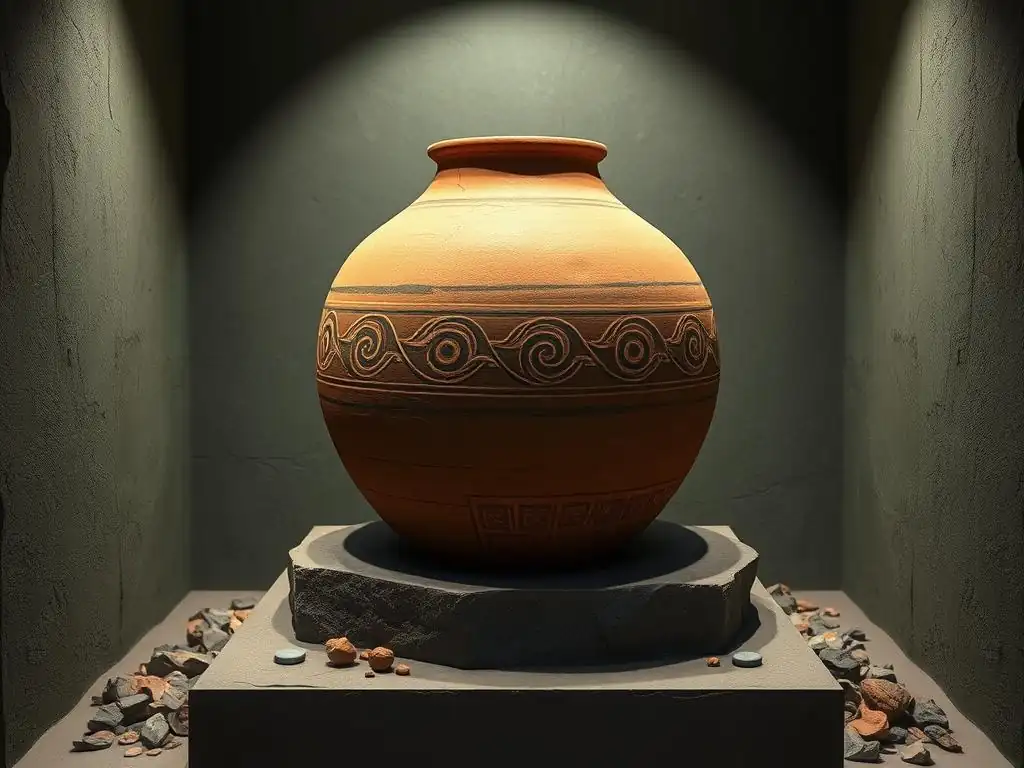
Fort Ancient pottery is a diagnostic marker of the culture, characterized predominantly by shell tempering, where crushed mussel shell is added to the clay to prevent cracking during firing. This technique was adopted from Mississippian traditions. Fort Ancient vessels exhibit a wide range of forms, including globular jars with constricted necks, bowls, and sometimes effigy vessels. Decorative techniques include cordmarking, incising, punctation, and appliqué.
Specific regional and temporal styles are crucial for Fort Ancient culture timeline analysis. For instance, Early Fort Ancient pottery might feature simpler designs, while Middle Fort Ancient styles like Feurt Incised are known for distinctive curvilinear or rectilinear patterns. Late Fort Ancient pottery, exemplified by Madisonville Cordmarked, often features large, globular jars with distinctive "collared" or "lipped" rims, and sometimes strap handles. The evolution of these styles provides a chronological framework for dating sites and understanding cultural interactions.
Stone Tools and Implements: Adapting to the Environment
Fort Ancient peoples utilized a diverse array of stone tools adapted to their environment and subsistence practices. Chipped stone tools, made from locally available chert or flint, included triangular projectile points (often Madisonville points) used for hunting, scrapers for hide processing, and knives for cutting. Ground stone tools, manufactured through pecking and grinding, were also common, including celts (axes) for felling trees and woodworking, grinding stones (manos and metates) for processing maize and other plant foods, and hammerstones.
The presence of specific raw materials, such as Flint Ridge chert from eastern Ohio, in sites across the Ohio River Valley, indicates established trade networks. Beyond stone, bone and antler were extensively used to create awls, needles, fishhooks, and specialized agricultural implements like hoe blades made from deer scapulae. These tools reflect the ingenuity and adaptability of Fort Ancient societies in harnessing their natural resources, providing tangible evidence for a Fort Ancient culture timeline analysis of technological development.
Fort Ancient Art and Symbolism: Interpreting Iconography
Fort Ancient art and symbolism, while less elaborate than some Mississippian traditions, offer insights into their worldview and beliefs. Symbolic expression is most commonly found on pottery, shell ornaments, and effigy pipes. Pottery decorations, beyond simple utilitarian patterns, sometimes include abstract designs that may have had symbolic meanings. Engraved shell gorgets, though rarer than in Mississippian contexts, depict motifs such as the cross-in-circle or feathered serpents, suggesting shared cosmological ideas with broader Mississippian iconography.
Effigy pipes, often made from pipestone, depict human figures, animals, or composite beings, likely used in ceremonial contexts. These artifacts provide clues about religious practices, mythology, and social roles within Fort Ancient communities. Interpreting this iconography is challenging but essential for understanding the non-material aspects of the culture. The study of these symbolic objects helps to enrich the Fort Ancient culture timeline analysis by revealing the evolving spiritual and artistic dimensions of these societies.
Fort Ancient Subsistence and Agriculture
Fort Ancient Farming Practices: Maize, Beans, and Squash
Agriculture formed the backbone of the Fort Ancient economy, with maize (corn) being the primary staple crop. Archaeological evidence, including abundant carbonized maize kernels from sites like SunWatch and Madisonville, confirms its dietary dominance. Fort Ancient farmers cultivated various maize types, including eight-rowed Northern Flint maize, which was well-suited to the Ohio climate. The cultivation of beans and squash, the other two "sisters" of the agricultural triad, provided essential nutrients, particularly protein from beans complementing maize's carbohydrate content.
This intensive agricultural system supported larger, more sedentary populations than previous Woodland cultures. Farming techniques likely involved shifting cultivation, where fields were used for a period and then allowed to lie fallow to replenish soil nutrients. The systematic cultivation of these crops allowed for food surpluses, which could be stored in subterranean pits, providing resilience against periods of scarcity. The transition to and reliance on these crops is a critical aspect of any Fort Ancient culture timeline analysis.
Hunting and Gathering: Supplementing the Fort Ancient Diet
While agriculture was central, hunting and gathering remained vital components of the Fort Ancient diet, supplementing the caloric intake from cultivated crops. Faunal remains from archaeological sites indicate that white-tailed deer was the most important game animal, providing meat, hides, and bone for tools. Other animals hunted included turkey, bear, elk, and various smaller mammals like rabbits and squirrels. Fishing was also important, with evidence of fish hooks and nets used to catch species from rivers and streams.
Gathering wild plant foods continued, providing crucial seasonal sustenance and dietary diversity. Common gathered foods included nuts (acorns, hickory nuts, walnuts), berries, and wild greens. The balance between agriculture and wild resource exploitation varied geographically and temporally within the Fort Ancient culture timeline, influenced by local environmental conditions and population pressures. This mixed subsistence strategy contributed to the long-term sustainability of Fort Ancient communities.
Evidence of Trade and Exchange Networks
Fort Ancient societies participated in extensive trade and exchange networks, connecting them with neighboring groups and more distant regions. Evidence of trade comes from the presence of exotic materials at Fort Ancient sites that are not native to the Ohio River Valley. Examples include marine shell from the Gulf Coast, copper from the Great Lakes region, and specific types of chert or pipestone from distant quarries. These materials were often used for ornaments, ceremonial objects, or specialized tools.
The exchange of goods likely involved both utilitarian items and prestige goods, facilitating cultural diffusion and social connections. While direct evidence of formalized trade routes is scarce, the consistent presence of these exotic materials across numerous sites points to well-established networks. The nature and extent of these trade relationships evolved throughout the Fort Ancient culture timeline analysis, potentially reflecting shifts in political alliances and economic needs.
Fort Ancient social structures were likely organized around kinship and clan systems, common among many indigenous groups in eastern North America. While there is no direct written record from this period, archaeological patterns suggest that villages were composed of several extended family groups or clans. The circular or oval arrangement of houses around a central plaza could reflect a social organization where different clan segments occupied specific areas of the village.
Evidence from mortuary practices, such as the arrangement of burials in specific cemetery areas or the presence of differential grave goods, hints at some level of social differentiation, possibly based on age, gender, or achieved status within a lineage. However, the absence of elaborate burials of a ruling elite, common in some Mississippian chiefdoms, suggests a less rigidly hierarchical society. Understanding these social dynamics is crucial for a complete Fort Ancient culture timeline analysis.
Leadership and Governance in Fort Ancient Communities
Leadership in Fort Ancient communities was likely more localized and less centralized than in large Mississippian chiefdoms. It is probable that leaders emerged based on their wisdom, oratorical skills, success in hunting or warfare, or their ability to organize communal labor for tasks like village construction or agricultural production. These leaders might have included village chiefs, war leaders, or religious practitioners. Decisions were likely made through consensus-building within councils of elders or prominent individuals.
The presence of defensive features like palisades in later Fort Ancient villages suggests the need for organized defense, implying a system of leadership capable of mobilizing labor and coordinating responses to external threats. While no grand political capitals existed, the larger, long-occupied villages may have served as regional centers for trade, ceremony, or social interaction, influencing surrounding smaller hamlets. This aspect of governance is an important, though inferred, part of the Fort Ancient culture timeline analysis.
Fort Ancient Ritual and Ceremony: Religious Practices
Fort Ancient peoples engaged in various rituals and ceremonies, reflecting a complex spiritual worldview. While direct evidence is limited, archaeological findings provide clues. Burial practices, for instance, varied across the Fort Ancient culture timeline, including flexed individual burials, bundle burials, and occasionally ossuaries, indicating specific mortuary rituals related to the treatment of the dead and beliefs about the afterlife. Grave goods, such as shell beads, effigy pipes, and pottery, suggest offerings or items for the journey to the spirit world.
The central plazas in Fort Ancient villages likely served as focal points for communal ceremonies, dances, and public rituals, similar to those observed in later historical indigenous groups. Effigy pipes depicting human or animal forms, and engraved shell gorgets with symbolic motifs, suggest a rich spiritual life and a connection to a broader cosmological framework shared with other Eastern Woodlands peoples. These practices highlight the non-material aspects crucial to a holistic Fort Ancient culture timeline analysis.
Fort Ancient Culture Decline and Legacy
Factors Contributing to the Decline of Fort Ancient Societies
The decline of Fort Ancient societies in the 16th and 17th centuries was likely a complex process influenced by a combination of factors, rather than a single event. Environmental changes, such as the onset of the Little Ice Age (roughly 1300-1850 AD), could have led to cooler temperatures and shorter growing seasons, impacting maize yields and contributing to resource stress. This environmental pressure might have exacerbated inter-group conflict, leading to increased warfare and population dispersal.
The arrival of European diseases, such as smallpox, measles, and influenza, transmitted through indirect contact with European explorers and traders, likely had a devastating impact on Fort Ancient populations. Lacking immunity, these diseases could have caused catastrophic mortality rates, disrupting social structures and weakening communities. Finally, the indirect effects of European trade goods and the shifting geopolitical landscape due to the fur trade likely altered traditional lifeways and economic systems, contributing to the eventual transformation or dissolution of distinct Fort Ancient cultural entities. A Fort Ancient culture timeline analysis of this period highlights a phase of significant upheaval.
The Relationship Between Fort Ancient and Later Indigenous Groups
The relationship between Fort Ancient peoples and later indigenous groups in the Ohio River Valley is a subject of ongoing archaeological and ethnohistorical research. While the distinct Fort Ancient archaeological signature largely disappears by the mid-18th century, it is generally accepted that the descendants of Fort Ancient peoples did not simply vanish. Instead, they likely assimilated into or formed the core of historically known tribes such as the Shawnee, Miami, and perhaps parts of the Delaware and Wyandot.
Linguistic and cultural similarities between these historical groups and the archaeological evidence of Fort Ancient culture support this continuity. For example, some Shawnee traditions place their ancestral homeland in the Ohio Valley, aligning geographically and temporally with the Fort Ancient presence. The process was likely one of cultural re-organization and amalgamation, as surviving Fort Ancient populations adapted to new circumstances, including increased mobility and interaction with European colonial powers. This continuity is a critical aspect of the extended Fort Ancient culture timeline analysis.
Preserving Fort Ancient Archaeological Sites: Conservation Efforts
The preservation of Fort Ancient archaeological sites is paramount for understanding the rich prehistory of the Ohio River Valley and for honoring the heritage of indigenous peoples. Many Fort Ancient sites face threats from agricultural practices, urban development, looting, and erosion. Conservation efforts involve a multi-pronged approach:
- Land Acquisition and Protection: Purchasing or easement agreements for significant sites to prevent destruction.
- Public Education and Interpretation: Developing parks and interpretive centers, like SunWatch Indian Village, to educate the public about the importance of these sites and the Fort Ancient culture.
- Legislation and Enforcement: Laws like the Native American Graves Protection and Repatriation Act (NAGPRA) protect burial sites and sacred objects, promoting respectful archaeological practice.
- Collaboration with Indigenous Communities: Working closely with modern tribal nations to ensure that research and preservation efforts are culturally sensitive and reflect their perspectives.
These efforts ensure that the legacy of the Fort Ancient culture, revealed through careful Fort Ancient culture timeline analysis, remains accessible for future generations of researchers and the public.
Fort Ancient Culture Timeline Analysis: A Synthesis
Reconstructing the Fort Ancient Culture Timeline
Reconstructing the Fort Ancient culture timeline relies on a combination of archaeological dating methods, typological analysis of artifacts, and comparative studies with other cultural sequences. Radiocarbon dating of organic materials (charcoal, bone, maize kernels) from secure archaeological contexts provides the primary chronological anchor, establishing the approximate AD 1000 to AD 1750 span. Stratigraphic analysis, observing the layering of cultural deposits at sites, helps to determine the relative sequence of occupation and cultural change.
Furthermore, the evolution of material culture, particularly pottery styles, serves as a refined chronological tool. The distinct shifts from simpler Early Fort Ancient pottery to the elaborate Middle Fort Ancient forms, and finally to the characteristic Late Fort Ancient types like Madisonville Cordmarked, allow archaeologists to assign relative dates to sites and understand the pace of cultural transformation. This detailed Fort Ancient culture timeline analysis provides a robust framework for interpreting the dynamic history of these societies.
The Significance of Fort Ancient Culture in Ohio River Valley Prehistory
The Fort Ancient culture holds immense significance in the prehistory of the Ohio River Valley. It represents the last major prehistoric cultural tradition in the region before sustained European contact, marking a period of intensive agricultural innovation, settled village life, and complex social organization. Their unique blend of local Late Woodland traditions with selective Mississippian influences created a distinct cultural identity that thrived for over seven centuries.
Their mastery of maize agriculture allowed for unprecedented population densities and the development of large, stable communities, fundamentally transforming the landscape and human-environment interactions. The study of Fort Ancient culture timeline analysis provides a crucial bridge between earlier indigenous lifeways and the protohistoric period, offering insights into the resilience, adaptability, and eventual transformations of native societies in the face of environmental shifts and external pressures.
Further Research and Ongoing Discoveries in Fort Ancient Archaeology
Fort Ancient archaeology remains an active and evolving field, with ongoing research continually refining our understanding of this fascinating culture. Future research directions include:
- Refining Chronologies: Utilizing new dating techniques and statistical modeling to create even more precise Fort Ancient culture timeline analyses, especially for regional variations.
- Climate and Environmental Impact: More detailed studies on how climate fluctuations, such as the Little Ice Age, impacted Fort Ancient subsistence and settlement patterns.
- Inter-site Networks: Advanced analyses of trade networks and social interactions between different Fort Ancient villages and with neighboring cultural groups.
- Bioarchaeology: Continued study of human remains to understand health, diet, disease, and population movements in greater detail.
- Ethnohistorical Connections: Deeper exploration of the links between Fort Ancient archaeological populations and historically documented indigenous groups in the Ohio Valley.
Each new discovery and research project contributes to a more nuanced and comprehensive Fort Ancient culture timeline analysis, enriching our knowledge of the rich and complex pre-Columbian past of the Ohio River Valley.
Frequently Asked Questions
### What is the Fort Ancient culture, and where did it flourish?
The Fort Ancient culture refers to a Mississippian-influenced Late Prehistoric Native American culture that flourished in the Ohio River Valley between roughly 1000 and 1750 CE. Their territory encompassed parts of modern-day Ohio, Kentucky, Indiana, and West Virginia.
### What are some defining characteristics of Fort Ancient culture sites?
Fort Ancient sites are known for their earthwork enclosures, often circular or rectangular, and their intensive maize agriculture. They also exhibited distinct artistic styles in pottery, bone tools, and shell ornaments, reflecting their unique cultural identity.
### How does the Fort Ancient culture relate to the larger Mississippian culture?
The Fort Ancient culture was influenced by the Mississippian culture centered further south, but it developed its own distinct characteristics. While sharing some traits like maize agriculture, they differed in their social organization and ceremonial practices.
### What is the significance of "Fort Ancient culture timeline analysis" in archaeological research?
Timeline analysis allows archaeologists to understand the development and evolution of the Fort Ancient culture over time. This helps to trace changes in settlement patterns, subsistence strategies, and interactions with other contemporary cultures.
### What happened to the Fort Ancient culture?
The exact reasons for the decline and disappearance of the Fort Ancient culture are still debated, but it is believed to be linked to disease, warfare, and migrations. Their descendants likely merged with or were absorbed into other Native American groups.
Okay, here's a final reflection crafted to fit your article on the Fort Ancient culture, optimized for emotional connection and future reflection, and designed to rank for "Fort Ancient culture timeline analysis":
Final Reflection: Echoes of the Past, Seeds for the Future
The preceding exploration of the Fort Ancient culture timeline reveals more than just a sequence of events; it unveils a dynamic tapestry of adaptation, innovation, and cultural exchange that resonates profoundly even today. Understanding the rise and fall of these Mississippian-influenced societies in the Ohio River Valley provides invaluable insights into the complexities of human interaction and the enduring power of cultural legacies. The lessons learned from their successes and eventual decline offer a crucial lens through which to examine our own societal structures and the choices we make that shape our future.
The impact of the Fort Ancient people extends far beyond archaeological sites and museum exhibits. Their story, woven into the very fabric of the Ohio River Valley landscape, serves as a constant reminder of the interconnectedness of humanity and the environment. It compels us to consider the long-term consequences of our actions and to appreciate the rich cultural heritage that has been passed down through generations. We do not inherit the earth from our ancestors; we borrow it from our children.
This ancient proverb encapsulates the responsibility we bear to learn from the past and to safeguard the future for those who will come after us, just as the Fort Ancient people once did.
Now, as you reflect on the Fort Ancient culture timeline analysis, consider how its lessons can inform your own understanding of the world. Let the resilience and ingenuity of these ancient societies inspire you to embrace innovation, foster collaboration, and strive for a more sustainable and equitable future. Embrace the echoes of the past, and let them guide you as you plant the seeds for a brighter tomorrow.
Unearth Your Inner Archaeologist!
Thanks for delving into the fascinating world of the Fort Ancient people! Now that you've explored their Mississippian-influenced society, it's time to take your journey further.
- Visit a local archaeological site or museum to see Fort Ancient artifacts firsthand and connect with their legacy.
- Research and share this article with friends interested in Native American history, sparking discussions and spreading knowledge.
- Design your own hypothetical Fort Ancient settlement. What resources would you need? What challenges would you face?
What aspects of Fort Ancient culture resonate most with you, and how might their story inform our present?